How to Furnish a Small Patio or Balcony
A small patio works when it is furnished for one thing. Pick that use first, then materials for your climate, room to move, cushions that cope with weather and somewhere to store them.
By DecoraMintPublished 4-minute readMore in Outdoor Furniture
In this guide
Coffee for two points to a bistro set. Long evenings point to a loveseat, or two low chairs with a small table between them. Dinner for four points to a compact table with chairs that slide fully underneath. A small patio or balcony can honor one of those, and trying for all three usually leaves none of them working. Choose the use first, and the outdoor living hub covers the setup around it.
Match the piece to the use
A bistro set is the tightest arrangement: a small round top lets two people face each other without a corner in anyone’s way. Low chairs and a side table suit a patio you mostly sit on. A table with a leaf or drop sides takes floor space only on the nights it is used, so see how it folds and where the extra panel lives. Round tables are easier to move around than square ones in a tight footprint, and folding or stacking chairs hand the floor back for a yoga mat or a few pots.
Plan on about 24 to 30 inches of clear floor around furniture so a chair can be pulled out and a person can pass behind it. That is a common planning rule for small layouts, and the best check is physical: tape the table and the pulled-out chairs on the floor, add the door swing, and walk it carrying a tray. Against a wall, push the table tight and keep the open side toward the walking route.
Materials and climate
- Teak and other dense hardwoods resist weather and last for years. Left alone, teak weathers to silver-gray, and oil keeps the honey tone.
- Powder-coated aluminum is light and does not rust, which suits balconies and the coast.
- All-weather resin wicker is the comfortable choice. Look for UV-resistant strands over a rust-proof frame, usually aluminum.
- Steel is sturdy and often the least expensive, but in humid or rainy climates the finish matters, since a chip lets rust start.
Light pieces are easy to rearrange and are also what a gust moves first. On a windy or high balcony, favor pieces with some weight or ones that stack or tuck against the wall, and bring light items inside when a storm is forecast.
Two small layouts
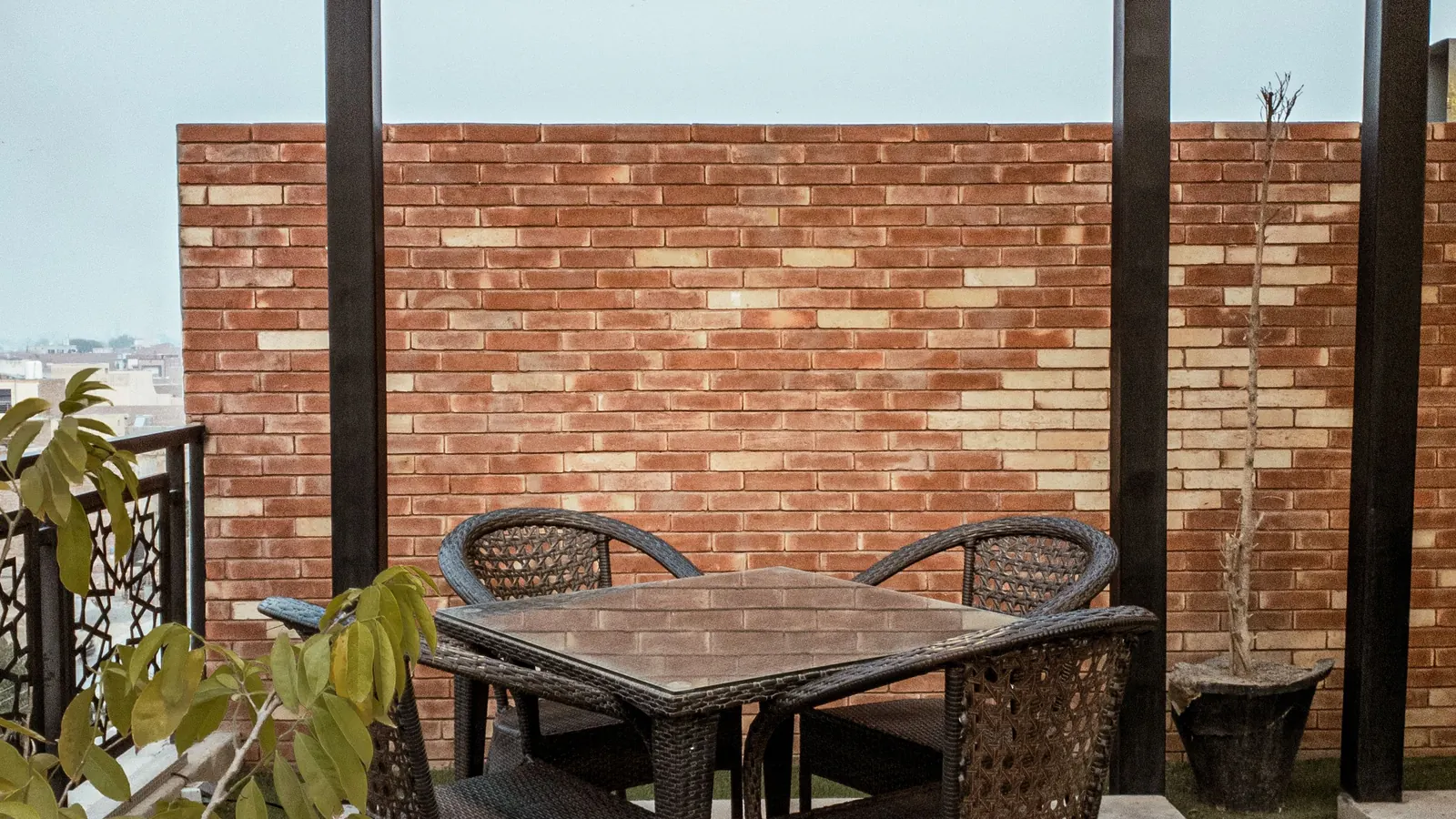
On a narrow balcony against brick, a round bistro table in charcoal powder-coated aluminum and two woven resin chairs in warm gray keep the lines low and light. The circle softens the rectangle of the floor, the weave adds texture against flat masonry, and one pot of herbs on the rail brings in green without using any floor.
On a sunnier concrete patio, a hardwood loveseat with off-white quick-dry cushions and a small teak side table feels warmer and heavier, with the grain set against the cool slab. Keep the far corner for one large planter and the seat still has room to pull out.
Cushions and winter storage
Outdoor cushions should have quick-drying foam and solution-dyed fabric, which is dyed through the fiber and resists fading. Look for removable covers, and decide where cushions go when it rains. A deep storage bench or lidded box becomes part of the furniture plan. Covers extend the life of almost any outdoor set, and a snug one sheds rain better than a loose one that pools. Where winters are hard, choose pieces that fold or stack, and decide where they spend November to March: a closet, a bench or a garage shelf.
Safety on a balcony or patio
Umbrellas cause the most trouble. A 2009 CPSC recall of about 60 offset umbrellas sold at Home Depot described the umbrella and pole falling over and striking people when the collar or sleeve was not removed before closing. Follow the closing steps in your own umbrella’s instructions exactly. Use the base the umbrella is sold with or a heavier one rated for it, close the canopy in wind and when nobody is sitting under it, and never leave one open in a storm or at a balcony edge where a gust could lift it.
Tall, top-heavy pieces such as a bar-height table or a shelving unit need flat, even footing. Keep chairs and tables away from a balcony rail a child could climb, and do not stand on furniture to reach things. In an apartment building, the lease or building rules may limit what you can store there, and the balcony’s weight limit is the building’s to state.
For a very small balcony, start with a bistro set in powder-coated aluminum, and move to hardwood or resin wicker only when there is room to sit back.