China Plates: Understand the Material, Pattern and Care
China can mean everyday porcelain, bone china or an inherited service. Identify what you have or want before adding pieces, and confirm care for the exact decoration.
By DecoraMintPublished 6-minute readMore in Tableware
In this guide
We may earn a commission from links on this page, at no extra cost to you. Affiliate disclosure
Bone china looks like the most fragile plate in the cabinet, and Pfaltzgraff calls it the most durable of the ceramic types. Thin, pale and faintly translucent, it carries gold rims and fine borders that make it the plate people save for best, though it can serve more often than its looks suggest. What decides daily use is the decoration, so start by working out what you have or want.
Porcelain, bone china and “fine china”
Porcelain and bone china are both ceramics. Bone china includes bone ash, and Wedgwood’s bone china guide describes bone ash as part of the material and links it to the light, translucent look. A seller who says “china” may mean either, so rely on the maker’s stated composition. Holding a plate to a window is a pleasant test, but a decorated or unfamiliar piece can mislead you.
“Fine china” is a presentation term unless the maker names the material. “Vintage china” needs a maker, pattern and condition. A decorative plate may be sold for display only. The country of manufacture is separate from the word china, which names a ceramic category.
A thin rim and a fine finish chip in different ways from a heavy stoneware edge, and any ceramic can be damaged, so handle by the body of the plate and stack with dividers.
Gold rims, microwaves and the dishwasher
Decoration sets the care rules. Pfaltzgraff says porcelain with a metallic rim should not go in the microwave. Wedgwood’s care guide says its bone china is dishwasher safe if marked, microwave safe unless it has metallic decoration, and not oven or freezer safe unless labeled. Royal Doulton’s guide ties microwave suitability to the pattern and finish. For a gold-rimmed plate, then, wash by hand with a soft cloth, skip the microwave, and warm food on a plain plate instead. For a plain white bone china plate, the literature that came with it is the one that counts, and a good answer from a seller is a care statement for that exact range. If the instructions say hand wash, buy that collection only if the routine suits your week.
Do not use a microwave to find out what an unknown plate is, and do not treat the absence of visible damage as proof of what a finish is meant for. Check each range for dishwasher use as well, since not every white plate is machine washable and not every patterned one needs hand washing.
That splits the cupboard in two. A plate that goes from the fridge to the microwave to the dishwasher several times a week does not need a gold line or bone ash; it needs a care line that names both appliances. Keep the gilded bone china for the meals you will wash by hand, and buy the workhorse plates separately. Bella Maison’s plates collection opens a page of porcelain and stoneware plates sold singly or in sets of four, which suits that open-ended, one-at-a-time buying; read the care line on each plate’s own page: most name both appliances, but two Bon Appétit pieces list only the dishwasher.
Size and fit
A plate’s outer diameter says little about its usable center, because wide decorative rims take table and shelf space and leave a smaller eating area. Coupe shapes and shallow bowls differ even at the same listed diameter. Compare a candidate with a plate you enjoy, and measure cabinet depth, stack height and dishwasher clearance. If you plan to microwave, check that it clears the turntable as well as being permitted. “Salad plate” is not a standard size, so read the seller’s measurements, and look at how a smaller plate scales against the dinner plate and glassware.
Meals or collecting
For everyday dinners, look for clear food-use instructions, comfortable handling and pieces sold individually. For entertaining, a dinner plate and one versatile smaller plate go a long way; add soup plates or bread plates because the menu needs them, not because the pattern lists them. For display, condition and identification matter more than dishwasher convenience, and a treasured plate may be wrong for reheating lunch.
A table of white bone china dinner plates edged in a thin gold line, flax-colored linen napkins, a low bowl of winter citrus and tapers in brass holders shows the idea. The translucent rims pick up candlelight, the gold gives a small flicker at each place and the plain white keeps the food in front. Patterned china belongs on the smaller plate, on top of a plain dinner plate: a busy border repeated at full size around a whole table competes with the dishes served on it.
To extend an inherited service, count intact dinner plates, smaller plates, bowls and serving pieces separately. Photograph the pattern and the backstamp so a replacement search targets the exact collection rather than a similar floral border. If an exact piece is gone, add something deliberately coordinated, such as a plain plate in the pattern’s background color, rather than an almost-match.
Older china and food safety
Read the underside marks and look at the whole pattern. A family story is useful context but is no basis for a date or maker. The maker, a replacement specialist or a qualified appraiser can identify a pattern, but naming a pattern or estimating its value does not show that a piece meets food-contact standards. The FDA’s guidance on traditional glazed pottery explains that some glazes can contain lead, and washing or boiling an older piece will not remove it. When you cannot establish that a piece is suitable for food, keep it for display. When buying a replacement, ask for photographs of both sides, the rim and the base: a small thumbnail hides repairs.
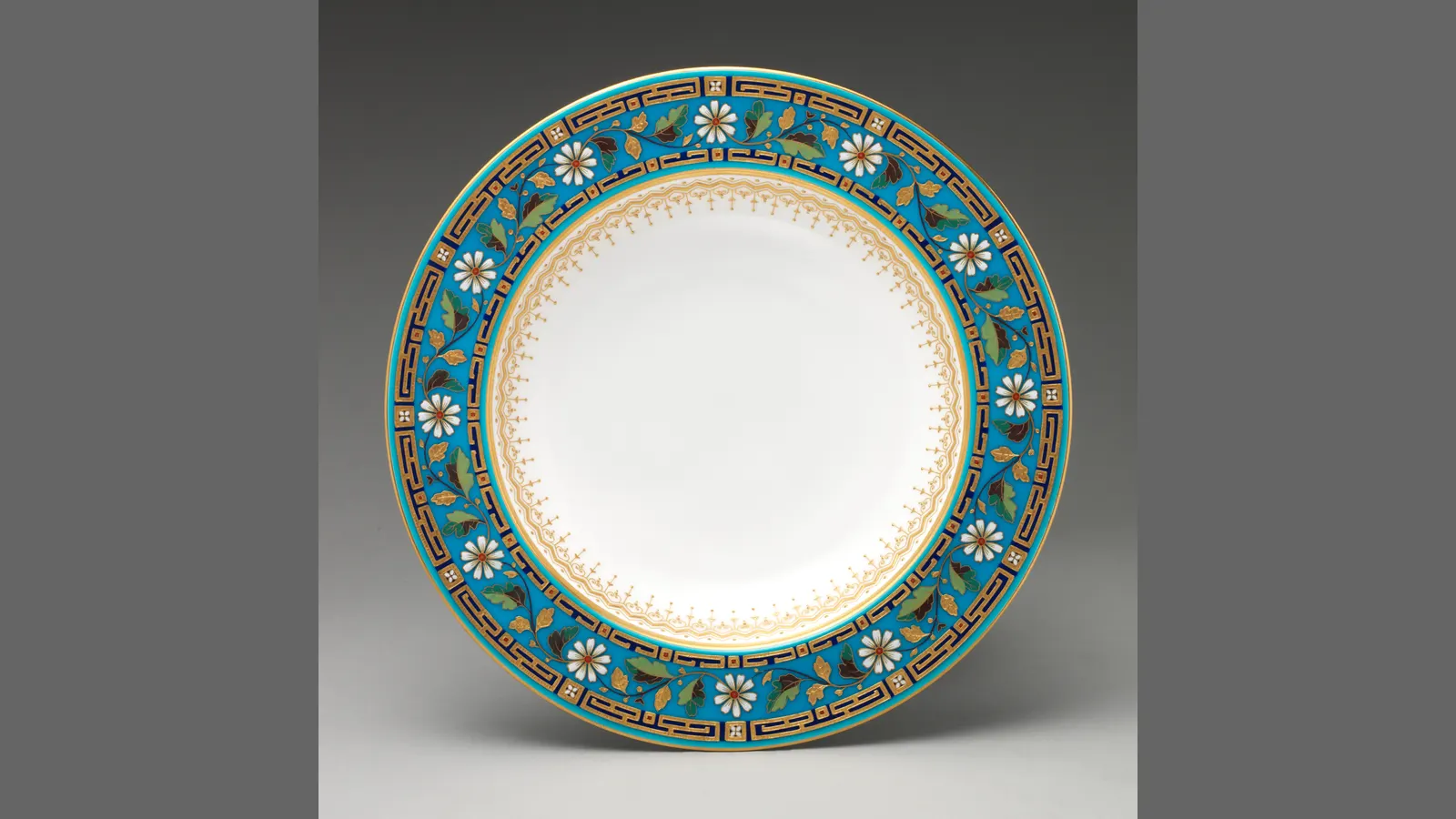
A Minton bone china soup plate from about 1880 in the Metropolitan Museum of Art’s collection shows how ornate bone china can be, with material and date given by the museum.
A porcelain option
You may not need bone china at all. Bella Maison, an advertiser available through this site’s affiliate links, lists a Bleu Blanc 24-piece porcelain dinnerware set that its page identifies as porcelain made in Turkey, with six each of 10.5-inch dinner plates, 9-inch soup plates, 8.25-inch dessert plates and 6-inch bowls. The care guide reads dishwasher safe and microwave safe, with advice against sudden temperature changes, and the description mentions no metallic decoration. We may earn a commission on purchases through our link, and we have not tested it.
In the retailer’s photographs the set reverses the layering described above. The densest decoration sits on the largest piece: the dinner plate is covered edge to edge in birds and blossoms, while the soup plate has one small spray reaching in from the rim and the bowl carries only its patterned blue edge. Dinner is served on the pattern, so it looks calmest with simply colored food and plain linen. The ground looks off-white in those photos; if it will sit beside cool white bone china, compare them in daylight before buying a whole service.
Buy the set for a blue-and-white table in daily use, in a household that will reach for both soup plates and bowls. It is the wrong purchase if you only want a patterned accent over plain dinner plates you already own: the plates collection linked above lists Bleu Blanc dessert and salad plates on their own. Neither is a substitute for an inherited bone china pattern.
Store pieces in stable stacks, avoid crowding rims against cabinet walls, and compare new whites with old ones in the same light, since warm ivory beside cool white may disappoint if you expected a match. Check replacement availability now, because a discontinued pattern turns one broken plate into a search. Pieces that chip or crack should leave the table, not be mended for food use at home.
Retailers to browse
Compare colors, sizes, materials and return details on the retailer’s current listings.
- Browse dinnerware at Bella Maison
Bella Maison
Opens Bella Maison’s dinnerware collection, not a single product.