Dinnerware Sets: Count the Place Settings, Then Check the Fit
A bigger piece count is not a better set. Start with how many full place settings you need, then check plate and bowl sizes, your cabinets and the care instructions.
By DecoraMintPublished 8-minute readMore in Tableware
In this guide
We may earn a commission from links on this page, at no extra cost to you. Affiliate disclosure
Lay a table for four with a plain white dinner plate, a smaller plate on top and a bowl beside it, and you can see most of what a dinnerware set has to do. The plates should frame the food, the bowls should hold what you actually eat from a bowl, and the whole stack should fit in your cupboard and your dishwasher. That is why the piece count on the box matters less than it looks: a 24-piece set can serve six people, because a place setting takes several pieces. Count complete place settings first, then plate and bowl sizes, then storage and care.
From piece count to place settings
Four dinner plates, four side plates and four bowls make a 12-piece set for four. Add four mugs and the same four diners have 16 pieces. Manufacturers combine pieces differently, so read the inventory: sets may include serving dishes, two kinds of bowl, cups and saucers, or extras that raise the total without adding a dinner plate.
| Example box | Total pieces | Dinner-plate settings | What to ask |
|---|---|---|---|
| 4 dinner plates, 4 side plates, 4 bowls | 12 | 4 | Do you already own mugs? |
| The same, plus 4 mugs | 16 | 4 | Will these replace mugs you have? |
| 6 dinner plates, 6 side plates, 6 bowls | 18 | 6 | Is one bowl type enough? |
| 6 dinner plates, 6 soup plates, 6 dessert plates, 6 bowls | 24 | 6 | Will you use and store both soup plates and bowls? |
These are arithmetic examples; count the dinner plates and bowl types in the set you are considering. The last row is a real inventory, the Bleu Blanc set read in detail further down, and it shows how 24 pieces can still leave a household of eight short.
Which kind of buyer you are
An everyday household. Work from a normal day. A family of four can run out of bowls even with four full settings if everyone uses one at breakfast and another at lunch, so count the meals between dishwasher runs. Jot down the dinner plates used at one meal, the bowls you go through, the smaller plates for snacks and dessert, the mugs already in the cupboard and any serving dishes you actually lack, then shop for the gap.
A host. Decide whether the whole table has to match. Extra dinner plates and an all-purpose bowl can serve a crowd better than doubling every piece, and a coordinated mix seats the same number without a second set to store. Set a holiday against the other days of the year, so a set bought for one dinner does not make ordinary weeks awkward.
A small kitchen. Fewer, stackable pieces win. A single bowl that works for soup, pasta and cereal beats two shapes that each sit unused half the time.
The look on the table
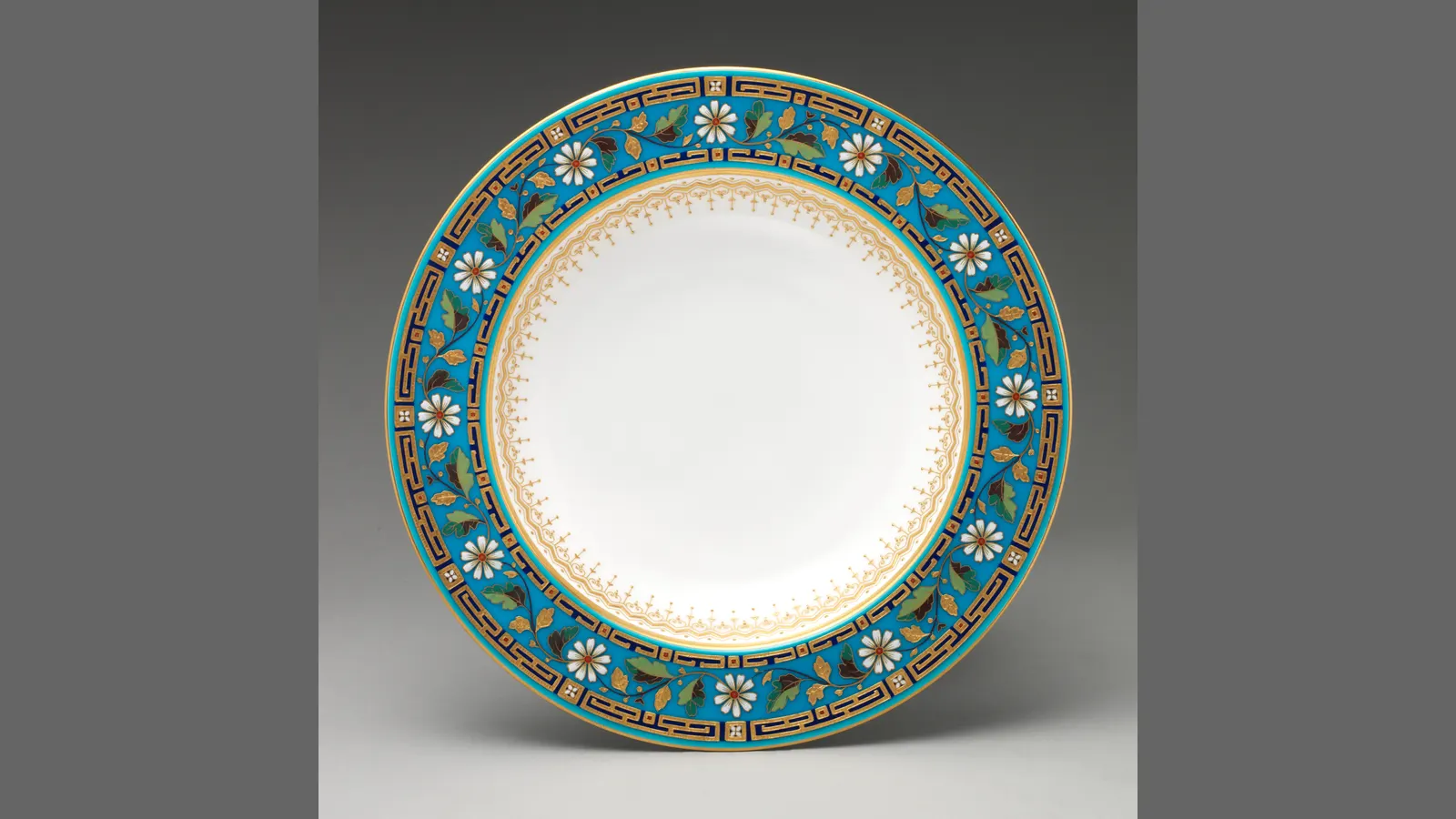
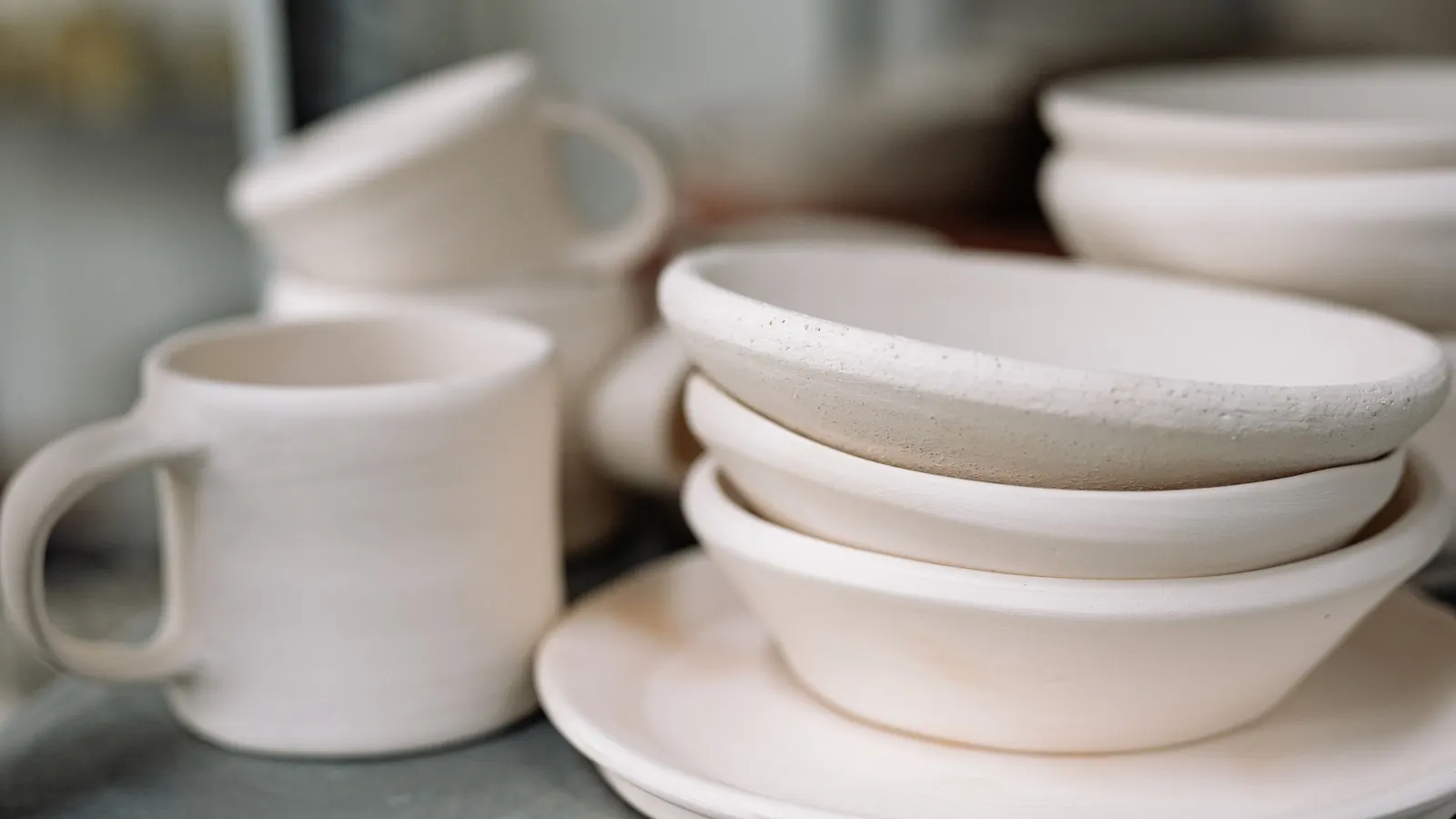
White and cream plates frame food and let a linen runner, a wooden table or colorful vegetables do the talking. A speckled stoneware glaze gives every plate a slightly different surface in window light, and the rim catches light unevenly in a way machine-smooth porcelain does not. A blue-and-white pattern adds a cottage note, and a matte plate in clay or sage looks restful beside glossy glassware.
Proportion matters as much as color. A broad rim can look generous and leave a smaller eating surface, and a very wide plate can crowd a small table even if it fits the cupboard. Set one place with the glasses and flatware you use before settling on a size.
Material and care instructions go together
Material changes how a set looks and feels in the hand, and the care label for the exact item decides what you may do with it. Ceramics differ from one another, so judge durability from the specific piece.
| Material | What to compare |
|---|---|
| Porcelain | Weight, rim shape, decoration, heating and cleaning permissions |
| Stoneware | Plate thickness, stack height, glaze variation, comfort in the hand |
| Bone china | Weight, translucency, decorative finishes, range-specific care |
| Glass | The particular construction and its breakage and temperature-change warnings |
| Melamine | Intended serving use and the ban on microwave heating |
Royal Doulton’s material guide shows why care advice belongs to a range and its finish: a plain plate and a metallic-decorated one need not share microwave instructions.
The FDA advises against heating food or drinks on melamine tableware in a microwave. Keep melamine for serving where no microwave heating is needed, such as a patio table.
In a mixed-material set, check each type of piece. Corelle’s usage instructions separate glass plates and bowls from porcelain or stoneware mugs, so a matching look can hide different construction and handling rules.
Only pieces made for food belong on the table. The FDA’s traditional-pottery guidance explains that some improperly made glazes or decorations can release lead into food, and it advises against serving or storing food on pieces labeled for decoration only. Handmade, antique, worn or unidentified vintage plates are the usual risks, and washing does not remove lead from pottery. Pieces labeled for decoration only belong on the shelf.
Will it fit the kitchen?
Measure a cupboard shelf’s usable depth and height, allowing for door lips and dividers, and compare the widest plate and a realistic stack. When buying online, ask for stacked measurements if the proportions make storage uncertain. Then look at the dishwasher: the plate diameter has to sit in its rack position without blocking the spray arm, following the appliance instructions, and a deep bowl can use more rack space than its diameter suggests. For microwaves, confirm both that the material is rated for it and that the plate clears the turntable, and never force the turntable.
Bowls decide whether a set feels useful
Set photographs spend their attention on plates, yet bowls are what you reach for. Compare capacity, opening width, depth and base. A wide, shallow bowl suits pasta or composed salads; a deeper one suits cereal and soup. They overlap, and not every household wants both, so ask whether each shape earns its shelf. Notice how a filled bowl sits in the hand and carries to the table, since a thick rim, narrow foot or large diameter changes the experience even within one material.
One set, read closely: Bella Maison Bleu Blanc
Bella Maison is an advertiser available through this site’s affiliate links, so we may earn a commission if you buy through them. Its Bleu Blanc 24-piece porcelain set illustrates why contents matter more than the headline number.
The merchant lists six each of 10.5-inch dinner plates, 9-inch soup plates, 8.25-inch dessert plates and 6-inch bowls. That adds up to service for six with two bowl-like forms, a very different set from 24 dinner plates. The page describes porcelain construction, dishwasher and microwave suitability, and avoiding sudden temperature changes.
The retailer’s photographs show where the pattern sits, which matters as much as the count. The dinner plate is printed across its whole face with blue birds and flowers inside a lace-like border, so the main course always lands on the print. The bowls carry only the border, the soup plates add a small spray near the rim, and the dessert plate a single branch with two birds. On the table that gives one busy layer and three lighter ones: plain linen, unpatterned glasses and steel flatware keep it from tipping into clutter, and a second pattern on the napkins would compete.
Two objections decide it. If your household eats from bowls more than from plates, six soup plates plus six 6-inch bowls are a sound mix; if you already own small bowls, a quarter of the box duplicates what you have. And 10.5 inches is a wide plate for a narrow cupboard or a crowded dishwasher rack, so measure both against that diameter first. When the dinner plate is the only piece you need more of, the open-stock route below reaches the Bleu Blanc dinner plate without a second box; compare its photo with the set’s before mixing the two. We have not tested the set for durability or dishwasher performance; read the listing’s current care information before ordering.
Boxed set or open stock
A boxed set is efficient when its mix matches your needs. Open stock lets you buy pieces individually, which helps with unequal quantities and replacing a broken plate. If you are counting on open stock, check that dinner plates and bowls are sold separately today, whether the collection is ongoing, and whether glaze or color varies between production runs, since a pattern in stock now may change later. Bleu Blanc shows how this works in practice: Bella Maison’s plates collection, a collection page, lists the 10.5-inch Bleu Blanc dinner plate on its own and in a set of four, alongside Bleu Blanc dessert and salad plates. A household of eight can start with the boxed set and add two dinner plates, plus two of whichever other piece it uses daily, rather than buying a second box of 24. Compare the cost of the pieces you will use, because dividing the price by every item in the box makes unwanted accessories look like value. A smaller collection that fits your routine can be the cheaper choice. A shared color, rim shape or pattern detail can link pieces that do not match exactly, so lay out a sample place setting before adding to the collection.
When the box arrives
Open it promptly and report chipped rims, cracks or missing pieces through the seller’s return process, keeping the packaging until you have checked everything. Compare pieces on a flat surface in ordinary room light. Wash new dinnerware per its instructions before use, and store it so lifting one plate does not mean balancing a tall, unstable pile. If a piece gets damaged, follow the maker’s guidance for damaged ware, and stop using a chipped or cracked piece for food.
Retailers to browse
Compare colors, sizes, materials and return details on the retailer’s current listings.
- Browse dinnerware at Bella Maison
Bella Maison
Opens Bella Maison’s dinnerware collection, not a single product.