Floor Pillows and Cushions: Size, Fill and Room Layout
Floor pillows work as extra seats when people are comfortable at that height and the pillows have somewhere to go afterward. Size, fill, covers and storage, in that order.
By DecoraMintPublished 5-minute readMore in Floor Seating
In this guide
We may earn a commission from links on this page, at no extra cost to you. Affiliate disclosure
A floor pillow gets sat on, dragged, stacked and stored, often in the same afternoon, so the useful ones are judged on how they behave in that cycle. Who sits on them, for what, and where they go afterward settle the choice more than color does.
A cushion softens a spot on the floor. It gives no backrest and makes standing up no easier, which is why the first question is whether the people using it like sitting at floor level at all. If they do not, a chair is the kinder option, and cushions should be an added choice and never the only seat in the room.
Match the cushion to the job
Reading calls for something to lean against as well as a seat. Around a low table, the cushion’s thickness against the underside of the table decides where knees go, and a taller seat is not automatically more comfortable. Extra guest seating mostly needs to move and store easily. If you want a backrest that stays attached, a floor chair is a different piece, because a cushion leaned on a wall is a looser arrangement than a chair with a supported back.
The footprint people occupy
Listed width understates the space needed. Legs, shifting positions and a clear path around the group all count. Mark the arrangement with painter’s tape before buying several matching cushions, and keep it out of door swings, hallways and routes to exits. A room that looks airy with cushions stacked in a corner can feel tight with all of them in use, so judge the open layout and not the storage photo.
Shapes
Square cushions give a defined seat but their corners poke into the space around a round table. Round ones fit a circular seating position and leave gaps when stored together. Long pillows can work as a seat, a back support or a lounger, though length makes them awkward to carry and store. Modular sets raise the question of whether pieces work alone or only stacked, and a cover sold separately depends on an insert that may not be included. Read actual dimensions, since “oversized” and “adult size” mean different things on different listings.
Past the long pillow sits the floor-level bean bag, which behaves more like a piece of furniture than a cushion: you sink in and lean back in one piece, but it stays out instead of going on a shelf. ZONLI’s Bean Bag Sofa shows the scale involved. The listing names its sizes 4.5, 6 and 7.5 feet, fills it with foam cubes rather than loose beads and describes the polyester cover as removable and machine washable. In rust red or matcha green it becomes the color block of a reading corner; in beige or gray it settles into a pale rug. Tape out even the 4.5-foot size before ordering, and choose it only for a corner that can give the space up for good. For seats that come out for guests and disappear afterward, stay with cushions.
Fill and construction
Loose fill, shaped foam and tufted cushions respond differently under weight, and a photo of unloaded thickness is a poor guide to how high you will sit. A firmer fill holds its shape; a softer one wraps around you. If you can, compare with a cushion you own. Find out whether the fill can be fluffed or replaced, since a fixed fill with no replacement insert wears out for good; a zipper may belong only to the outer cover, and a sealed inner cushion should stay sealed unless the maker permits opening it.
Seams and attachments deserve a look. A handle is usually meant for carrying the empty cushion and can fail if used to drag someone across the floor. Buttons, tassels and long fringe suit some settings and not a busy playroom, so follow the maker’s age and use instructions on children’s products.
Covers that touch the floor
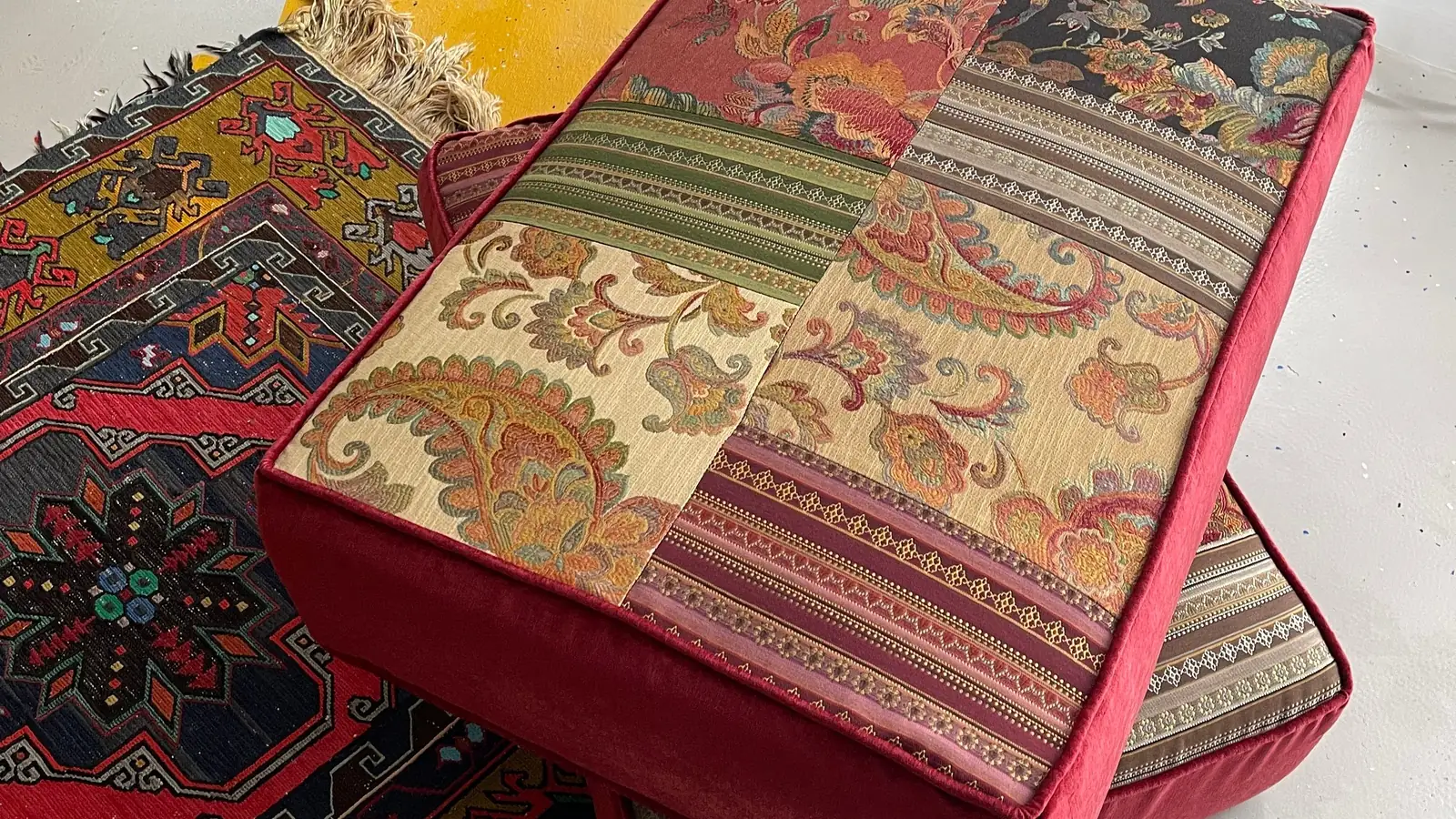
The underside meets whatever is beneath it, so look for covers you can inspect and clean, especially if the cushion travels between rooms. A textured or patterned fabric hides everyday marks differently from a pale one, and a busy print still needs a cleaning routine. Confirm whether the cover comes off and whether it can be washed, spot-cleaned or professionally cleaned, with the inner cushion considered separately. IKEA’s GREJSIMOJS floor cushion set shows the split: its instructions allow washing the removable covers and say the inner cushions should not be washed. These are that maker’s care terms, and we have not tested the product. Think through drying and refitting a cover before buying, and if the required care is awkward in your home, pick something else.
Check how the cushion sits on your floor or rug. If it shifts when someone gets on or off, rethink the placement. Keep it away from heat sources and damp. An indoor cushion belongs indoors; for outdoor seating buy a product made for it and follow its storage directions, as water-resistant wording does not mean it can stay out indefinitely.
Styling a group
In a living room with a wide-wale gray rug, a low walnut table and a linen sofa, three floor cushions in rust, olive and cream, all roughly the same height, would sit under the table’s edge without blocking knees, and their matte, slightly nubby covers would pick up the rug’s texture without competing with its pattern. We would keep one of the three patterned and the other two plain.
A reading corner under a window works with two large square cushions in a textured cotton cover, set side by side against a pale wall with a basket of books within arm’s reach. A deep teal or mustard cover gives the corner a clear edge in daylight, and a slim floor lamp behind one shoulder, its base and cord kept clear of the cushions, lights the page at dusk. We would choose covers with a woven texture here, since they hold up to daily dragging and look good in side light.
When the rug already carries a strong pattern, compare the scale of its motif with the cushion instead of trying to match every color. A quiet room can use plain covers and let the shapes do the work. For several cushions, keep one thing consistent, such as color family, edge treatment or size, and avoid mixing heights around one low table.
Where they live between uses
Measure the shelf, basket or corner, including the opening as well as the space inside, because a large square cushion can fit in a cabinet and still jam in its door. Stack only as the maker permits and keep the stack steady. Loose cushions piled as elevated seating are a fall risk, and a stacking photo does not show that the stack can hold a person. Most floor cushions are not made for sleeping, so give an overnight guest proper bedding. Store cushions clean and dry, and somewhere easy to reach, or the extra seating turns into a pile nobody moves.
When you buy a set, order or inspect one first if you can, to judge size and feel before committing the room to it.