Full-Length Mirrors: Choose a Useful Dressing View and Support System
The tallest mirror that fits the wall may not give you a useful dressing view. Start from where you will stand, compare the actual glass and choose a support method safely.
By DecoraMintPublished 5-minute readMore in Decor
In this guide
The best spot for a full-length mirror is wherever you finish getting dressed: beside the wardrobe, across from the closet, by the front door for a last look. Start there, then choose a mirror with enough clear glass to show you head to toe from where you can actually stand, and finally decide how it will be held up. That last choice matters most. A wall-hung mirror, a floor mirror that leans and still has to be anchored and a freestanding mirror with its own stand are three different installations, and a styled photo rarely shows which one you are looking at.
Find your dressing spot
Walk through your routine: open the closet, choose clothes, put on shoes, check the result. Put the mirror where that happens naturally, out of the busy doorway and clear of furniture you would have to move.
Look at the space with closet doors and drawers open. A mirror that looks perfect beside a wardrobe can vanish behind its door, and a freestanding stand takes floor space that the front-view measurement does not show. If two people share it, think about both heights, because a placement that suits the taller person can crop the shorter person’s feet.
What the room sees
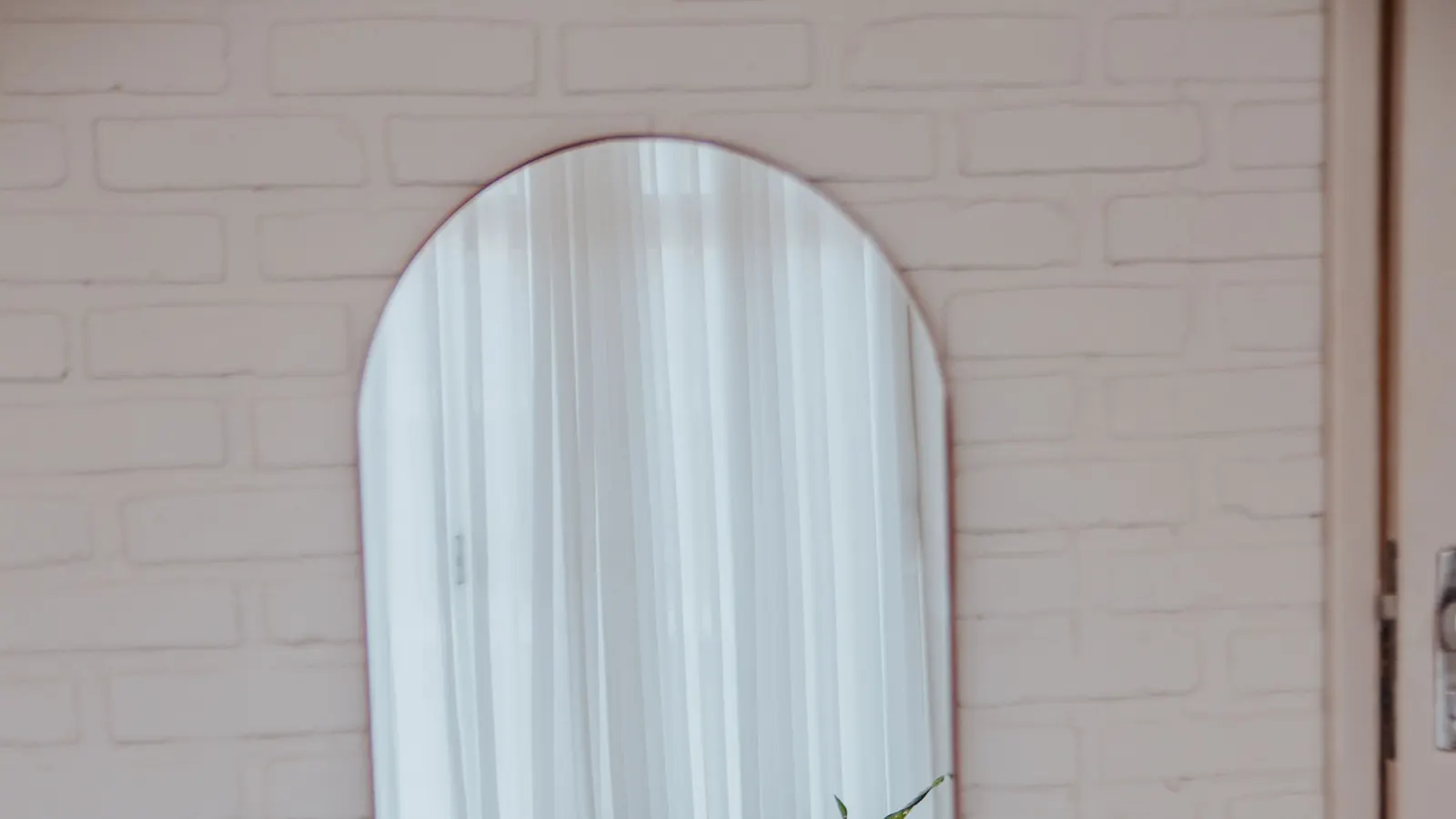
A tall mirror has a large effect on how a room feels. Leaned against a pale wall opposite a window, it bounces daylight back into the room and can make a narrow bedroom feel wider. A slim aluminum frame stays almost invisible, while a chunky wood frame or a gilded one becomes part of the furniture and wants a calm wall beside it. An arched top softens a room of straight lines; a plain rectangle suits a minimal one. Whichever you choose, the glass reflects whatever stands opposite, so a tidy wall or a handsome chair behind you makes the mirror look good even before you are in front of it.
Light matters for the person as much as the room. Light from the side or in front of you is flattering and useful, while a bare bulb reflected straight into your eyes just gets in the way. A dressing spot should be bright at the time you usually dress, including after dark. Mirrors with built-in lighting have their own brightness and power requirements, separate from size. Catching a pretty window reflection is a joy in a living room, and in a dressing corner function should come first.
Clear glass versus frame size
Listings often give the outside size of the frame, and a wide or decorative frame can take a surprising amount of it. A 24-inch-wide frame with a 3-inch border on each side leaves 18 inches of glass, so two mirrors with the same outside width can show you quite different amounts. Look for clear glass in the specifications, along with frame depth, stand footprint and box size so you know how far it sticks out and whether it fits through the door.
Arched and irregular mirrors can work well for dressing, though notice where the shape narrows. Crossbars or a divided mirror break up the view of a whole outfit.
Tape the outline on the wall with finish-safe tape or paper, and mark where you will stand. That shows how it relates to the furniture and proportions, though paper cannot show the reflection. For that, look at the model in a store or at a similar mirror already installed securely. Make sure you can see from shoes to collar without stepping into the bed or a door swing. If you would have to shuffle around every morning, move the location or choose more glass, since a taller frame alone may not help. Never prop a heavy mirror against a dresser for a quick test.
How it is held up
Wall-hung
Hanging the mirror keeps the floor clear and suits narrow spaces. Look at the model’s mounting points, weight and orientation, and at what your wall is made of. The decorative strap or trim on the front may not be what carries the weight, so read the instructions and examine the back. If you are unsure about your wall, hire someone to hang it.
Leaning, but anchored
A mirror that rests on the floor and leans against the wall may still need to be fixed to it. IKEA’s HOVET 405.071.96, at 30.75 by 77.125 inches, is a good example: IKEA allows it to hang on the wall or lean on the floor, but requires it to be anchored when it leans, and specifies wall mounting in a bathroom. Its current instructions note that the right wall screws depend on your wall material. Other models have their own rules, and we have not tested this one.
Freestanding
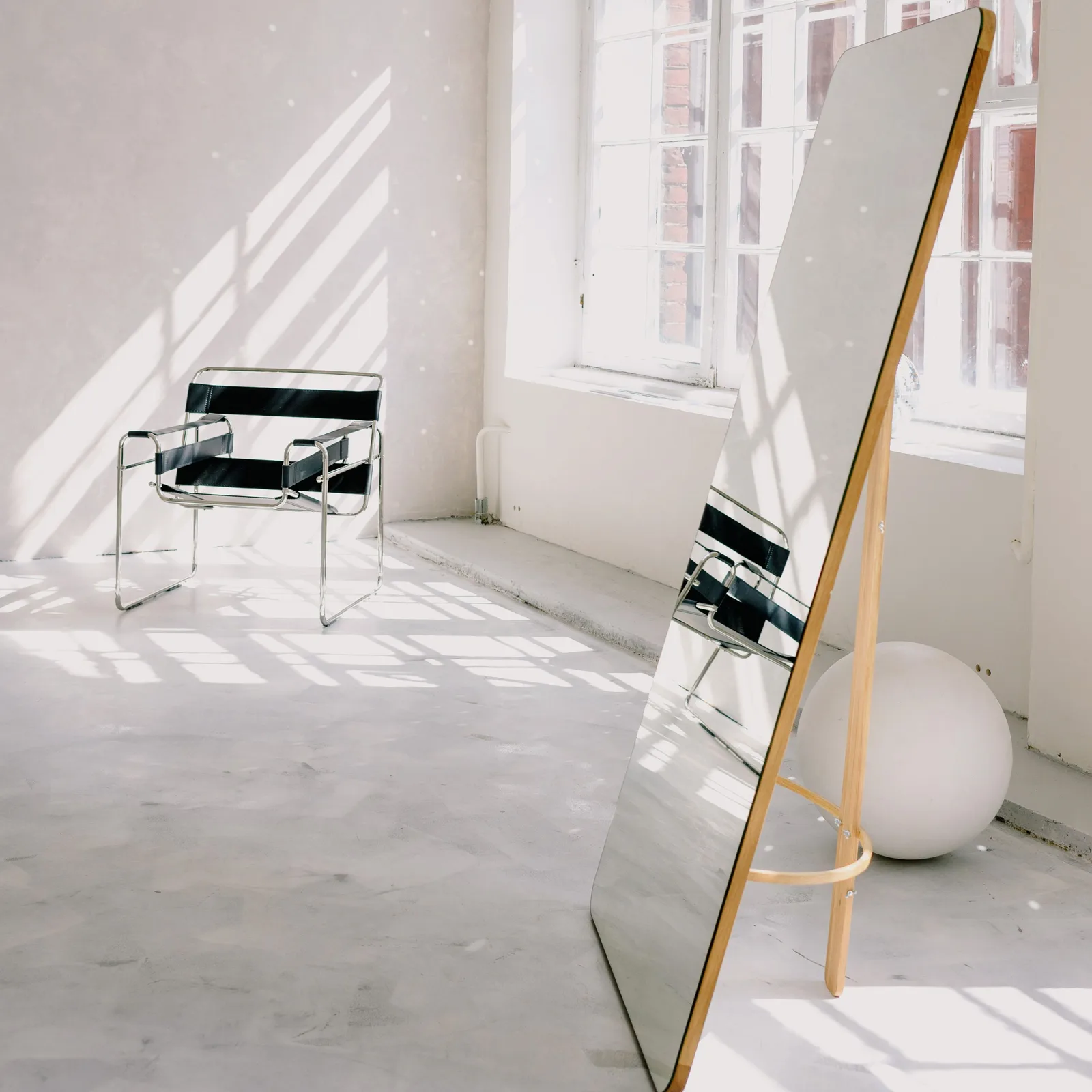
A freestanding mirror has a stand or rear leg designed to hold it upright. Measure the full footprint including whatever sits behind it, which the front-view photo hides, and read whether the stand needs locking or extra restraint. Keep the stand at the width the maker designed, even in a tight corner. A freestanding model suits a rental only if its design needs no wall fixing, and your lease will tell you what else is allowed.
Three common spots
Beside a wardrobe. Open the doors and drawers and stand where you would pull out clothes. The mirror should still be usable. If the only free wall is behind an open door, ask yourself whether you will close the door every time.
Facing the end of the bed. Measure the walkway left once the mirror and any stand are in place. A wall-hung mirror and a deep floor stand have very different effects on a narrow strip, and your morning check should leave your partner’s path clear.
In an entry or hall. Think of someone passing with bags or a stroller. A frame that sticks out can catch a shoulder in a tight hall, so a flatter, wall-hung mirror suits these spaces better.
Getting it home
Get help carrying it, and do not lift by a decorative frame or stand unless the instructions say you can. Once it is up, look at yourself from your usual spot. If straight lines look warped, contact the seller rather than tilting or forcing the frame. Glass and frame may need different cleaners, since a wood-look finish may not be wood, and the anchor or stand should stay visible and accessible with no plant or pile of clothes in front of it.
If you can only afford one decision, choose the dressing spot and the wall anchor first, and let the frame follow. The decor collection covers the rest of the room.