Bathroom Rugs: Choose a Mat, Runner or Decorative Rug for the Right Spot
A mat by the shower, a runner along the vanity and a rug in a drier corner each have their own job. Match the rug to where it lies, then check the backing, the floor and the drying routine.
By DecoraMintPublished 5-minute readMore in Decor
In this guide
We may earn a commission from links on this page, at no extra cost to you. Affiliate disclosure
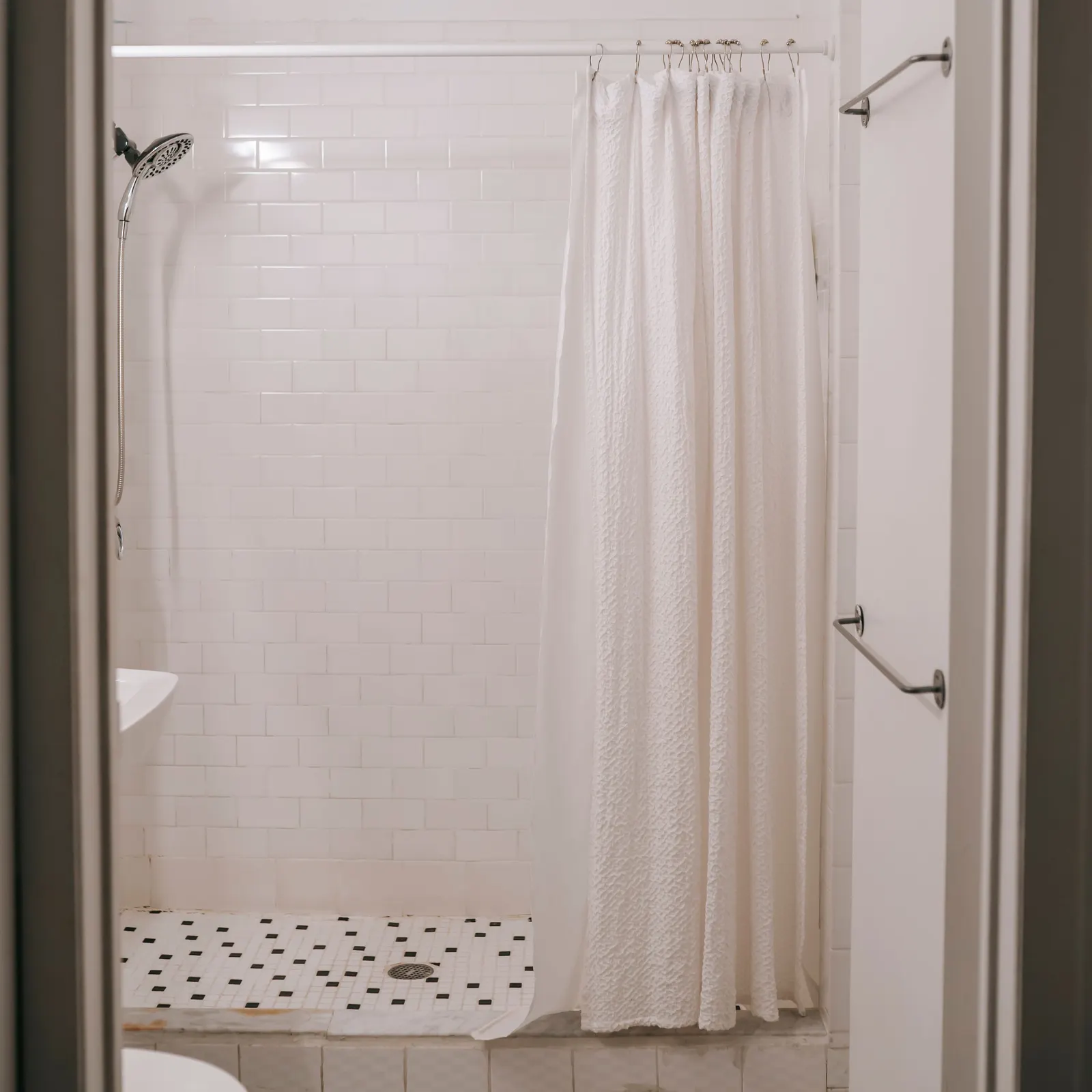
Which part of your bathroom floor actually gets wet? Usually it is a strip about a stride wide in front of the tub or shower, plus a few drips below the sink. The rest of the floor stays dry, and that is where a rug has far more freedom. Sort the room into those zones before you look at a single product, because a mat for the splash zone and a rug for a dry corner are different purchases, however alike they look in a product listing.
Sets, singles and runners
A set sells you a quantity. It does not draw you a floor plan. A matching trio might give you a large mat for the tub, a smaller one for the sink and a lid cover you never wanted, so read each piece’s dimensions and use only the ones that fit. One well-sized mat beside the tub with bare floor around it usually looks calmer than several patterned pieces competing, and it leaves you less to wash.
If the plan does have two standing spots, a set earns its place only when it holds exactly those pieces. Bella Maison’s Corner Bath Mat Set is two pieces and nothing else: a 23.6-by-39.4-inch mat to lie along the tub or across the front of a shower, and a 19.7-by-23.6-inch mat for the sink. Both are 100% cotton, and the care line is a cold gentle wash and a low tumble dry, so the wetter mat can go through the machine without its partner. With one tub and one sink, that covers both standing spots and leaves no spare piece to find a home for; in a very small room, the large mat alone may be enough. The set comes in mustard, and on white tile we would expect that warm block of color to stand out strongly, so it sits best in a room where the towels or a wood vanity already carry a yellow or honey tone. The listing does not describe the underside, so treat grip as unknown and give it the wet-feet trial in the backing section before relying on it; the product page states returns within 30 days, which leaves time for that test.
If you do want two or more pieces, let them share a color or a weave so the floor reads as one idea. A runner is the other route. Along a long vanity it makes a single continuous strip and removes the gaps between mats. The price is that the end nearest the shower gets wet while the far end stays clean, so you wash the whole thing more often than the dry end needs. Two shorter mats can be lifted, hung and replaced separately. We would choose the runner only where the vanity strip is the main standing area, and two mats where the shower is.
The splash zone
Right outside a tub or shower you want something you can pick up, wring out or put in the machine without a fuss. Deep, dense pile holds water longer, which means a slower dry and more reason to hang the mat after each use. A flatter, tighter surface gives its moisture up sooner. Whatever the texture, the habit to avoid is a damp mat left lying against a damp floor. Hang it where it dries without covering a heater or blocking a walkway.
IKEA’s TOFTBO 24-by-47-inch bath mat is one documented example: polyester fabric on a hot-melt-glue backing, listed as machine washable with low-temperature tumble drying. Those are the instructions for that mat, and we have not measured its drying time or how it behaves on different floors. What it shows is the habit worth copying, which is reading the backing line, because that material decides whether a mat stays put on tile.
Backing and slip
MedlinePlus’s bathroom safety advice for adults recommends a non-skid mat on the floor outside the tub for firm footing and says to keep that floor dry. A smooth, wet floor is the hardest case for any backing, so give a new mat a trial: step onto it with wet feet and turn the way you would at the sink. If a corner lifts or the mat travels, return it.
Use a mat only where its maker says it belongs. A bath rug is a floor textile, and anything that goes on the floor of a tub or shower should be a product sold for that job. Do not stack one rug on another to hold it down or to rescue an oversized purchase; buy a smaller piece.
Some backings can react with certain floor finishes, so on sealed stone, vinyl or coated wood, read the flooring maker’s guidance before laying down a rubber or latex-backed piece. If a backing starts to crumble or peel, it has stopped doing its job and the mat should be replaced.
Drawing the usable floor
Mark the tub edge, toilet base, vanity toe kick and the full swing of the door, and include any low drawers. Tape the outline of the mat you are considering and walk it. A rug can fit the rectangle on paper and still catch the door at one corner, or land in the turn between sink and shower, where feet rarely stop.
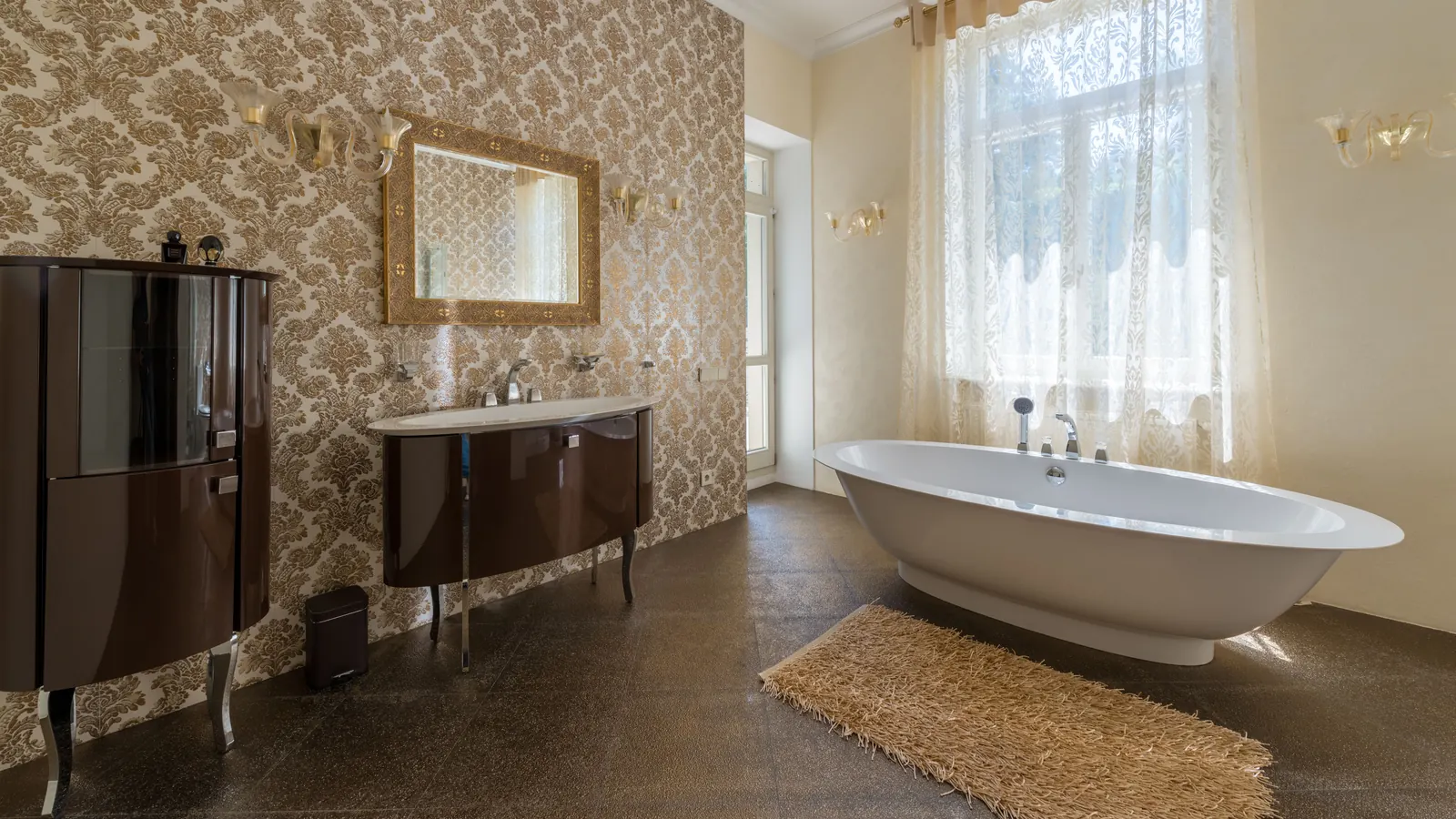
In a small bathroom with white tile and a dark vanity, one textured mat in a gray or sand tone borrowed from the grout or the towels is plenty, and it keeps the floor looking larger. In a room with bold patterned tile, a quiet tight-weave mat leaves the tile to do the talking, while plain tile can carry a striped runner along the vanity. A large central motif disappears under the vanity edge, so judge the pattern by the part that will stay visible. Our decor collection has towels and textiles that coordinate.
A rug from another room
An ordinary area rug can live in a dry corner of a bathroom, provided its care instructions allow for the odd splash and you can lift it to dry. It does not belong in the splash zone unless it is sold for it.