Long Shower Curtains: Measure the Drop, Liner and Rod Position
Raise the rod for a longer curtain by eye and the liner may stop short of the tub. Measure from the hanging point, plan the liner separately and check width as well as drop.
By DecoraMintPublished 3-minute readMore in Decor
In this guide
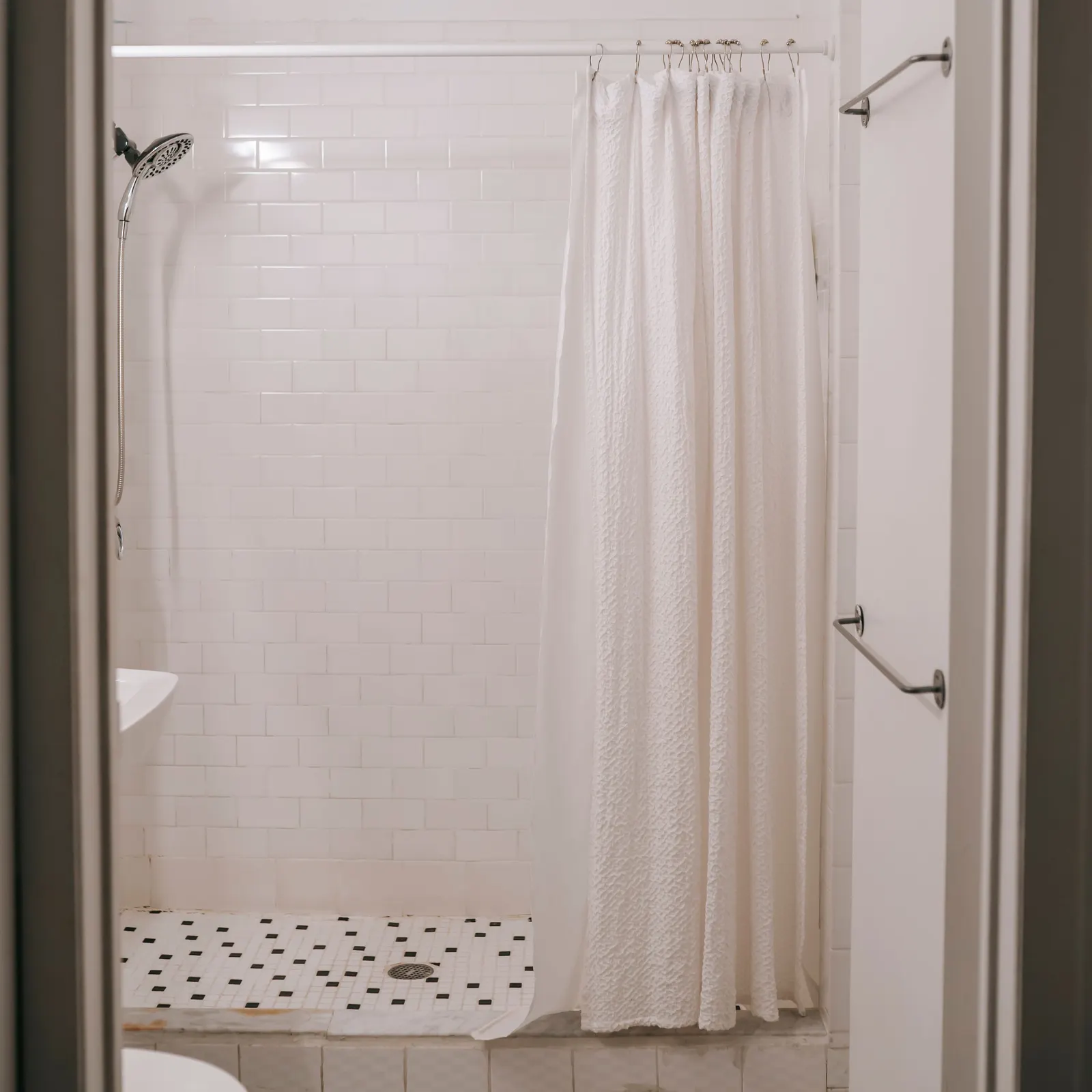
Raise the rod, hang a longer curtain, and the bathroom grows taller: the fabric falls in one long line from near the ceiling, the tub looks dressed instead of boxed in, and the whole wall reads as a single vertical. It works only when the rod height, the curtain’s finished length and the liner’s reach are planned together. Raise the rod by eye for an 84-inch curtain and the liner can end up stopping short inside the tub.
Measure from where the curtain hangs
Rings and hooks hang the curtain below the rod, so measure from the actual attachment point, using your hardware or its stated dimensions. Note the usable width of the opening and the shape of the rod, the height of the attachment point above the floor, the curtain’s finished length and how the maker measures its heading, where you want the outer hem to fall, and where the liner attaches and needs to reach inside the tub.
The arithmetic is simple: an attachment point 87 inches above the floor with 84 inches of fabric below it leaves a 3-inch gap. A heading that rises above the grommets, or a different hook, changes that figure, so find out how the product is measured.
84 inches is one option
Long curtains are commonly sold around 84 inches, but the right length is the one that puts the hem where you want it with your rod, tub and hooks. A low ceiling, a tall tub apron or different hooks change the answer. IKEA’s BORSTALOE shower curtain, for example, is 72 by 72 inches, a common size, so look at the numbers on a “long” listing to see whether it adds length.
Replacing a curtain you like? Measure it hanging, compare with its label, and make sure the hem sits level, since an uneven floor or rod can mislead you. Cutting a too-long curtain is risky with sewn hems, weighted edges or built-in liners, so order the length you need as sold.
The liner sets the limit
The outer curtain is for looks and the liner keeps water in. IKEA’s shower-curtain guide separates water-repellent curtains from the waterproof liners used with some of them. When you raise the rod, the liner rises too, and a standard-length liner that worked at the old height may now end several inches above the tub floor. Measure its reach at the new height before the first shower, and buy a longer liner if needed. For a walk-in stall, work from its curb and opening, and keep extra fabric away from the step-in area.
Fullness, rod and hooks
A long panel can still be too narrow. A curtain pulled taut looks skimpy next to one with relaxed folds, so decide how full you want it closed and measure the span to cover; on a curved rod, measure along the curve. Open, the gathered fabric should leave the entrance and the towel hook free, and the rings should glide past the rod joints with two layers on them.
A longer curtain plus a liner weighs more, so make sure the rod and its mounting are meant to carry that weight; an old tension rod may not cope. Count the holes against the hooks and see whether one hook can carry both layers. Hooks that let you unclip the liner on its own make cleaning easier, which matters more when the rod is mounted high.
A black curtain
Black shower curtains are striking against pale tile and tie in with black faucets, a dark mirror frame or a black-and-white floor. Across a small room, solid black becomes one large dark plane and can feel heavy. A black-and-white pattern, or a light curtain with a dark border, picks up the black fixtures with less weight, though a large pattern can fight a patterned floor. Weave, thickness and lining decide how much light comes through, so ask for a swatch if privacy or a brighter shower matters. The liner can be any color; a black curtain does not need a black liner. To decide, hold swatches up and photograph them in the bathroom with the tile, mirror and towels in view.
Washing a long curtain
A fabric curtain and a plastic liner often need different care, so read each label. Choose a curtain whose care you can manage at its size.