Rug on Carpet: How to Layer It Without Wrinkles or Clutter
A rug can sit on carpet if the pair lies flat, stays put and lets doors open. Check the carpet first, use a pad made for carpet, and fix shifting or bunching when it happens.
By DecoraMintPublished 4-minute readMore in Decor
In this guide
The first thing a rug on carpet does is wrinkle. Two soft surfaces with nothing to stop them sliding against each other can creep and buckle into a ridge, usually right where people walk. Layering works when you solve that before you think about color, and the solution comes from the carpet underneath as much as the rug on top.
Read the carpet first
Walk across the area in daylight. A firm, low carpet gives a rug something to sit on. Deep, soft pile lets the rug sink and shift, and that is the hardest base to keep flat. Home Depot’s rug-on-carpet guide advises against layering over particularly soft, long-pile carpet and stresses a suitable pad and sensible furniture placement. Existing ripples, loose seams or damp patches need repair first, because a rug will cover them but cannot mend them.
In a rental, read the lease for rules on adhesives and floor coverings, and ask the property manager before using anything that sticks if you cannot identify the carpet or its backing.
Creep, buckling and the pad that stops them
Look for a pad sold for rugs over carpet, not one made for hard floors, and match it to both the rug backing and the carpet. RugPadUSA’s Carpet Lock is described by the seller as helping keep rugs lying flat and wrinkle free over wall-to-wall carpeting, and it calls it the only pad it markets specifically for rugs on carpet. That shows the kind of stated purpose to look for. These are one seller’s claims, and we have not tested the pad.
When you choose a gripper, use these questions as a screen:
- Does the maker say it suits carpet like yours, and the rug’s backing?
- Does it use adhesive that can mark either surface?
- How much smaller than the rug should it be? A good answer is a specific margin from the maker, since a pad that peeks out is a trip line.
- Can you return it after a short trial?
Shelf liner and generic sticky tape are not designed for this job. If the rug still moves with a proper pad, the combination is wrong, and stronger adhesive is the wrong fix; change the rug or leave the carpet bare.
Setting it down
Vacuum the carpet and let it dry fully. Lay the pad smooth, then place the rug without trapping a fold. If it arrives rolled, let it relax as the maker instructs before you load it with furniture. Furniture legs can hold a rug in place, but pulling the rug taut between heavy pieces creates tension that works against you.
Then use the room the way you normally do: drag a dining chair, roll an ottoman, open a drawer, turn the corner from the hall. A rug that stays flat under a sofa may buckle under a moving chair. Watch it for several days, and do not leave an obvious trip point while it settles.
| What you see | Likely cause | Next step |
|---|---|---|
| Rug creeps one way | Pad mismatch or placement | Reset it once, then go back to the pad supplier |
| Ridge in the middle | Trapped fold, soft pile beneath | Lift and reset; change the pairing if it recurs |
| Door catches the edge | Total thickness | Move the rug out of the swing or use a thinner pairing |
| Corners curl | Rug condition | Use the maker’s flattening method or remove the rug |
Contrast between the two layers
When carpet and rug are close in color, the layered look disappears and the rug seems to be a stain. Clear contrast, whether in tone or in texture, gives the rug a shape. A wool-blend carpet in greige with a flatweave rug striped in rust and cream looks deliberate, with the flat weave also lying neatly. A deep-pile cream carpet with a thick cream shag reads as one muddle and will not lie flat. If the carpet is patterned or heavily textured, a plain rug gives the eye somewhere to rest. If the carpet is plain, the rug can carry the pattern.
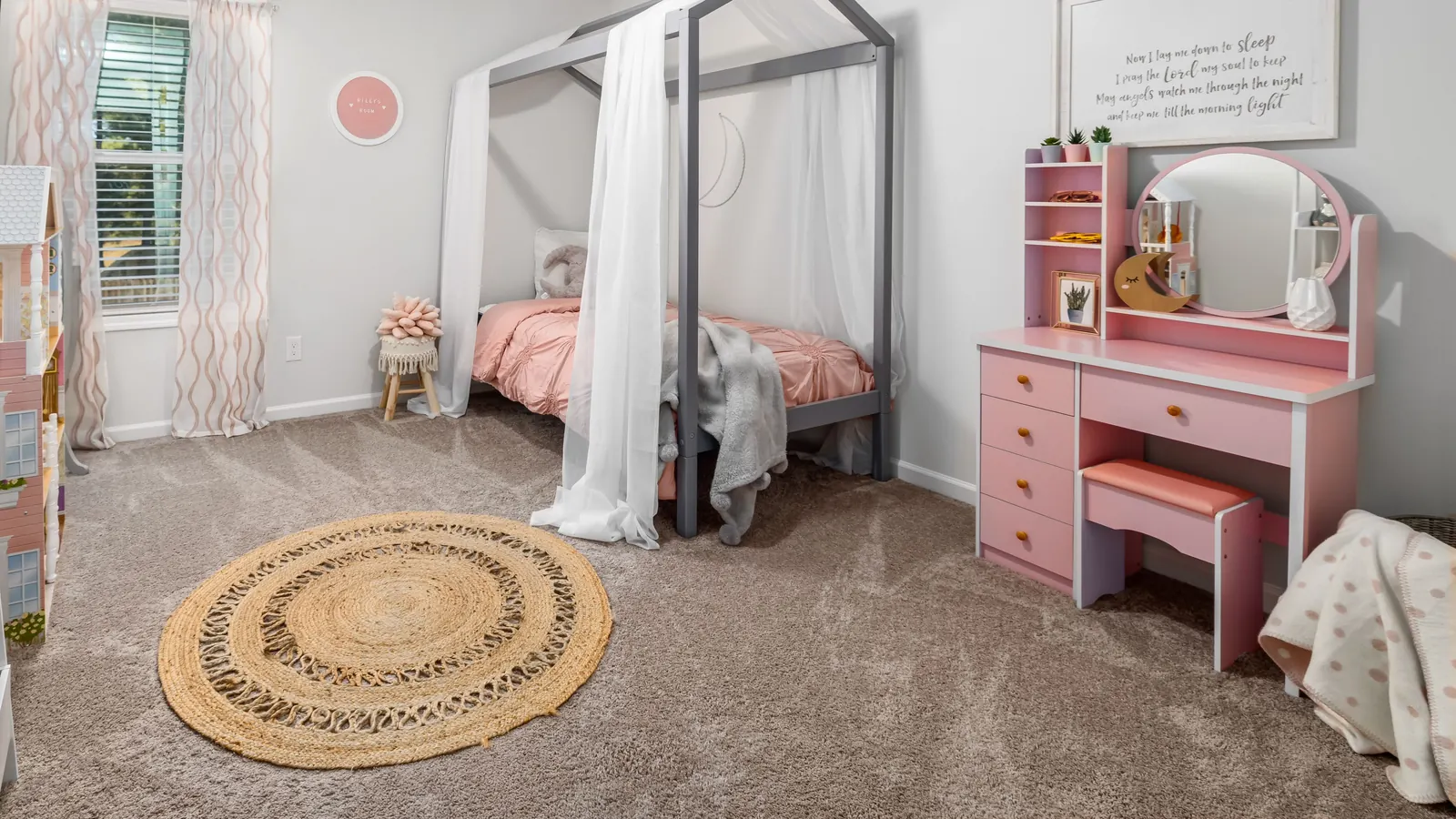
In a bedroom with a pale gray carpet, we would lay a round tan woven rug beside the bed, where you step down, instead of covering the whole floor. The curve breaks up a room of straight lines, the woven texture contrasts with the carpet’s smooth nap, and a thin flat weave suits the job. Judge a sample or returnable rug beside the carpet in daylight and in the evening, since a screen image cannot show how two colors sit together in your room. For living rooms, our rug size guide covers where sofa legs land.
Cleaning both layers
Follow the rug’s own care label, and lift the rug from time to time so you can vacuum the carpet and look at the pad for debris or deterioration. If a spill reaches the carpet, clean both layers and let them dry before the rug goes back. A large spill or a lasting odor suggests moisture beyond what you can dry yourself, which is the point to get cleaning advice before covering the area again.
A rug also should not cover a stain or odor you have not resolved. Skip the layered rug where the floor stays unstable, doors cannot clear it or someone using the room finds the step difficult. In a rental, photograph and report existing damage before styling around it.