Cheap Rugs: Compare the Size, Total Cost and Return Risk
The price on the search card is usually for the smallest size. How to compare rugs at the size you need, with the pad, care and return terms in the total.
By DecoraMintPublished 4-minute readMore in Decor
In this guide
We may earn a commission from links on this page, at no extra cost to you. Affiliate disclosure
Imagine a sofa and two chairs on 80 square feet of floor, with a rug under them that covers 40. The front legs hang over the edge and the rug looks like a doormat the furniture has wandered off. The search-card price can belong to the smallest size, while the styled photo beside it shows a far larger rug. Where a tight budget works is in the pattern, the pile and the construction, and where it fails is in the footprint. Fix the size first, using our rug-size guide for the layout, then shop inside it. The FTC’s textile labeling guidance is the source for the tag point under Fiber below.
Where saving works
- Pattern. A simple geometric or a tonal design costs nothing extra to live with and hides a lot. A complicated hand-finished look is where price climbs.
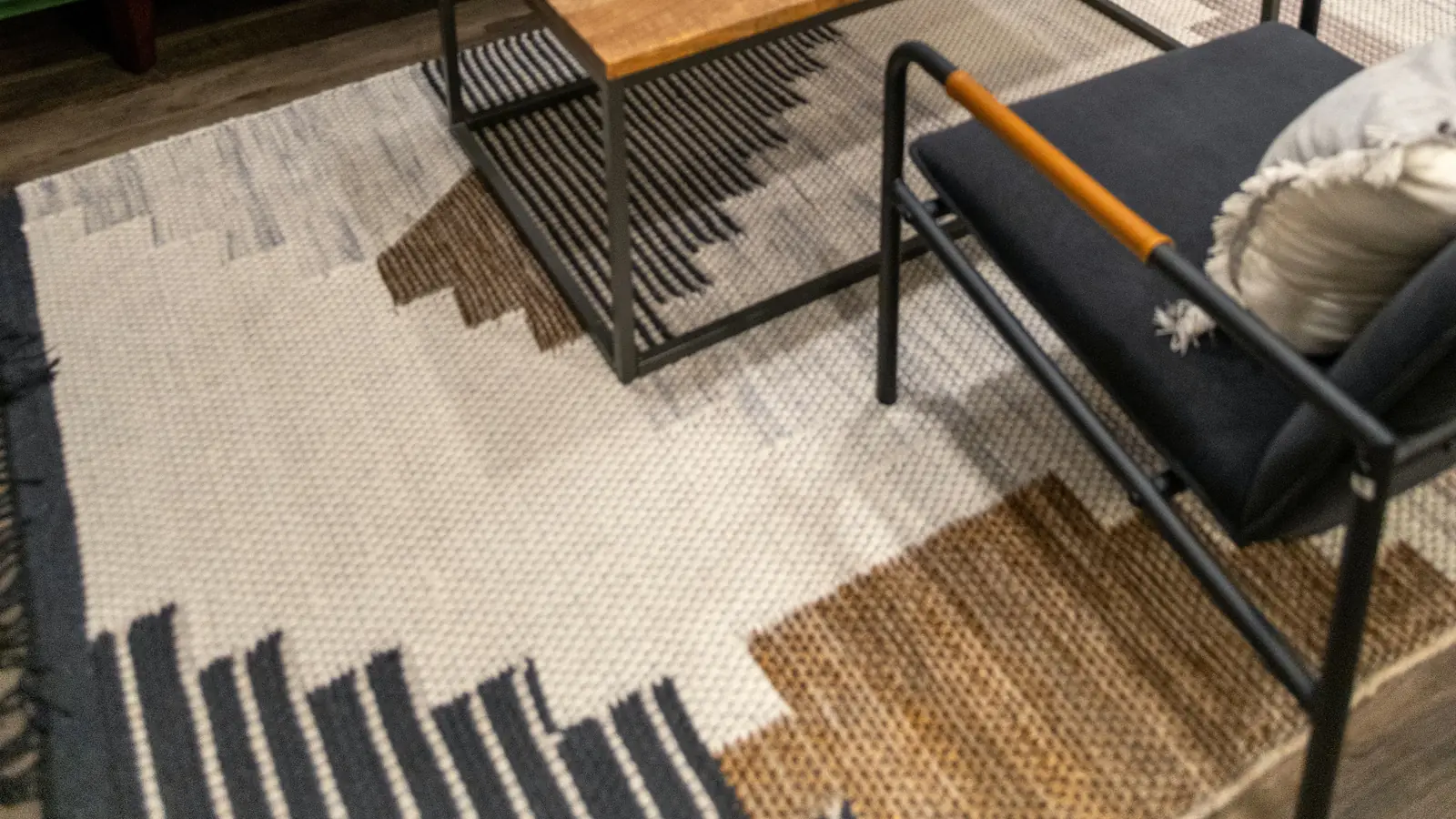
- Pile. A thin flatweave can work in a dining area or hallway, where a thick pile would catch chair legs. Check the listing’s stated construction instead of assuming it is hard-wearing.
- Fiber. Cotton flatweaves are thin and light to handle. Polypropylene and polyester both turn up in lower-priced rugs, and care differs by product. Read the fiber line on the tag or listing: the FTC says labels on rugs list generic fiber names and percentages by weight, in descending order. A “wool-look” name with a polyester line tells you what you are buying. The FTC exempts backings and pads from that label, so ask about those separately.
- Accent size. A small rug can be a smart buy for a bedside, entry or kitchen sink, where small is the point.
Where saving fails
- A rug too small for the room. Dropping from an 8-by-10 to a 5-by-8 saves money by changing the job the rug does. A 5-by-8 covers 40 square feet and an 8-by-10 covers 80, so the second has twice the area although the dimensions sound close.
- Missing pad. Some rugs need a pad for grip or floor protection, and a pad is a separate cost, so find out whether the rug you like needs one and whether its backing and the pad suit your floor finish.
- An expensive return. A rolled rug is bulky. Learn who pays return shipping and what condition and packaging are required, and whether sale items are final. When it arrives, check it against the order before throwing out the packaging, report damage through the seller’s process, and do not cut or wash it if you might send it back.
- A care routine you will not follow. A rug you cannot clean at home is cheap only until the first spill.
Read the listing like a shopper
Open the listing, choose the size and shape you need, and see whether the price follows. IKEA’s TIPHEDE black/natural listing shows a flatwoven cotton rug of 2 feet 7 inches by 4 feet 11 inches. That is a small rug, not a stand-in for a seating-group rug. Super Area Rugs’ Ridgewood Premium Kitchen Braided Rug is offered in several sizes and shapes, including a 2-by-3-foot oval and a 5-by-8-foot oval, which are different configurations with different prices. Ovals do not follow the length-times-width rule, so compare them with other ovals. These are examples of how listings vary, not recommendations; we have not tested either, and prices change, so check the current one at the retailer.
Price per square foot is a fair way to compare similar rectangles. It cannot tell you about quality or whether the footprint fits.
Building the total
Add up what the order will cost: rug, pad if the rug needs one, delivery, tax and any return you can foresee. A rug discount can be wiped out by a delivery charge, so compare the checkout totals for the same size, not the headline numbers. A coupon counts only once it applies to your item, after exclusions and minimum-spend rules, and a discount may reduce the refund too.
Running that check in one shop keeps the comparison honest. The Super Area Rugs store link opens the retailer’s storefront, not a particular rug; its rugs can be filtered by size, from 2 by 3 through 5 by 8 and 8 by 10 to 10 by 13, with runners, rounds and ovals listed separately, and rug pads sit in the same shop under accessories. Pick the size your tape outline calls for first, then put the rug and, if its backing needs one, the matching pad in the cart together and compare that checkout total with the alternatives, along with the store’s return terms for a rolled rug.
When the budget falls short
If the rug you need does not fit the budget, change the design before changing the size: pick a simpler pattern, a thinner construction or a different material in the same footprint. Or wait for the right rug. Keep a short comparison sheet with the model, chosen size, total, pad needs, care and return deadline, and drop anything that fails the footprint, even if it is cheapest. A rug that leaves the room unfinished means another purchase later.
Check the door clearance with the rug and pad stacked, and the floor under it. If a feature the rug needs is missing from the listing, ask before ordering and do not treat silence as a plus. A thinner rug is fine for a hallway but will disappoint if you want a cushioned place to sit, and no photo shows how it will feel.