Coffee Table Styling: A Useful Surface With a Personal Display
Style a coffee table around daily use, then choose books, trays and objects that suit its shape, sightlines and surface finish.
By DecoraMintPublished 6-minute readMore in Living Room
In this guide
We may earn a commission from links on this page, at no extra cost to you. Affiliate disclosure
The usual mistake is styling the table for how it looks and forgetting that someone will want to set down a mug. Work out the daily job first: where the drink lands, where the remote lives, whether a book gets opened here. Everything decorative goes around those habits, and a table that still works at nine in the evening looks more settled than one that has to be dismantled before use.
Clear it, then put back only what earns its place
Take everything off, including the items that drifted there and stayed. Sort them into three piles: used here, displayed here, belongs elsewhere. Put the useful objects back first (coasters in the number you use, the remote within easy reach, space for an open book if you read here) and treat what is left as the display area.
If the table doubles as a games or snack surface, plan an arrangement you can lift away in one go. A tray with a bowl and a candle-free vase moves in one trip, while five loose objects need five.
Build in three heights
A coffee table arrangement reads as deliberate when it has a low layer, a middle layer and, at most, one gentle peak. The low layer is flat: a book or a stack of two or three, a shallow dish, a tray. The middle layer sits on or beside it, such as a bowl or a squat ceramic vessel. The peak, if you want one, is a small branch or a slim bud vase. Keep the peak modest because the table sits in the middle of conversation, and a tall stem will cut across someone’s face from the sofa.
Sit in each seat before you finish. A vase that looks centered from the doorway can block the television or the person opposite, and the seated view is the one that counts. For a table that serves a room with a view across it, a low bowl beats the tallest vase you own, and a tall display can come out for parties and go back to a shelf afterward.
Oak, gray and a jute rug
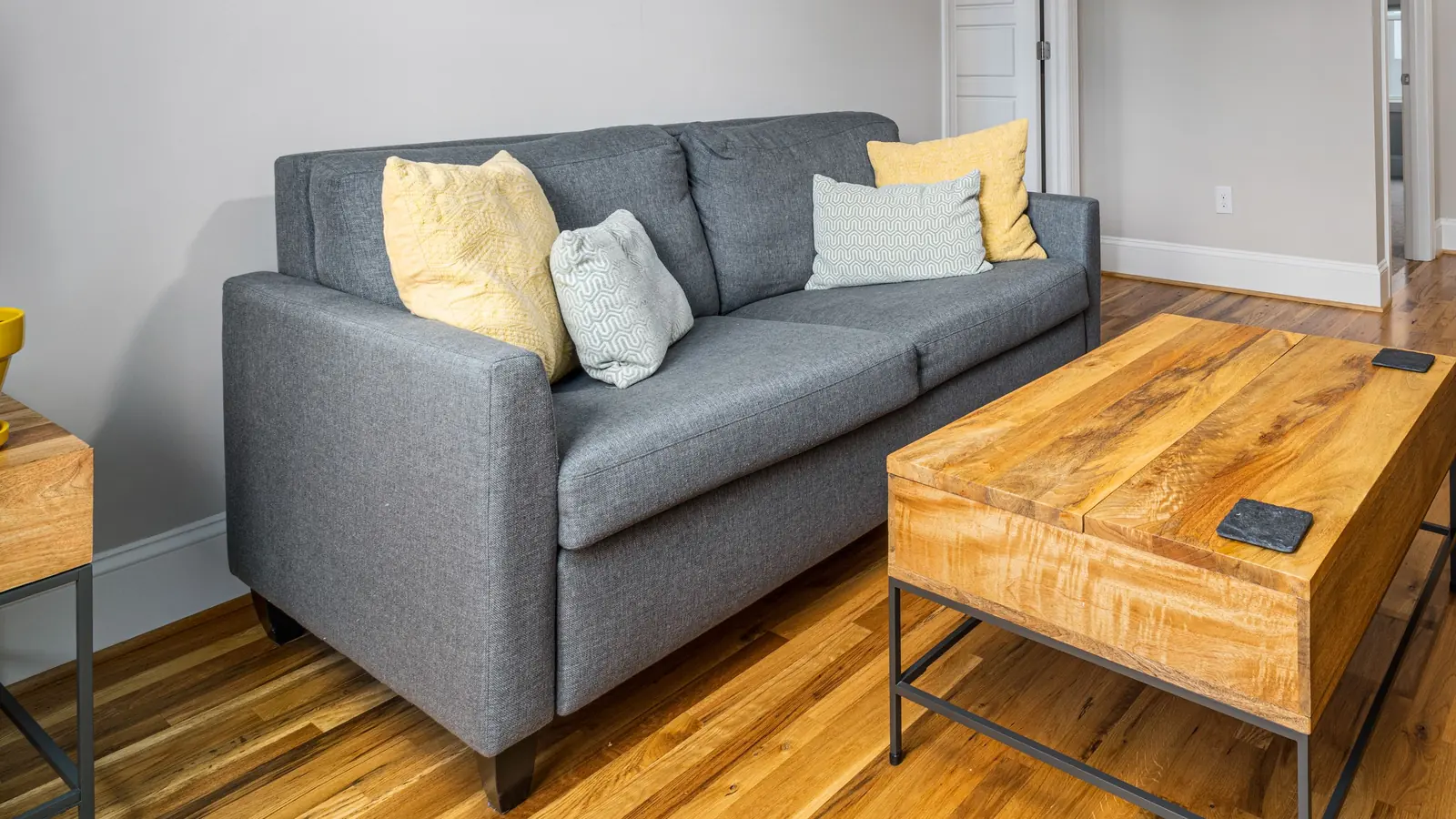
A low oak rectangle sits in front of a deep gray sofa, with a jute rug underneath and a floor lamp at one end. We would set a shallow lacquered tray toward the lamp end, holding a short stack of two large books, a squat ceramic bowl in cream and a single bud vase in dark green glass. The cream bowl picks up the lamp shade, the green repeats a cushion, and the oak stays bare along most of its length, where mugs and a remote can land. From the sofa the tallest piece sits below the line of sight to the window, and the low objects keep the grain of the table visible.
Shape and scale
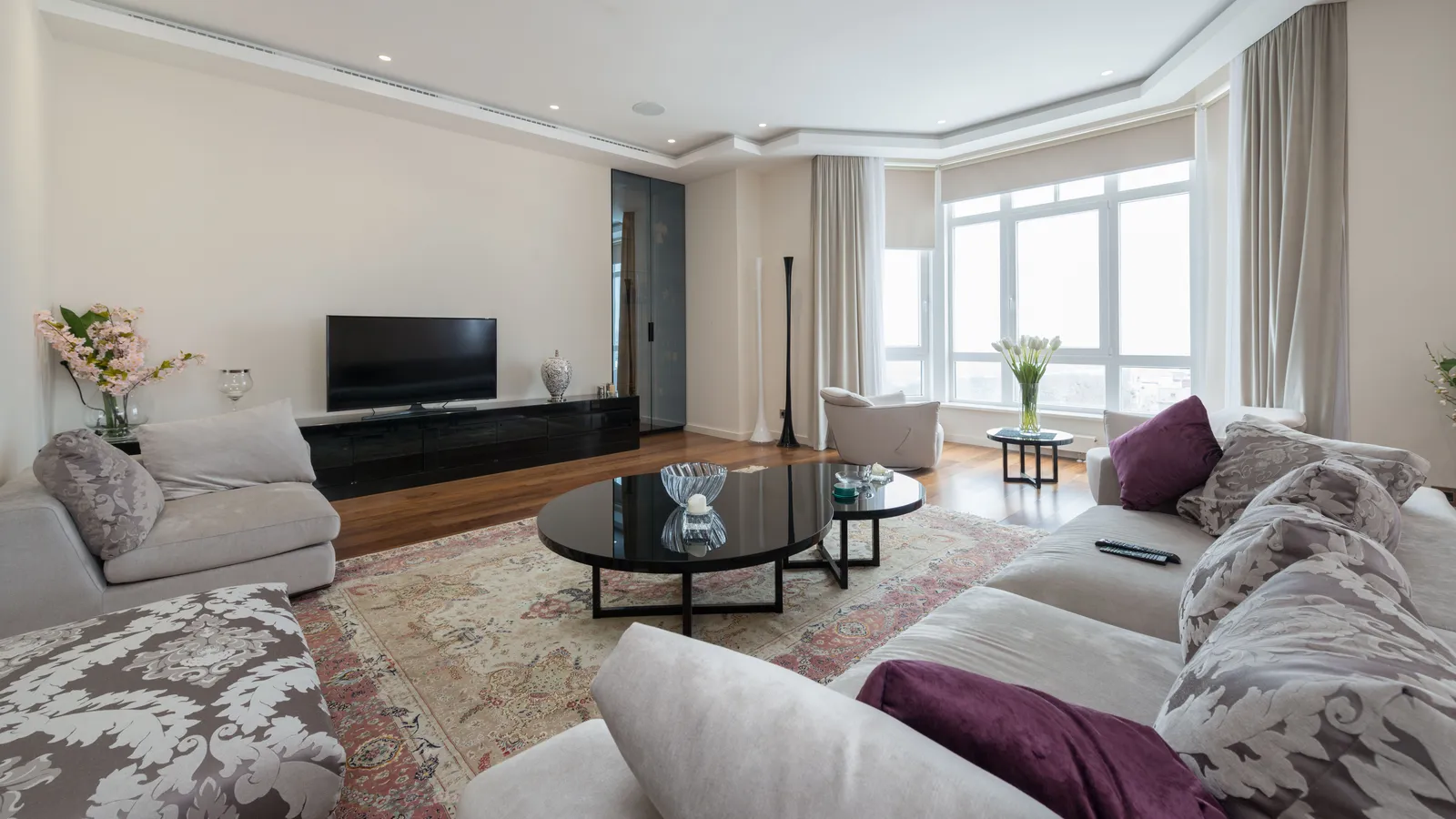
On a round table, one compact group set slightly off-center leaves a free side for cups, and a tray that fills the circle leaves no landing space at all. A rectangle suits a display weighted toward one end with open surface beside it, rather than a row of objects that occupies every spot someone might reach. A square table does well with one group and breathing room along two adjoining sides. On an oval, follow the long axis loosely. With nesting tables, style one surface lightly and keep the movable one clear so it can still slide out. An upholstered ottoman needs a stable tray under anything liquid, since a soft top will not hold a glass steady by itself.
Scale the group to the table. If a drink and a hand cannot land comfortably beside it once the objects are down, it is too big for that surface.
Trays and books
A tray gives small things a boundary and turns a display into one object you can pick up. Decide its job before buying: carrying, staying put, or collecting remotes. Decorative trays are not always built to carry a loaded serving arrangement. Measure the outside edges including handles, cut a paper outline, set it on the table with the objects inside and see whether a cup can still go down beside it. Bella Maison’s decorative trays collection gives you real footprints to cut. Its painted glass and glass-over-MDF rectangles are about 8.75 by 14.5 inches, small enough to sit at one end of a long rectangle with most of the top still bare. The handmade Tina mango wood tray is round, 17.75 inches across and 2 inches deep, with a world map carved into its base in the retailer’s photographs; on a round table that circle would cover the middle, so it belongs on a large square or rectangular top, set off-center so two adjoining sides stay free. All of them list a damp cloth as their only care, so none of them is meant for the sink. The tray can contrast with the table or echo it; a dark lacquered tray on pale oak reads as a clear anchor, a woven one on a stone top adds grain without adding color.
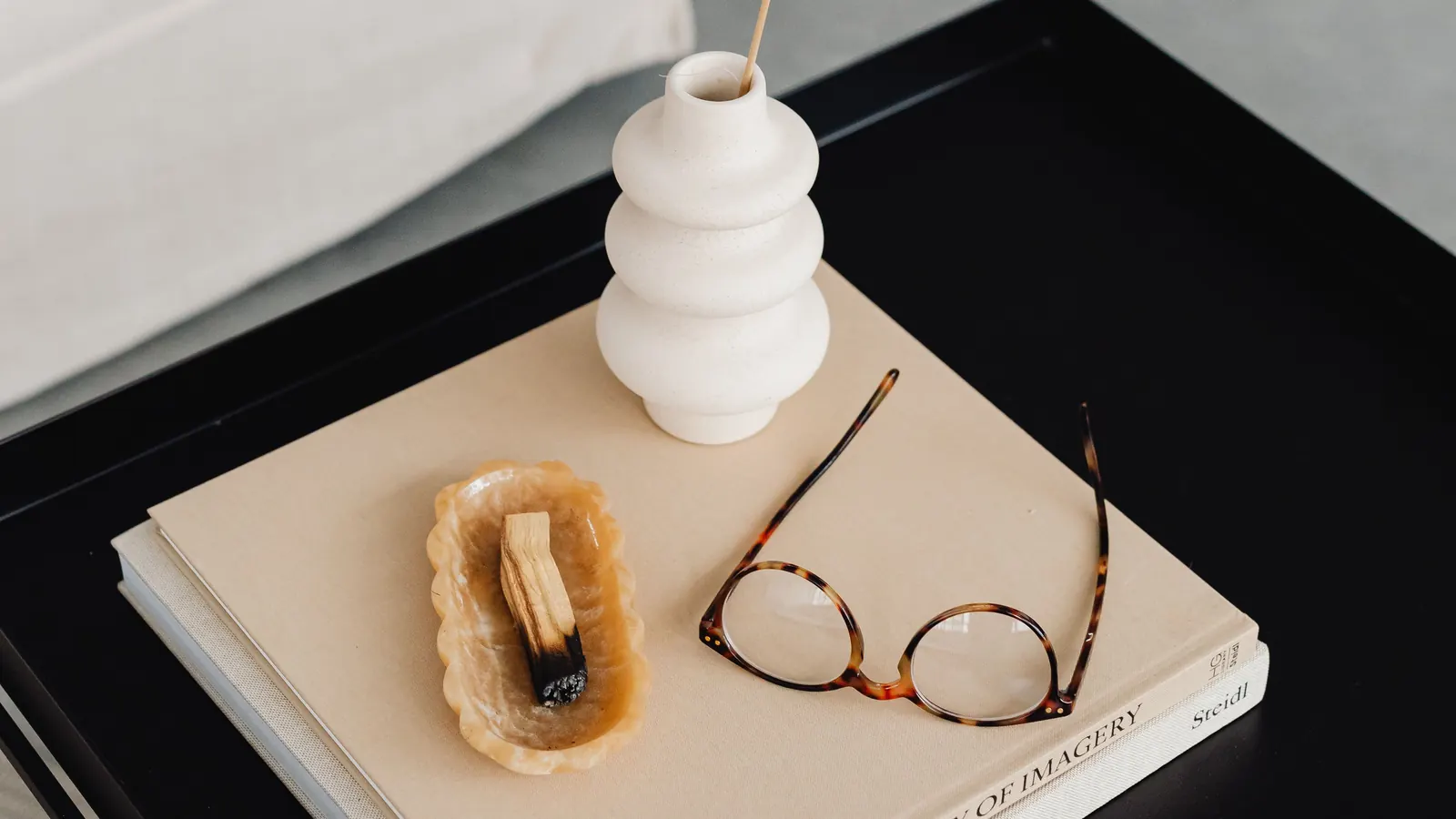
Use books you like seeing and opening. A short stack makes a stable base for a lightweight object, but if you have to take apart a tower to reach the bottom volume, trim it. Face the spines toward the seat where you read, then look from the doorway and decide which side wins. Condensation and paper do not mix, and a dust jacket is no coaster, so give drinks their own spot.
A palette that comes from the room
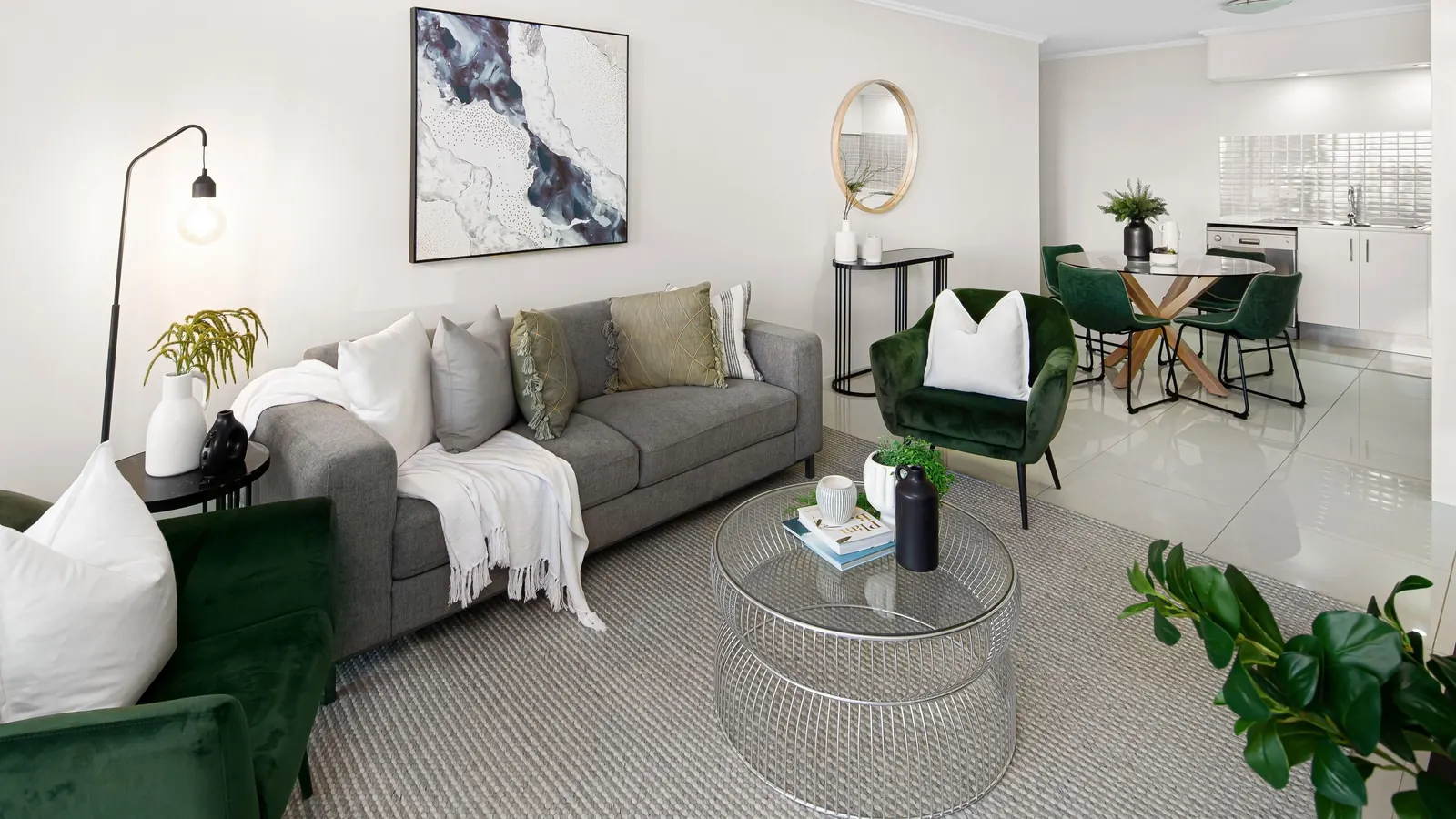
Pull one color from a rug, cushion or artwork and repeat it once in a small object, then compare with an all-neutral version. Texture can carry the variety when color should not: a glazed vessel next to a woven tray, a matte bowl beside a glossy book jacket. If the tabletop already has strong grain or pattern, leave more of it bare.
On a glass table, the lower shelf and the floor beneath are part of the view, so a sparse top with a crowded shelf still looks crowded. We would lean toward fewer pieces on the top and a single basket or stack below.
Protect the finish and mind the flame
Wood and veneer tables dislike heat, moisture and rough bases, and Room & Board’s care guidance recommends protective items under objects and warns that some materials can react with a finish. Lift things instead of dragging them, test a vase for leaks before adding flowers, and use a suitable liner under it. A base that feels smooth can still scratch.
Burning candles belong at least 12 inches from anything that can catch fire and should not be left burning when you are not there or are going to sleep, according to the National Park Service, which suggests battery-powered flameless candles when open flames are hazardous. A coffee table crowded with paper, dried stems and books rarely offers that clearance. Keep fragile pieces out of reach of pets and children, and nowhere near an edge.
Leaving the surface mostly empty is a legitimate finish, since the table’s own material can be the display. If things keep migrating onto it anyway, give the remote a nearer home, shrink the tray or move the vase to a shelf, changing one thing at a time, and stop when a mug can land beside the grouping without moving anything.