Cooling Mattress Toppers: Compare the Layer, Claims and Fit
The cooling label may describe the cover, something in the foam or a different build. Find where the claim lives, then add up the bed height and check how the topper stays put.
By DecoraMintPublished 5-minute readMore in Bedroom
In this guide
Put a three-inch topper on a 12-inch mattress and you are making up a 15-inch bed, before the protector. That single number explains half the disappointments with cooling toppers: fitted sheets that ping off the corners, a bed that suddenly sits higher than the nightstand, a surface far softer than the one you liked. The other half come from the word “cooling,” which may describe the cover, something mixed into the foam or the way the layer is built. Find where the claim lives, do the height arithmetic, and check how the topper stays put, and you will know whether a particular topper is worth trying. For related bedding, see our bedroom guides.
Is a topper the right fix?
A topper changes the top few inches of the bed and nothing beneath. If the mattress sags, the foundation is broken or the bed is past its useful life, a new layer will hide the problem for a while at best. Sort out support, and any warranty question, first.
If the mattress itself is sound and you simply sleep warm or dislike the surface, look above it too. A thick quilted protector, a heavy sateen sheet and a dense duvet can trap heat on their own, and swapping one of those may be a cheaper first experiment than adding another layer of foam.
Where does the cooling claim live?
Every cooling topper puts the claim somewhere specific, and each location promises something different.
| Where the claim sits | What it can plausibly affect | What to ask |
|---|---|---|
| Cool-to-touch cover | How the surface feels when you first lie down | How was contact coolness measured, and for how long? |
| Gel, graphite or other additive in the foam | Heat buildup in the foam itself | Where in the layer is it, and what evidence does the maker give? |
| Perforations or open-cell structure | Air movement through the layer | What was it compared against? |
| Moisture-wicking fabric | How damp the surface feels | Which fabric and which test? |
| Powered layer with a controller | Active temperature control | What equipment, power and upkeep does it need? |
A percentage or “degrees cooler” figure means little without the reference product and test conditions. Ask whether it was measured on the whole topper under bedding or on a material sample, and over minutes or hours.
One topper, read closely
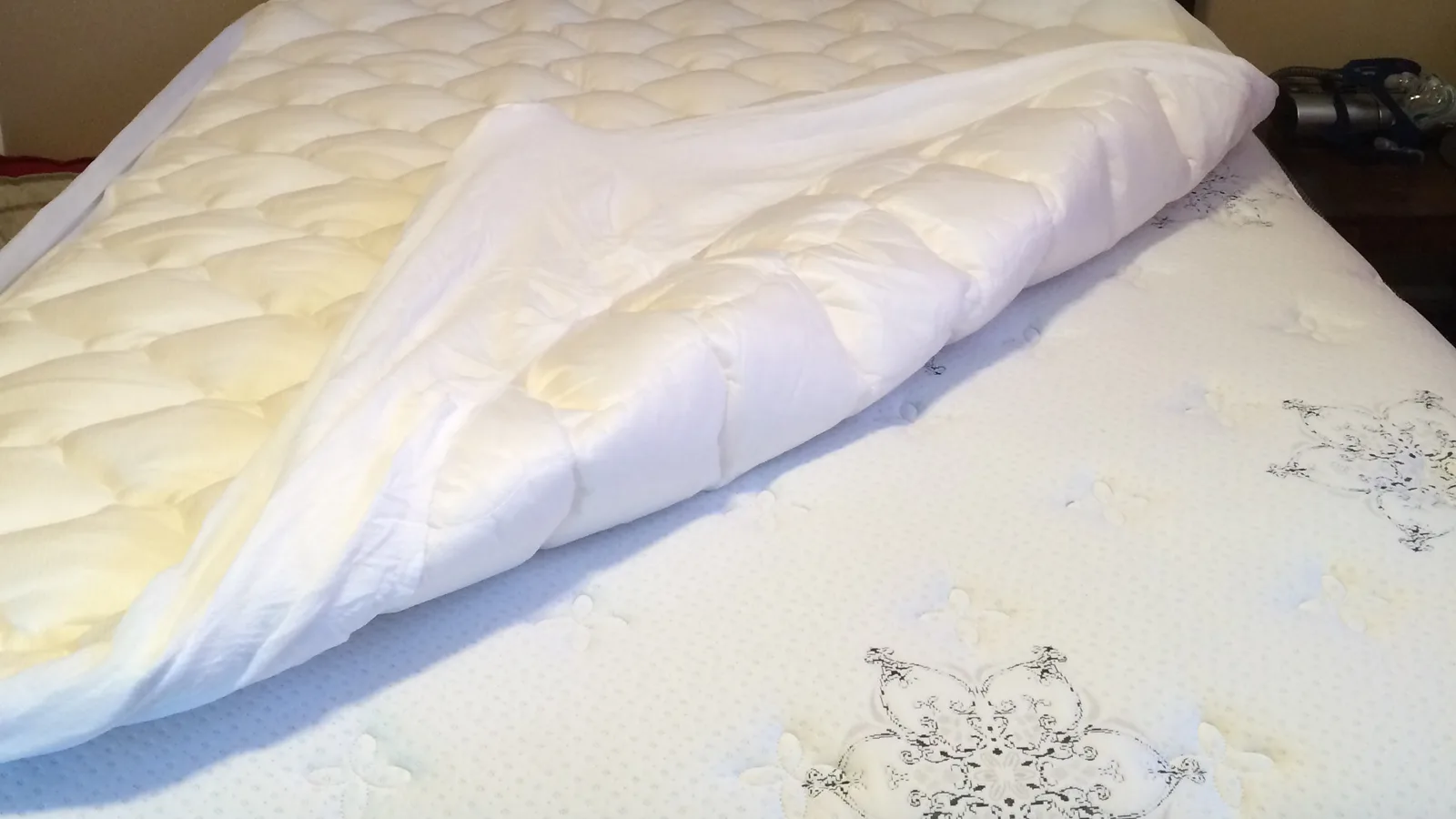
Saatva’s Graphite Memory Foam Mattress Topper is a useful example of a clear component list. Saatva describes a three-inch build of graphite-infused memory foam and polyurethane foam, an organic-cotton-blend cover and four elastic anchor bands to hold it on the mattress, and it markets the graphite for cooling. Those are the maker’s construction details and claims, not evidence we have that it sleeps cooler through the night. The page specifies spot cleaning with a mild solution, so do not expect to put the cover in the washer.
That kind of breakdown is what to look for in any listing. “Breathable,” “premium” and “natural” tell you very little; layer names, thicknesses and the fastening method tell you a lot.
Feel matters as much as temperature
A memory foam topper adds cushioning, and memory foam is known for that slow, enveloping sink as you settle in. If your mattress already feels too soft, three more inches of plush foam may move it in the wrong direction, whatever the temperature claim. If you like your mattress but want a gentler surface, a topper is a modest, reversible change compared with replacing the bed.
Couples share whatever goes on top unless the product is designed otherwise. Two twin toppers side by side can leave a ridge or gap down the middle, so a single full-size layer usually lies flatter.
The height arithmetic
Measure the mattress, then add the topper and any protector that will sit beneath the fitted sheet. Compare that total with the fitted sheet’s stated pocket depth, and leave some margin: corners, elastic and the topper’s own puff all eat into it. A 15-inch stack in a sheet labeled for exactly 15 inches can be a struggle every laundry day.
Height shows up in the room too. A bed that rises three inches changes its relationship with the nightstands and headboard, can hide more of the upholstered headboard than you planned, and makes the bed slightly harder to climb into. On an adjustable base, check that the mattress, topper and retention system are approved together.
Width and length matter as well. Size names are a starting point; compare the finished dimensions with your mattress so the edges line up instead of overhanging or falling short.
How it stays in place
Elastic corner bands, straps and fitted skirts each work within a range of mattress depths. A skirt-style topper wraps the mattress like a fitted sheet; corner bands are quicker to fit but rely on the mattress being within their depth range. Do not improvise with pins or adhesive. If a correctly fitted topper keeps sliding, contact the seller about fit or use the return process.
Protectors, sheets and laundry
Keep any protector the mattress or topper instructions require, even if it covers the cooling fabric you paid for. Leave your usual sheets and duvet on for the first week with the topper, so any difference you notice belongs to the topper.
A washable cover does not make the foam inside washable, and a zipper on the cover does not always mean the cover is meant to come off. Read each component’s instructions. Think about where a bulky topper would air out after a spill; even a modest-looking one is awkward to carry.
Trial and warranty
Mattress trials do not automatically extend to accessories. Before opening the package, read whether an opened topper can be returned, whether there is a minimum trial period and who pays return shipping. If an opened topper cannot go back, you are buying on the specifications alone, so weigh that before you order. Keep a dated copy of the specifications and terms you bought under.