How to Choose Bed Sheets: Fabric, Weave and a Better Fit
Good sheets feel right to you, stay on the mattress and survive your laundry routine. Thread count comes after fabric, weave and the real depth of your bed.
By DecoraMintPublished 6-minute readMore in Bedroom
In this guide
We may earn a commission from links on this page, at no extra cost to you. Affiliate disclosure
Weave decides how a sheet feels more than thread count does, and the depth of your mattress decides whether it stays on. Sort out those two, then fiber and laundry, and the thread-count number becomes a tiebreaker.
Percale or sateen
Both are usually cotton, and both are woven, so they are the pair most shoppers are choosing between. Percale is a plain weave, each yarn passing over one and under one, which gives a matte, papery surface that feels like a pressed shirt and wrinkles in small, dry creases. Sateen floats yarns over several others, which gives a smoother face with a soft sheen and a draping, slightly heavier hand.
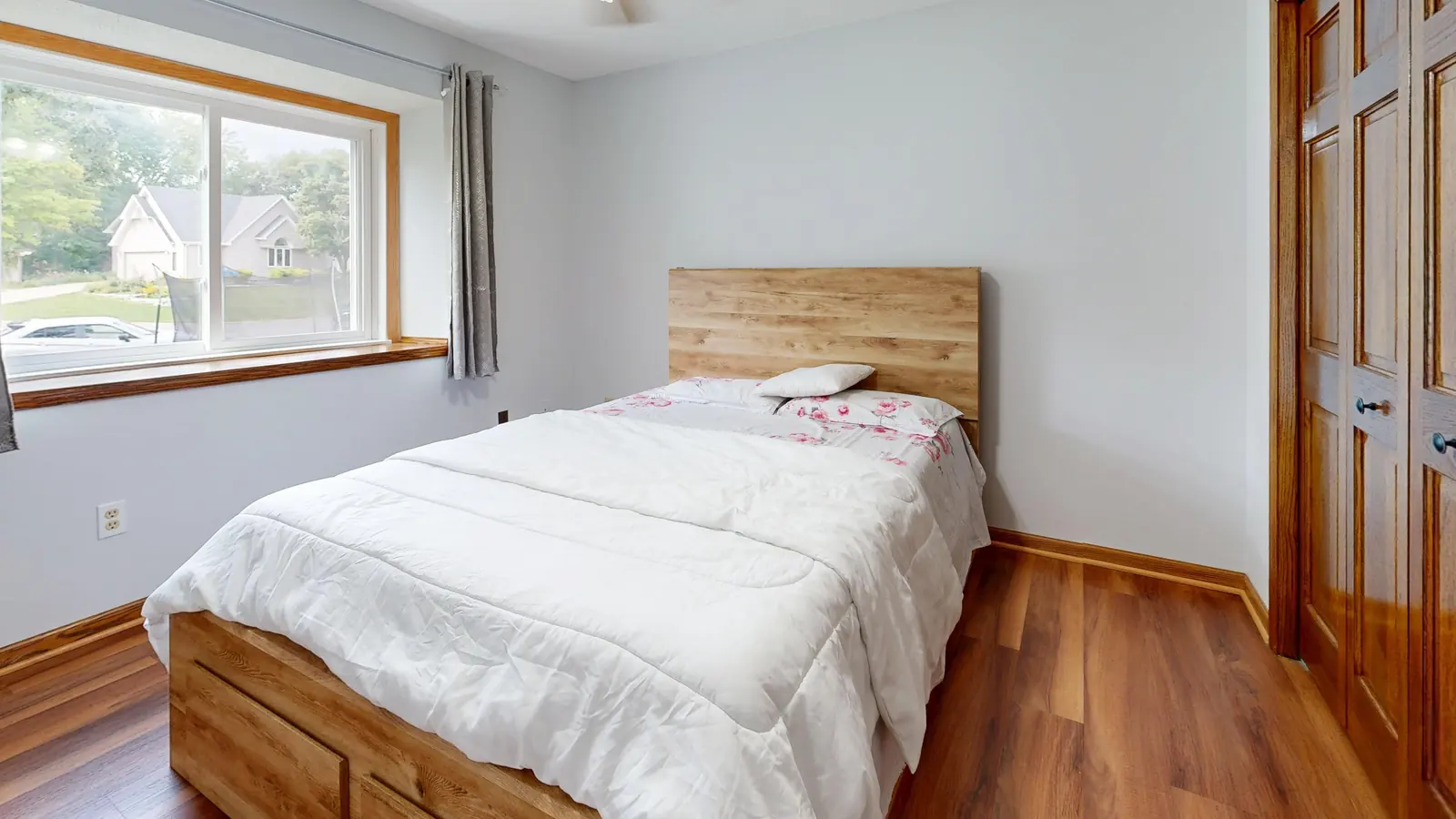
In a bedroom with white walls and pale oak, white percale folds into a tidy, slightly rumpled ridge at the pillow and stays flat across the mattress, a good partner for a matte linen duvet. Sateen under a bedside lamp picks up a gentle glow across the folds, which suits a room with darker paint, brass or velvet where the extra sheen looks intended. A bed that looks lived in points to percale; a smooth, hotel-flat surface points to sateen. Handle a swatch of each before committing.
| Fabric | What to expect | Worth knowing |
|---|---|---|
| Cotton percale | Matte, papery plain weave | Wrinkles in small creases |
| Cotton sateen | Smooth face with sheen | Drapes closer; the surface can feel slick to some sleepers |
| Linen | Textured, loose, visibly rumpled | Heavy texture is the point |
| Jersey | Knitted, stretchy | Stretch affects how it sits on the mattress |
| Polyester microfiber | Smooth, synthetic | Judge by the fiber label and a sample |
| Rayon or viscose from bamboo | Smooth, drapey | Processed fiber; check the label wording |
Fiber names what the yarn is made of, and weave or knit describes how it is assembled, so the word cotton alone predicts little about feel. The FTC’s bamboo textile guidance distinguishes actual bamboo fiber from rayon or viscose manufactured with bamboo as its plant source, and the label should name the fiber accordingly. For heat-focused picks, see cooling bedding.
Thread count is one number among several
Thread count is the number of warp and filling yarns in a square inch. The trouble is how sellers count: the ASTM definition counts each yarn once whether it is single or plied, which means a set labeled 800 thread count from two-ply yarns would be 400 by that method. A very high number can also go with a heavier fabric. Compare thread count only between the same weave, since a knit sheet and a woven sheet cannot be ranked on it. When two sets look alike on paper, choose the one with a clear fiber label, a stated pocket depth, care instructions and a return policy you understand.
Fit starts with the mattress measurements
Measure the mattress width and length, then the full depth with any topper that stays under the fitted sheet and your usual protector in place. Run the tape vertically from the bottom edge to the top sleeping surface rather than following the rounded corner. Pocket labels such as standard, deep and extra deep are defined differently by different sellers, so compare the stated pocket depth in inches with your measurement; retailer guides such as Wayfair’s have you subtract 2 inches from the pocket depth to find the stack it suits, so aim for a pocket about two inches deeper than your measurement, and more for a thick pillow-top.
The pocket sets side depth only, so the sleeping surface must also match your width and length; check all three dimensions on the exact variant, particularly when a retailer sells in several countries, and treat conflicting measurements as a reason to pick a different listing. A split king may need two fitted sheets and one flat, which a standard king set does not include, and a twin XL fitted sheet is a separate product from a plain twin.
For the flat sheet, decide how much you tuck at the foot and sides; someone who leaves the sides loose wants less overhang than someone who tucks tightly.
What is in the box
A product photo of a dressed bed does not show the package contents, so count the fitted sheet, flat sheet and pillowcases listed for your size. Shams and a duvet cover are often sold separately. A set suits you if you use every piece and like a matching finish; separates make more sense if you skip the flat sheet, use odd pillow sizes or wear out fitted sheets first. Color matching across separate purchases is safest within one collection, because lighting in photos can hide differences.
One cotton sateen set to compare
Bella Maison lists its Basic 100% Turkish Cotton Sateen Sheet Set with a fitted sheet, flat sheet and two pillowcases in queen and king. For queen, the listed fitted dimensions are 60 by 80 inches with a 15-inch pocket, and the care directions are cold, gentle washing with low tumble drying, with a warm iron if needed. We have not tested it, the link is an affiliate link and we may earn a commission, and the set’s dimensions should not be transferred to a separately sold fitted sheet from the same brand.
Depth is the deciding number. Bella Maison says the pocket is designed for mattresses up to 15 inches; by the two-inch margin in the fit section above, a stack of about 13 inches sits comfortably, 13 to 15 inches is at the edge, and a thick pillow-top with a topper above 15 inches needs a deeper pocket from another listing. The pillowcases are 21 by 30 inches in the queen set and 21 by 40 in the king, so measure your pillows if they run larger than standard.
The set comes in cream, green and salmon. Cream sateen behaves like the lamp-lit example above: a soft glow along the folds, quiet against a pale wall. Green or salmon make the sheets the color of the bed, which works when the duvet and walls stay neutral and fights with a patterned cover. If you prefer the dry, matte crease of percale, this is the wrong weave whatever the color.
Laundry and storage
Read the care label before buying and think through your own laundry day: a sheet that needs a particular temperature or air drying is fine for one bed and a nuisance across several. Wash new sheets as directed before first use. Hotter and longer is not always better, because the label for that fabric sets the limits. If a medical reason calls for a specific sanitizing routine, confirm the fabric tolerates it with a professional and the maker. A second set shortens laundry day; store clean bedding dry, never compress it while damp, and keep matching pillowcases with their sheets.
Sheets are one layer of the bed. If you run warm, change one piece at a time, since a heavy comforter or thick topper can matter more than the sheet; our cooling blanket guide covers a lighter top layer. On a mattress used directly on the floor, the floor mattress guide covers airing and moisture. Start with the mattress measurement and the weave you like; color comes last.
Retailers to browse
Compare colors, sizes, materials and return details on the retailer’s current listings.
- Browse duvet covers and sheets at Bella Maison
Bella Maison
Opens Bella Maison’s duvet covers and sheets collection, not a single product.