How to Choose a Cooling Blanket
The fibers, weaves and weights that keep hot sleepers comfortable, and the marketing claims to ignore when shopping for a cooling blanket.
By DecoraMintPublished 5-minute readMore in Cooling Bedding
In this guide
Three different things get sold as “cooling” in a blanket: a surface that feels cold for the first few seconds, a lighter and airier layer that simply holds less warmth, and a treated fabric that claims to buffer heat. They solve different complaints, so the useful first question is what bothers you. If you wake up buried and heavy, you want less covering. If you wake up clammy, the shell fabric and the rest of the bed matter more than the label on the blanket.
For most adults the sensible starting point is a light layer you can fold off one shoulder or kick to the foot of the bed. A filled comforter marketed for cooling suits people who want the soft, plumped look of a made bed. A powered system that circulates water or air through the bed is a different kind of equipment altogether, with setup and upkeep beyond any blanket.
Why one blanket feels cooler than another
| Mechanism | What it means | A good answer from the seller |
|---|---|---|
| Cool initial contact | Heat moves quickly from your skin into the fabric when you first touch it | States whether the figure describes the first touch or a night’s sleep |
| Lower insulation | The whole covering holds less warmth than a heavier one | Compares the same size, fill and layer count |
| Moisture movement | Sweat spreads through the fabric and can evaporate | Names the test, and the humidity and airflow it ran under |
| Phase-change material | A treatment absorbs and releases heat as it changes state | Says that this exact product contains it |
NC State’s textile testing laboratory separates evaporative cooling from heat transfer on contact. Its method covers clothing fabrics under controlled sweating and drying, so it explains why “cold to the touch” and “helps sweat evaporate” are different claims without telling you how any retail blanket performs in bed.
Phase-change textiles come from space-program research. NASA’s Spinoff account describes the microencapsulated materials as passive: they absorb and release heat as they shift between liquid and solid, with no pumped cooling. The same account credits Outlast Technologies with putting them into bedding and apparel. Whether a particular blanket carries that treatment is something only its own listing can say.
Reading a blanket as a whole
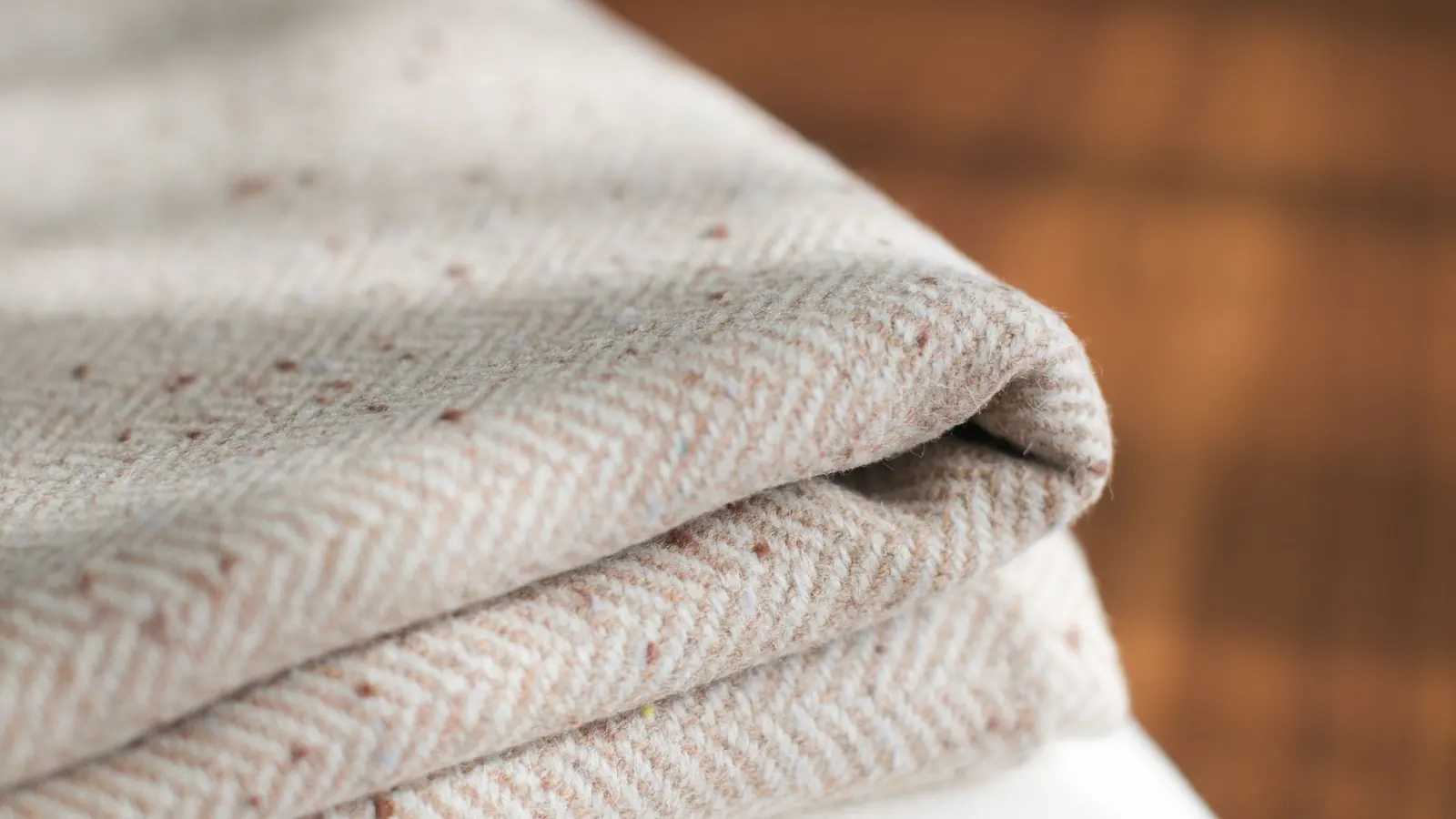
Line three blankets up on a bed in summer light. One is a loosely woven cotton throw with a slightly uneven surface and visible gaps between the yarns. One is a tight, smooth weave that drapes in a heavy sheet. One is a quilted comforter that stands a few inches proud of the mattress. Before any cooling treatment enters, those three already sit differently on a body, and the face fabric, reverse, filling and quilting each contribute. A fiber name, bamboo included, cannot settle the comparison, so read the actual fiber content and the construction of the finished product.
A white or pale linen-colored cover keeps the bed looking calm and light in a warm bedroom, and a folded blanket at the foot reads as an invitation to adjust. The more the bed looks like a stack of layers, the more likely it is that the stack is the trouble.
If a listing gives a weight in grams per square meter, use it only for the part it describes. A shell fabric’s weight describes the shell alone, and a lower figure says little by itself because construction and the rest of the bed also count.
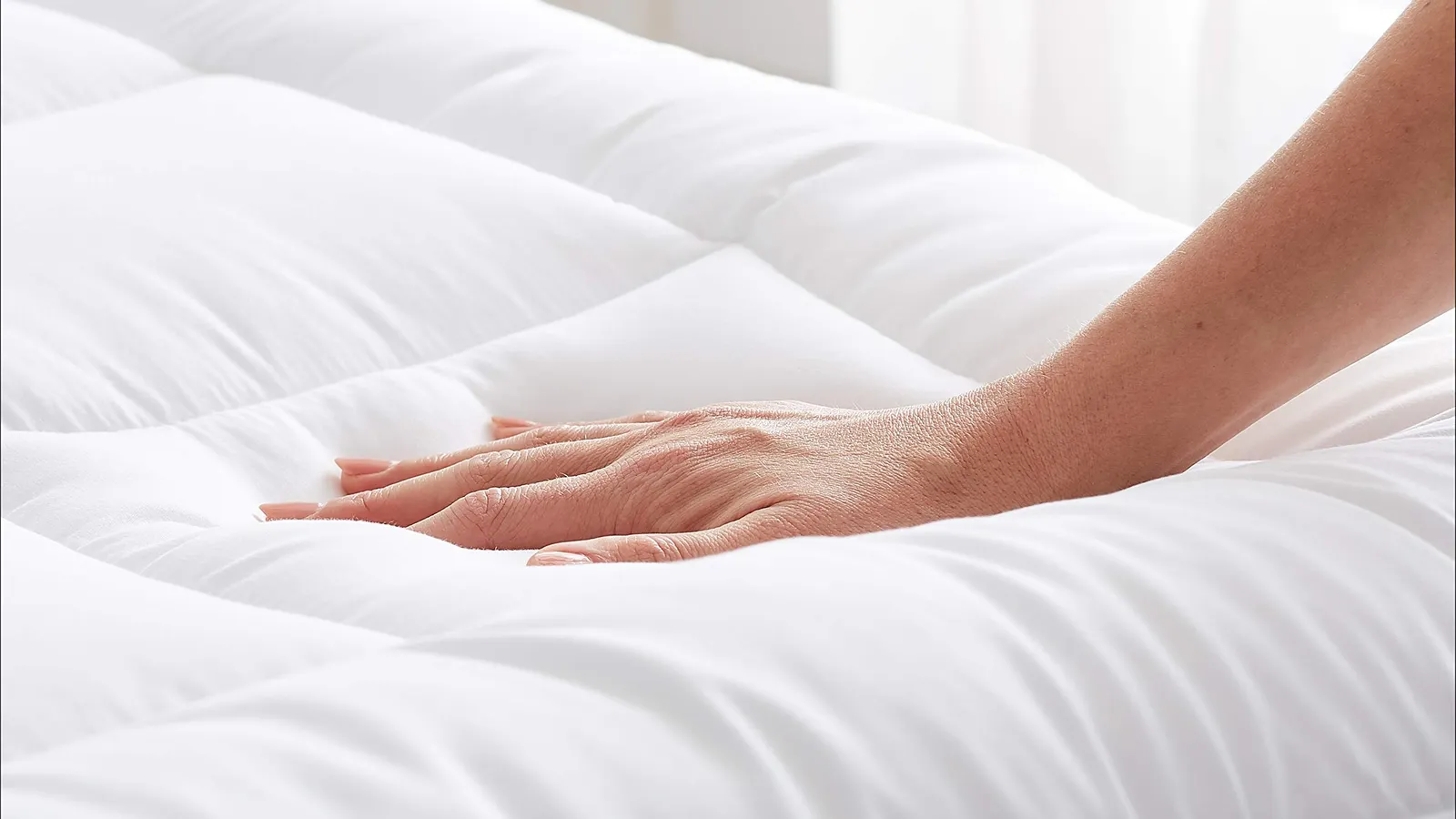
Choosing between a thin woven blanket and a filled comforter is really a choice about handling. A thin blanket folds off the upper body in a second, while a comforter gives a soft, enveloping surface and accepts some bulk in return.
A filled comforter to compare
Rest’s Evercool comforter is a filled option marketed for cooling, a different thing from an open-weave blanket. The listing offers Twin/Twin XL, Full/Queen and King/California King, each with its own dimensions, so you can settle coverage first and then weigh the evidence behind the cooling claim. We have not measured its temperature or compared it in a sleep trial, and awards, reviews and headline figures on a product page belong to the maker. Price and availability change, so read the current terms for the version you pick.
Changing the bed one layer at a time
Keep the sheets, sleepwear and room routine the same while you try a lighter covering. Swap the duvet, mattress pad and blanket together and you will never know which one helped.
Think about how the bed is shared, too. One wide cover over both sides is convenient until one person keeps uncovering a leg. Two smaller coverings give partners different options, as long as the pair still works across the mattress, and that arrangement is the one we would suggest for partners who run at different temperatures.
Size, washing and covers
Compare finished dimensions with both the bed and your washing machine. “Washable” means little if the size you chose cannot move freely in the drum, so look at the permitted drying heat and whether a duvet cover is expected. A cover changes what touches your skin: if the shell’s feel is the reason you are buying, a duvet cover or a sheet between you and the blanket changes the arrangement.
Which one to buy
If you run warm and mostly want less on top, buy the thin woven blanket first. It folds off in a second, costs the least to try and tells you whether covering was the problem. If you love the soft, plumped look of a made bed and sleep warm, a filled comforter marketed for cooling such as the Evercool is the better fit, with the seller’s evidence for the cooling claim to weigh. Partners who disagree about temperature will be happiest with two covers over one fitted sheet. A passive covering changes the layers on your bed and leaves the room’s temperature alone, so if night sweats are unexplained or persistent, take them to a clinician, and browse the cooling bedding collection for related layers once you know which kind of layer you want. Start with the thin blanket, and move up to the comforter only if you miss the bulk.