Mattress Toppers Compared: Three Constructions Worth Considering
Name the change you want before buying the thickest topper: softer, different feel or a washable layer. Three researched constructions, compared by fit, care and attachment.
By DecoraMintPublished 5-minute readMore in Cooling Bedding
In this guide
What do you want to feel different when you lie down tonight? A topper is the one bedding layer meant to change how the bed feels (a comfort choice, not a treatment for pain, allergies or a sleep disorder), so the complaint you start with should pick the construction for you. A bed that presses hard at the shoulders, a bed that has gone too soft, and a bed that just wants a plump, washable cushion each call for a different topper, and sometimes for a different thickness of the same one.
We built this comparison around three toppers, one of each main construction, from manufacturer specifications checked in October 2026; we have not slept on them. For the wider bedding setup, see our bedroom guides.
| Your complaint | Construction to look at | Example | What the maker specifies |
|---|---|---|---|
| Surface feels hard | Soft latex or memory foam | Sleep On Latex Pure Green, Soft | 1, 2 or 3 inches, cover optional |
| Bed has gone too soft | Firm latex, thick enough to matter | Pure Green, Firm | At least 2 inches, preferably 3 |
| Want deep, molded comfort | Memory foam | Saatva Graphite Memory Foam | 3 inches, elastic anchor bands, spot clean |
| Want plush loft you can wash | Fiber-filled featherbed | Saatva Down Alternative Featherbed | About 2 inches, fitted skirt, machine washable |
When the surface feels hard
Latex softens the top of the bed without the sinking feeling, and it pushes back quickly enough that turning over stays easy. The Pure Green topper comes in soft, medium and firm, each in 1-, 2- and 3-inch thicknesses, and the maker is candid about what each depth does: it describes 1 inch as a subtle surface change with no added support, and 3 inches as a significant change. Firmness and thickness are two separate dials, so record both when you compare. The cover is optional, from none to an organic cotton knit, and the foam itself is spot-clean only, so a cover or protector is worth having.
Sleep On Latex lists a 30-day return window for this topper, with a free return label and a box supplied if needed. Policies change, so check the terms on the day you order, but a topper you can send back takes much of the risk out of guessing a firmness.
When the bed has gone too soft
A firm topper can tighten up a surface that feels too yielding, but thickness matters more here. Sleep On Latex advises using its firm latex at no less than 2 inches, and preferably 3, for that purpose; a thin firm layer has too little depth to change much. That only works when the mattress is soft by design and still sound. If it has developed a dip, broken springs or a warranty claim waiting, a topper laid over that sagging support simply follows the hollow, and the mattress is the thing to fix.
When you want to be cradled
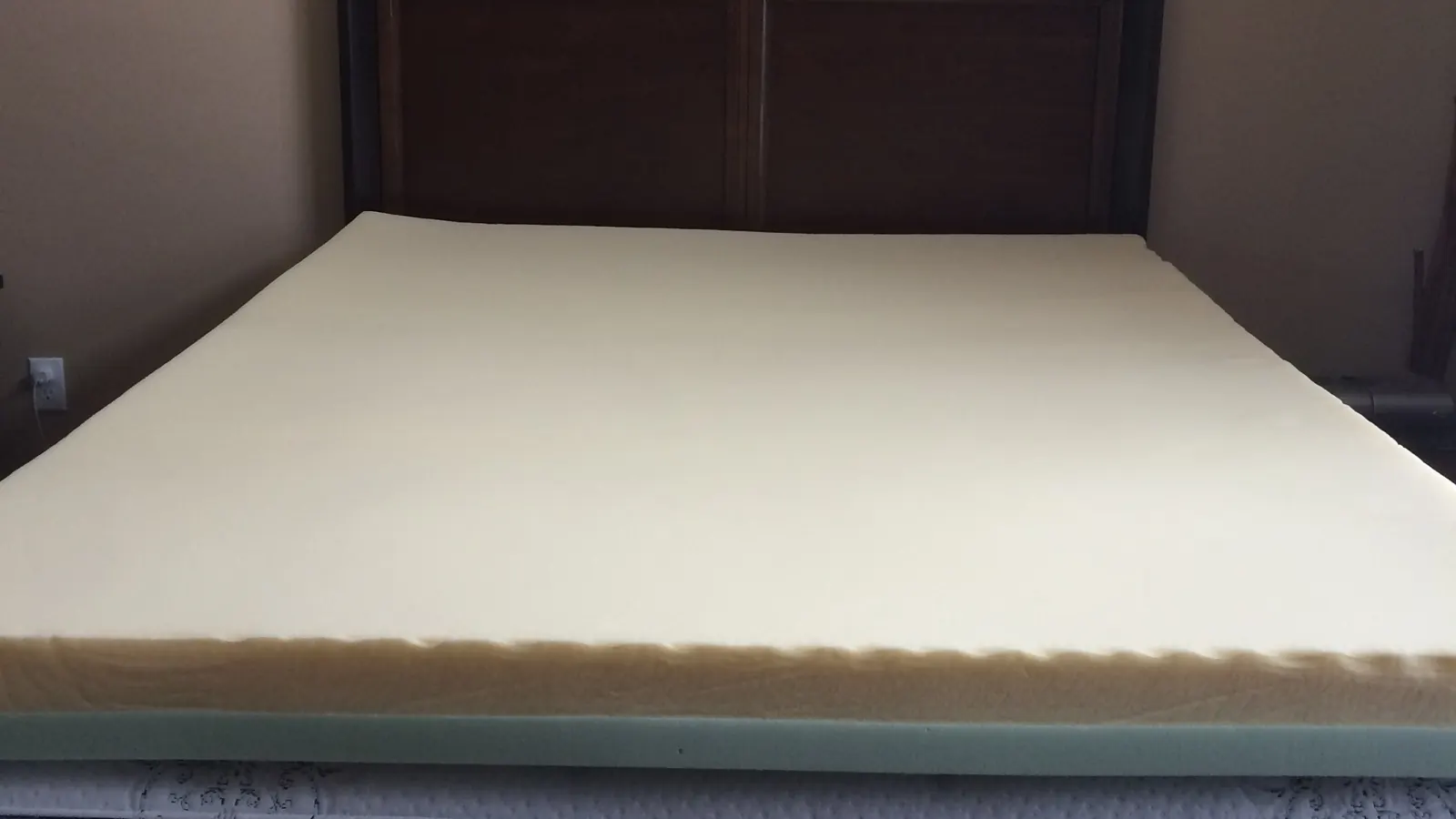
Memory foam gives the slow, molded feel, where shoulder and hip settle in a moment after you lie down and the surface holds your outline. Saatva’s Graphite model is a 3-inch topper of graphite-infused memory foam and polyurethane foam under an organic-cotton-blend cover, held on with elastic anchor bands. Saatva markets the graphite for cooling, a claim we have not seen measured, and the care is spot cleaning. Three inches of plush foam on a mattress that is already soft can push it further the wrong way, so this suits a firm or medium bed best. Anchor bands help it stay put, but think through real use: getting in from the side, tucking sheets, an adjustable base folding up. Warm sleepers can find more options in our cooling bedding section.
When you want plush loft and easy laundry
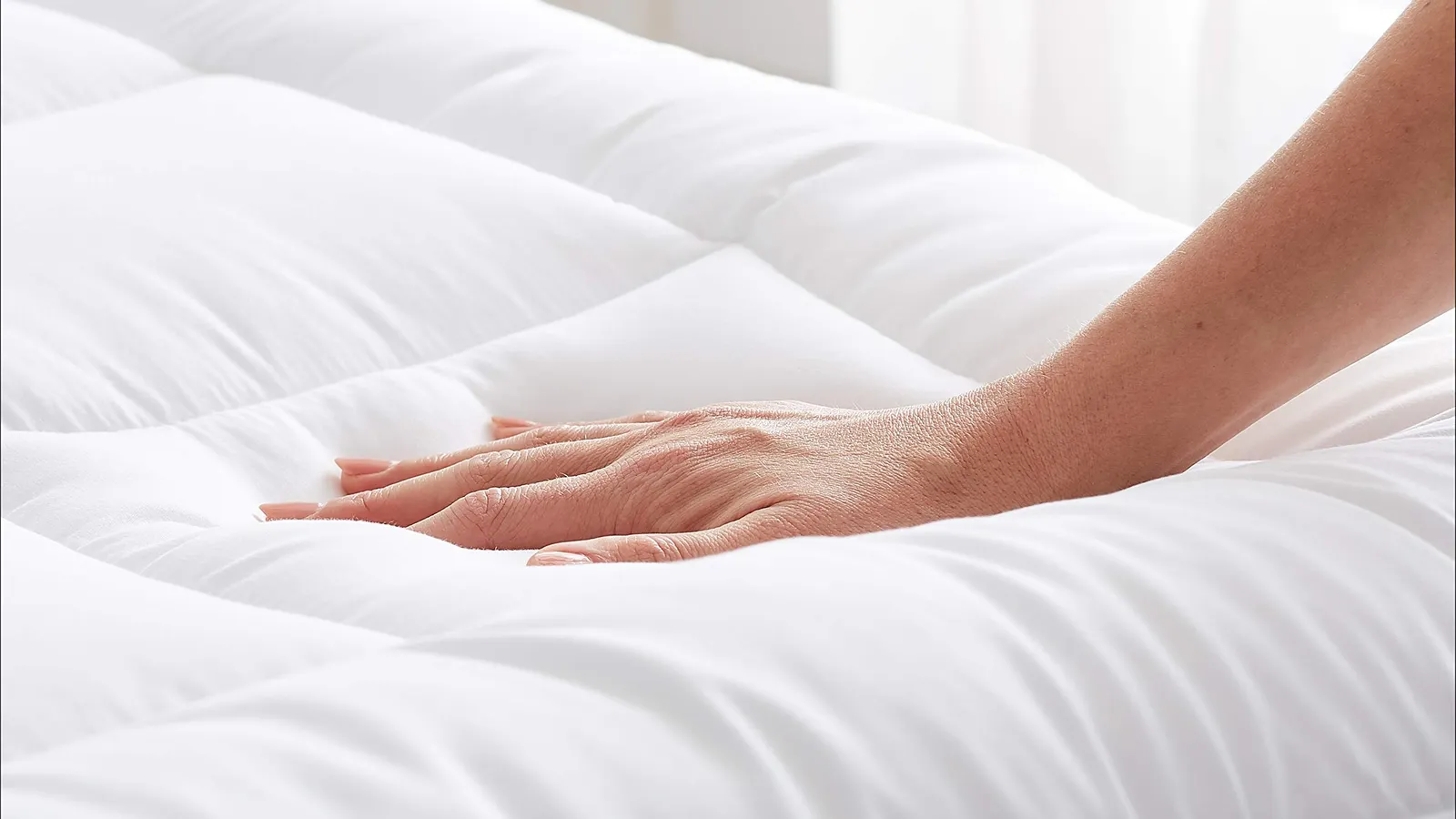
A featherbed feels more like lying on a thick duvet than on a slab. Saatva’s Down Alternative Featherbed is built in two chambers: Saatva says the top chamber uses fine 0.9 microdenier fiber for plushness and the bottom a thicker 6 microdenier fiber for support, and a baffle-box layout keeps the fill spread evenly. It adds about 2 inches under a 300-thread-count cotton sateen shell and stays on with a fitted skirt. Unlike the two foam toppers, it can go in the machine: cold, gentle, no bleach, tumble dry low. That only helps if your washer and dryer can take a fluffy queen or king and dry it right through. Despite the name, its listed fill contains no feathers, which is a good reason to read the fill line on any topper with a quilted look.
The height you are adding
Every inch of topper raises the bed. Add its thickness to your mattress height, then add any protector, and compare the total with your fitted sheet’s stated pocket depth, leaving some margin for the topper’s own puff. If the topper has a skirt or bands, decide whether they go under or over the protector.
Height changes the room as well. A bed that climbs a few inches sits higher against the nightstands, hides more of an upholstered headboard and can change how easily you sit down and swing your legs in. On a tall bed, a 1- or 2-inch topper may give you the feel you want without that cost.
Choosing between two
If two toppers still seem equally right, let the complaint decide: lift and easy turning point to latex, a cradled feel to memory foam, washability to fiber fill. A mattress trial may not extend to accessories, and a compressed foam topper will not squeeze back into its original packaging, so when it is still a toss-up, the one with the clearer return route is the safer first try.