How to Choose a Floor Mattress
Thickness, fill, airflow and storage for floor mattresses and futons used for guests, children's rooms or sleeping low every night.
By DecoraMintPublished 7-minute readMore in Floor Mattresses

In this guide
We may earn a commission from links on this page, at no extra cost to you. Affiliate disclosure
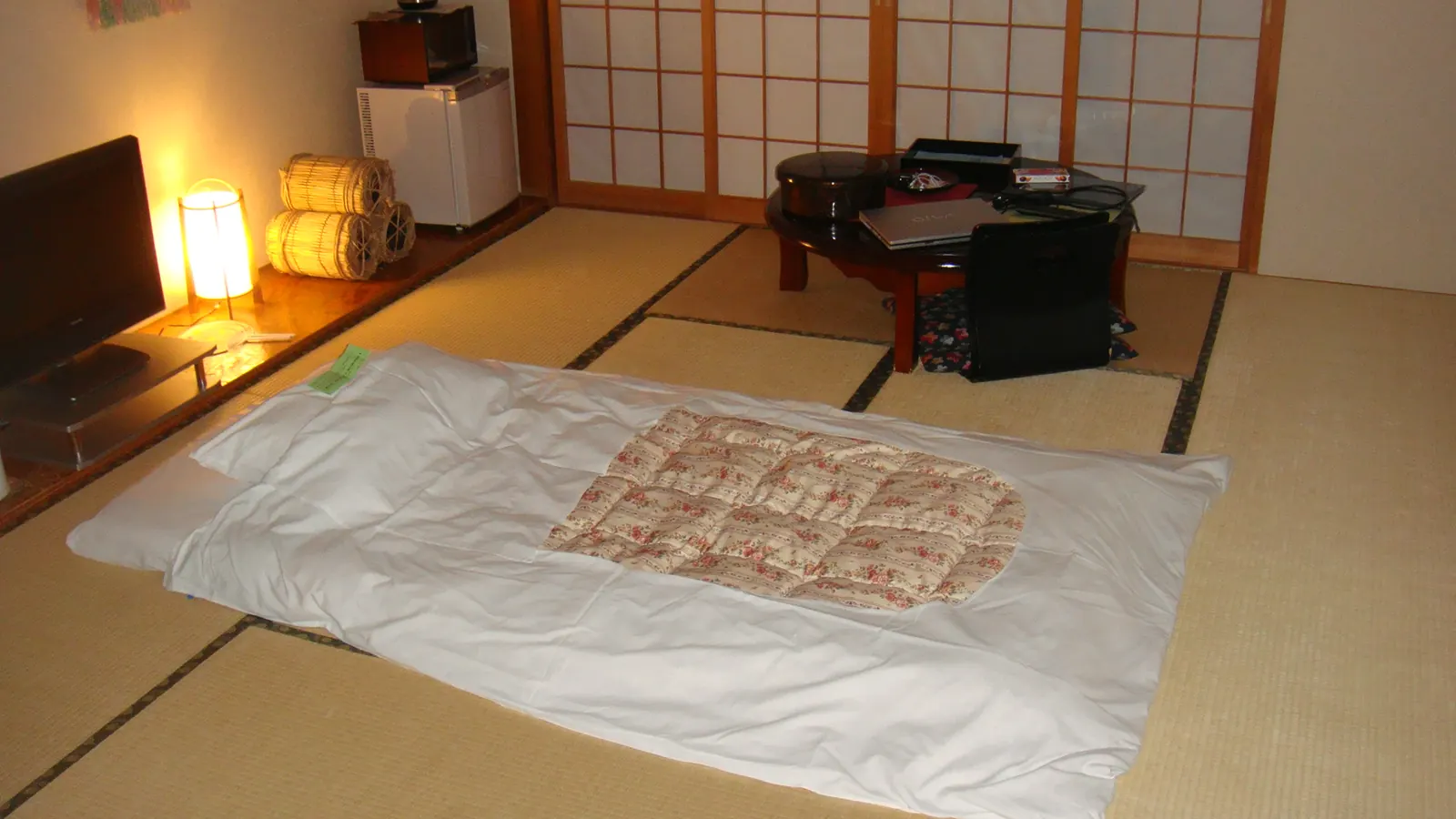
Rolled out on a tatami-style floor, a futon is a soft, low rectangle of cotton and air, with the quilt turned back and the room’s furniture standing taller around it. Folded away by breakfast it is a neat bundle on a closet shelf, and the floor goes back to being a floor. That daily cycle is one way to use a floor mattress. A foam guest mattress that lives in a cupboard most of the year is another, a bed that rolls away so a child’s room can double as a play space is a third, and a permanent low bed is a fourth. Decide which one you are buying before you compare thickness, because each asks something different of storage, handling and whatever sits underneath.
Keep one distinction in mind from the start: a floor futon and a mattress made for a folding sofa frame can both carry the word futon. Go by the maker’s stated use, since the label alone cannot say which arrangement the mattress was built for.
Pick the type by how you will use it
Occasional guest bedding is mostly a storage and handling question. Can one person carry it, unroll it and make it up, and does it come with a protective cover? Think about who will actually sleep on it. Getting down to floor level and back up is hard for some visitors, and a mattress that stores beautifully is still a poor offer to a guest who struggles to stand from the floor.
Bedding you put away every day depends on folding instructions, weight and airing. You need a spot to air it and a spot to store it, and both have to be easy to reach on a rushed morning. This is the routine a traditional cotton futon such as ZONLI’s Classic Floor Mattress is made for: its basic build is a cotton cover over fiber layers on a foam base only 2 cm thick, and the listing describes it as foldable.
A permanent low bed is a whole setup: mattress, approved support surface, bedding and care working together. You will need to lift the mattress to inspect the underside, so leave room to do that. A cover you can take off and wash matters more here than on a futon that spends its days in a closet. ZONLI’s Wheat Dream Futon Mattress comes with a removable, machine-washable cover and a foam core; its listing names naps, yoga, guests and camping rather than a permanent bed, so check that its instructions approve your base or mat before leaving it down for good. Our guide to building a floor bed covers the surrounding arrangement.
A folding sofa frame needs a mattress the maker has approved for that exact frame and fold. A mattress designed to roll or fold for storage may not bend across a sofa mechanism or stay in place when the frame is upright.
Construction before thickness
Thickness is one dimension, and it says little about how a mattress feels. Skip rules like “side sleepers need so many inches” and ask what the cover, the cushioning layers and the core are made of. A product described as cotton may have a cotton outer fabric over a different filling, and a Japanese-style look can sit over a modern foam core.
When one product comes in several thicknesses, find out whether they share materials or have different internal structures. The description of an upgraded model should not be carried over to the basic one just because they share a page.
Gather these details for any contender:
- listed thickness after the specified unpacking period, and overall dimensions for your size
- cover composition, and whether it is removable
- fill and core materials, described apart from the cover
- whether folding, rolling or flipping is allowed, and which floors, mats, platforms or frames are approved
- care instructions and return conditions
Posture and pain-relief language on a listing is a marketing claim. Nothing here treats back pain or any other condition, so if a health issue shapes your choice, talk it over with a qualified clinician.
Two ZONLI mattresses, matched to the routine
ZONLI sells both kinds of floor mattress this guide separates, and the choice between them comes down to where the mattress spends the day.
For a futon folded into a closet every morning, the Classic’s basic build has the least foam to bend: the thinner the foam, the easier the fold, so that is the version to start from. ZONLI publishes no weights or folded sizes, so check both on the variant you select. For a mattress left down on a mat, the Wheat Dream is the better-documented fit, for two reasons: a foam core, which holds its shape more consistently than fiber alone, and a removable cover even in its thinnest build, where the 2.5-inch Classic’s cover is fixed (at 4 and 6 inches, ZONLI’s page says both models’ covers come off). That is guidance from the listings, not a test result, and it still depends on ZONLI approving the base or mat you plan to use. Neither listing mentions a folding sofa frame, so for a sofa buy a mattress made for that mechanism instead. Both come in several sizes and thicknesses; check that the variant you select is the one whose thickness and folded size you have planned for. We have not tested either mattress for comfort or durability; the details above come from ZONLI’s listings and product pages.
For one you will fold often, find the folded size and the maker’s folding method. For one you will leave out, find the recommended support and the underside-care routine. Those answers usually matter more than the thickest option.
Count a tatami-style mat as part of the bed only if it is sold as a sleeping surface, and put one beneath a futon only if both makers allow the pairing. Words such as natural or breathable protect nothing by themselves, so the complete setup still needs inspection.
Measuring floor and closet
Measure the clear floor area with room to approach the mattress and move around it, then check door swings, drawers and the route out of the room. Bedding should never block normal access or exit.
Compare the stated mattress dimensions with sheets you already own rather than trusting twin, full or queen labels. On a very thin mattress a deep fitted sheet leaves surplus fabric, and a dedicated cover has its own dimensions and care rules to check before it goes in the cart.
For storage, measure the closet opening as well as the space inside. A folded mattress can fit on paper and still be awkward through a narrow door, so include any storage bag and room for handling. Look at weight and whether straps or handles are meant for carrying. A foldable mattress can still be heavy, and if the plan depends on someone helping every morning, pick an arrangement that works without that help.
The surface underneath
Follow the maker’s instructions for the supporting surface. Many conventional mattresses are made for a bed base, and an arbitrary mat will not change that. Inspect the floor and the underside as directed. Dampness, a musty smell or visible deterioration means the setup has a problem, and another layer on top only hides it. Furniture pushed against every edge makes inspection hard, so leave the space that the routine needs.
Airing frequency depends on the product and your home, so follow the maker’s guidance, and use sun exposure or mechanical drying only where the construction allows it.
Cleaning and the first unboxing
Read “washable” as the cover only unless the listing names the core, and keep cover, insert and any separate mat distinct in your mind. A guest mattress must be clean and fully dry before it is packed away. Never soak a core meant for spot cleaning, and for accidents beyond the care label, ask the maker.
Compressed mattresses may need a set time and method to reach their shape, so wait before judging thickness. Keep packaging and order details until you know the return rules: whether an opened mattress is accepted, whether there is a trial, who pays shipping and how it must be packed. A bulky mattress can be hard to send back however generous a policy sounds. On delivery, check size, seams, cover and accessories against the order, because a photographed mat, pillow or bag may be sold separately.
The picks
Prices and availability update from the retailer feed.

For bedding you fold away every day
Classic Floor Mattress
A tufted futon in a 100% cotton cover, with fiber layers over a thin high-density foam base, in twin to king. The listing calls it soft, foldable and portable. The 2.5-inch build has the thinnest foam to fold but a fixed cover; ZONLI's page lists 4- and 6-inch versions with removable covers, which add cushioning and a bulkier fold.
Price as of

For a low bed that stays out
Wheat Dream Futon Mattress
Hollow-fiber fill around a memory foam core, with straps for rolling and a removable cover the listing calls machine washable. The description gives around 3 inches when expanded for the basic build, and ZONLI's page also lists 4- and 6-inch versions. The cover comes off in every thickness, which helps on a mattress that lives on a mat and gets lifted to air; check that its instructions approve your base.
Price as of