How to Build a Comfortable Floor Bed
Setting up a Japanese-style floor bed in four layers: mattress thickness, a breathable base, a washable cover and sheets deep enough to fit.
By DecoraMintPublished 5-minute readMore in Floor Mattresses
In this guide
We may earn a commission from links on this page, at no extra cost to you. Affiliate disclosure
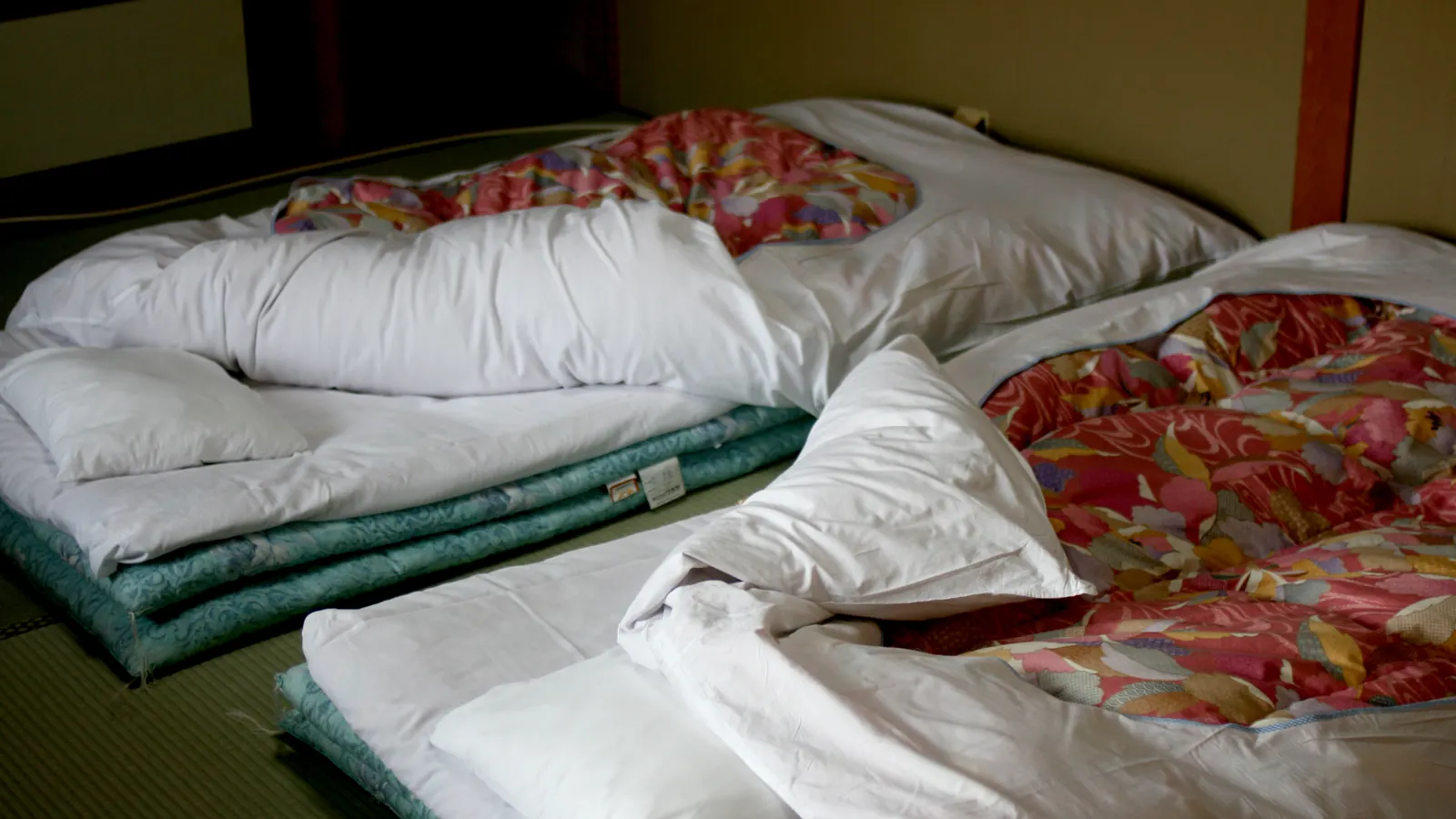
Getting out of a floor bed means standing straight up from a few inches off the ground, and getting the bed right means building it from the ground up: the mattress, what sits under it, a cover that protects it and a sheet on top. Add a habit of airing the mattress so moisture cannot collect underneath, and it is a bed you can sleep on every night and clear away by day.
The mattress
Thickness decides most of the rest.
- About 2.5 inches feels firm and folds easily. It suits guest rooms, children’s rooms and people who like a traditional futon.
- About 4 inches is the middle ground for sleeping on every night: still foldable, noticeably softer.
- About 6 inches is closest to a conventional mattress, and bulkier to fold and store.
Fill matters too. Cotton and polyester fiber breathe well but compress over time, so plan to air them regularly. A foam core holds its shape more consistently. ZONLI’s two mattresses lean opposite ways. The Classic Floor Mattress is mostly fiber: a cotton outer layer over 2.5 kg of PP cotton on a thin 2 cm foam base, a futon to fold away and sun-dry, as the listing advises. The Wheat Dream Futon Mattress wraps hollow fiber around a memory foam core, which makes it the better match for a bed that stays down and is lifted to air rather than folded every morning. Its listing, though, names naps, yoga, guests and camping rather than a permanent bed, so check that ZONLI’s instructions approve the mat or base you plan to leave it on. Both are sold in 2.5-, 4- and 6-inch builds on ZONLI’s product pages (the Wheat Dream’s description gives its basic build as around 3 inches when expanded), so the thickness list above applies to either; check the variant you select. We have not tested them, and the details here come from ZONLI’s listings and product pages. Our guide to choosing a floor mattress goes into the materials.
A breathable base
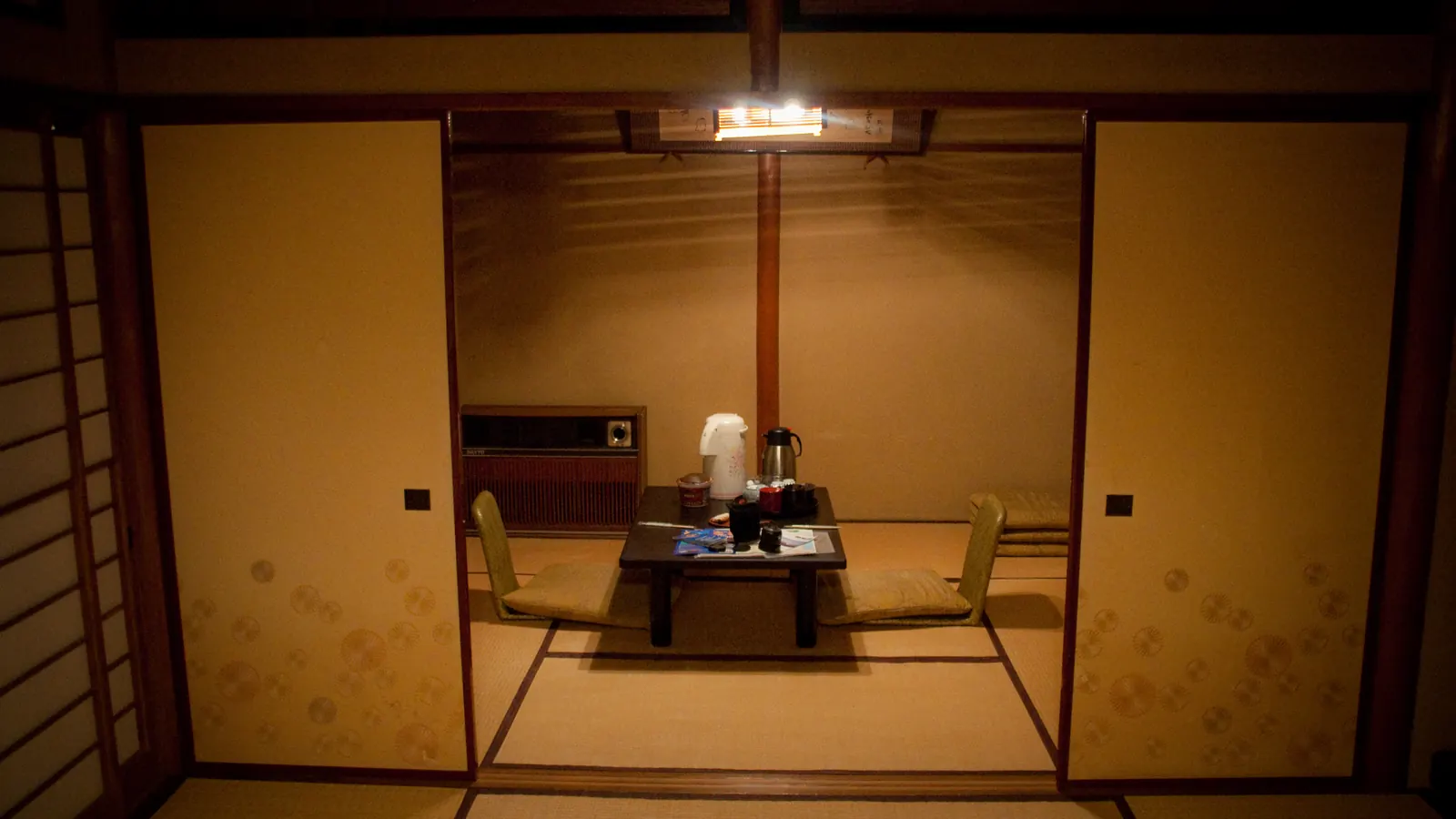
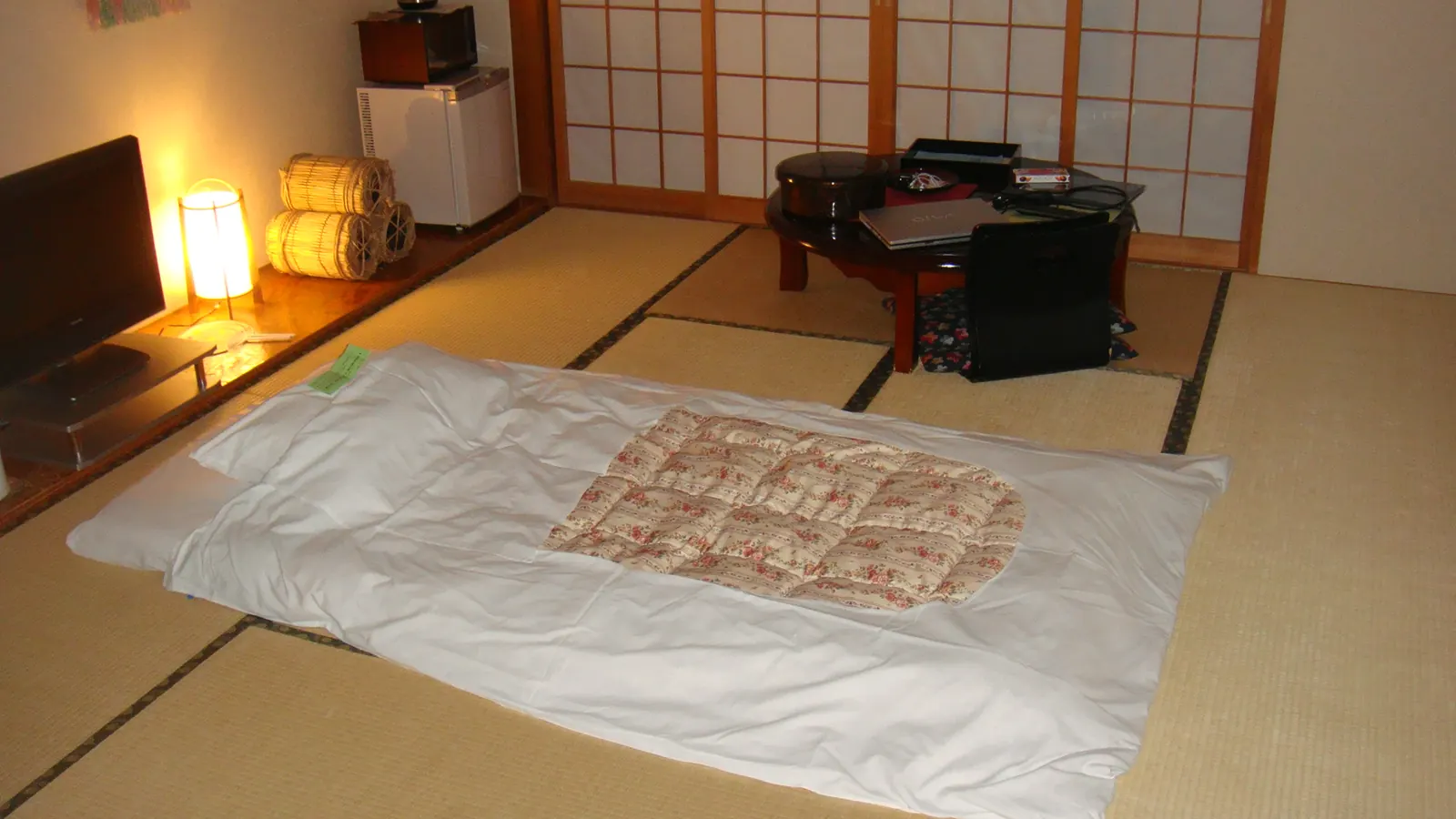
A mattress laid straight on the floor gives overnight moisture nowhere to go, so a layer underneath earns its place. A woven tatami-style mat, the traditional layer under a futon, adds a firm, airy layer and marks out the sleeping area like a rug. A slatted base lifts the mattress for more airflow.
On a bare floor where the bed is cleared away by day, a tatami mat makes it read as a defined, textured platform; on concrete or in a humid room, a slatted base lifts the mattress further off the cold, damp surface. Neither replaces airing.
Whichever base you pick, air the mattress. Fold it, stand it up or hang it in the sun for a few hours, and lift it regularly to check the underside for damp patches or a musty smell. The EPA says the key to mold control is moisture control and suggests keeping indoor humidity below 60 percent where possible. In a basement, a ground-floor room on concrete or a humid climate, do this more often, and if mold has started, stop using the mattress until it has been dealt with.
A washable cover
Floor mattresses are heavy to clean, so a removable cover does a lot of the work. Check its dimensions against the mattress; cotton gives a breathable, matte surface. Whether you need a separate cover depends on the mattress: the Wheat Dream already comes with a removable, machine-washable one, while the Classic’s 2.5-inch build has a fixed cover (ZONLI’s page says its 4- and 6-inch builds have removable ones). For the 2.5-inch Classic, ZONLI’s Cotton Futon Mattress Cover is listed in 100% cotton for twin (41 by 81 inches), full (55 by 81 inches) and queen (61 by 81 inches) futons, in printed leaf and plain designs. A plain cover keeps a pale futon quiet against a painted wall; the leaf print gives a bare room some pattern at floor level.
Sheets that fit
Futon sizes do not always match US mattress sizes, and thick floor mattresses need deep pockets. Measure length, width and thickness, then look for a fitted sheet sized for futons with strong elastic or straps, so it stays on when you fold the bed.
Check those sizes against your own measurements before ordering, since they are futon dimensions rather than US mattress sizes. ZONLI’s variant menu gives the fabric as 100% nylon and the description calls it a microfiber knit, silky and machine washable cold: a different hand from a matte cotton cover. If you want an all-cotton bed, any futon-sized fitted sheet with deep pockets and straps does the same job.
Safety: adults and older children only
A floor mattress is a bed for adults and older children. The American Academy of Pediatrics tells parents to put infants to sleep on a firm, flat surface in a crib, bassinet, portable crib or play yard that meets CPSC standards, with only a fitted sheet and no pillows, quilts or soft items, and to avoid bed sharing. A soft futon with bedding on the floor is none of those things. Keep it out of a baby’s room as a sleep surface, and see our guide to furnishing a kids bedroom for what suits younger children.
Around the bed
With no headboard to anchor the bed, the wall behind it does that job. A deep olive or warm clay paint on that wall, or a single wide textile hung above the mattress, gives a pale cotton futon something to rest against, and a linen duvet in off-white keeps the layers soft where they meet the floor. Beside the bed, a stack of books under a small lamp or a low wooden stool makes a bedside table, and woven baskets at the foot hold the folded bedding in the daytime. A floor-length curtain in the same tone as the wall makes the ceiling feel higher over such a low bed. Leave open floor on the side you step out onto and keep any rug flat, so a bare foot never catches an edge. Floor beds sit naturally in minimalist and Scandinavian rooms, and the bedroom and floor mattresses hubs show more setups.
The picks
Prices and availability update from the retailer feed.

A classic cotton futon mattress
Classic Floor Mattress
A 100% cotton outer layer over 2.5 kg of PP cotton fill and a 2 cm high-density foam base, with a tufted design that keeps it flat. The listing says it folds and ships compressed, regaining its thickness within 2 to 3 days.
Price as of

For a foam core
Wheat Dream Futon Mattress
A breathable cotton cover over hollow-fiber fill and a memory foam core. The description gives around 3 inches when fully expanded for the basic build, and ZONLI's page also lists 4- and 6-inch versions. The listing says it is OEKO-TEX certified, rolls or folds with reinforced straps and comes with a removable, machine-washable cover.
Price as of

The layer underneath
CocoShield Tatami Mat
A tatami mat made from coconut shell fiber and jute, which the listing describes as breathable and moisture-resistant, the two things you want between a floor mattress and the floor. Unfolded, the mats connect into one surface, and it folds for storage.
Price as of

A cover that is easy to clean
Cotton Futon Mattress Cover
A 100% natural cotton cover that the listing calls breathable, hypoallergenic and easy to clean, in multiple sizes and colors. Keeping the cover clean is the simplest way to keep a floor mattress fresh between airings.
Price as of

A deep-pocket sheet that stays put
Cooling Futon Mattress Fitted Sheet
Made for thick mattresses, including tatami-style, with anti-slip straps and elastic all the way round. A stretchy knit, listed as 100% nylon and described as microfiber, that the listing calls cool and breathable, in twin, full and queen futon sizes, and it can be machine washed cold.
Price as of