How to Furnish a Kids' Bedroom: Bed, Reading Corner and Storage
Furnishing a child's bedroom: a twin or trundle bed, a child-sized chair, storage they can reach, lighting for bedtime and a cordless shade for the window.
By DecoraMintPublished Updated 8-minute readMore in Kids' Rooms
In this guide
We may earn a commission from links on this page, at no extra cost to you. Affiliate disclosure
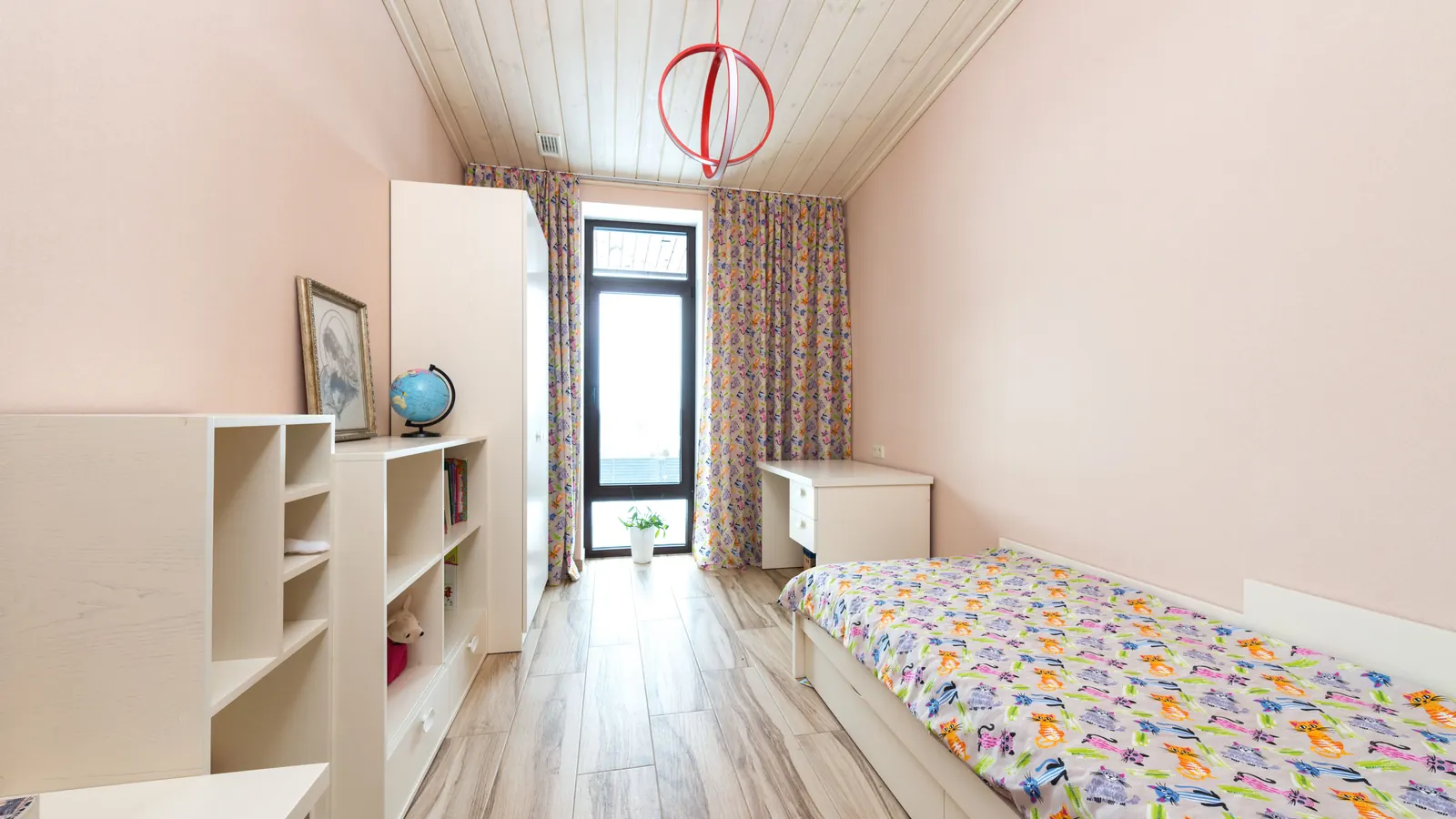
A low bed against one wall, a shelf of books at sitting height and a pale rug with space left on it: that is a child’s room that works. The floor stays clear for building and drawing, and the furniture does the quiet daily jobs of sleeping, dressing, reading and putting things away. Decoration comes last and should be easy to swap, because a child’s favorite thing changes faster than any bedframe.
A bed that suits the child, storage they can reach and one well-planned activity corner give a room more flexibility than matching pieces in every corner. This guide covers children’s room planning and leaves infant sleep and crib timing to other advice.
The bed and the open floor
Work from the exact bed’s required mattress size and thickness, not just the word twin or single. Imported and specialty beds can differ. Put the frame’s outside dimensions on the floor plan, along with any drawer or trundle pulled fully out, and compare the result with the space left for walking and play. An ornate frame can eat the play area or block a closet, and a compact one saves floor but still has to suit the child and the maker’s instructions. Never add homemade rails, padding or other alterations to make an unsuitable bed work.
A storage drawer and a sleeping trundle look alike, so find out which one your model and configuration has. If a drawer is built to take a mattress, follow its own size and thickness limits. A storage-only drawer must never be used for sleeping.
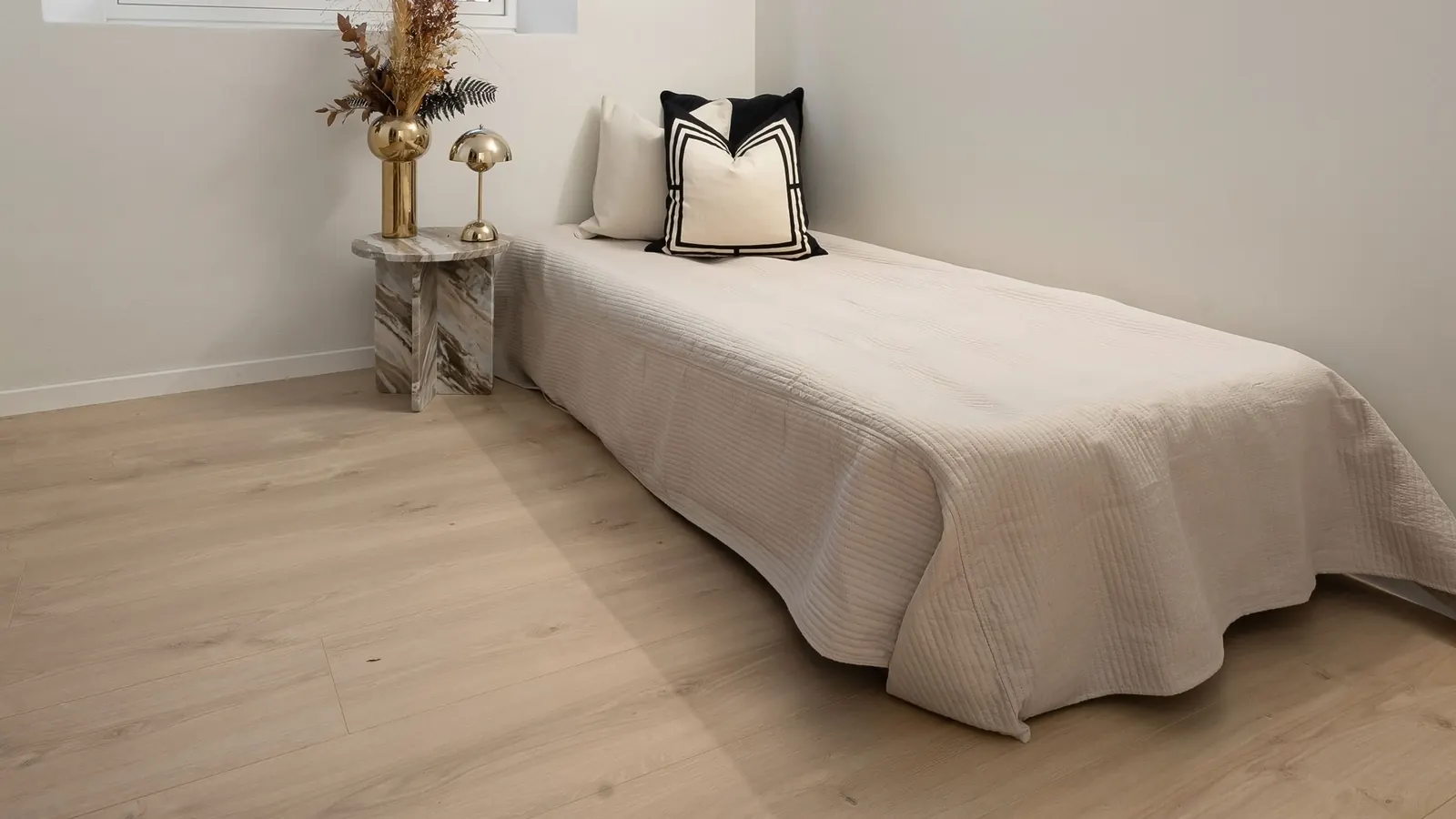
For sleepovers in a small room, look at a daybed whose lower drawer is rated to hold a second mattress. One frame then does the work of two, and the drawer turns back into storage the rest of the week. Upholstered versions with a curved or scalloped outline soften a room full of straight lines, but they need a cover you can clean. Either way, the drawer’s own mattress size and thickness limits decide what goes in it, and mattresses are usually sold separately. Some upholstered children’s beds sold online are UK designs, and a UK single mattress (90 by 190 cm) is not a US twin (38 by 75 inches), so buy the US version and check which base comes with it.
A corner for reading
For a child who loves books, give reading one clear home: a chair beside a low shelf with the covers facing out, and room to climb in and out without moving anything else. Gingham in a soft green on the seat looks fresh against pale walls and wood, and a small round rug under it marks the corner as a place to stop. Choose the chair by seat height and depth: the child’s feet should reach the floor and their back should reach the backrest, which a small upholstered armchair made for children manages and an adult accent chair rarely does.
Keep a small rotation of books within reach and swap them now and then instead of covering every surface. Put the light where the book is held. An overhead fixture can be fine, though a fabric shade alone does not guarantee enough reading light, so look at the actual lamp, bulb and switch, and place cords, hot parts and anything fragile out of a child’s way.
Making and building
A small table gives drawing, puzzles or blocks a home. Compare table and chair together, including how the child sits and the room needed to pull the chair out. A photo of a matching set cannot tell you whether the dimensions suit your child. Keep everyday materials near the activity and adult-controlled supplies out of reach. Wipeable finishes help, but follow each finish’s care instructions, since painted and laminated surfaces differ.
A tray or shelf for unfinished projects stops the bed and floor becoming the default storage. The best test of the setup is whether the room returns to ordinary use without a full cleanup.
Two children in one room
A shared room does not need two identical halves. Give each child a clear place for their own belongings and share the bigger furniture and play space. Matching the main pieces and varying one small thing, such as a washable textile or a labeled storage section, builds ownership without two competing themes. Keep doors, windows and clothing storage reachable for both. If you are weighing two beds against a bunk, read the age, mattress and use rules for the exact products. The American Academy of Pediatrics advises keeping children under 6 off the top bunk, and floor space saved does not make a bunk suitable.
Decoration that can change
Pick one or two colors or motifs and let textiles and prints carry them. A child who loves animals can have a few prints and a quilt while the bed and storage stay adaptable. One who draws can show a rotating selection of their own work. Ask the child which details matter most before you commit to an expensive theme.
Mount heavy wall decor securely and away from places where it becomes a hazard. Keep cords, string lights and decorative fabric off the bed, whatever a styled photo shows. In a small room, leave some surfaces quiet.
Storage children can use
Match storage to contents: books, clothes, small toys and bigger objects each want different compartments. Open bins keep some belongings visible and drawers contain others, and neither suits every age.
Lidded furniture needs attention to its mechanism. A storage ottoman keeps toys or blankets at floor level and doubles as a perch, but only if its lid has a support that holds it open and the maker says it can be sat on. Read the lid and seating instructions before anyone sits on it, and do not improvise lid supports or alter the hardware. A lidded piece sold for a children’s room can still be unsafe for independent use.
CPSC’s Anchor It campaign says anchoring furniture that has drawers, doors or shelves to the wall prevents tip-over injuries and deaths. Plan the anchor points when you place each piece, and use the maker’s hardware and instructions. Low pieces need this too.
The window
CPSC recommends cordless window coverings and keeping cribs, beds and furniture away from window-covering cords. A custom blackout roller shade with a cordless control makes a bedtime room darker, and a cordless lift removes the pull-cord hazard, though other window risks remain, so keep climbable furniture away from the glass and think about opening windows. A blackout fabric stops light through the material, while edge gaps and installation decide how dark the room gets.
Blackout is worth it when bedtime comes before dark for part of the year, or when a streetlight shines straight in. For a room that faces away from the evening sun and a child who sleeps after dark, a light-filtering shade is enough and keeps the room from feeling closed in by day. Because this one is cut to size, the fit question is mounting (check which mounts Persilux offers): inside the frame gives a flush, tidy line against the trim but leaves a thin band of light at each side; outside the frame, with the shade a little wider than the opening, covers those gaps and reads as a solid panel when it is down. Measure for the mount you choose before ordering. Our window shades guide covers fabric and measuring.
Buying in order, and a matching set
Start with the right bed and essential storage, and add seating, a work surface or decoration only when the plan shows a use. Check what each product includes. A bed frame may exclude the mattress, and a photographed lamp may be only a shade for sale. Count delivery, assembly and required hardware, and read return terms before assembly, especially for imported furniture. Compare the US configuration against the room, since a UK specification can differ.
A matching set pays off only when every piece has a job and fits. Compare its itemized contents with a room built in stages. Mattress fit, anchoring and storage work the same under any boys’ or girls’ label, so let the child’s taste steer color and keep the furniture on task.
| Route | Example to compare | What to add up |
|---|---|---|
| A simple bed first | IKEA SLATTUM Twin, 105.712.59, with its slatted base | Mattress and bedding are separate, and there is no storage drawer or dresser |
| An activity bundle | IKEA LÄTT, 501.784.11, one small table and two chairs | A three-piece activity set for play and crafts |
| An upholstered daybed | One whose drawer is rated for a second mattress | US version, drawer purpose, included base, separate mattresses |
| A full matching suite | Seller-specified bed, dresser and bedside storage | Actual items, required bases, anchoring, freight and assembly |
The US SLATTUM listing includes the slatted base and excludes the mattress. It is a general bed-frame option to assess for the intended user, and its outside dimensions and instructions are worth a look before it goes in this room. The US LÄTT table-and-two-chair set lists a 24¾-by-18⅞-inch tabletop, a 17¾-inch table height and an 11-inch seat height. Its pine frame and foiled fiberboard surfaces clean differently from an upholstered reading chair, and the child’s fit counts for more than the number of pieces.
On a tight budget, make three totals: the sleeping setup, clothing storage, and then optional activity and decoration, each with delivery, assembly and hardware included. That shows whether a cheap-looking set leaves out the mattress. No fixed dollar figure fits every household.
Which route, then? For a small room with sleepovers, a daybed with a mattress-rated drawer gives you a second bed without a second frame. For a child who mostly needs a plain bed, start with a simple twin such as the SLATTUM and spend the difference on anchored storage. For a young maker, the LÄTT table and chairs come first. For a themed look that will be outgrown, keep the large pieces neutral and let textiles carry the theme.