How to Choose Window Shades: Blackout, Light Filtering, Solar and Cellular
Shades are easiest to choose in a fixed order: how dark the room should be, which type does that, how it operates and how it mounts. By the time you get to style, the list is short.
By DecoraMintPublished 7-minute readMore in Blinds & Shades
In this guide
We may earn a commission from links on this page, at no extra cost to you. Affiliate disclosure
Settle how dark the room should be before you look at a single swatch; that one answer narrows the field faster than style, price or type. A nursery or a bedroom for a night-shift sleeper wants fabric that stops light. A living room wants daylight to come through softly, with the garden or street still visible. Once the light is settled, the choices that follow are the shade type, how it operates and how it mounts, and by then the shortlist is short.
Four levels of light
- Sheer softens daylight and gives little privacy at night.
- Light filtering lets daylight through. Privacy varies by fabric and lighting, so look at a sample from outside with the room lights on after dark, since silhouettes may still show.
- Room darkening cuts most light but not all.
- Blackout blocks light through the fabric. Light still creeps in around the edges, and an outside mount with generous overlap may reduce that, though it cannot promise a dark room. Compare the exact fabric, the mounting and any compatible side channels.
Bedrooms, nurseries and media rooms usually want blackout, while living rooms and kitchens do better with light filtering or solar fabric. In a bedroom that faces the morning sun, the simplest blackout route is a flat roller: one panel of opaque fabric, raised into a slim roll by day, with an outside mount added if the strip of light at the edges matters.
Which type of shade
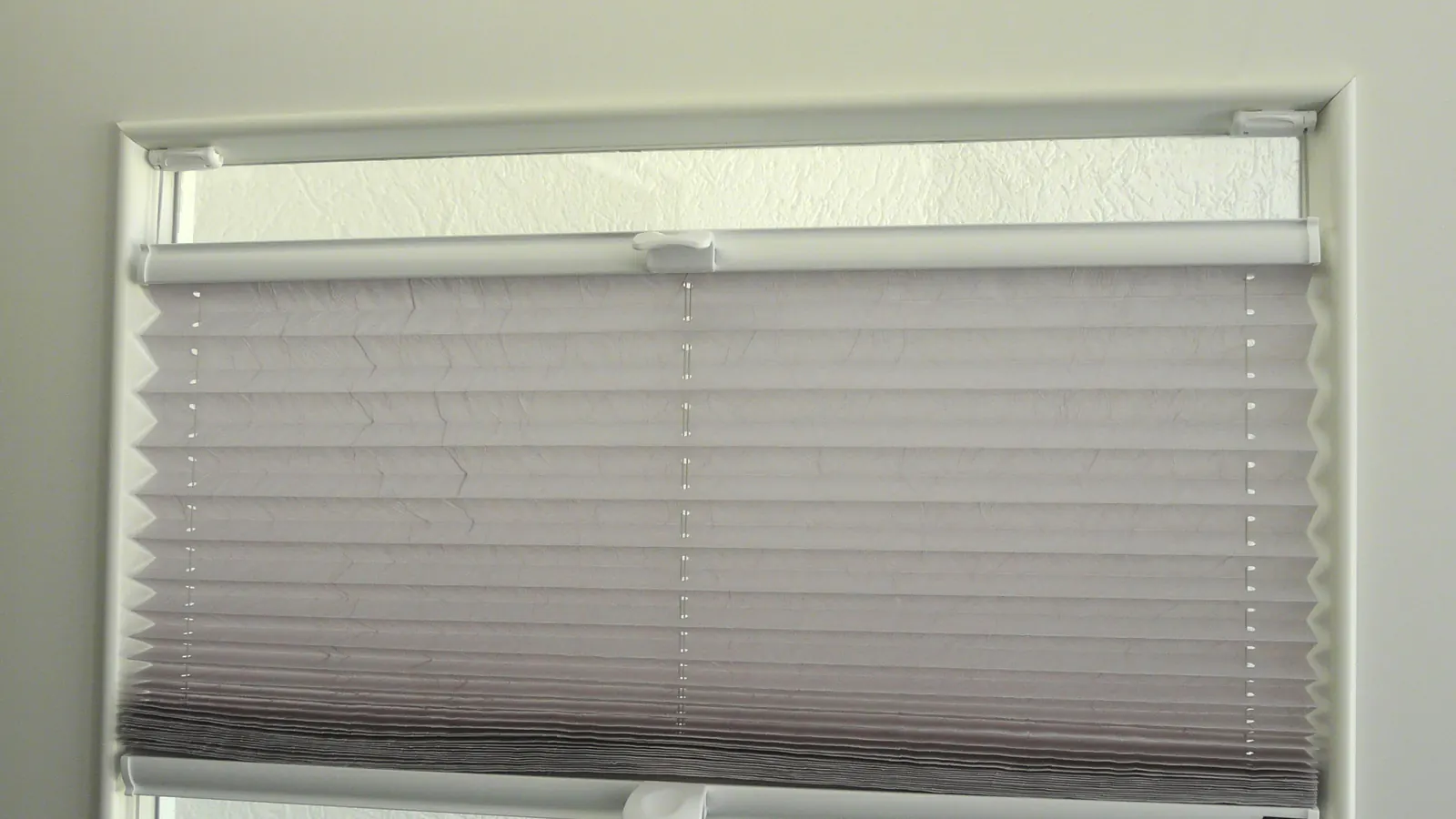
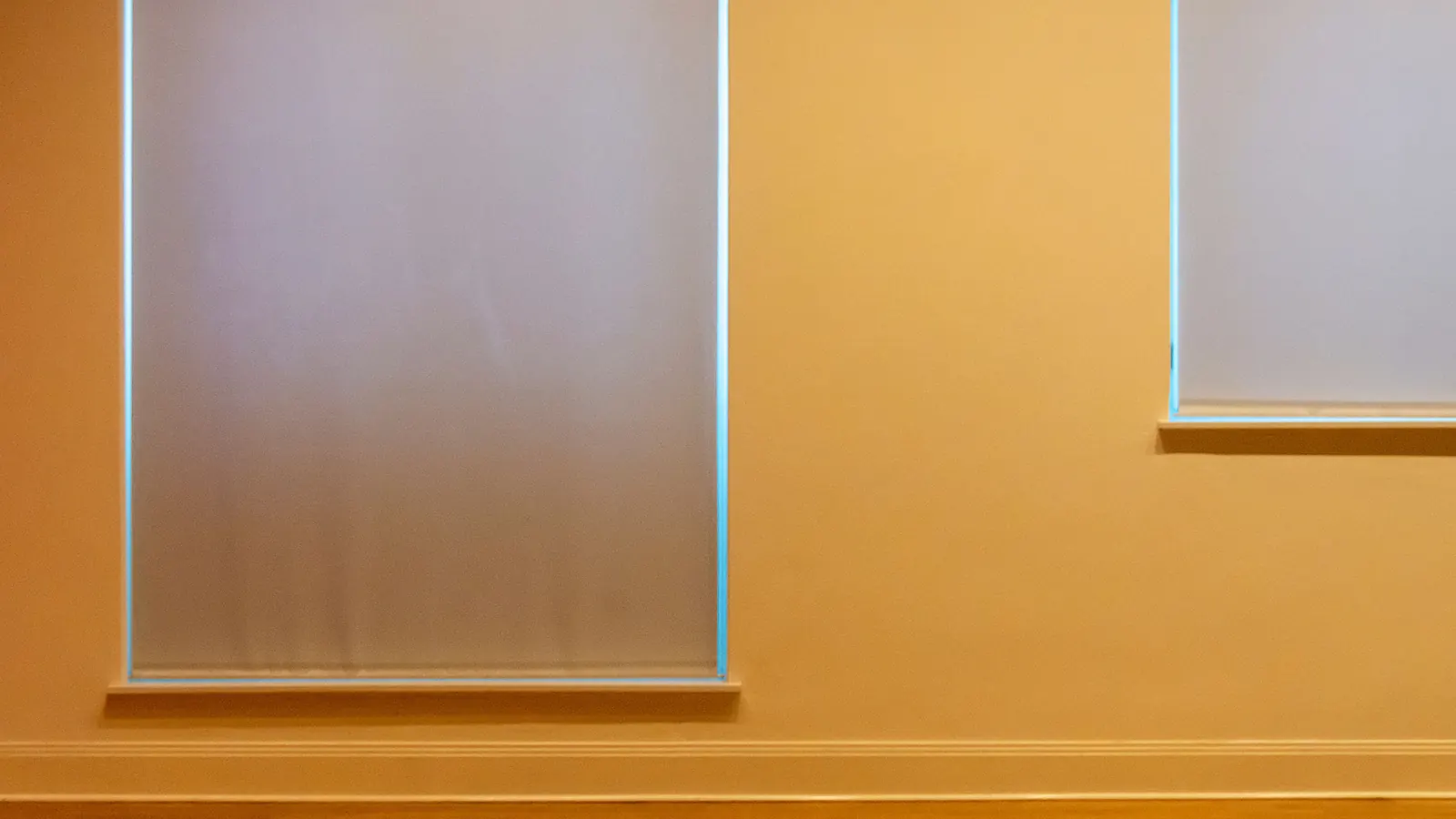
A roller shade is a single flat panel on a tube. It is the simplest and the slimmest when raised, and in a quiet room it reads as a clean, matte rectangle that lets trim and wall color do the talking. Cellular, or honeycomb, shades are built from pleated cells that trap air, which is why they are sold for insulation, and many offer top-down bottom-up operation. That second feature solves the street-facing window: lowered from the top, the shade keeps the lower glass covered where passers-by look in, while the sky band above eye level lights the room.
Zebra shades layer alternating sheer and solid bands, and sliding one layer against the other changes the light while the shade stays down. In a living room used at different hours, that means stripes of soft light across the floor in the morning and a closed, solid face in the evening without touching the height; Persilux’s Light Control Zebra Blinds work this way, and the listing mentions aluminum rods. Choose a zebra when the light changes through the day and a roller when you mostly want the window either open or dark.
Roman shades fold into flat pleats as they rise. They bring fabric, texture and a softer line to a window, and the folded stack takes up some of the glass at the top. Solar shades are an open weave rated by openness, the share of the fabric that is open. A low openness lets in less light and a high one lets in more light and more of the view, but how much glare, heat or UV a given shade blocks depends on the fabric, so lean on the retailer’s figures where they exist. For a TV wall or a desk facing a sunny window, start at the lowest step, such as Persilux’s 1% Openness Solar Shades, which the retailer says block dazzling sunlight while you can still see outside; it also lists 3% and 5% versions for rooms where the view matters more than the glare. Solar fabric gives no privacy after dark with the lights on, so it is not the shade for a bedroom on its own.
Cords, motors and no-drill mounts
Window covering cords can strangle young children, and CPSC recommends cordless coverings, which it calls the only option that eliminates the strangulation hazard. That can happen in moments, even with an adult nearby. If you keep corded blinds, CPSC says shortening the cords, fitting cord stops (within 1 to 2 inches of the head rail when the blind is fully lowered) and keeping cribs, beds and furniture away from the window reduce the risk without removing it. It also advises replacing blinds sold before November 2000 at once, because most have inner cords that can form a loop around a child’s neck. “Cordless” describes the lift system and does not guarantee that every internal component is cord-free, so install as instructed and keep climbable furniture away from the window.
Motorized shades earn their cost on tall or hard-to-reach windows, or when several windows run on a schedule. Look at how the motor is powered and charged and which apps, remotes or smart-home platforms the retailer lists for that exact model, because compatibility that is not stated cannot be counted on. The Eve Motionblinds bottom-up cellular shade is an example of a listing that states it: no cables, charging over USB-C, control from a phone, speaker, remote or a pull on the shade, operation without a bridge or cloud connection, and a pitch aimed at Apple HomeKit homes. If your home runs on another platform, that last point is the one to check first. Eve’s support guidance for a different product shows why generation matters: its Matter roller upgrade kit needs compatible controller and Thread hardware, and other shades sold under the same brand may differ.
Where drilling is off limits, as in many rentals, the shade has to be sold with no-drill mounting and the frame has to suit that mount. Persilux’s No Drill No Tools Roller Shades are sold with a no-punch design that the listing says protects windows and walls, and the product page sets the fit: 12 to 86 inches wide corded, or up to 87 inches cordless or motorized, with a minimum inside-mount depth that the same page gives as 1.25, 1.5 and, in its FAQ, 1.6 inches. Plan on the deepest of those minimums, 1.6 inches; the FAQ asks for 2 inches for the shade to sit fully recessed. A frame at least 1.6 inches deep, with flat, firm sides and no handle in the way, is the one this shade is made for; a shallower frame needs an outside mount or a different product. The page calls the headrail tension-mounted but gives no weight it can hold, so on a window near the 86-inch limit the lighter fabric is the safer order.
Inside or outside mount
An inside mount sits within the frame and looks neater, as long as the window has the depth and nothing like a handle gets in the way. Follow the product’s own measuring guide. Persilux’s current guide, for instance, asks for the top width and the largest of three heights for its described inside mount, then applies its own rounding rules and factory deductions, and other systems differ.
An outside mount covers the frame and some wall. It stops more light at the edges and makes a small window look larger. Made-to-measure shades usually cannot be returned, so measure twice.
The eight picks
All eight picks come from one retailer, Persilux, which we work with. Two of them have no section above: the bottom-up blackout cellular, for a dark bedroom where you also want the insulation its listing mentions, and the Roman shade in a polyester and linen blend with a cordless lift, for a softer fabric line.
All of these are made to measure, so the price depends on width, height and options such as motors. A card shows a starting price only while the retailer’s feed is recent enough to quote; when it is not, the button opens the retailer’s page, where you can price your own size. We have not tested these shades; the details come from the retailer’s product information.
More in blinds and shades. For the rest of the bedroom, see how to choose a cooling blanket and how to furnish a kids’ bedroom.
The picks
Availability updates from the retailer feed. Where our copy of a price is out of date, the retailer’s site shows the current one.

For a bedroom that has to be dark
Blackout Roller Shades (Custom Size)
A made-to-measure blackout roller shade with a cordless lift. The retailer describes it as blocking sunlight for sleep and lists the cordless design as a safety feature, which matters in a child's room.

Blackout with a cellular construction
Bottom Up Only Blackout Cellular Blinds (1.5" cell)
A blackout cellular shade with a 1.5-inch cell that raises from the bottom only. The listing says it darkens a room enough for daytime naps and mentions insulation and noise reduction alongside UV protection.

For a street-facing window
Custom Top Down Bottom Up Cellular Shades (1.5" cell)
A 1.5-inch cellular shade that can be lowered from the top as well as raised from the bottom, so the lower half of the window stays covered while daylight comes in above eye level.

To adjust light without raising the shade
Light Control Zebra Blinds
A zebra blind made of alternating sheer and solid bands; shifting the bands against each other moves the shade from open to closed while it stays down. The listing mentions aluminum rods and UV protection.

For glare in a living room or home office
1% Openness Solar Shades
A 1% solar shade cuts glare on a screen or the sofa hardest while keeping a dim view out, as the retailer describes. Step to the listed 3% or 5% versions if seeing the garden matters more than glare; the 5% is the one described as leaving enough light for plants on the sill. It gives no privacy after dark with the lights on.

If you can't drill
No Drill No Tools Roller Shades
A made-to-measure roller shade that installs without screws, the simplest choice for a rental where the lease rules out holes. The frame decides whether it works: the product page lists widths up to 86 inches (87 cordless) and inside-mount depths from 1.25 to 1.6 inches, so plan on a frame at least 1.6 inches deep with flat, firm sides.

For a smart home
Eve Motionblinds Motorized Bottom-Up Only Cellular Shades
A motorized bottom-up cellular shade sold as Eve Motionblinds, for a high or hard-to-reach window you would rather schedule or run from a phone. Which smart-home platforms it works with depends on the motor generation listed, so match it to the system you already use.

For a softer, fabric look
Linen Fabric Roman Shades
A Roman shade in a polyester and linen blend that folds into flat pleats as it rises, with a cordless lift according to the listing.