Changing Tables: Choose a Station That Works for Daily Care
A changing table is worth its space when every supply is in reach and the pad belongs to that setup. Plan the station around one change at a time and what the furniture becomes later.
By DecoraMintPublished 5-minute readMore in Kids' Rooms
In this guide
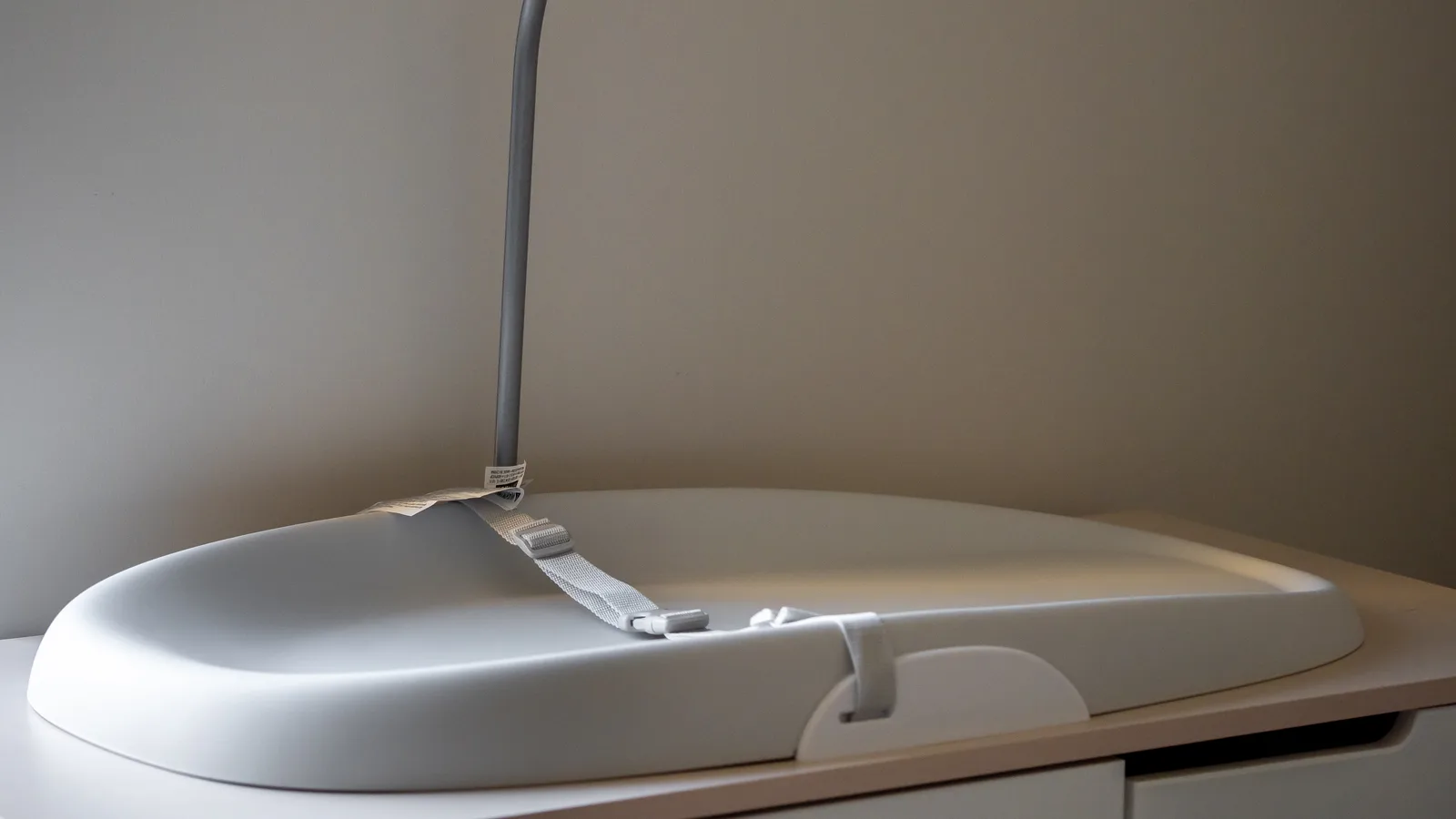
Never leave a baby alone on a changing table, even for a second and even when the strap is buckled. The American Academy of Pediatrics’ changing table guidance says so directly: use the strap, but do not rely on it alone, and if you have to step away, take the baby with you. Everything about choosing a station follows from that rule, because the best one keeps what you need within arm’s reach while you keep a hand on the baby.
Three ways to build the station
A purpose-built open table has a changing surface above two or three shelves, so towels, wipes and creams sit in view just below your hands. It looks light in a small room, and a pale wood or white frame with woven baskets reads as furniture rather than equipment. A dresser fitted with a changing top uses furniture you will keep, because the top comes off when diapering ends, but only if the dresser, top and pad are documented to go together. A crib with an attached changer combines two products into one footprint, each with its own limits. A pad set on an ordinary cabinet is the arrangement to avoid, since an accessory made for one dresser or play yard does not fit another because its width looks right. The kids-room guides cover the rest of the nursery.
For a freestanding table, the AAP advises a sturdy, stable table with a 2-inch guardrail on all four sides and a concave top, with the center slightly lower than the edges. Those are the features to look for first, before the finish.
Where you stand matters as much as the table
Tape the footprint on the floor and stand where the instructions put the caregiver. Can you walk straight up to it, or are you reaching across a corner? Does a closet door swing into your working space? The height of the changing surface, not a decorative back panel, decides how your back feels at the end of the day, and two adults of different heights may disagree. A deeper table adds reach, since the far edge of the pad is the distance you cover with one hand while the other holds the baby.
Leave doorways clear and give the hamper and diaper pail a spot you can reach without turning your back.
A concrete example and its limits
Delta Children’s Wilmington changing table is a good illustration of how a listing reads. It has a changing surface over two shelves and comes with a pad, and the listed assembled size is 35 inches wide, 18.75 inches deep and 39.25 inches high. That is the size of this model. The page links more than one booklet, so use the instructions that match your unit’s revision.
In Delta’s June 2025 booklet for the Wilmington 7530 H revision, the warning page specifies the supplied pad, a 30-pound maximum and staying within arm’s reach, and the pad is shown with its restraint accessible. Those are that revision’s figures. Another table carries its own limit, and a storage-shelf rating is a separate number from the weight allowed on the changing surface. When a listing gives one unexplained load figure, ask the maker what it applies to.
Use the pad made for the table. A thicker pad, an extra cushion or a board laid on top changes how the baby sits, and the maker has tested only its own.
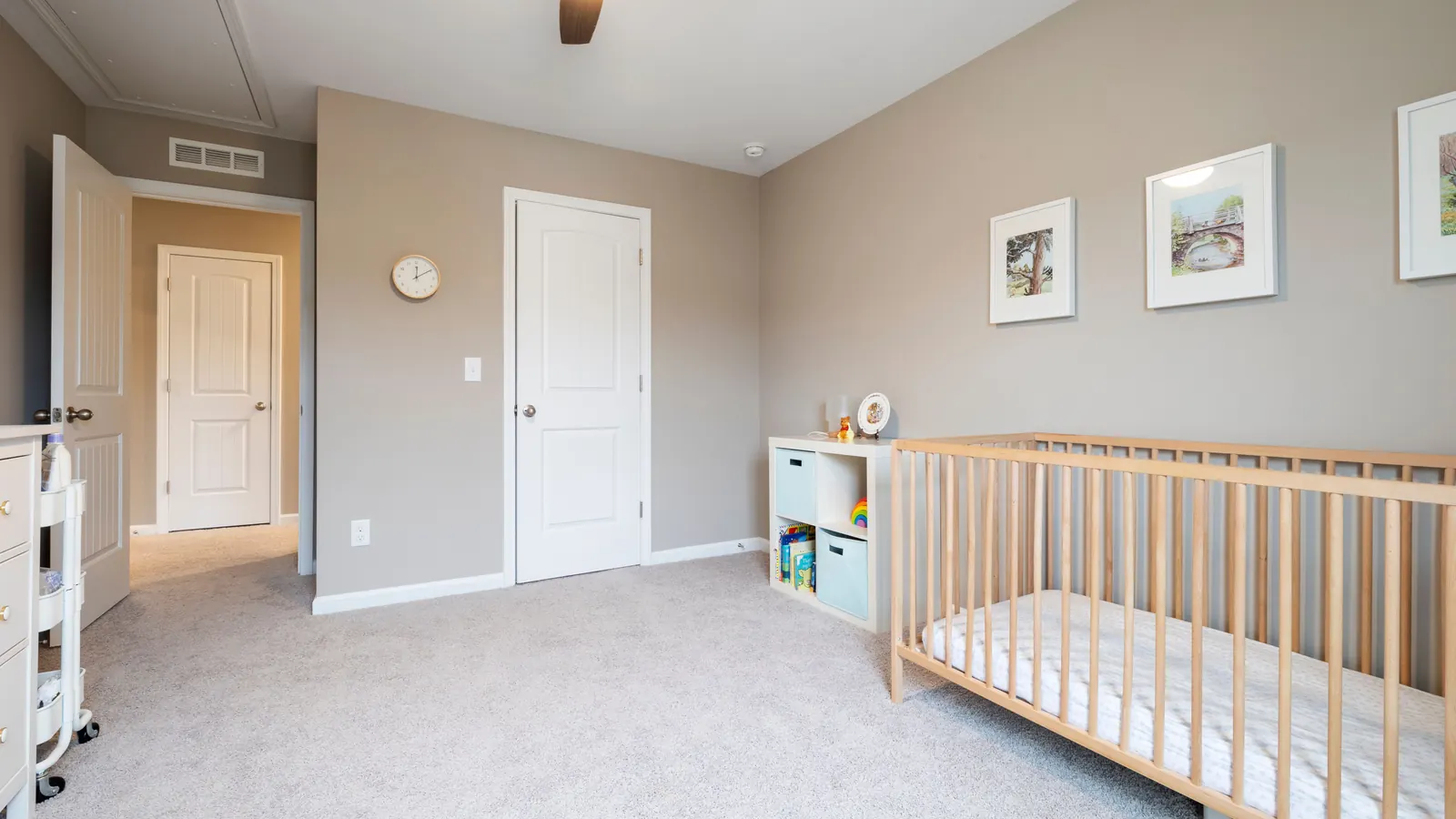
Look at the station as part of the wall it stands against. Open shelves in pale wood or white keep the silhouette light, and baskets in a natural weave or muted linen add texture without competing with the art above. A dark, heavy finish turns a changing table into a block in a small nursery, while a lighter one lets window light reach the floor beneath it. Choose a pad cover in one soft, solid tone so the surface you look at most stays calm, and save pattern for the wall.
Supplies: close, but out of the baby’s reach
The AAP’s rule is to keep diapering items close enough to grab without leaving the baby, but out of the baby’s reach. Put the wipes, diapers and cream for the change in front of you, and keep reserve packages elsewhere so the working shelf does not overflow. Do a dry run before the baby arrives: stand at your side and see whether the next item is in reach, and watch for a basket behind your knees or a drawer that swings into your standing space.
The AAP also warns against letting a baby play with powder containers, since inhaled powder can injure the lungs, and says to store disposable diapers out of reach, because swallowed bits of the plastic liner can cause suffocation. Keep creams and other products in closed storage instead of on the pad’s edge, and as the baby grows, reconsider what is reachable from the table.
Tip-over: anchor the dresser and any combo unit
A dresser or combo unit with a changing top is tall, drawered furniture, and children climb. CPSC’s Anchor It campaign says children like to climb furniture, that new dressers are sold with anti-tip devices to install right away, and that existing furniture can be anchored with inexpensive anti-tip brackets. Anchor it to the wall, and keep tempting items off the top.
Wheels, folding stations and portable mats
A wheeled station looks handy in a small apartment, but it means locked wheels before every use and a model that permits loaded movement. Do not add casters to a fixed table or move the station with a baby on it. A folding station needs a documented opening and locking sequence, and its folded thickness is a different measurement from the space it takes when open. A portable mat on the floor or a bed is a different arrangement from an elevated table, and the same supervision rule applies to it.
After diapers
A removable changing top can leave you a good dresser if removal is part of the maker’s documented configuration, and some tables with fixed rails cannot become a shelf unit. If you want the furniture to last, decide that when you buy: a focused changing table plus separate long-term storage is sometimes the clearer plan. The changing surface is not a place for a nap, whatever the cushioning looks like.
Clean the pad cover and the surfaces around the attachment points as the instructions direct, and do not cover or modify the strap. If a part is missing or damaged, stop using the table until the maker supplies the right replacement for your revision.