Kids' Rugs: Choose for Play, Room Fit and Realistic Cleaning
Is the rug for playing on, adding color or a soft landing by the bed? Pick the main job, size it around the furniture, then check backing and care before going big.
By DecoraMintPublished 6-minute readMore in Kids' Rooms
In this guide
We may earn a commission from links on this page, at no extra cost to you. Affiliate disclosure
Picture the room at four in the afternoon: a block tower going up in the middle of the floor, a stack of picture books by the reading chair, a trail of toy cars heading for the door. The rug should sit under that scene, not under the empty room in the listing photo. So decide its main job first (a play base, a reading spot, a soft landing beside the bed or a splash of color), size it around the furniture as it actually opens, and only then fall for a pattern. Our kids-room guides cover the furniture and storage around it.
Let the main activity choose the surface
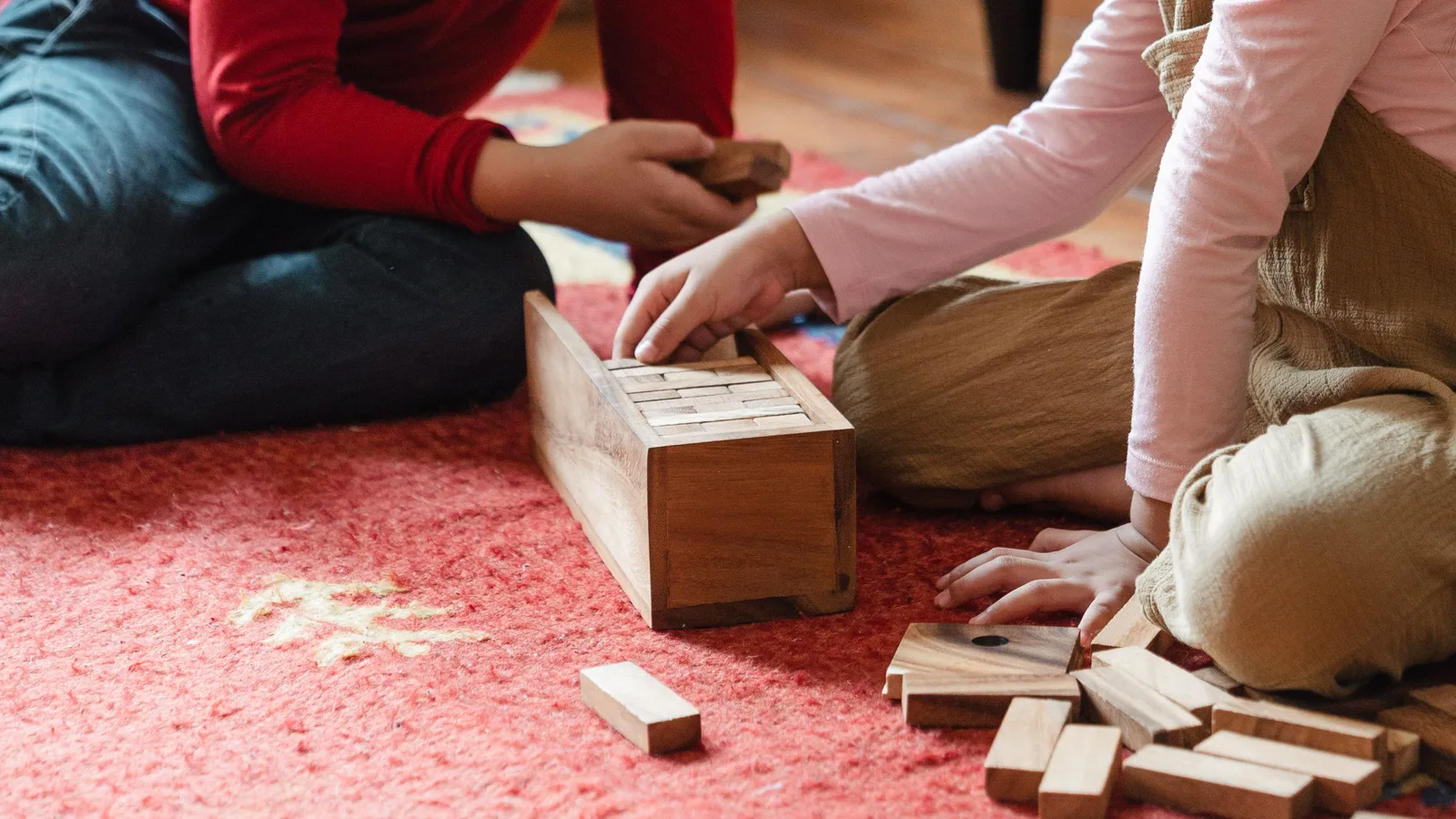
For building and small-piece play, a flat, low pile is easiest: towers stand up, and pieces stay visible. A busy, multicolored pattern looks cheerful but hides the one tiny brick everyone is hunting for at bedtime. Low-contrast patterns or a simple border give the same warmth without the camouflage.
A reading corner can take more texture. A round rug with a little loft pulls a chair, a floor cushion and a low book ledge into one cozy island, and it does not have to line up with the walls. Beside the bed, what counts is the strip of rug that stays exposed once the bed and its drawers are in place, enough for feet in the morning without catching on the door.
In a shared room, put the rug where neither child’s route to their own shelves crosses the other’s play. And a rug is not a craft mat. Paint, slime and clay belong on a wipeable surface on a table or a mat made for it.
Size it around furniture in use
Fold a flat sheet or a couple of opened-out moving boxes to the rug’s size and lay them where it would go. Then open the closet, pull out the under-bed drawers and walk the usual path from the door to the bed. You are checking the room in motion, because a rug that fits the closed footprint can still block a drawer or bunch under a door.
In a small bedroom, a clear open rectangle in front of the shelves often does more than a large rug mostly buried under the bed. A narrow sliver of rug across a doorway is the arrangement to avoid; it is the one that gets kicked up. Turning the rug ninety degrees or dropping a size can fix what a bigger rug cannot.
Shop by inches. A “5 x 8” label can be a nominal size, and a 6-foot round covers far less floor than a 6-by-9 rectangle. For the bigger picture on proportions, see choosing the right rug size.
Two kids’ rugs, two different laundry days
Super Area Rugs’ Hipster Kids and Playroom braided rug in Aqua Blue Multi is a braided rug in a 65% nylon and 35% polypropylene blend, sold in more than one shape and size, so the footprint depends on the option you select. The options are ovals from 3 by 5 to 8 by 11 feet, rounds from 4 to 10 feet and a 2-by-8 runner, with no rectangular area-rug size among them, and the listing calls the rug reversible. Its care page splits washing for smaller sizes from care for larger ones and points you to the attached label. It also advises vacuuming without a beater bar and drying both sides completely. If aqua fights the bedding, start from the Super Area Rugs store, which opens on its home page rather than on this rug: the Hipster is listed separately in yellow, violet, lime green, pink and sand beige multi colorways, each with its own size list, next to the solid-colored Lullaby braid in matching shades. A multi-colored braid scatters small flecks of color across the floor and hides the odd crumb, while a solid braid reads as one calm ring under the reading chair and leaves the toys and books to supply the color.
IKEA’s BLASKATA 00569520 is built differently: polyester pile on a synthetic-rubber backing, 41 by 63 inches, recommended for ages 3 and up. Its care instructions call for warm hand washing and no tumble drying.
Set against the room plans above, they go to different corners. The Hipster’s rounds are the shape for the reading island, where a 4- or 6-foot circle is the size to tape out first, and because the listing calls the braid reversible, a marked or worn face can be turned under. For the open rectangle in front of the shelves, the Hipster offers nothing rectangular beyond that narrow runner, and BLASKATA’s 41-by-63-inch rectangle fits that plan, as long as someone at home is willing to hand-wash a rubber-backed rug of that size in warm water and air-dry it, since tumble drying is ruled out. These notes come from the makers’ listings, not side-by-side testing.
Washable has to mean washable at your house
The care label decides, not a “kids’” or “playroom” tag. Before choosing the largest size, think about your washer’s drum and where a heavy wet rug can lie flat to dry without blocking the bathroom or a hallway for a day. A smaller rug that goes through your machine can be easier to live with than a big one that needs professional cleaning after every juice spill. And “stain-resistant” describes a finish, not a promise about crayon.
If a seam opens or the backing starts to crumble, follow the maker’s repair or replacement advice; another wash will not fix a failing seam or backing.
Backing, floor and edges
Know your flooring and its finish before choosing a rug pad. A backing labeled non-slip is not a guarantee for every floor treatment, so use a pad that both makers allow. After the rug is down, watch the edges for a week. If a corner curls or the rug creeps, fix the cause with the right pad or a different placement, not by hiding the problem under a dresser or taping it with an adhesive the floor was not made for.
Plan to lift it now and then. Debris and the odd lost bead collect underneath, and a rug pinned by heavy furniture makes cleaning the floor a project.
Color that leaves room for the toys
Pick one relationship with the room: a shared accent pulled from the bedding, a softer echo of the wall color or a confident contrast against pale furniture. The rug does not need to repeat the room’s theme. A calm rug makes a crowded shelf of bright books and toys look intentional; a bold rug can carry the whole room if the bedding and curtains stay plainer. Judge it with the toys out, since they bring a lot of color of their own.
Check which part of the design stays visible. A central picture can vanish under the bed, while a border frames the open floor nicely. Choose from what the kids actually like, not color codes by gender, and lean toward something that survives the next change of favorite animal.
In a nursery
A rug in a baby’s room is for the floor plan, the chair and the changing area, never the sleep setup. CPSC’s safe-sleep guidance calls for an infant sleep product with a firm, flat mattress and a fitted sheet only; a soft floor rug is not a place for a baby to nap. Keep a clear path to the crib, and follow any age limit the rug’s maker gives.
Retailers to browse
Compare colors, sizes, materials and return details on the retailer’s current listings.
- Go to Super Area Rugs
Super Area Rugs
Opens Super Area Rugs’s store (area rugs).