Nursery Decor: Plan a Useful Room Around Safe Daily Routines
Changing clothes, storing supplies and sitting with your baby come before the theme. Plan the room around those routines and a safe sleep space, then add color and personality.
By DecoraMintPublished 5-minute readMore in Kids' Rooms
In this guide
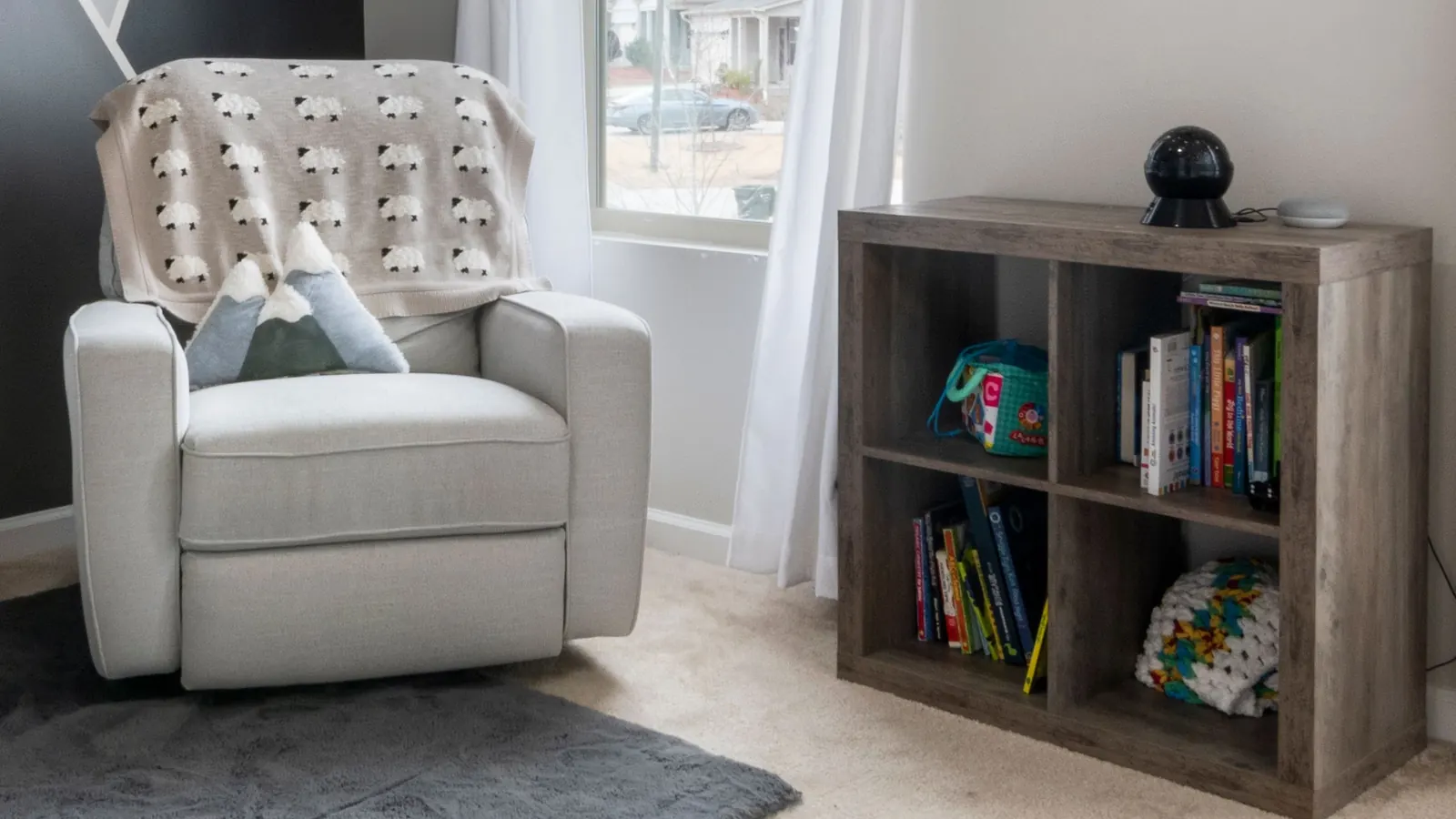
Soft light through cream curtains, a deep armchair with a basket of folded muslins beside it, a low dresser in pale ash and nothing at all on the crib wall: that is a nursery that works, and it is built from the routines up. Changing, dressing, feeding, storing supplies and finding your way across the room in the dark come first. The theme is the last layer.
Start with the essential equipment and a layout that works, and let a smaller set of useful pieces show you what the household actually needs.
The sleep space comes first
NIH’s Safe to Sleep guidance defines room sharing as the baby sleeping in the adults’ room, in a separate infant sleep space, and ties it to lower risk of sleep-related death (safe sleep environment). NIH says room sharing is safer than having a baby sleep in a separate room, so a decorated nursery is a room for changing and daytime routines first, and a place to check the current guidance before the baby sleeps there overnight.
When the baby does sleep there, CPSC’s safe-sleep guidance calls for an appropriate infant sleep product with a bare surface and a fitted sheet. Pillows, blankets, bumpers and stuffed toys stay out, and the baby sleeps on their back. A retailer’s crib display is merchandising, so take your color cues from the walls, textiles and furniture elsewhere in the room. Keep framed pictures, shelves and hanging decor off the wall above the crib, and keep lamp and monitor cords away from it.
For secondhand equipment, look the exact model up in recall notices and make sure instructions and all hardware are present. New paint cannot fix a missing part.
Draw the room before choosing a theme
Measure the walls, doors, windows and built-ins, and mark outlets, heating equipment and access panels. Allow for drawers pulling out and doors swinging. Our furniture-measuring guide covers the delivery route too, which matters for large pieces. Place the essential equipment first and then test the paths between it. Furniture should not sit where a door must stay shut to make the plan work.
Try the layout at the hours you will use it. A chair that is easy to reach by daylight can be a trip hazard in a dim room if something has been left on the floor. Keep a clear route from door to crib to chair.
Storage and the changing zone
Separate current clothes from larger sizes and occasional supplies, and measure drawers and shelves before ordering any set of bins. Open shelves can show off a few books but need editing, so decide what belongs on each shelf before filling them with decor. Anything that can tip needs anchoring: CPSC’s childproofing guidance recommends securing furniture, and the instructions and your wall construction decide the hardware. Keep medicines, cleaners and other hazards in secured storage; an open decorative basket leaves them within reach.
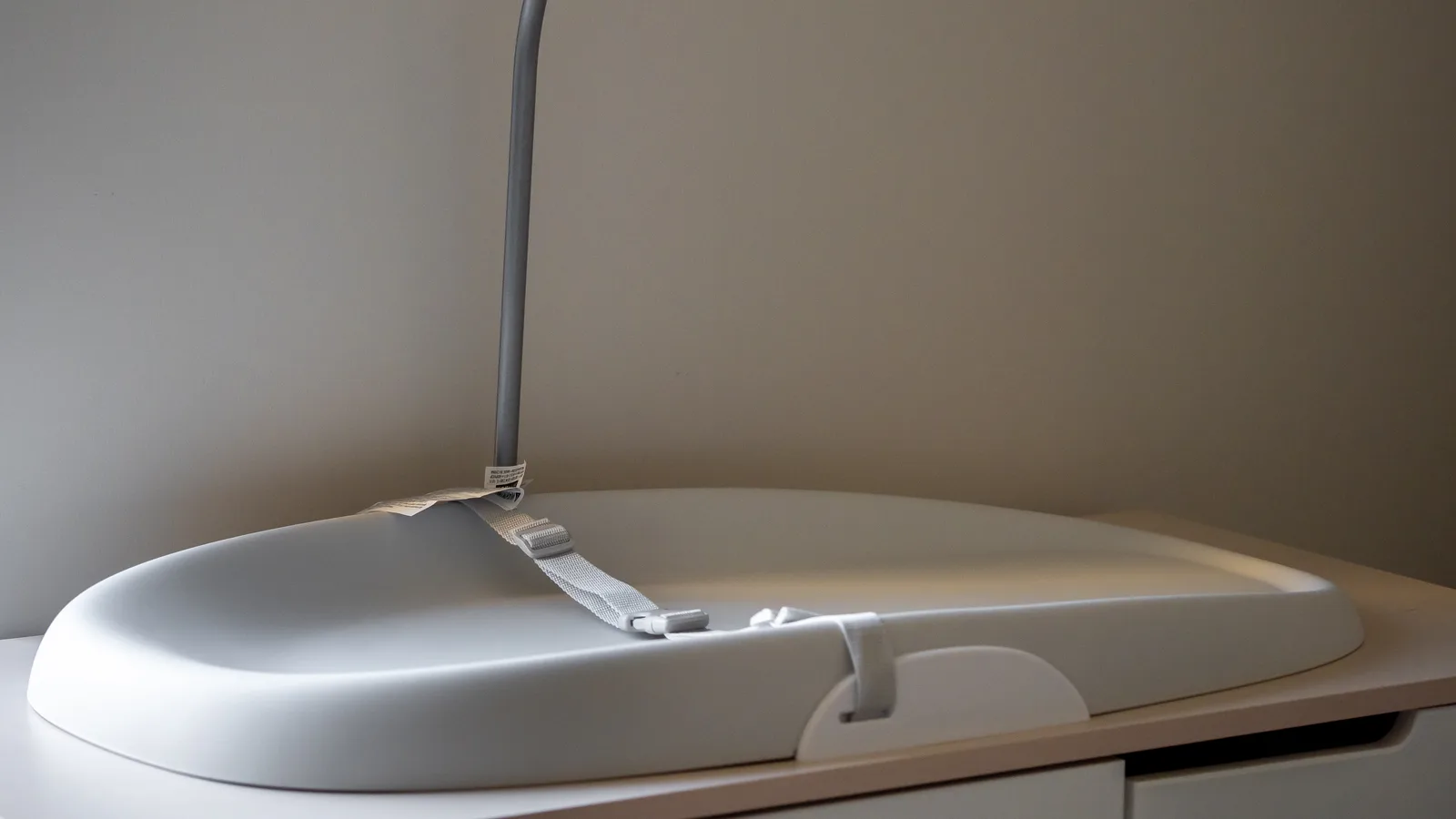
Using a dresser for changing is a separate decision from using it for clothes. The maker has to approve the whole setup, including topper or tray and pad, and the caregiver stays with the baby throughout. Our nursery dresser guide covers that match in detail. A tray of coordinated containers keeps the surface calm without adding anything fragile for small hands.
A chair for the adult
Try the chair before buying it. You should be able to sit, stand and reach the next thing you need without a fight, and the full swing of a rocker or glider belongs in the footprint. Keep a side table stable and out of the walking route, and route any cord from a powered chair safely.
A nursery chair is not a sleep space. NIH warns that couches and armchairs are especially dangerous when an adult falls asleep there while feeding or comforting a baby.
Light and window coverings
Put switches where you can reach them and check the room after dark. A low lamp near the chair and dimmable light by the changing area reduce how much you need the overhead.
CPSC recommends cordless window coverings where young children are present, as the option that removes the strangulation hazard. Where cords exist, it advises moving cribs, furniture and toys away from windows and cords, preferably to another wall. Plan the furniture and the window treatment together.
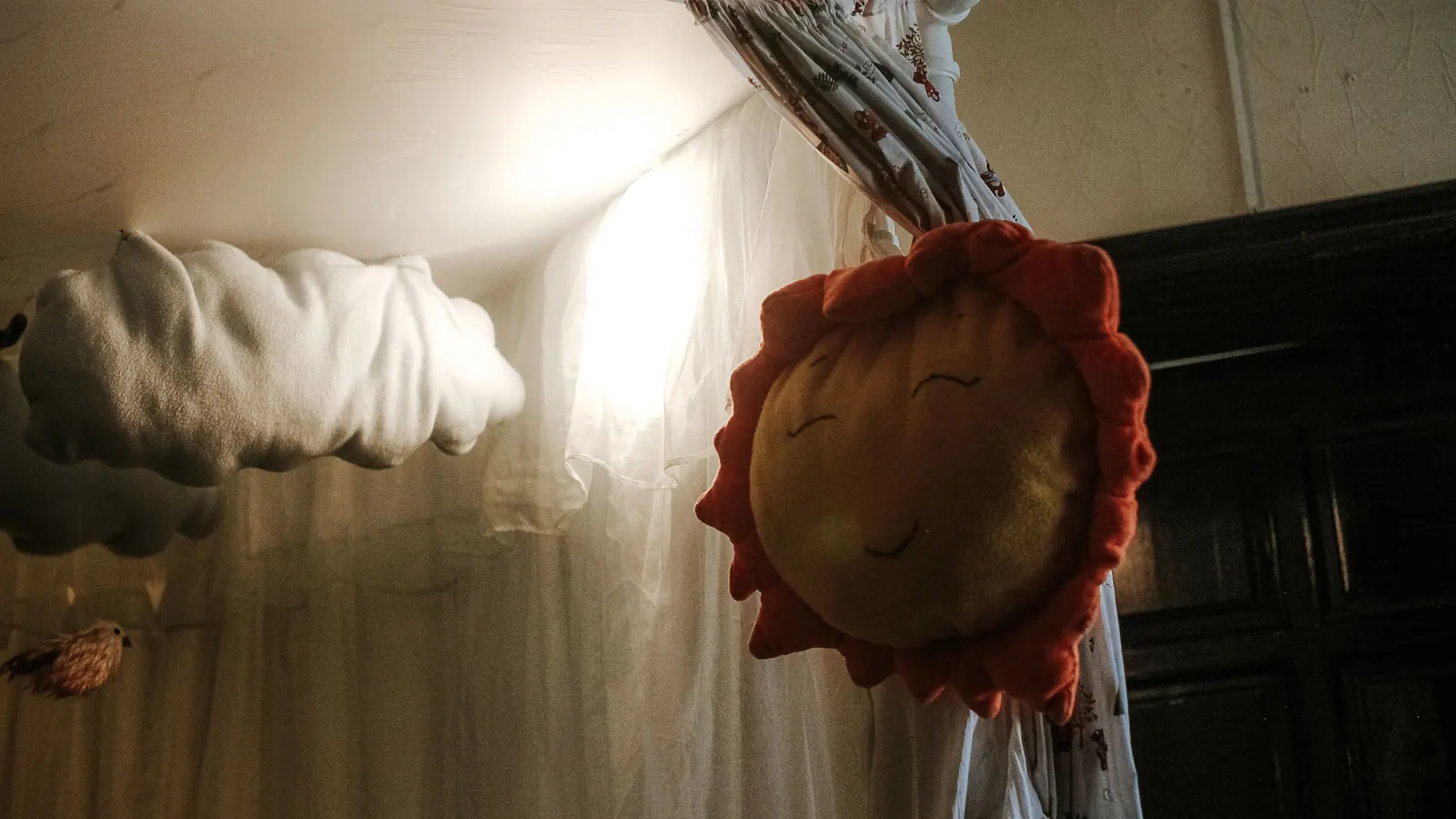
For blackout, light still enters around the sides, above the heading and between panels, so even a dark fabric leaves a bright edge. IKEA’s gray MAJGULL pair is sold as blackout, with each panel listed at 57 by 84 inches, and IKEA advises overlapping the window frame to cut leakage. We are working from that listing rather than a light test. Two panels’ flat widths shrink once gathered, so measure the track span and the finished drop with your own heading and hardware, and look at where the panels meet in the middle and where the fabric rests when open. Use the hardware’s own parts to close gaps instead of improvised ties or cords, and keep the covering and its operation away from the sleep space. Evaluate privacy separately from darkness, and choose the arrangement for controllable light, since no curtain promises a baby longer sleep.
Color and wall decor
In a small nursery, a pale sage or warm white wall with a wood-toned dresser and one deeper accent, say a rust or navy cushion on the chair, gives the eye a single place to land. Matte paint keeps window glare off the wall, and a woven rug with a low pile gives the floor texture without catching a rocker’s runners. Add pattern in one place only, such as a striped shade or a framed print on the adult side of the room, and the space still feels restful at night.
A warm neutral wall with one stronger color, a simple stripe or a nature palette are aesthetic choices and no more. Test paint or wallpaper samples in the room’s light, follow the product’s cure and ventilation directions, and finish before the furniture comes in. In a house built before 1978, EPA advises testing old paint or assuming it contains lead (EPA), so deal with that before sanding or scraping, and leave removal of lead paint to qualified lead-safe professionals instead of doing it yourself. Check rental rules too.
With walls, repeat one or two colors from the room and leave some wall empty. A small grouping over an adult storage area is easier to update than a scatter around the crib. We would hang pictures only where they cannot fall or be pulled onto a child, mount them with hardware suited to the wall rather than a decorative adhesive hook, and keep anything breakable away from climbable furniture, since a dresser or chair changes what a child can reach.
Buying in order
Start with suitable essential equipment, its installation and useful storage, then lighting and window coverings. Budget for delivery, assembly and anchoring along with the price tags. Leave optional decor until the room is working, so you can see whether another rug, basket or chair has a purpose. Revisit the room as the child grows, looking at cords, climbable furniture and changing storage.