How to Measure Before You Buy Furniture
Measuring the room, the route in and the clearances around each piece, so new furniture fits the first time.
By DecoraMintPublished 3-minute readMore in Small-Space Furniture
In this guide
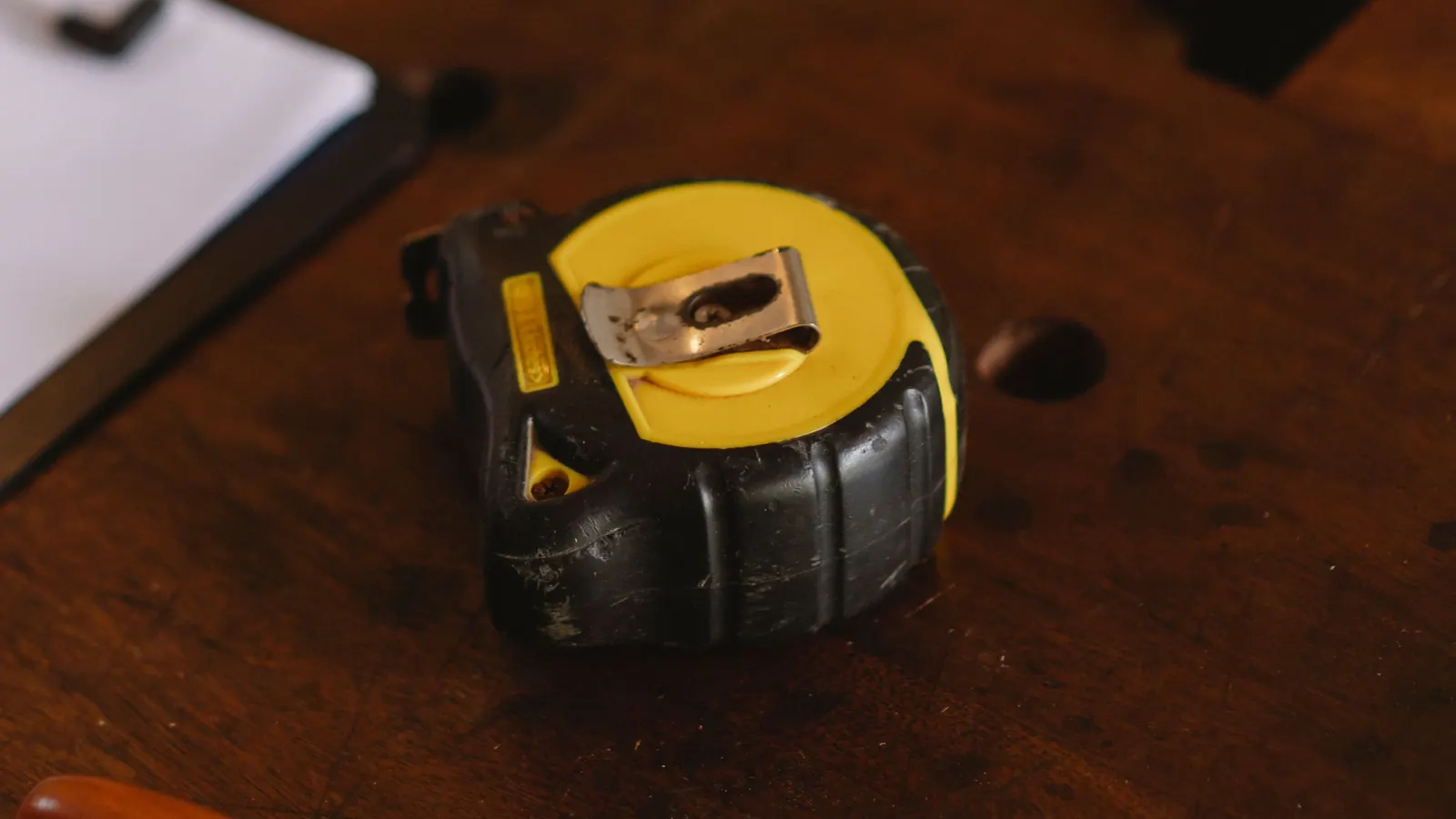
The tape measure usually gets pointed at the wrong space: the corner where the sofa will sit, when the stairwell it must climb first is what decides whether it arrives. Measure the route in, the room and the clearances around each piece, in that order, and a delivery turns into an afternoon instead of a return.
The route in
Measure every doorway, hallway, stairway and elevator the piece has to pass through. Write down the width and height of each opening and note tight turns, low ceilings over stairs and any banister that narrows the way. Compare these with the item’s smallest dimension, usually its depth, or the diagonal depth for a sofa, which can often be tipped on end to clear a door that the flat width would not. Remember that the handles, the person carrying the other end and the corner at the landing all take room too. Where a piece cannot make the turn, look for one that ships in sections or with removable legs and arms.
The room
Measure each wall at floor level and note windows, doors, radiators, vents and outlets. Sketch a floor plan on paper and mark everything that cannot move. Then mark the baseboard heights and where the sofa back would sit against them: a wall with a deep baseboard or a radiator can hold a piece away from the wall, which matters in a narrow living room.
Clearances
Distances to plan around:
- 30 to 36 inches for main walkways.
- 14 to 18 inches between a sofa and a coffee table.
- 36 inches behind dining chairs, so they can be pulled out.
- 24 inches beside a bed, to get in and out.
These are common design rules of thumb, and tight rooms often trade a few inches here for space there. Protect the walkway to the door first and let the other gaps flex.
Tape it out
Mark the outline of a new piece on the floor with painter’s tape, and on the wall for height. Leave it for a day or two and walk around it. A sofa that blocks the line from the door to the window, or a table that makes the walkway feel pinched, is far easier to catch with tape than after assembly. Tape also shows how a rug, a lamp and a side table will cluster around a piece. A long, low sofa against a pale wall leaves room for a floor lamp and a shallow console at one end, whereas the same footprint in a deep, high-backed style might swallow the window.
Check the other dimensions
Look at seat height, arm height and overall height, not only width. A sofa can fit the wall and still sit awkwardly under a window; a desk can fit the corner and still clash with the arms of your chair.
Tall pieces and wall anchoring
Dressers, bookcases and TV stands that will stand against a wall should be anchored to it. The CPSC’s Anchor It! campaign says anchoring all furniture with drawers, doors and shelves to the wall prevents tip-over injuries and deaths. When you tape out a tall piece, mark where the anchor will go: you need access to a stud behind the piece, and the clearance to the wall has to allow for the strap. The Anchor It! site lists the supplies: a kit, drill, stud finder and screwdriver.