How to Choose a Kids' Twin Bed That Fits the Room
A twin frame has to fit the mattress and the way the room is used: getting in, changing sheets, opening drawers. Start from the exact mattress and the full frame size.
By DecoraMintPublished 6-minute readMore in Kids' Rooms
In this guide
In most children’s rooms the twin bed is the largest object and the one that decides where everything else goes: which wall the dresser takes, whether the closet door opens fully, how much floor is left for play. So choose it the way you would choose a sofa for a small living room, by drawing its footprint first. The mattress size is only the beginning of that drawing.
This guide covers twin beds for children who are ready for the selected product under its maker’s guidance. It does not address infant sleep or recommend an age for leaving the crib.
Match the frame to the mattress
A size label is a starting point. Read the frame’s required mattress width, length and thickness, and see whether the listing gives the sleeping surface or the larger outside dimensions of the assembled bed. If a merchant sells regional versions, make sure you pick the one you want: a UK single and a US twin are different products, however alike the photographs. Choose the USA configuration if that is your mattress, and get the specification in writing before buying a mattress separately.
Look at the support too. Does the frame come with slats, does the mattress maker require a foundation, and will an extra base raise the sleeping height past what the bed allows? A topper adds height, which matters to a rail or trundle opening, so measure the mattress you own, depth included, instead of trusting an old order title.
Draw the footprint on the floor
Tape the bed’s outside edges onto the floor, including protruding legs, an upholstered headboard and side panels. A thick frame around a twin mattress can take noticeably more room than a simple platform. Then walk around the tape, open the closet, dresser and door, and trace the route a child takes to bed and the one an adult takes to change sheets. If the layout needs anyone to climb over storage or squeeze past a sharp corner, change the layout.
| Bed format | What it gives you | Space question |
|---|---|---|
| Simple platform | Easy access, few moving parts | Outside frame size and mattress support |
| Daybed with side panels | A daytime sofa | Reaching the wall side to change sheets |
| Storage bed | Use of the space beneath | Drawer travel and handle clearance |
| Trundle | A second sleeping spot | Fully extended footprint and second mattress depth |
| Loft or bunk | Vertical space | Separate safety and clearance rules, below |
Storage or trundle
A storage bed pays for itself when its compartments hold things you use and open without rearranging the room. Measure a drawer’s usable interior and the floor it takes when pulled out. Side drawers collide with nightstands, a foot-end drawer needs space beyond the bed, and a drawer that rolls on the floor must work on your flooring and the rug it crosses. Follow the maker’s load limit, keep contents below the closing clearance and never force a drawer shut over an overfilled basket.
Storage and sleeping are separate specifications. A drawer made for belongings is not a trundle because a small mattress fits in it; for an actual trundle, use the approved mattress footprint and maximum depth, and the maker’s instructions for bedding. Do not alter stops, slides or retaining hardware to make a drawer glide more easily.
Think about how often the second bed will be used. If every sleepover means emptying the drawer, decide where those things go, and keep rarely used items from being buried under a trundle mattress.
The upholstered option: Posie & Penn Lochlan
The Posie & Penn Lochlan Wavy Bed is an upholstered, daybed-style bed with a pull-out drawer, and a curved edge that softens a room of straight lines. The retailer’s guidance for the USA version gives a 38-by-75-inch top mattress with a maximum depth of 23 cm; the drawer takes the same footprint with a maximum depth of 21 cm, or serves as storage. Those are this configuration’s figures, and a package may or may not include mattresses, so read the listing and assembly instructions.
The curved upholstery suits a room where the bed doubles as seating. In return, fabric needs the maker’s cleaning method, and enclosed sides make the bed harder to make. Compare the assembled outside dimensions with your floor plan. We know it from published product information only, and furniture is harder to return than a pillowcase, so look at delivery and return terms first.
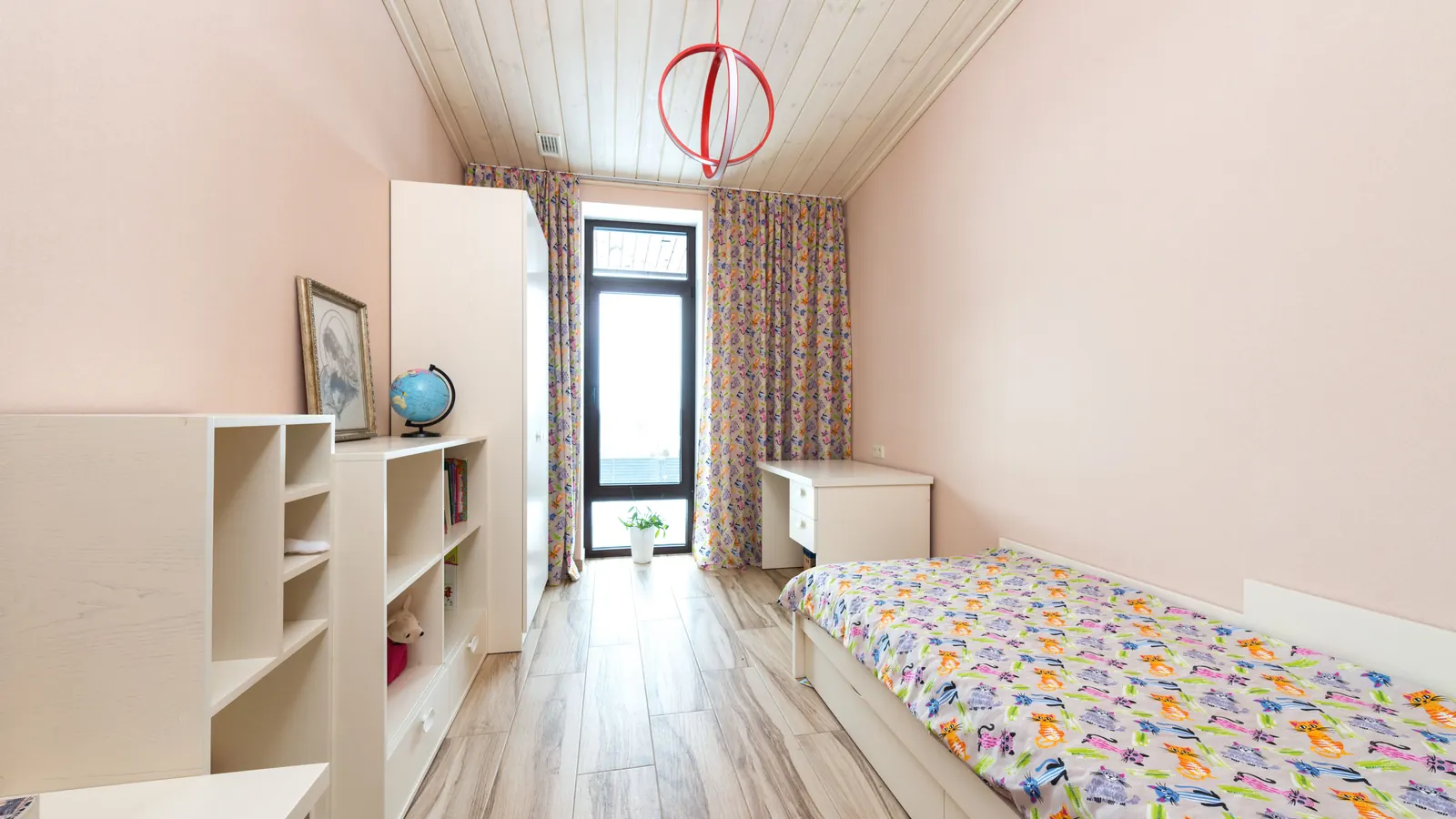
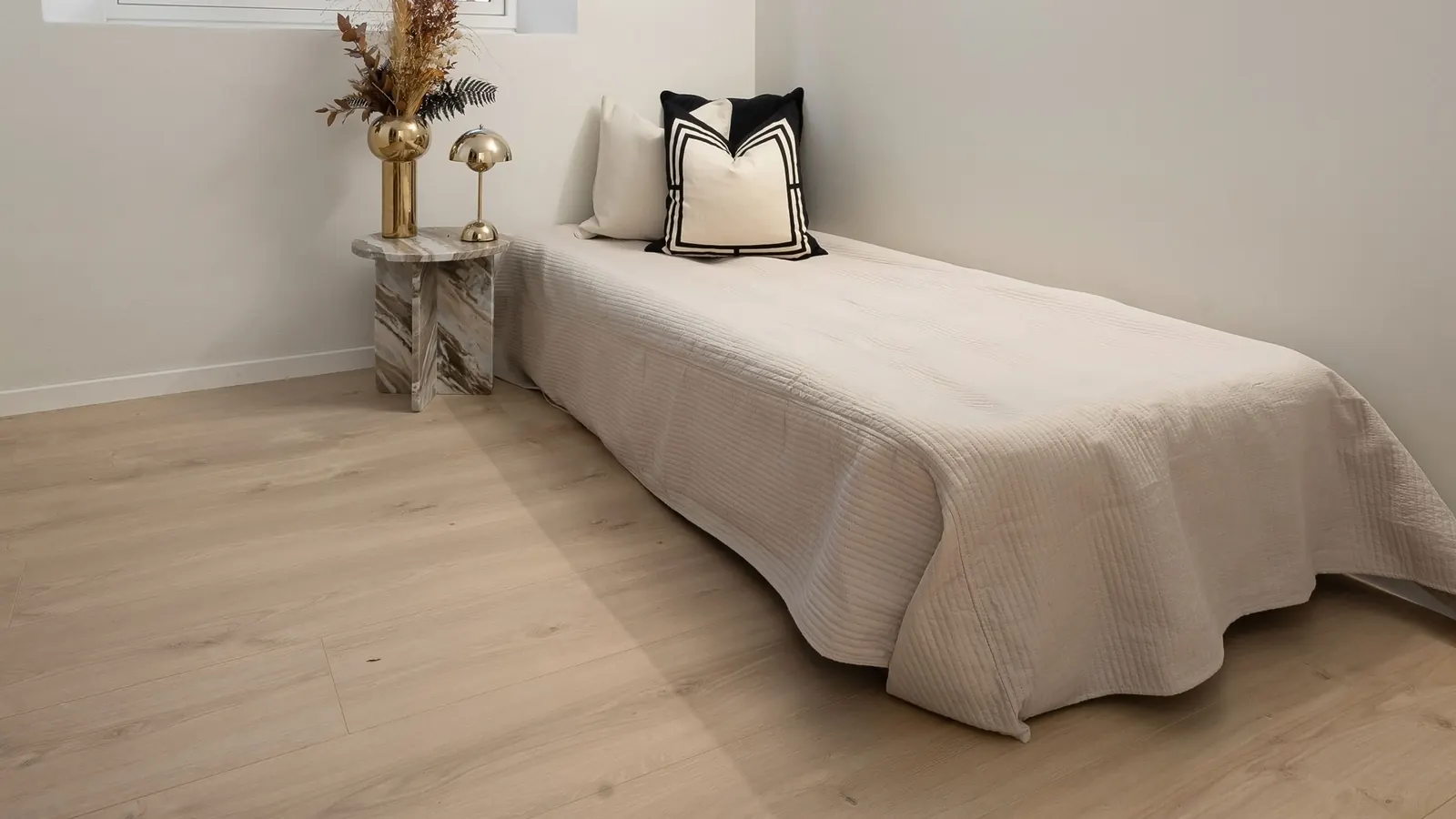
A twin reads differently depending on its frame. A low platform in pale wood leaves the wall above it open for a shelf or a row of prints, while a tall upholstered headboard becomes the focal point and asks the rest of the furniture to stay quiet. Bedding is the easy place for color: one pattern against plain walls looks deliberate, and it can change when the child’s taste does.
House beds and playhouse beds
The name covers a range. An open house-shaped frame adds a roof outline above an ordinary sleeping surface; an enclosed one adds panels or a play area; a raised one is a loft or bunk with a roof. Include the roof height and projecting posts in your plan, and leave the beams for their intended use: they are not climbing bars and do not support a canopy, lights or hanging toys the maker has not allowed. In an enclosed design, find out which part is the sleeping surface and which is for play.
Max & Lily’s assembly directory shows why the exact version matters: it lists separate documents for the House Bed, the House Bed with Trundle and the House Bed with Storage Drawers. Use the one that matches your model and parts. It documents instructions and does not vouch for a product’s safety.
Loft and bunk beds: the rules that matter
CPSC’s bunk bed standard covers beds with the underside of the foundation more than 30 inches above the floor, and requires guardrails, with a continuous rail on the wall side. CPSC’s announcement of the standard says the required label warns against placing children under 6 on the upper bunk, and that the rule targets entrapment of children in both adult and child bunk beds. Treat that age limit as firm. Do not use a loft or bunk as a swap for a low twin, and use only the mattress size the label specifies.
Bed rails are a compatibility matter
A cushioned daybed side, a decorative bolster and a portable bed rail are three different things, and only the last is a rail. CPSC’s portable bed rail guidance describes them as intended for adult beds and for children able to get in and out without help, typically ages two to five. If you add one, the bed, mattress and rail instructions have to agree on mattress thickness, foundation type and installation. Do not improvise attachment points or fill gaps with loose cushions.
Where the bed goes
A bed under a window is attractive and a poor choice if the window has cords. CPSC advises that cordless window coverings are the safest where young children are present, and a bed gives children a way up to the cords. Keep lamp cords and charging cables off the route to the bed. Anchor any tall piece beside it that its instructions say to anchor. For seating, storage and lighting around the bed, see our kids’ bedroom furnishing guide.
Before ordering, measure the stairs and doorway against the package sizes and see whether assembly needs two adults. Keep hardware and packaging away from children during setup. Use the supplied hardware and keep the manual; a missing structural bolt is not replaced by one that merely looks the same. Choose a finish you can keep clean: painted rails, textured upholstery and fabric drawer fronts each ask for something different, and removable covers help only if the maker permits washing them.