Feng Shui Bed Placement: Command Position and Room Constraints
One commonly taught feng shui approach places the bed where you can see the door without lying in line with it. How it works, and what to do with several doors or a window wall.
By DecoraMintPublished 5-minute readMore in Bedroom
In this guide
The bed in a feng shui bedroom is usually described by what it can see. Lying on the pillow, you can watch the bedroom door without your feet or head pointing straight down its line. Practitioners call this the command position, and it is one of the most repeated bed rules in the tradition. It comes from a school of thought with its own vocabulary, and the claims attached to it about qi, sleep and luck have not been established by scientific measurement. Read it as a design convention with a long history, one that happens to overlap with sensible room planning.
One thing to know before comparing lists online: feng shui has several approaches, and their rules do not necessarily agree. This guide follows the door-based method taught by Black Sect practitioners Laura Morris and Anjie Cho. In Mindful Design School’s explanation of bed placement, Morris identifies her and Cho’s practice as Black Sect feng shui, whose starting point is the entrance and the described flow of qi. Compass-direction rules, which tell you to point the bed toward a bearing, come from other methods, so mixing the two can leave you with instructions that contradict each other.
What the command position asks for
In this approach, the sleeper can see the main bedroom entrance from the bed, and the bed is judged in relation to that doorway instead of to how symmetrical it looks from it. Check the view from the pillow position, since a photo taken from the foot of the bed may show something different. A projecting closet, an open door or a tall dresser can cut the sightline.
Seeing the door is not the same as lying in line with it. In Morris’s own bed-placement discussion, she separates those two arrangements and says that rooms sometimes call for compromise. Those are her practice’s recommendations, and the page’s health and emotional claims are outside what this guide adopts.
The practical overlap is clear enough. A bed on the far side of the room from the door, set a little off the straight line, can leave a clean view of the entrance, a route in and out and space at the headboard. If the idea appeals to you because it makes the room feel settled, that is a good enough reason to try it.
Three arrangements to compare on paper
Draw the actual bed frame and mark the entrance, other doors, windows and fixed equipment.
| Arrangement | Door-based question | Practical question |
|---|---|---|
| Bed on the wall across from the entrance | Can you see the door without lying directly in line with it? | Are the bedside areas and storage openings still usable? |
| Headboard on the same wall as the entrance | Is the door out of the sleeper’s view? | Is this the only layout that keeps routes clear? |
| Bed shifted along a larger wall | Does the shift improve the sightline? | Does one person’s access get harder? |
Shifting a bed a little might open the view of the doorway and keep two usable bedside areas. Pushing it into a tight recess might match a diagram more closely and leave the closet door stuck half open. The diagram should lose that contest. These comparisons are our own.
Headboard wall and side access
Morris and Cho’s bed-placement episode outline lists a headboard against a solid wall and space on both sides among the topics they discuss. Both fit ordinary planning: a solid wall behind the bed gives a stable base for a headboard, and open sides let two people get in, reach a light and change the bedding.
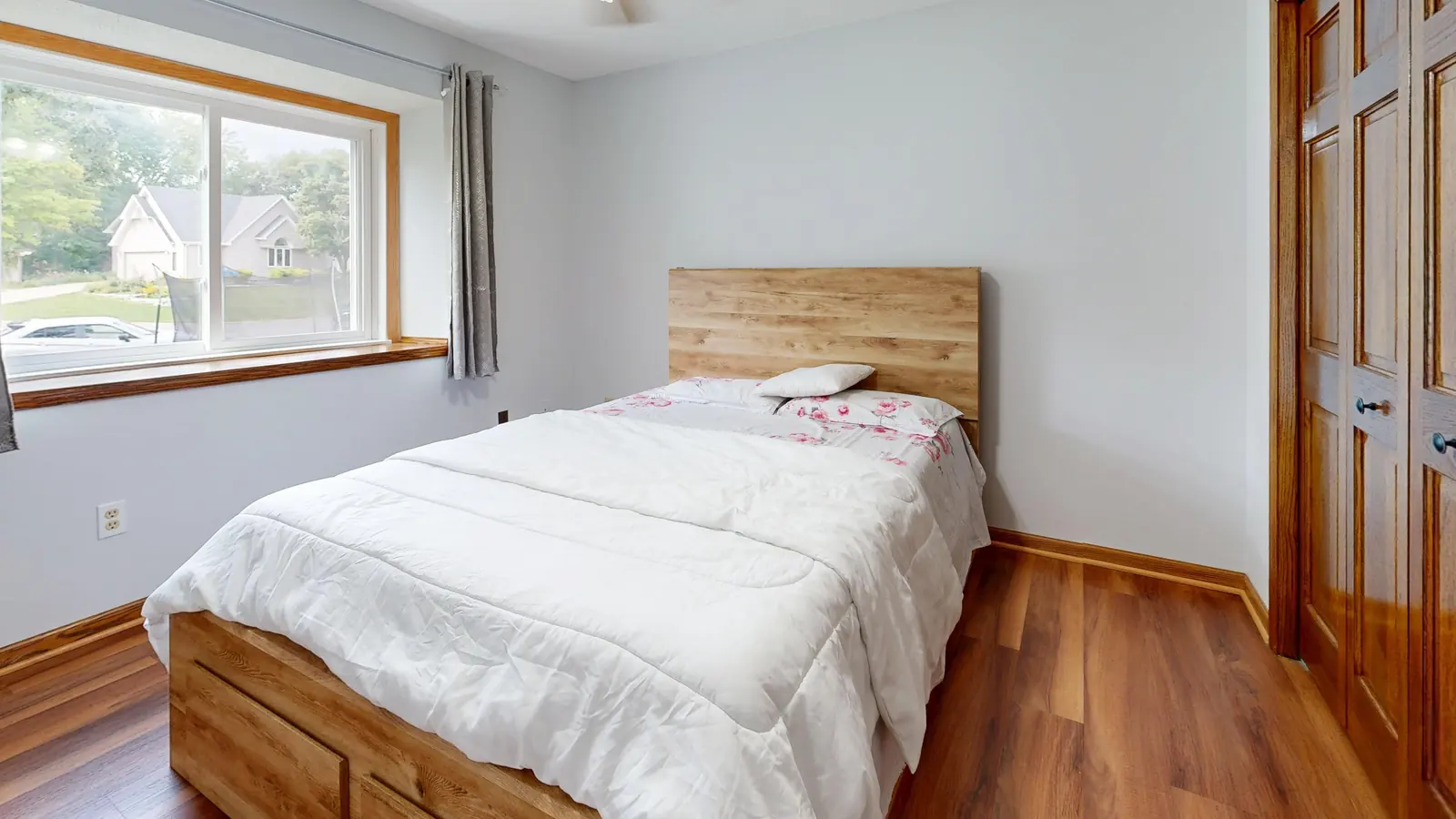
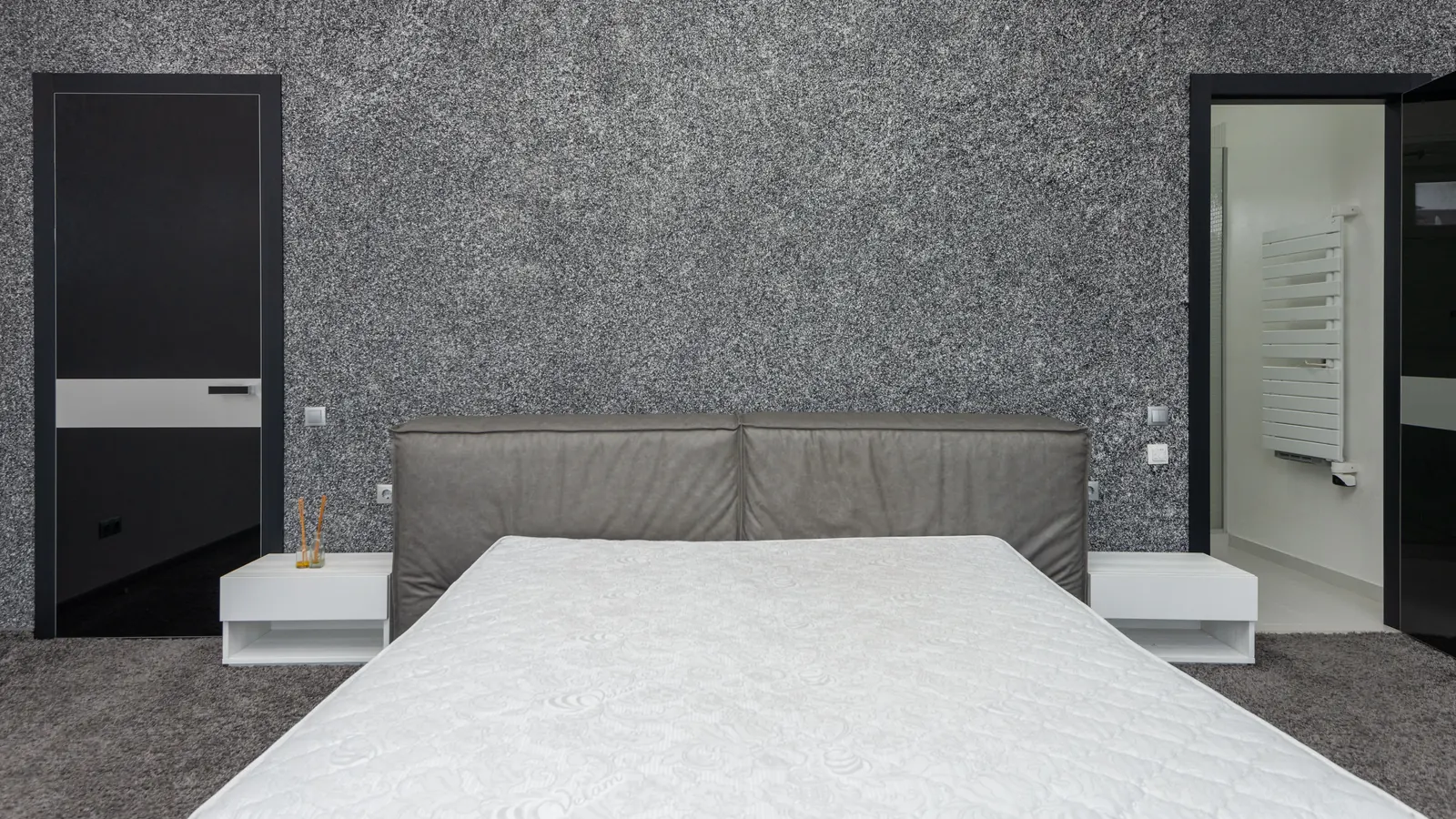
Measure the whole frame, not just the mattress, because a wide upholstered surround or a footboard changes the room. Bedside pieces of different sizes can serve better than a matched pair that crowds a door, and balance can come from color, height or placement. A photograph cannot show whether a bed is in the command position without knowing where the entrance and the sleeper’s eyes are, so use room photos as illustrations of furniture relationships only.
Several doors, or a bed under a window
Work out the main entrance first, then separate the closet, bathroom and balcony doors and draw their swings. A bed can have a clear view of the entrance and still block another door you use daily. Run through a normal morning and evening: leaving the bed, reaching clothing, getting out of the room. That test stays useful whatever tradition you follow. If a spot puts the bed near a bathroom door, think about the actual door swing, light and sound. Claims that bed location causes illness or relationship problems have not been established. If something bothers you, an ordinary fix such as a different door habit or a layout change is enough.
Some rooms offer few clear walls, and the bed ends up under a window. Before committing, make sure the window can still be opened and maintained, and that any window or door serving as an emergency way out stays clear. Keep furnishings away from heaters and other equipment that needs clearance, following its instructions. Compare the headboard height with the sill and look at how a curtain or shade moves, since a plan that works on paper can block a latch, trap fabric or cover an outlet. Pick the safest workable arrangement and treat a limited room as simply limited.
Mirrors as an optional extra
Some practitioners suggest a mirror so the entrance is visible from the bed when direct sight is impossible. It is an option within the approach. Look at the reflected view from the bed before hanging one, since daylight, another lamp or an unwanted scene can make it a poor choice. Hang it on fasteners rated well above its weight, following its instructions, and keep it out of any spot where a fall could land on the bed. Skipping the mirror is fine.
Choosing and keeping an arrangement
Use measurements or temporary floor outlines before moving heavy furniture, then live with the new arrangement long enough to see whether storage works, doors open and the room feels comfortable. If you hire a practitioner, ask which school they follow and how they handle fixed room constraints. Treat claims about health or finances as outside the evidence, and be wary of any suggestion that a compromised floor plan is something to fear or fix with a purchase. For layout questions that do not depend on any tradition, our bedroom hub covers the individual furniture decisions.