Small Bedroom Design Ideas: Color, Pattern and a Clear Focal Point
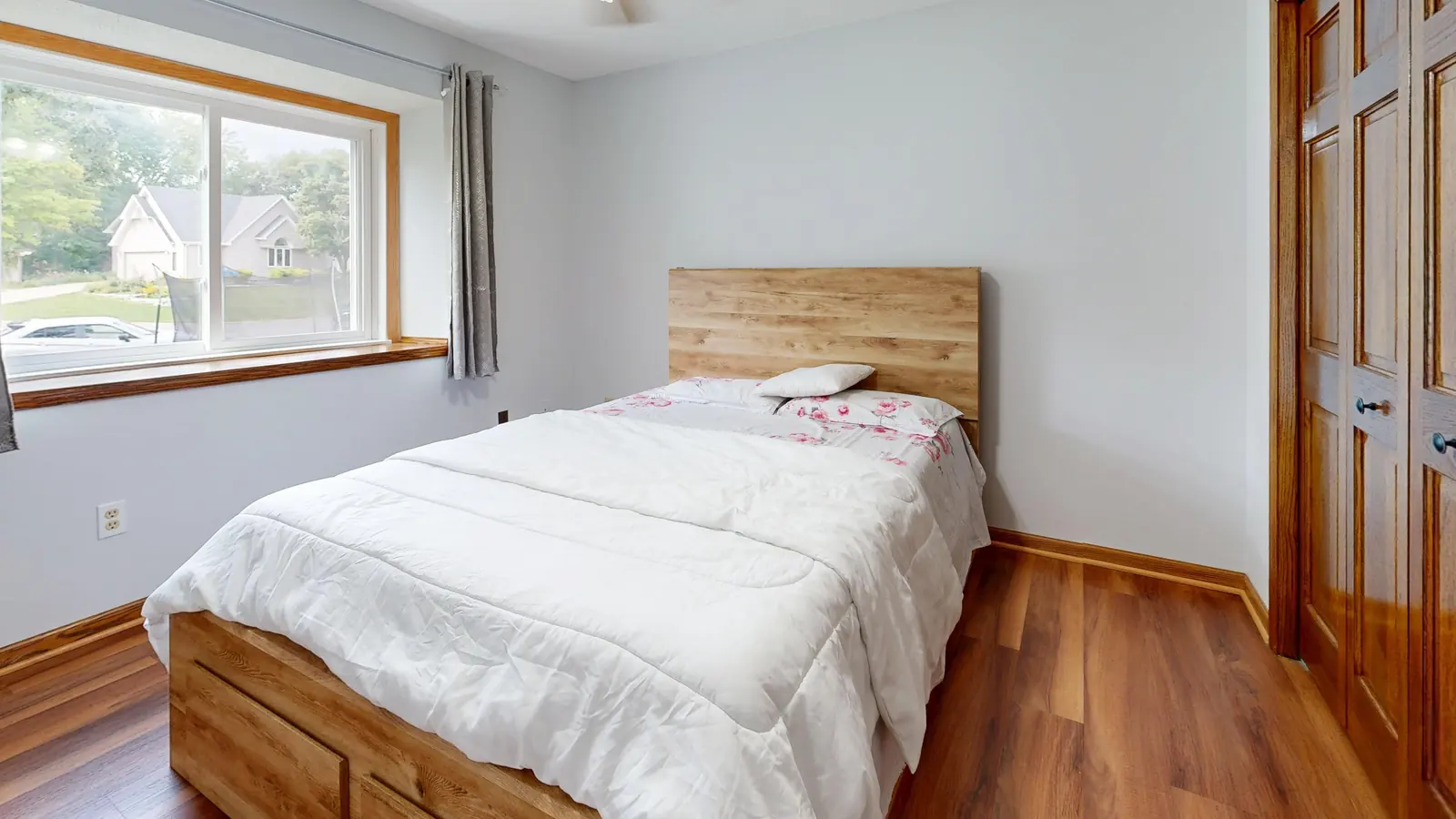
A small bedroom can have a clear style without filling every wall. Start from the bed, wardrobe, window and floor you already see, then try one of three color schemes.
By DecoraMintPublished 5-minute readMore in Bedroom
In this guide
We may earn a commission from links on this page, at no extra cost to you. Affiliate disclosure
Small bedrooms tend to fail in one of two ways. Either they are painted white and emptied until they feel like a waiting room, or every surface gets a little something and the room hums with competing details. The way out is a single clear idea with a few concrete moves behind it. Layout, meaning where the bed goes, has its own guide; this piece covers color, pattern, light and what stays on show, and the bedroom hub links the furniture and bedding decisions that follow.
Wrap the bed wall in one color
The most useful move in a small room is to treat the wall behind the bed as the room’s only big gesture. Paint it a deep green, ink blue or aubergine, run the same color up over the ceiling line if you like a cocooned feel, and keep the other three walls pale and warm. The bed then sits inside a dark frame, the corners behind the headboard dissolve, and the eye has one place to go. Use a sample large enough to judge, such as a painted sheet of poster board moved around the wall, and look at it at breakfast and again with the lamps on.
Let everything else support it. We would use a plain curtain in the pale wall color, one or two light solids on the bed, and a bedside surface in pale wood so the dark wall does not swallow it. If the room has a boxed-in corner or an off-center window, end the color at a natural corner rather than in the middle of a wall, because a color that follows the architecture looks intended.
Or keep it pale and let texture do the work
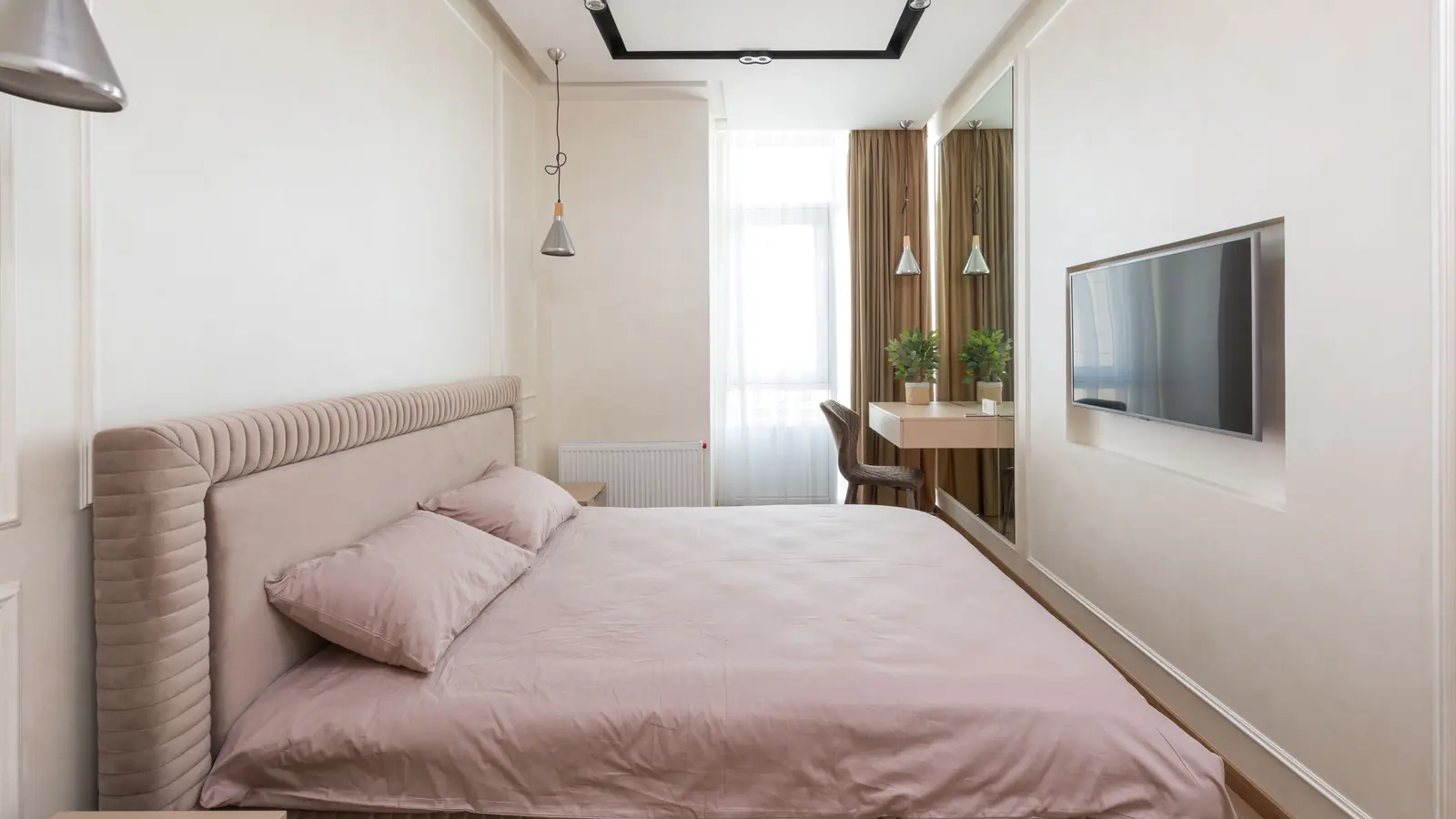
A pale room holds attention through surface instead of color. Warm white walls, a bed in sand-colored linen-look fabric and a bedside table half a step deeper give you edges without sharp contrast, and a woven headboard against smooth paint, a nubby throw over a flat duvet and a matte lamp base beside a glass tumbler give the eye small differences to read. Add one dark note, a black lamp or a thin picture frame, so the room has an anchor.
The hazard is the near-miss. A cool gray curtain beside a yellow-cream wall can clash in a way neither product photo suggested, so hold swatches at the window and in the dimmest corner before ordering. A pale scheme also needs a working light over the bed, since color does nothing for a dark corner.
Put the pattern in one place
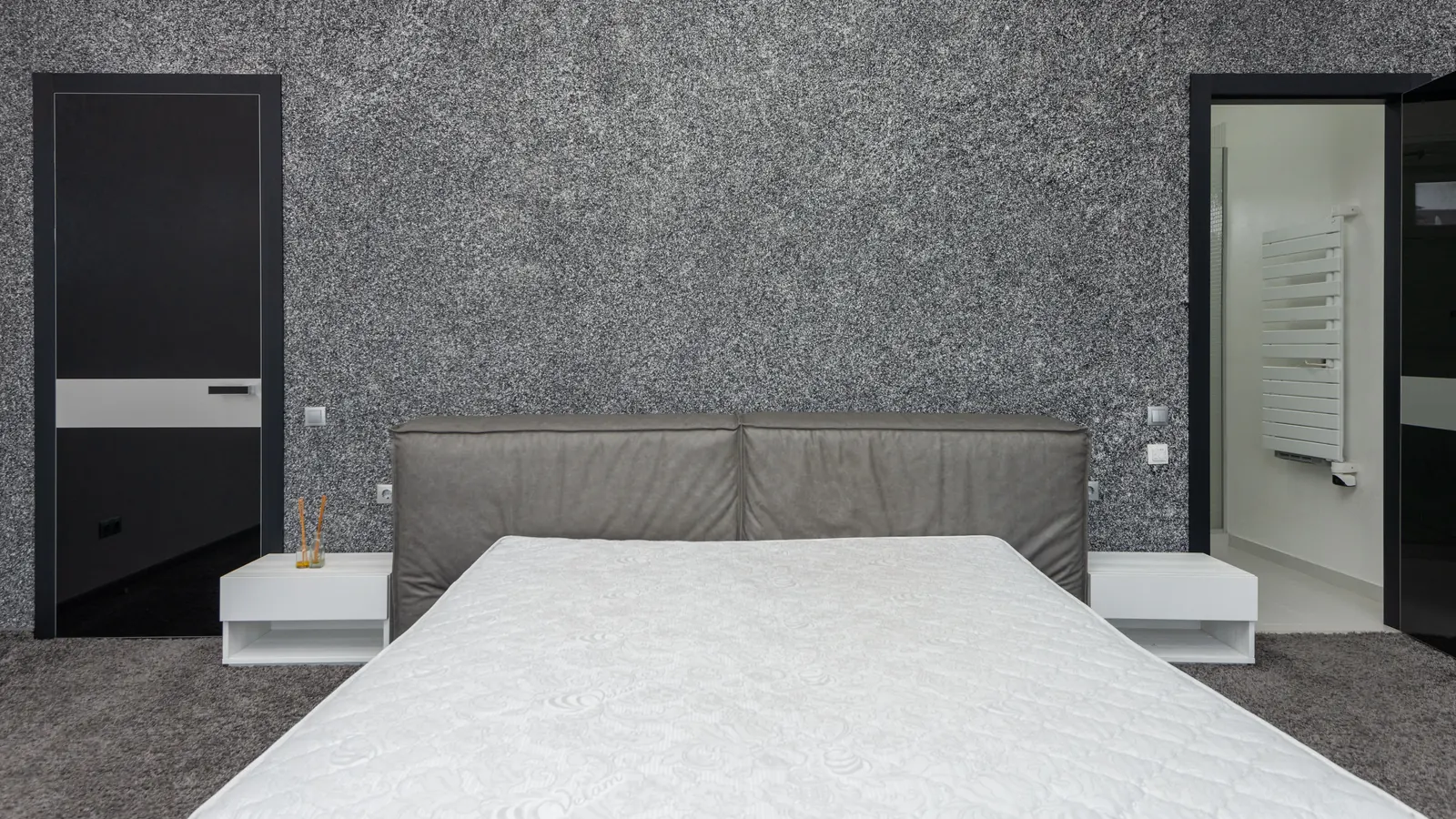
A patterned curtain, wallpaper or bedspread gives a small room personality that white cannot. Scale matters more than any rule about small rooms and small prints: a tiny dense repeat becomes texture from the door, while a large motif becomes the feature, and it is how much of the repeat survives behind the bed and in curtain folds that decides which you get. Choose the pattern first, then pull one or two of its colors into plain pieces. A bold floral bedspread suits a plain headboard and curtains in its background tone, and if the wall carries the pattern, the bed can drop to solids.
One wall is usually enough, and the headboard wall earns it. Wallshoppe’s renter-friendly collection is one place to compare patterns; the page for the pattern you pick states its surface and removal conditions, which a lease may govern as well.
Choose the headboard as part of the composition
A tall, heavily detailed headboard is already the feature, so give it a plain wall with nothing hung directly above. A low one leaves room for a single large piece of art or a shelf. A headboard in the wall’s tone recedes, and a darker one draws the bed’s outline, so decide whether the bed or the wall should lead. Include the whole frame in the plan, since side projections and a footboard change both the look and how the room works; the furniture-measuring guide shows how to mark them out before ordering.
Bedding and storage you can reset in a minute
The bed is the largest color field in a small room, so simplify it first: sleeping pillows, a duvet, and one decorative layer only if it adds a color or texture the room needs. A heap of cushions creates a nightly chore, and when the floor and a chair are the only places for them, the heap is too big. A solid duvet cover can pick up one tone from the curtain, and a contrasting edge is enough accent.
Closed fronts quiet a wall and open shelves show everything on them, so choose which you want to see. A short row of books and a few useful boxes look intended, and a shelf filled edge to edge with decorative boxes is as busy as one left bare. Tall storage saves floor but must be secured: the CPSC’s Anchor It campaign calls for anchoring furniture that can tip, a slim piece needs it as much as a broad one, and the maker’s instructions and wall-suited fasteners apply.
Light, and what the mirror sees
Sit where you read in bed and notice where the lamp or wall light actually lands; a modest lamp can serve better than a dramatic pendant, and a hanging or wall-mounted fixture needs installing to its instructions. For bulbs, the FTC’s label guide explains that the label gives brightness in lumens and light appearance from warm, which is more yellow, to cool, which is more blue, and a warm bulb suits a palette of cream and wood.
Before hanging a mirror, look at what it would reflect. A window or a clear wall opens the room, and a crowded wardrobe interior doubles the clutter. Test the view from the bed and the doorway, think about lamp and screen reflections after dark, and hang or lean it only as the maker’s mounting instructions allow.
When the big choices are in, edit one thing at a time: a color that appears once by accident, a pattern competing with the lead, a surface that has become overflow storage. Leave doors, windows and heating equipment their access, and stop when the room has one lead and two supporting players.
Retailers to browse
Compare colors, sizes, materials and return details on the retailer’s current listings.
- Browse renter-friendly wallpaper at Wallshoppe
Wallshoppe
Opens Wallshoppe’s renter-friendly wallpaper collection, not a single product.