Bedroom Ideas: Four Ways to Refresh the Furniture You Already Own
Before buying another lamp or throw, decide what to keep and which surface carries the color. Four worked ideas for rooms with mixed woods, patterned textiles or a plain upholstered bed.
By DecoraMintPublished 5-minute readMore in Bedroom
In this guide
We may earn a commission from links on this page, at no extra cost to you. Affiliate disclosure
Before buying another lamp or throw, ask what the room already owns and which of its surfaces should lead. A bedroom with a medium-brown dresser, a lighter bed, a darker floor and a nightstand bought to match all three seldom needs new furniture. It needs one decision about emphasis, and a few repeated details that show the mix was meant.
The four ideas below start from furniture you already own and change the least that will matter. They are design directions to adapt, and no color or arrangement here is a promise of better sleep.
A one-line brief
“Make it modern” gives you nothing to shop for. “Keep the walnut-colored dresser, make the quilt the focus and add a place to read” does. Write the room in that form first, and sort the problems into practical ones and visual ones. A bedside light that cannot reach your book is practical, and three lamp finishes that look unrelated are visual. Fix the first by moving the light and the second by editing the lamps.
Then make three short lists: what stays, what the room genuinely lacks and what is optional decoration. Spend on the second list before the third, because a proper curtain or a bedside surface that can hold a lamp and a glass changes the room more than ten accessories.
Mixed woods, made deliberate
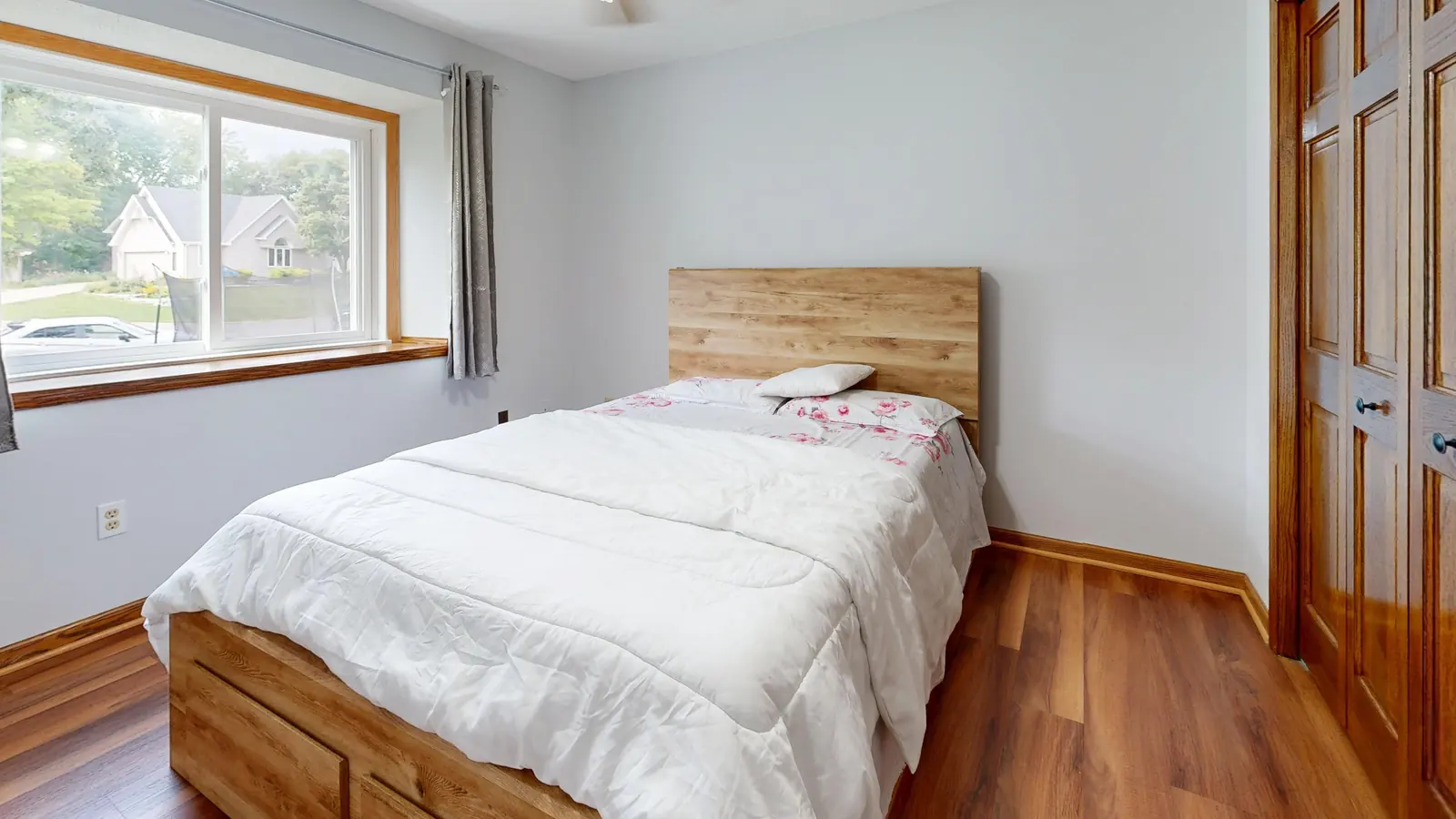
Starting point: the brown dresser, lighter bed and darker floor above.
Keep the bed and dresser, and take away the near-match. A bedside table that is plainly different, such as a painted one in sage or white or a slim metal frame, is easier to organize than a stain that almost works. Then link the pieces with something other than wood tone: a curved lamp base echoing rounded drawer pulls, or a narrow dark frame repeating the dresser’s hardware. One or two repeated details are enough for the choice to read as intentional.
Use the bedding to separate furniture from floor. A cream cover with a rust accent sits comfortably between a warm bed and a darker floor, and a blue-gray throw will make orange-leaning wood look even more orange, so hold a sample against it before buying the full set.
What changes: the near-match, the textiles and perhaps the lamp. What to resist: replacing everything for a matched suite, or trusting a photo to name the wood species.
A traditional room around one pattern
Starting point: a detailed headboard, a traditional dresser and a floral quilt, with several fabrics all equally busy.
Let the quilt hold the pattern. A solid curtain in one of its quieter background tones, and a small stripe or plain border on a single other textile, will let the carved headboard and dresser outline show again. Judge the combination from the doorway: two prints that differ close up often blur into one busy texture across the room. Keep the dresser top to a lamp, a tray for daily things and one object.
The reverse works as well: plain bedding and a patterned wall. Wallshoppe’s Delilah in Dark Moss is an ornate trellis of vines, leaves and medallion flowers in deep green, sold in removable and traditional formats with 8 by 8 inch samples. Behind a wood bed and beside a painted dresser, a green this dark would make a cream cover look luminous. Order a sample before the rolls, and follow the selected format’s own instructions for wall preparation.
What changes: the competing textiles or the wall, not both at once.
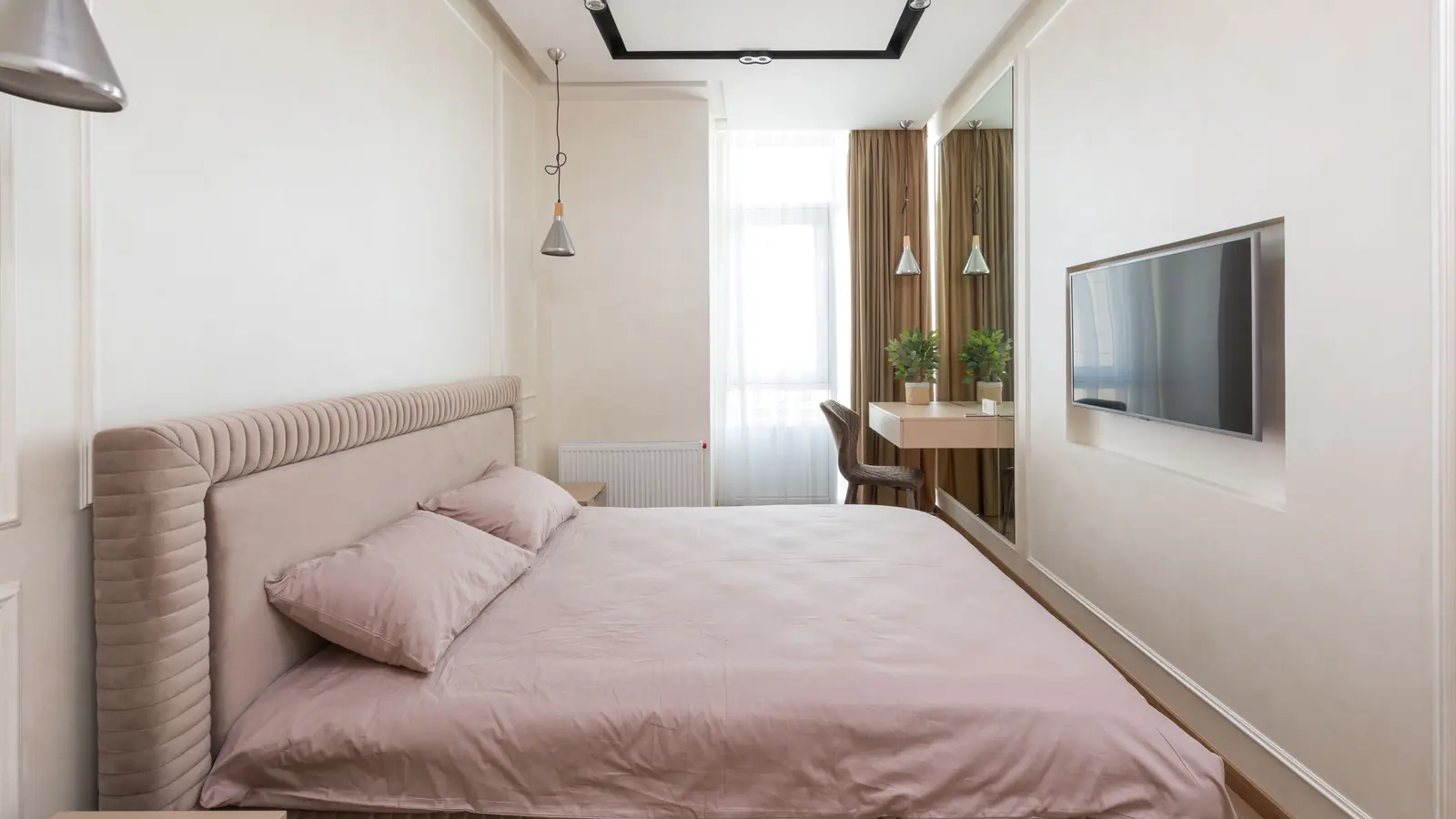
A plain upholstered bedroom that needs an outline
Starting point: a simple upholstered bed, plain bedding and walls close to the same color. Everything is present and the room still looks unfinished.
First decide whether to strengthen the bed or move interest elsewhere. A darker bedside table with a lamp that has a clear silhouette will make a pale headboard legible. A substantial composition on another wall, such as a long picture ledge, gives the room a second point of interest without more pillows.
Texture is the tool for a restrained palette. A matte painted nightstand, a loose weave on the bed and a glass or metal lamp are three different surfaces in one color range. Tall cushions can hide the headboard’s shape, so remove extras before you replace the headboard.
For a more tailored result, repeat one line: a horizontal rail on the bed echoing a long dresser or a narrow picture grouping. For a softer room, bring in a round bedside object or a curved chair.
What changes: contrast and surface variety.
A reading or dressing corner with a job
Starting point: a room large enough for a chair or table, where the extra piece looks like overflow from somewhere else.
Give it a task. A reading chair needs a light that reaches the page and a place to rest a book. A dressing table needs a mirror, light and room for what is used there. A decorative chair that becomes the permanent clothes pile is worse than better storage.
Relate it to the bed without making a miniature suite. Repeat one bedding color in the chair fabric, or a metal finish across the reading lamp and bedside hardware, and let the chair’s shape differ. A rug can mark the area, but check how the chair moves on it, and keep the edge from becoming a trip hazard or blocking a door. Keep lamp cords out of walking routes.
Leave the wall around the corner quieter than the bed wall. A mirror above a dressing table has a job. A small picture beside a reading chair can be personal. Both are better than another oversized statement.
Where the money goes first
Work from large decisions to small ones (the bedroom collection has focused guides for furniture, bedding and window treatments). Settle the wall, the bed and the main window treatment before choosing accessories, or several cheap purchases will use the budget without changing the room. When furniture finishes differ, remove the closest failed match first. When patterns compete, keep one and simplify its neighbors. A plain room usually needs contrast at one important edge. An idle chair needs light and a side surface, or a new home.
A room holds together without matched furniture; repeating a color, line or hardware finish connects different pieces, and an obvious contrast can work too. Keep what works and edit what does not, since replacing a sound dresser only because its finish has fallen from fashion is rarely the best use of a budget. Start with the one change that alters the most visible surface, live with it for a week, and shop for the rest only if the room still asks.
Retailers to browse
Compare colors, sizes, materials and return details on the retailer’s current listings.
- Browse renter-friendly wallpaper at Wallshoppe
Wallshoppe
Opens Wallshoppe’s renter-friendly wallpaper collection, not a single product.