Exterior Shutters: Choose the Purpose, Proportions and Materials
Decorative, operable and storm-rated shutters are three different purchases. Pick the job, size them to the window so they look right, and keep protection claims specific.
By DecoraMintPublished 4-minute readMore in Decor
In this guide
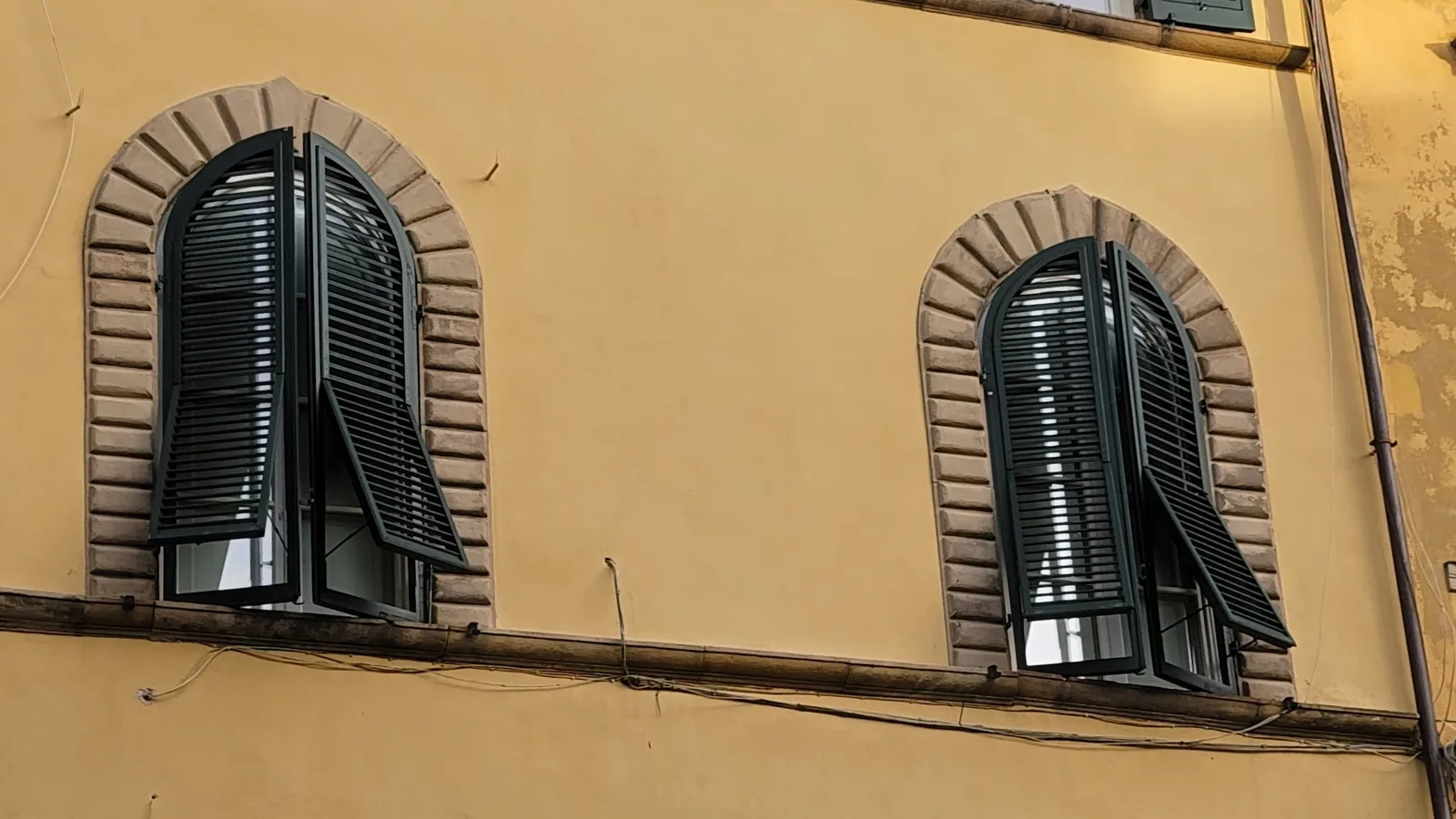
Stand across the street and imagine each shutter swinging shut: if it would cover its half of the window, the proportions are right. Shutters that are too narrow, too short or stuck beside a wide picture window they could never cover make a facade look unbalanced. Beyond proportion, decide what the shutters are for. Decorative panels, shutters that open and close, and a rated storm-protection system are three different purchases, and the third needs documentation. Our decor guides cover other window decisions.
Decorative, operable or protective
Decorative shutters frame the window, so start with panel style, scale, finish and how they attach. Operable shutters add hinges, swing and hold-backs, and the opening size decides whether they can close over the glass. A product can look exactly like a traditional wooden shutter and be designed only as fixed trim, and whatever its hinges look like. Storm protection is covered in its own section below.
Getting the proportions right
Look at the whole window, trim included. For a traditional pair, a useful visual starting point is half the window’s width per shutter and the full height from the top of the trim to the sill, so the pair could close over the opening. The actual order size comes from the maker’s allowances. Shutters ending well above the sill, or a skinny pair beside a wide window, look tacked on.
The L’Enfant Trust’s historic-shutter guide discusses sizing shutters to the window reveal and the role of hinges, tiebacks and latches, and suggests looking for physical or photographic evidence before adding shutters to a historic house. In our view, a wide picture window looks better bare than framed by shutters that clearly could not cover it. For operable shutters, the manufacturer’s allowances for overlap, hardware and mounting decide the exact panel size. Before buying anything, photograph the house straight on and sketch a few outlines on the print, looking at all the windows together.
Panel style and color
Louvered shutters add fine horizontal lines and suit Colonial and many traditional homes. Raised or recessed panel shutters give broader, more formal solid areas. Board-and-batten shutters, vertical boards with crosspieces, read as farmhouse, cottage or rustic. Combination designs split the face into louvered and paneled sections.
On a busy facade with patterned brick, divided-light windows and detailed trim, a simpler shutter keeps things readable. On a plain elevation, a more detailed panel adds definition. A louvered look can come with fixed louvers, and a board pattern with molded composite, so read the material specification.
Color is best chosen outdoors, beside your siding or brick, roof and trim, in morning and afternoon light. A small online swatch cannot show how a full dark panel reads against a pale wall. Classic choices are a deep color such as forest green, navy or near-black against light siding, or a shade a few steps darker than the body color for a softer, more tonal look. Black on white brings the strongest graphic contrast, while a muted gray-blue on warm brick feels quieter.
Materials and finish
Start with what the shutter is made of, then the finish it needs. Wood, vinyl, composite and polyurethane shutters behave differently even at the same size. Fypon’s Shaker-Style Shutter, for example, is polyurethane, comes in smooth and wood-grained styles and is described for decorative use. Its wood-grain texture does not make it wood or operable.
Ask whether shutters arrive finished, primed or ready for a particular paint, which paints are compatible and how to treat any cut edges the maker allows. Look at upkeep too: can a damaged piece be replaced, and what cleaners are allowed? “Maintenance-free” still leaves cleaning and hardware checks to you. On an older house with painted shutters of unknown age, get the paint assessed before sanding or scraping, since old paint may contain lead.
Hardware and clearance
Operable shutters need hinges that let them swing clear of the trim, the next window and anything else on the wall, with a hold-back to keep them open and a latch to keep them closed. List possible conflicts, such as projecting trim, a downspout, a corner, a light or a deep sill, and ask how the system handles them. Decorative panels can be converted to open later only if the maker sells that configuration, and adding hinges to a fixed panel leaves it without the right stops and hold-backs. Never modify a hinge or remove a stop to make it fit. Think about reach too: a shutter you can close only by leaning dangerously out of an upstairs window is one you will rarely close.
Siding, brick, stucco and trim each need a different fastening approach, and a moving shutter loads its fixings differently from a fixed panel. Use the maker’s current instructions and an installer who knows your wall, including how holes are sealed against water. On a historic house, check preservation rules before adding new holes, and HOA rules may apply too.
Storm protection is a separate project
If protecting windows from storms is the goal, start with a documented protective system. Ask for its approval or test documents covering opening sizes, wall types and installation conditions, and confirm local requirements with your building department and a qualified installer. A test result for a different model does not cover your opening, and “storm,” “hurricane-style” or “heavy duty” in a product title is no approval. List decorative shutters and storm protection on separate lines of any quote.
For any quote, find out whether the price is per panel or per pair, and list size, finish, hardware and installation accessories for each window, since shipping, finishing and installation can outweigh small price differences. When replacing a single damaged shutter, compare the new one with the weathered survivors in daylight; sometimes a new pair looks better than one new panel.