How to Decorate a Dining Table for Everyday Use and Guests
Style a dining table with a usable centerpiece, considered textiles and room for serving. Compare everyday, round-table and dinner-party arrangements.
By DecoraMintPublished 5-minute readMore in Dining
In this guide
We may earn a commission from links on this page, at no extra cost to you. Affiliate disclosure
The best dining table decoration is the one you can lift off in a single trip. On weekdays the table is for eating, homework and sorting mail, so whatever sits on it must clear fast. For a dinner party the display can grow, as long as everyone can still see across it and pass a dish. Style the everyday version first, then add layers for guests.
Everyday: one anchor
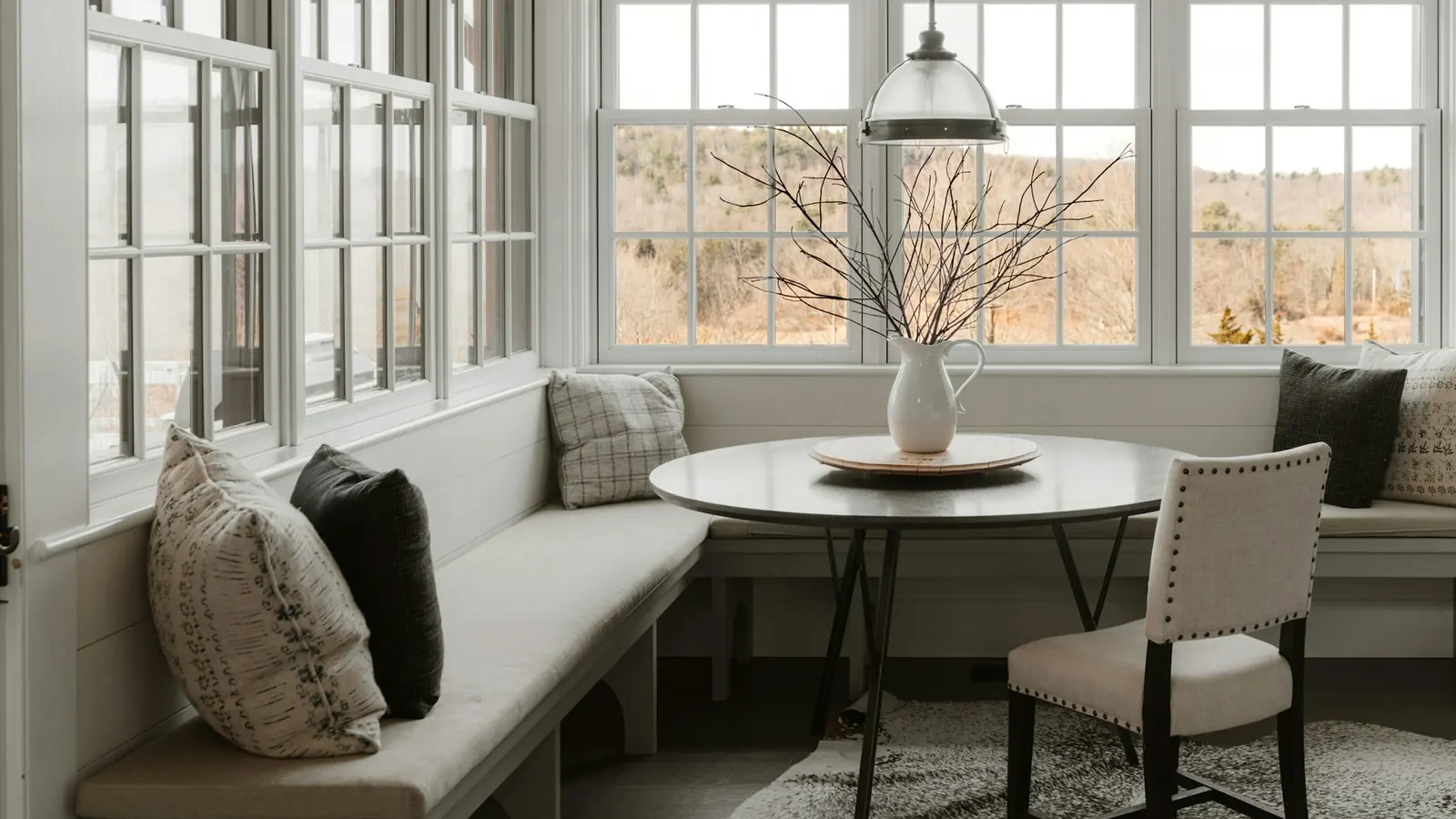
Walnut with a low, wide bowl of lemons is hard to improve on. Kept low and wide, the bowl sits within the middle strip without crowding the place settings, and the yellow stands out against the dark wood. Window light falling along the grain does the rest, and the whole arrangement takes ten seconds to clear. Other anchors that work the same way include a stoneware pitcher with a few branches or a shallow tray holding two candlesticks and a small dish. Repeat something you already own, such as a glaze color or a curved outline, rather than buying a set of unrelated accents.
Before settling, set out the plates and glasses you normally use and pass an empty serving bowl across the table. Whatever space remains down the middle is what your decoration may occupy. Handles, stemmed glasses and a wide plate can change that answer without changing the table, so try the actual pieces. A clear tabletop with good dishes and one useful textile can also look finished without any centerpiece.
Shape decides where the focus sits
A long rectangle takes a low arrangement down the center or a few small groups with gaps between them for shared dishes. A compact round table suits one contained bowl or vase, as long as every diner can reach what they need. On a square table, a single focus or a small asymmetric group leaves the corners free for place settings. An extendable table does best with a small everyday arrangement and an optional second group that joins when the leaves go in and more chairs arrive.
A rectangle does not need a runner and a round table does not need a round centerpiece. One substantial bowl or two related pieces can beat the “rule of three”.
Keep faces visible
Sit opposite another person before you choose a tall arrangement, and judge the finished display with stems and foliage, since an empty vase is shorter than the arrangement it holds. IKEA lists its KONSTFULL vase at 10¼ inches tall in mouth-blown glass, and flowers rise above that, so the finished display stands taller than the vase alone. We have not tested it and mention it only as a scale reference. If a display gets in the way of conversation, make it more open, lower it, or move it to the sideboard during dinner. That is usually easier than squeezing a big bouquet into a crowded setting. For the surrounding room, our dining hub collects the furniture and layout guides.
Textiles as one layer
A runner draws a line down a long table, placemats repeat a shape or color at each seat, and a tablecloth changes the whole background. Choose the effect you want before stacking all three. Patterned plates read better on a solid cloth in cream or gray, and white or stoneware dishes can carry a bolder runner in rust or deep green.
Measure the table before the print, because standard sizes behave differently on different lengths. When we checked Bella Maison’s table linens collection in early November 2026, every runner in stock measured about 19.75 by 59 inches and every tablecloth about 59 by 98.5. On a 72-inch table that runner stops roughly 6.5 inches short of each end, a clean frame for the head seats; on a 96-inch table it leaves more than 18 inches of bare wood at each end and reads as a centerpiece base rather than a line, so placemats carry the length better. On a 72 by 36-inch top the cloth hangs about 11.5 inches at each side and 13 at each end. The collection also has round placemats around 13 to 14 inches across in woven cotton or rattan, which frame each plate and leave wood showing between seats; their care labels run from gentle machine wash to do not wash, so read the one for the mat you choose.
Decoration and protection are different jobs. A runner may not be a trivet or a waterproof barrier, so follow the maker’s guidance for hot dishes, moisture and the table finish.
A dinner party on a long white table
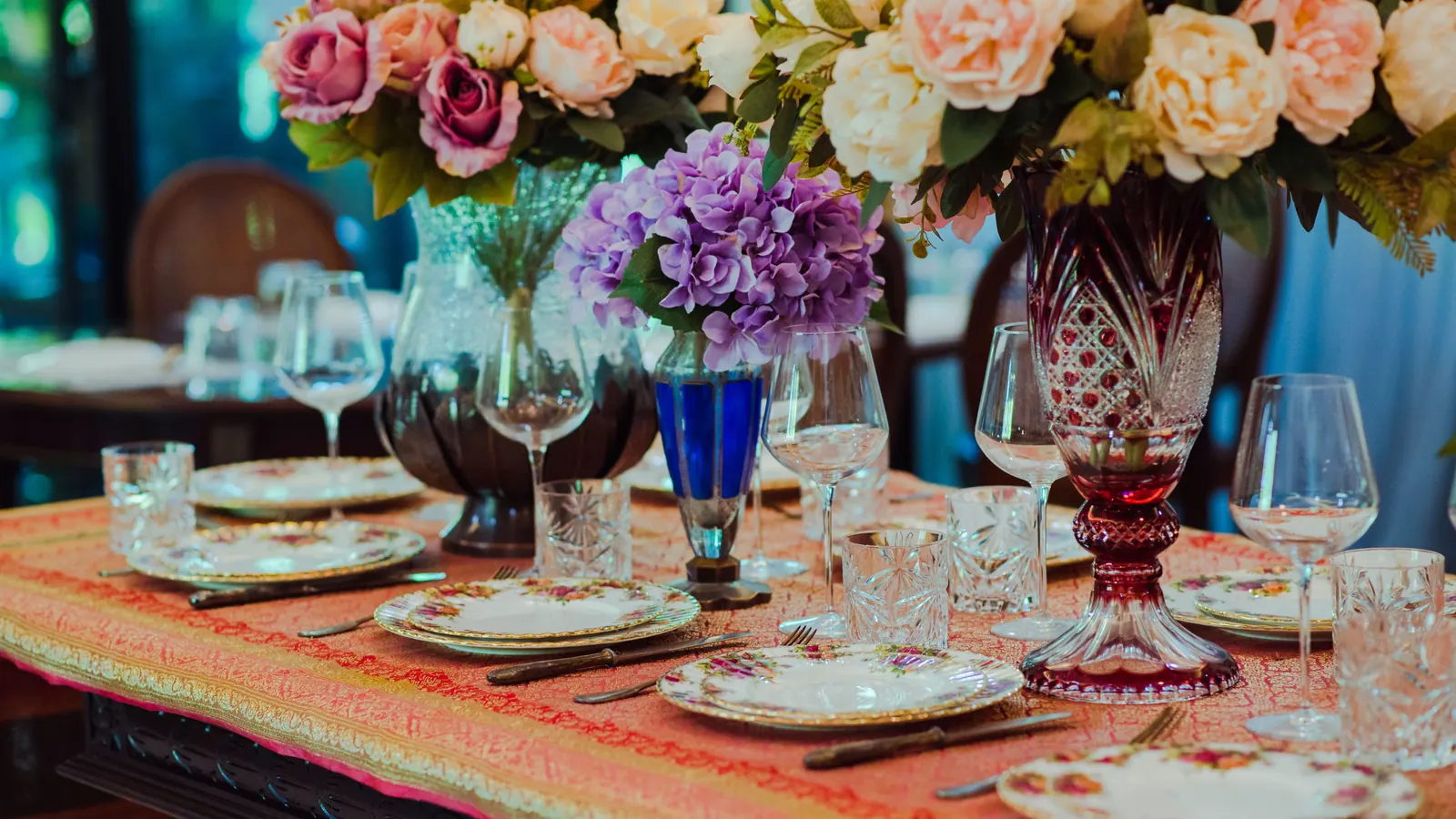
Dress a long table with a white cloth, dark wooden chairs and a window at one end, and we would run a low band of short glass bud vases down the center, each holding a single stem of white ranunculus or a sprig of eucalyptus, with brass candle holders between them and linen napkins in sage at every seat. Nothing in the middle rises far above the water glasses, so guests facing each other see faces rather than foliage, and the brass picks up the lamplight once the sun goes down. Lay out the serving dishes first and place the vases only in the gaps between them. If food fills the center, carry the color through napkins and dishes and leave the vases on the sideboard.
For a smaller table, repeat one material or color across it, such as the brass candleholders echoing a brass-rimmed glass, and vary height only where sightlines and serving allow. Stop when the display has a clear relationship.
Candles and open flame
The National Park Service says burning candles should stay at least 12 inches from anything that can catch fire and should not be left burning when no one is there or when going to sleep. It suggests battery-powered flameless candles when open flames pose a hazard. At a set table that clearance has to cover napkins, foliage, a paper runner and a linen runner alike, and a crowded centerpiece may not offer it. When it cannot, use a flameless candle or leave the candle out.
Store seasonal pieces in a separate box from the everyday collection. Then changing the look for a holiday means swapping one box, and the weekday bowl goes straight back on the table afterward.