How to Lighten a Dark Room with No Natural Light
A windowless room needs light everywhere, more light where you read or work, and wall colors tested under those bulbs. Find the dark zones first, then compare output, not wattage.
By DecoraMintPublished 5-minute readMore in Lighting
In this guide
At three in the afternoon, a room with no window looks exactly as it does at nine at night, and that is the whole design problem. Nothing shifts, nothing warms, and a single ceiling fixture flattens everything beneath it: the sofa, the shelves, the paint you chose in a bright showroom. The fix is not one stronger bulb. It is several modest sources at different heights, each aimed at something, so the room has a bright wall, a pool of light where you sit and a few places for the eye to rest.
Start by finding where the room actually goes dark
Switch on what you have and walk the room slowly. Most windowless rooms go dark in patches. The middle might be fine while the bookshelf is a black rectangle, or the desk might sit in your own shadow with the ceiling light behind you. A bare bulb can be hard to look at while the wall behind it still feels like a cave. Note each of these, because each one wants a different remedy.
- A dim doorway or path: widen the general light, or add a second source that covers it.
- A reading chair or desk in shadow: a task light placed beside or in front of you, so your body does not block it.
- A gloomy wall behind the seating: a shaded lamp or wall-directed light that washes the surface.
- Hot spots with dark gaps between them: move or add fixtures so the pools overlap.
Layer the light at three heights
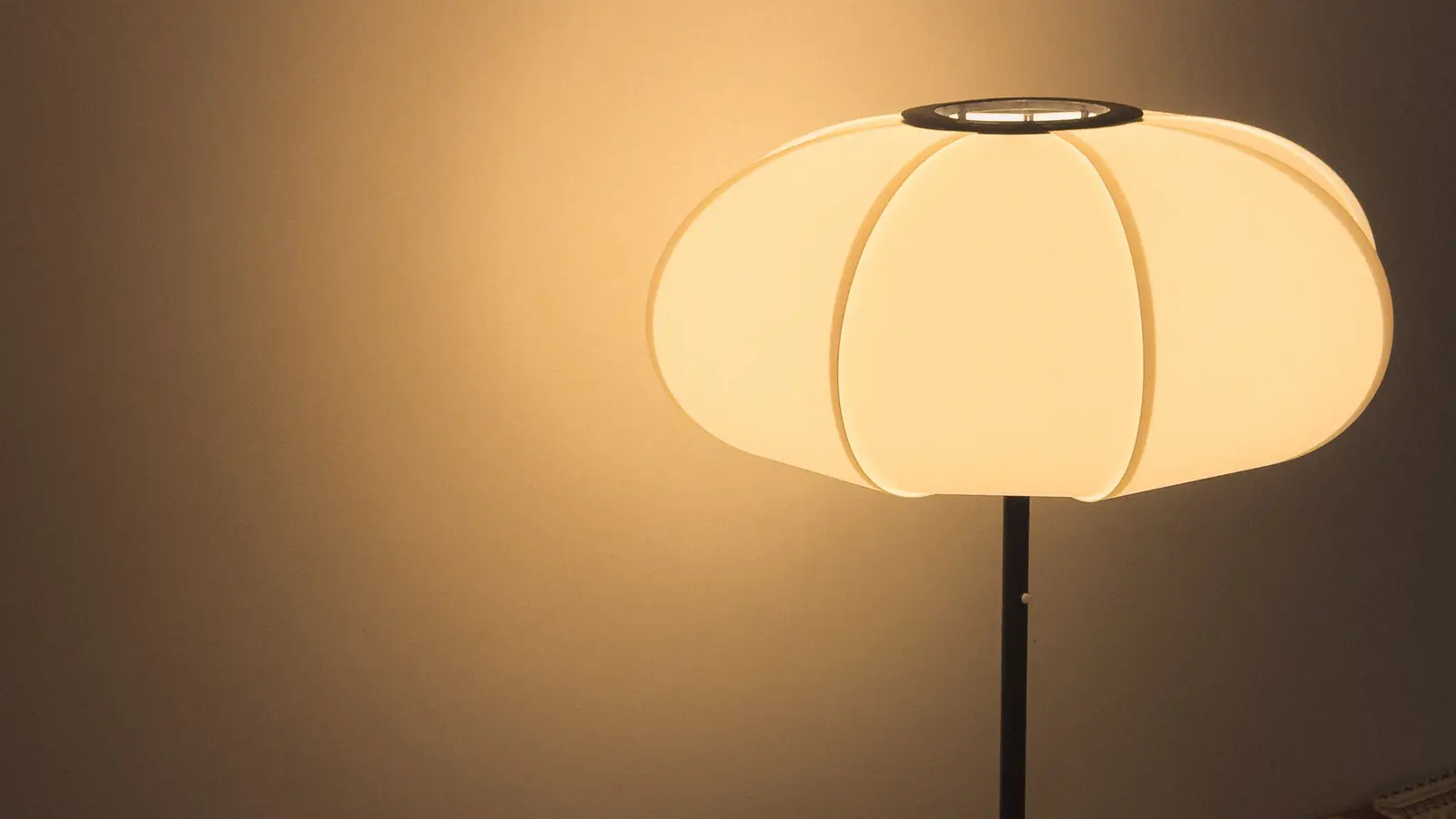
Overhead light alone makes a windowless room feel like a corridor. Add a lamp at table height and one lower or higher, and the walls start to read as surfaces rather than edges. A floor lamp that bounces light up and out of a shade, a table lamp with a pale, translucent shade glowing beside a sofa, and a small picture or shelf light all do different jobs. The reading head on an adjustable floor lamp is for the page; a wide diffuser is for the room. Choose by job, then look at footprint and stability, especially in a narrow room where a tall lamp stands near the traffic route.
Light the wall as well as the furniture. A plain wall washed with soft light becomes the brightest, calmest plane in the room and makes the whole space look taller and wider than it is. Try it with a lamp before committing to installed sconces, and judge it from the doorway and from your main chair.
Read the label in lumens
ENERGY STAR explains that brightness is measured in lumens, so compare bulbs by lumens and read watts as the energy cost. Its guidance is to find the lumens you need, then pick the lowest-wattage bulb that delivers them. Stay within the fixture’s own rating, and look at what the lamp says about enclosed housings and dimmers before you swap in a brighter bulb. If the fittings you have cannot give you the arrangement you want, add a lamp instead of overdriving a fixture, and leave permanent wiring changes to an electrician.
The bulb’s color matters as much as its output in a room that never sees daylight. The Department of Energy’s buying guidance for light bulbs describes light color on a scale from yellowish warm white to bluish cool white, with warm light at about 2,700 K and cool at about 4,100 K, and notes that a swing between the two is easy to see. In a room you use for relaxing, warm bulbs make wood, linen and skin look friendly. In a work corner you may prefer a cooler bulb, as long as the lamps in the room look like they belong together. The same page says ENERGY STAR-qualified bulbs must have a color rendering index of 80 or higher, a 0 to 100 measure of how faithfully a bulb shows colors. That is the number to glance at if you care how a paint sample or a bookshelf of covers will look.
Let color and mirrors do the second half of the work
Paint decides how much of the light you have gets bounced around. Pale, matte walls spread a lamp’s glow farther than a dark, glossy surface that either swallows it or throws back a glare. Dark colors can still work, and a deep green or navy in a windowless room can feel like a deliberate cocoon, but they need more lamps to keep the corners from disappearing. Whichever way you lean, brush large samples on two walls and look at them under your own bulbs, in the evening and in the morning, because a swatch judged in a store will behave differently under a 2,700 K lamp.
Lighter textiles help in a smaller way. A pale throw on a dark sofa, a cream shade, a rug that is lighter than the floor: each gives the light something to land on.
A mirror can carry light from a lamp into a dark corner. Hang one where it faces a lit wall or a lamp; a mirror that shows a bare bulb at eye level becomes a glare source. A large mirror on the wall beside a lamp doubles the glow of a corner, and a round one over a console gives the room a focal point as well. Mount any heavy mirror with hardware rated for its weight, and keep cords off the walking path. Do not hide a lamp or fixture behind an object to disguise it; keep its required clearances and ventilation open, and never improvise concealed wiring.
Give the room a working mode and an evening mode
A windowless room has to be useful at noon. If dimmers are fitted, keep a full setting for work and cleaning and a low one for evening, and confirm that your bulbs are labeled dimmable before you pair them with a dimmer, since not every LED is. Put the switch or plug where you can reach it from the doorway, so you are not crossing a dark room to turn on the light that lets you see it.
Change one thing at a time. If the desk improves but the entrance is still dim, the answer is a source for the entrance.
A note if the room is becoming a bedroom
Egress and occupancy rules decide whether a windowless space may legally be used as a bedroom, and they are set locally. Look into those before furnishing a bed in a room that never had a window.