How to Set a Table for Everyday Meals and Dinner Guests
Plate in the middle, fork on the left, knife on the right with the blade in. Start from that simple setting, then adapt it for extra courses, a buffet or a small table.
By DecoraMintPublished 6-minute readMore in Tableware
In this guide
We may earn a commission from links on this page, at no extra cost to you. Affiliate disclosure
Forks go on the left, knives and spoons on the right, and everything is used from the outside in. That one rule, from the Emily Post Institute’s table-setting guide, covers most dinners you will host. The guide’s other principle matters just as much: set the table only with the utensils you will use. A tidy setting with four pieces beats a showpiece with nine.
The everyday setting
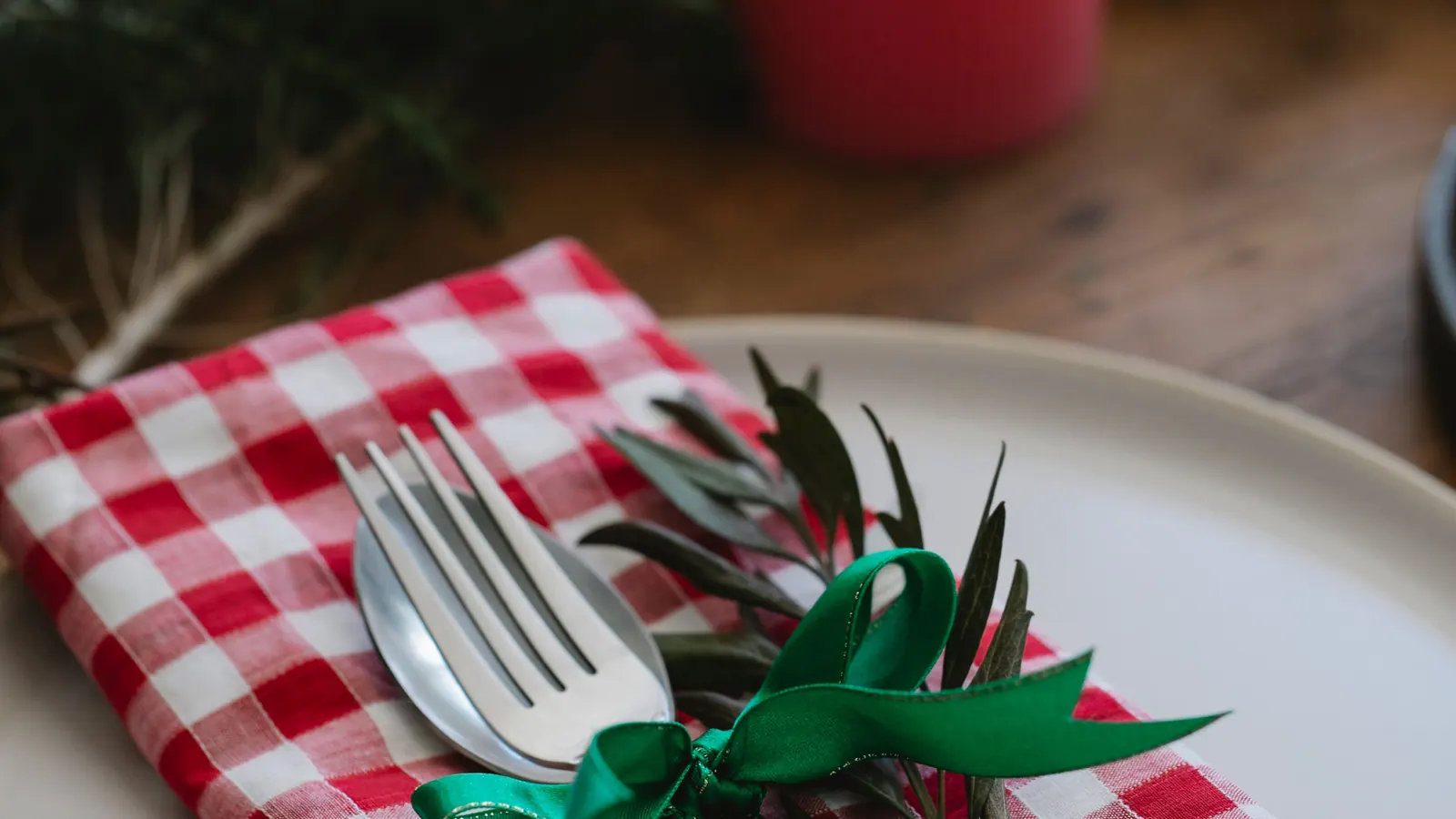
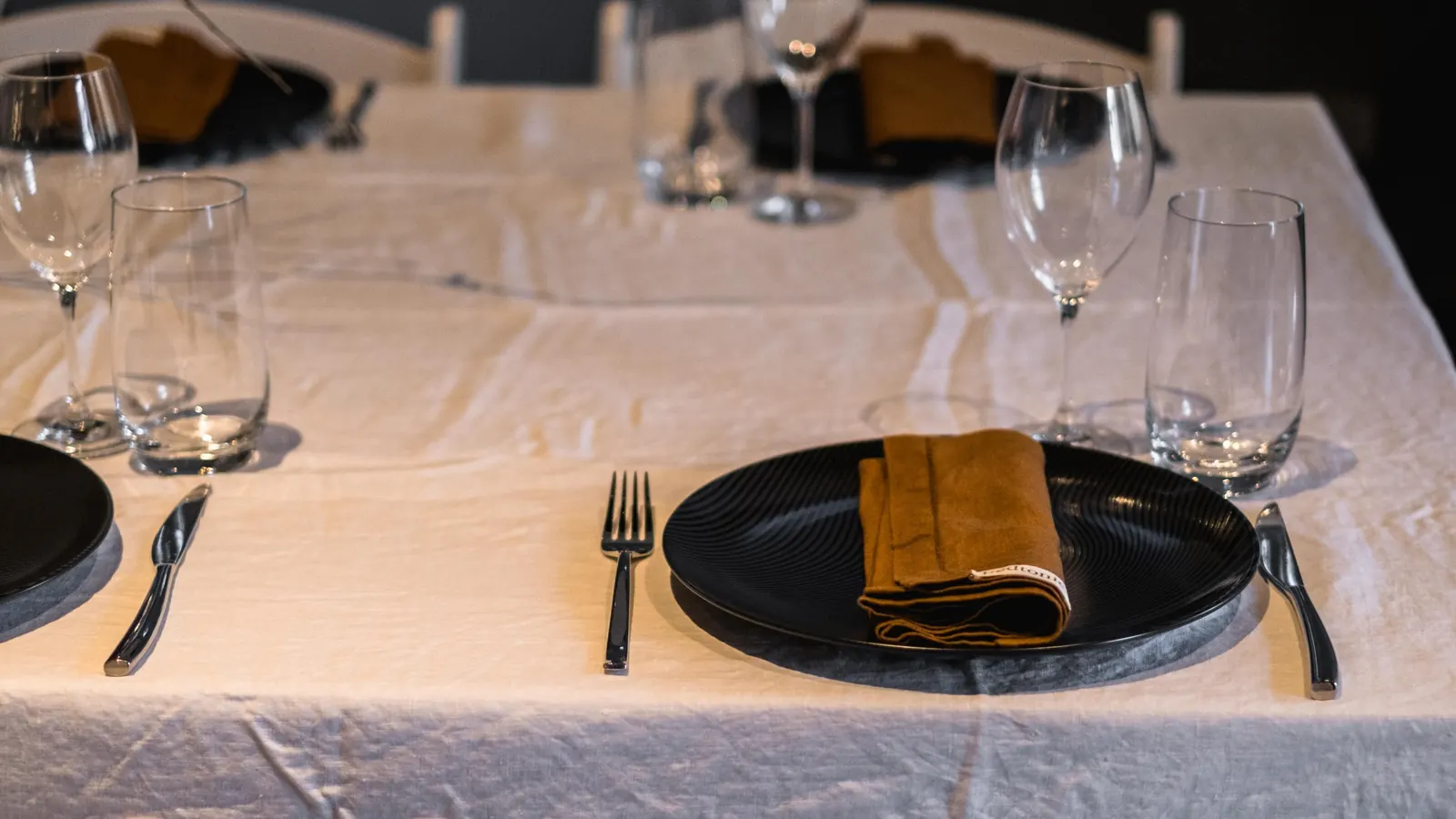
Put the dinner plate in front of the chair. The fork sits to its left; the knife sits to its right with the blade turned toward the plate, and a spoon, if the food calls for one, goes beside the knife. The water glass sits above the knife, or Emily Post’s casual layout angles it to the knife’s right at 45 degrees. The napkin sits to the left of the setting, and in a casual layout the utensils may rest on it. Some hosts place the fork on top of the napkin to save room, while others prefer each piece left untouched until it is used, and the guide calls it a matter of style. In a formal setting the napkin may instead sit in the center of the charger.
A charcoal stoneware plate on a pale linen napkin, a steel fork and knife and one clear glass make a complete setting for a weeknight dinner. On a bare oak table the plate’s dark rim gives each seat a clear edge, and a linen napkin in oat or sage adds a second texture. Add a bread plate or a second glass only when the menu includes bread or a second drink.
From casual to formal
Emily Post’s guide describes three levels. A casual setting is minimal and suits family meals. An informal or semi-formal one suits a classic dinner party, including a three-course dinner. A formal setting is for meals of more than three courses. Move up a level only if the meal does.
| Level | What goes out |
|---|---|
| Casual | Plate, fork, knife, glass, napkin; a spoon when the food needs one |
| Informal or semi-formal | Utensils for each course in order of use, plus usually one or two wine glasses to the right of the water glass |
| Formal | A different glass for each wine, so a line of glasses extends to the right; utensils for each course set in order of use |
Two details from the same source help with courses. If soup comes between the salad and the main course, the soup spoon sits between the two knives. Dessert utensils can arrive with dessert, or sit above the plate for the whole meal, fork handle pointing left with the spoon above it and its handle pointing right. A butter plate, if you use one, carries its knife with the blade facing the diner. The guide also notes that a salad or luncheon fork can double as a dessert fork, which is a handy way to cut down the number of pieces.
That smaller fork is the piece a basic set lacks. An 18-piece box usually means six forks, six knives and six spoons, all dinner size, which covers the casual row of the table and nothing more. Bella Maison sells its Torino 18-piece flatware set in a dinner version (8-inch forks and spoons, 9.7-inch knives) and a dessert version (6.3-inch forks and spoons, 7.8-inch knives), both in 18/10 stainless steel. With both boxes, six places get the informal layout: a short fork outside the dinner fork for salad, or above the plate for dessert, and a short spoon for dessert or coffee. In the retailer’s photographs the handles widen into scalloped ends, a traditional outline shown beside blue-and-white porcelain; next to plain modern stoneware or thin-rimmed white plates it reads as a period note. The listing allows a gentle dishwasher cycle with the knives loaded apart and says not to soak the pieces.
If a formal layout feels like too much, simplify the service. Bring the dessert spoon with the dessert and clear the soup bowls before the main course, so each guest faces fewer unused pieces.
Count seats and rehearse one place
Count the seats before laying out plates. Include a high chair or a wider chair, and make sure people can pull their chairs out without hitting a wall or sideboard. Set one complete place, sit in front of it, then repeat it around the table. Keep serving dishes and their utensils on a separate list from the place settings, so you do not find yourself hunting for a serving spoon after every ordinary spoon has been placed at a seat.
Let the menu decide. A dish served in a deep bowl needs a spoon; a sandwich lunch may not need a knife at every seat.
Room for the food
Put the empty serving dishes on the table during your trial. If they do not fit when empty, they will not fit when full, and handles, lids and a rest for the serving spoon all take space. On a small table, serve a course from the kitchen or set a side dish on a stable surface nearby, and avoid asking guests to balance a hot dish while another item moves. Keep the route from kitchen to table clear.
Choose a centerpiece last, and sit down to see whether it blocks the person across from you. A low bowl or a few small objects will usually work better than one tall display when food is passed from the middle of the table.
A dinner-party table
For a three-course dinner, we would lay a white cotton cloth, set each place with a white dinner plate and a folded napkin to the left, and put a salad fork outside the dinner fork, with a soup spoon outside the knife. A tall water goblet sits above the knife, and a smaller wine glass to its right catches the candlelight from two brass holders at the center of the table, kept low so guests see each other. Dessert spoons arrive with dessert, so nothing at the seat is left unused when the plates are cleared.
Mixed dinnerware, chargers and condition
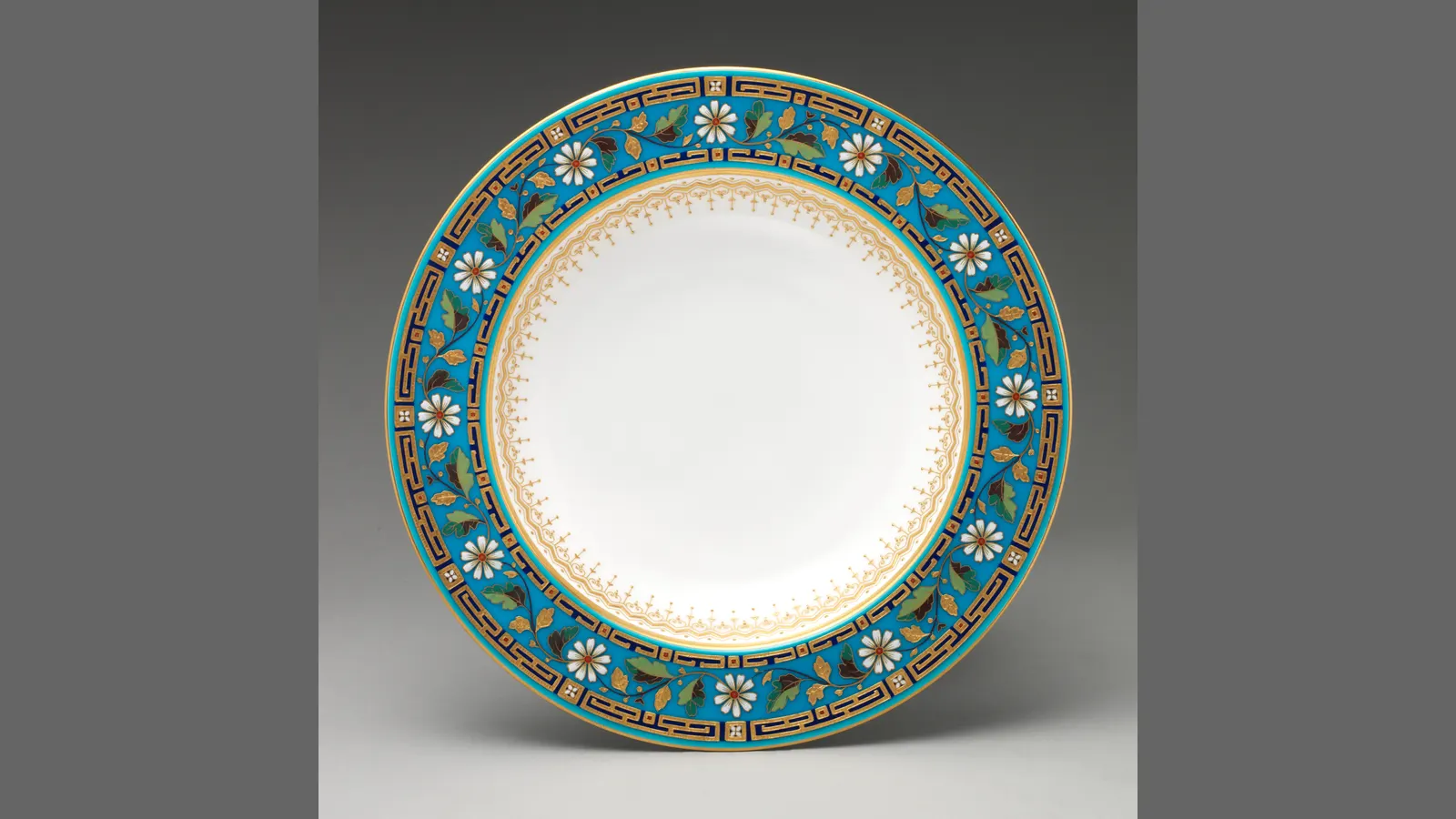
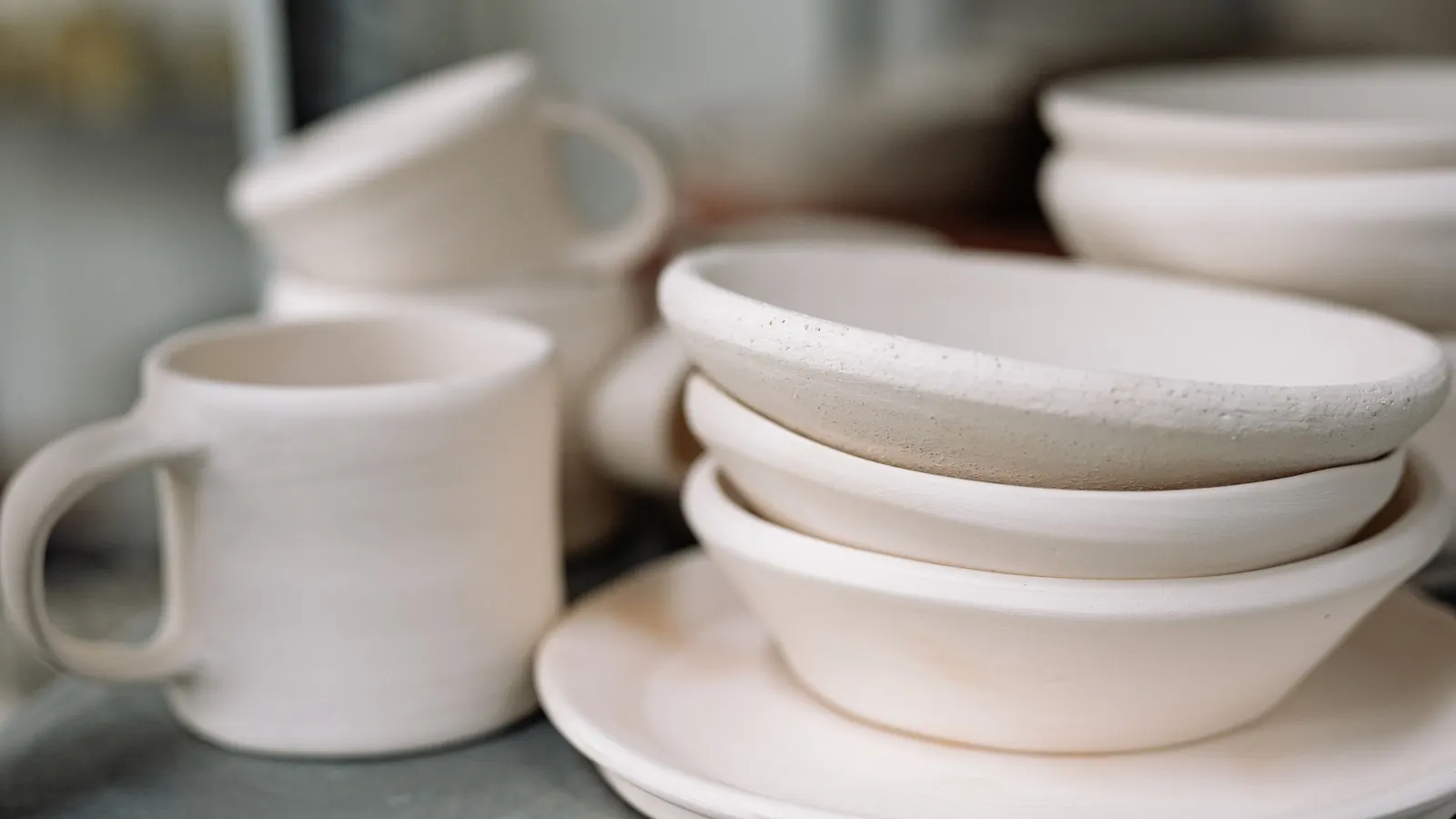
Matching sets are optional. A mixed collection looks planned when the pieces share a color, shape or scale; put the larger differences in the serving dishes, or alternate two patterns consistently around the table. Check that a bowl sits securely on the plate under it and that a wide plate leaves room for the utensils. A charger is a decorative base, so serve food on a dinner plate and follow the maker’s guidance for decorative pieces. Check plates and glasses for chips and cracks before they go out, and wash anything stored uncovered. If a piece will go in an oven, microwave or dishwasher, look at the guidance for that piece, since two items in the same material can behave differently.
A buffet
Plates go at the start of the route. Put utensils and napkins at the end of the line or at the seats so nobody juggles them while serving. Give each dish its own serving utensil and somewhere to rest it. Keep drinks away from the busiest serving point when space allows, leave an obvious spot for used dishes, and make sure the surface can bear the load of the full dishes. Arrange the line so nobody reaches across hot food for a plate. If a guest has dietary needs, talk to them directly instead of leaning on small labels.
Comfort first
Adjust a place setting when a guest needs a different glass or more room. At a family meal, use tableware suited to the people present and keep fragile decoration out of the eating space. Position cords, loose linens and serving items so they do not catch around chairs. Keep spare napkins and a spare fork nearby for spills.
Walk around the table and sit in a few seats. Everyone should have the pieces for the first course and a glass within reach, and no place should be crowded by a centerpiece. Then decide where the first empty plates will go, because a table that clears easily is a table that will be set again.