Industrial Floor Lamps: Shapes, Light Direction and Room Fit
A big metal head, a visible joint, a tripod or a bare bulb each light a room differently and take different space. Choose by what the lamp should light, then by the look.
By DecoraMintPublished 5-minute readMore in Lighting
In this guide
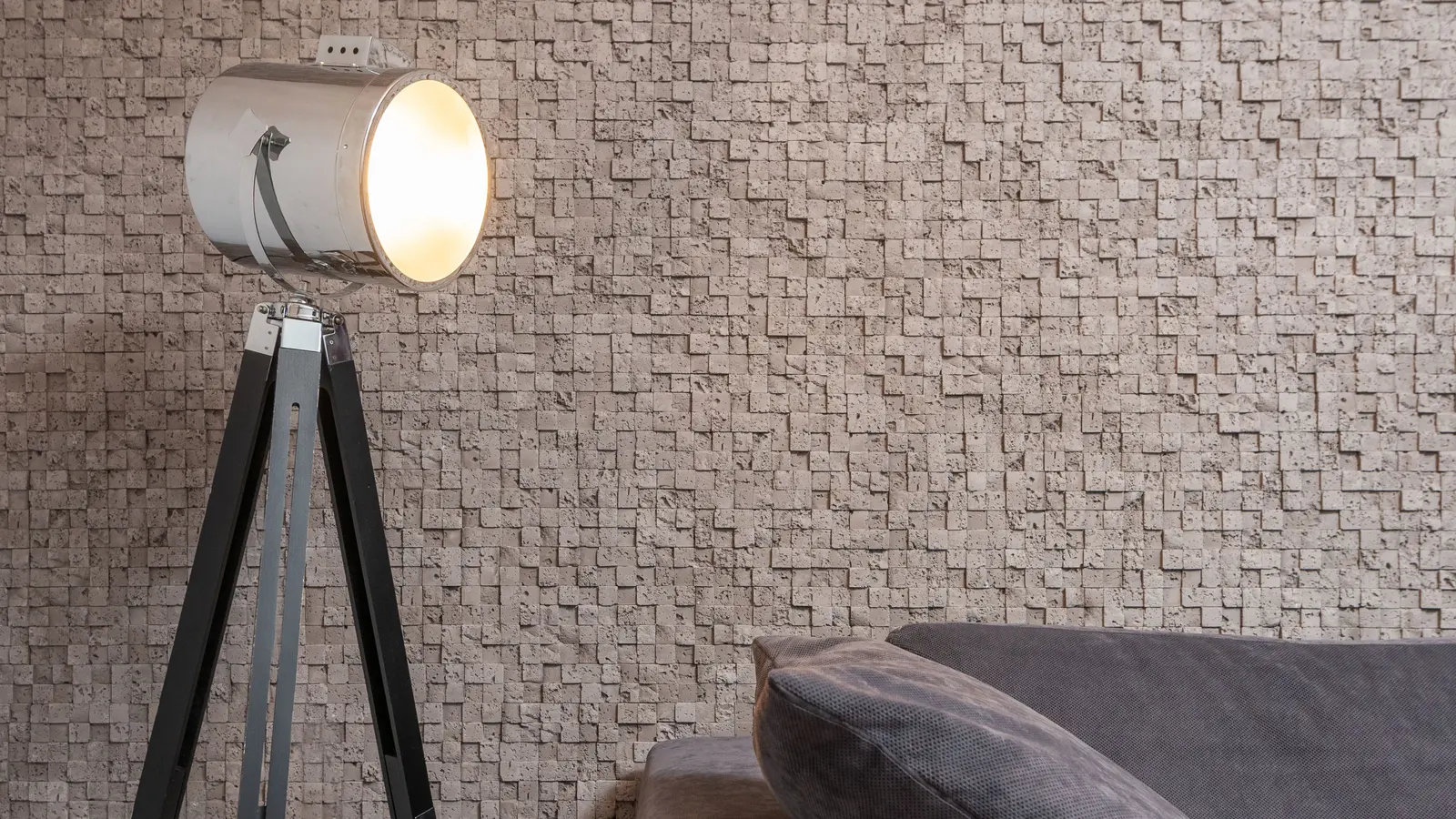
Picture a dark steel head the size of a mixing bowl, tilted over the arm of a gray sofa, its hinge, stem and cable all in plain view. That is an industrial floor lamp at its most honest: a light that shows you how it works. The look is easy to love in a photograph. Living with it depends on where that bowl of light lands, and how much floor the stand claims beside your chair.
Where the look comes from
Industrial lighting borrows from places where lamps were tools. Think of the articulated work light clamped to a bench, the heavy metal shade over a factory station, the spotlight on a stage stand. IKEA describes its own HEKTAR lamp, for instance, as inspired by factory and theater lamps.
The articulated arm has a well documented origin. According to the Design Museum, George Carwardine, an automotive engineer, patented the spring design behind the Anglepoise in 1932, and the lamp was initially aimed at industrial use before a domestic version followed in 1935. Plenty of balanced, jointed arms on lamps today follow the same idea.
What ties the family together is visible structure: metal shades, exposed joints and knobs, cables that are not hidden, tripods that read like equipment stands. Black steel is the familiar finish, though raw silver metal, enamel colors and contrasting brass joints carry the same mechanical character.
The label describes a style, not an age. A new lamp can be designed to look like it spent decades in a workshop, so if a seller charges for history, ask for provenance: markings, a maker’s plate, documented past use. Rust-toned paint and exposed screws can be applied in a factory last month.
Five silhouettes, five kinds of light
The big adjustable dome. A wide metal head on a straight stem throws a strong, defined pool of light downward and hides the bulb from most angles. It suits a reading chair, provided the head tilts far enough to reach the page and sits above the eye line of whoever sits nearby.
The projector on a tripod. This is the most sculptural option, and the one in our photograph. The head aims light sideways like a stage spot, so it can wash a wall or a corner beautifully, or shine straight into the eyes of the person on the opposite sofa. Aim it at a surface, never at a seat.
The articulated task arm. Joints let you bring the head close to a book or a craft table. Its useful footprint is the whole envelope the arm sweeps through, so measure it extended as well as folded.
The bare bulb or cage. Here the light source is the ornament. A cage frames a glowing filament, but it also leaves the bulb in full view, which can feel harsh at reading brightness. A dimmer, softer bulb usually suits this design better than a bright one, and the cage itself is ornament that implies no impact protection.
The plain stem with a metal shade. The quietest way into the style. Its fixed direction is the trade-off: lovely as ambient light beside a sofa, less useful if you need to steer light onto a page.
Glare is the thing photos hide
Product shots tend to face the shade head-on. You will see the lamp from the sofa, from the doorway and from the chair across the room. Before committing, picture the open end of the shade from each of those seats. An opaque dome pointed down keeps the bulb out of sight for anyone seated; an open cage or a projector aimed across the room does not.
Adjustable heads have limits. A tilting head does not mean the stem telescopes, and some visible joints are fixed. Read the stated adjustment range, and never bend a fixed arm to make it reach.
The footprint is wider than the stem
A tripod occupies the full triangle formed by its feet, not the point where the legs meet. One leg can easily stray into the walking route even when the lamp looks tucked behind a chair. A round base is compact by comparison, but a long arm or a large head may overhang well past it. Find the leg spread or base diameter in the specifications and compare it with the real gap between chair, wall and walkway, remembering that the head may overhang further still.
Find the switch, too. A foot switch lost behind a sofa and a head switch above comfortable reach are both small daily irritations.
IKEA HEKTAR: the dome archetype in numbers
IKEA lists its HEKTAR floor lamp, item 702.165.44 with a steel tube, an aluminum shade and an adjustable head. The stated height is 71 inches, with a 12-inch shade and 13-inch base; the E26 bulb is sold separately. It shows the dome archetype well: the large head makes the statement, while the round base keeps the footprint much tighter than a tripod would. We are going on the published specifications here, not hands-on use, and it is not the lamp in our photograph.
The single-head HEKTAR manual covers the stem sections on page 5, base cable handling on page 6 and shade attachment on page 7. Page 2 warns against altering the polarized plug and against deviating from the assembly instructions. The three-head version has its own documentation, so do not swap manuals because the series name matches.
Making one strong piece sit well in a room
One convincing lamp is enough to set the tone. You do not need a room full of pipes and rivets to earn the label. For how it sits alongside ceiling lights and table lamps, browse our lighting collection.
A dark lamp can echo the metal legs of a coffee table while its shade remains the star. A silver projector head can stand out against a calm painted wall. Soft upholstery helps: a plain linen chair gives a jointed lamp a clean backdrop, and a wool rug softens all that steel.
Watch the visual load. In a room already busy with open shelving, framed prints and a patterned rug, a slim stem with one metal shade will settle in more easily than a tripod with three joints. In a spare corner, the more elaborate stand supplies exactly the detail the room lacks.
Electrical basics, briefly
- Buy new lamps that carry a mark from a recognized testing lab, such as UL or ETL, and come with instructions for the US market.
- Respect the maximum bulb wattage printed on the socket or label.
- Dimming needs a compatible lamp, bulb and control together. An on/off smart plug does not make a lamp dimmable.
- Before putting a lamp anywhere near moisture, look for a damp or wet location rating in its instructions, however rugged the housing looks.
Vintage stage lights and converted factory fittings are their own category. Ask who rewired the piece and what documentation comes with it, and have a qualified electrician assess anything uncertain before it goes near an outlet. A plug that fits the outlet reveals little about the wiring behind it.
Start with the silhouette you love, then make sure its light lands on the page, the wall or the corner you meant it for.