Light-Filtering Curtains: Choose Daylight Without Guessing About Privacy
Light-filtering curtains soften daylight, but the label will not tell you what neighbors see after dark. Test privacy with the lights on, and use two layers if the room needs both.
By DecoraMintPublished 4-minute readMore in Blinds & Shades

In this guide
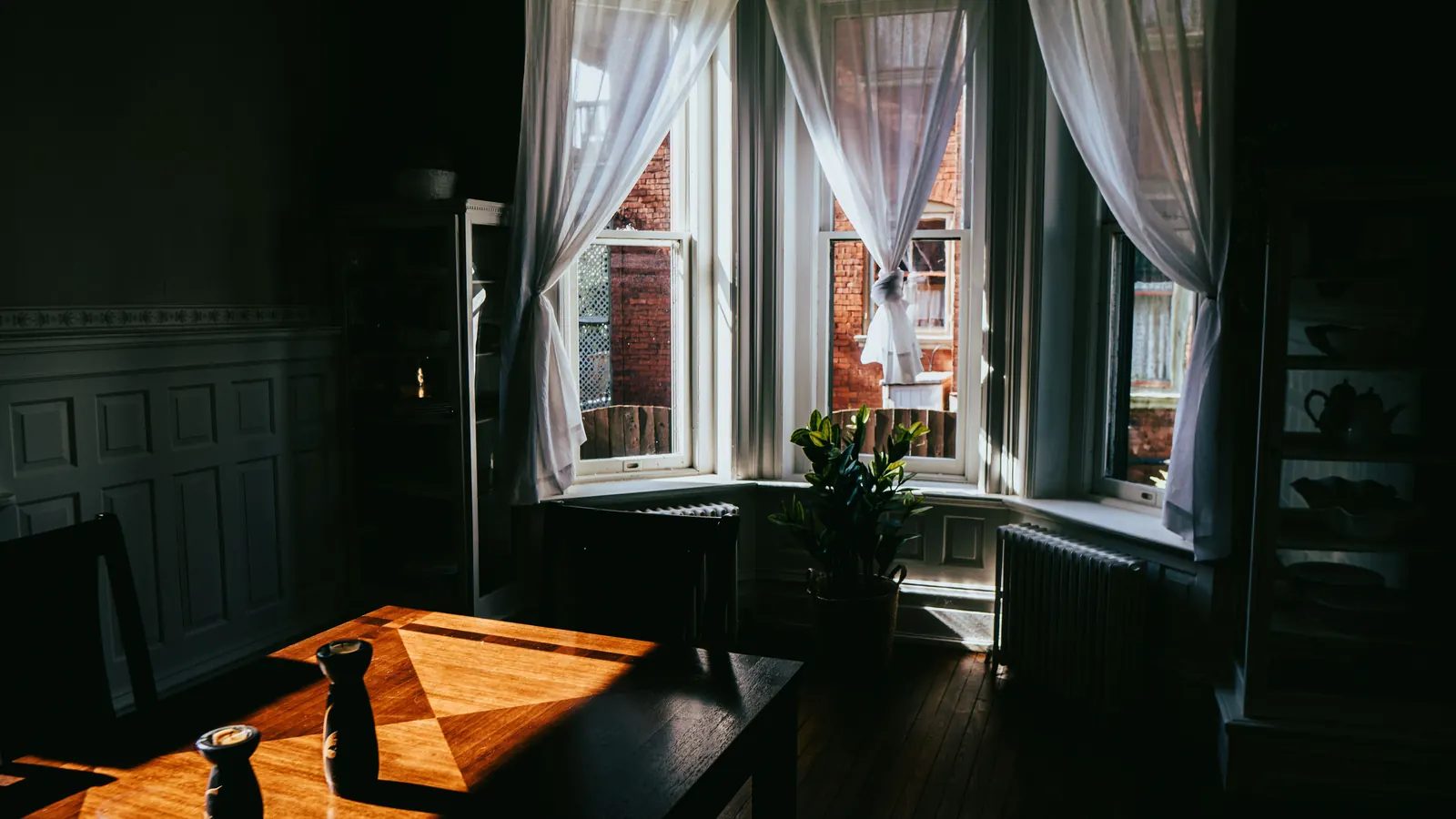
By day, a light-filtering curtain turns a window into a pale, glowing panel and takes the glare off the sofa. After dark, with lamps on inside, the same fabric can show shapes and movement to anyone outside, and IKEA says as much about its own SILVERLÖNN sheer. So choose light-filtering curtains for softer daylight, and add a second layer wherever night privacy matters.
What the curtain is for
Name the job before choosing a color. Softening afternoon light on the sofa, blurring the view of the building next door and giving a gentle backdrop to a room used mostly by day each ask something different of the fabric. For a dark bedroom, light filtering is the wrong tool on its own, and a separate opaque layer does that work.
Retailers use “sheer,” “semi-sheer” and “light filtering” loosely, and one brand’s “privacy sheer” can be another’s “light filtering.” Hunter Douglas’s opacity guide separates sheer, semi-sheer, semi-opaque and opaque fabrics. It is written for shades, and the principle carries over to curtains: how much light and view gets through depends on the fabric itself. Color misleads too. A dark, open weave can reveal a surprising amount, while a pale, dense or lined fabric hides more. Photos of folds make any fabric look thicker because the layers overlap, so look for a flat sample against a bright background.
Test privacy with the lights on
IKEA’s SILVERLÖNN sheer curtain listing says people outside can see into a lit room at night, and that shapes and silhouettes may show by day. That note is for one product, and it is worth testing any sheer for the same thing.
If you can get a sample, hang it at the window in the evening with the room lit and have someone look from the sidewalk or your own yard, from a couple of angles. Judge with your eyes; a phone camera flatters. A swatch cannot show side gaps, the center opening or a panel that stops short, so use it to rule fabrics out, then look at full panels before ordering for several windows.
How a sheer looks in the room
A sheer at a bright window is mostly about light. Linen and textured weaves throw gentle shadows when backlit, so the grain of the fabric shows up on the floor and the wall. Smooth, tightly woven sheers look more even, with a cleaner glow. Both flatter a pale room, and in a dark one, a warm white or oatmeal tone keeps the window from looking like a hole.
Warm cream and cool white look nearly identical online and quite different side by side in natural light, so hold samples upright at the window during the hours the light bothers you, next to the wall paint and the floor. Look at a flat section to judge the view-through and at a few folds to see how the color deepens. Fullness matters as much as fiber: gathered generously, a sheer falls in soft columns, and pulled nearly flat it looks thin and shows the window behind it.
If glare on a screen is the problem, judge from the seat you use. Turning the screen or the desk sometimes helps more than the curtain.
Two layers for day and night
In a room used day and night, two separately operated layers work better than one fabric asked to do everything: sheers in front of lined drapery, or light-filtering curtains over a shade. The sheer stays closed all day for gentle light and the second layer closes at night. Decide which layer you will move most and give it room to slide without catching on the other; bracket depth, window handles and the stack at each side all matter. A lining sewn into a panel moves with it, so it counts as one layer. Light that comes around the edges still gets in with two layers.
In a bedroom, they work well as the daytime layer, with a shade or lined curtain behind them for night. Our window-shade selection guide helps choose that second layer.
Coverage and stack
Measure the window, the rod span and the drop from the actual rod or track position, not just the glass. See whether a package holds one panel or a pair, and whether a custom quote gives flat fabric width or finished coverage after pleating.
Leave room for the panels when they are open. On a narrow window, a thick stack can cover the very daylight you wanted to keep, so extend the rod past the frame if you can. At a sliding door, keep the fabric clear of the handle and the path outside.
Care before length
Delicate-looking fabric can still be dry-clean only, so read the fiber, lining and trim care. SILVERLÖNN is cotton and lists up to 4% shrinkage, which matters if you hem before washing. If the label allows washing, wash before hemming in case the fabric shrinks, and never wash a dry-clean-only panel because another sheer survived it. Panels behind a heavy sofa or on a very high rod are a chore to take down, so factor that in. Plan the second layer for any window that faces a neighbor and stays lit after dark.