Memory Foam Mattresses: Compare Layers, Feel and Practical Fit
A memory foam mattress is rarely all memory foam. Read it from top to bottom, keep density and firmness apart and check the base and bed height it needs.
By DecoraMintPublished 4-minute readMore in Bedroom
In this guide
- A memory foam mattress is mostly other foam
- Heat: why it can feel warm, and what the cooling features target
- Motion: still on one side, slower to turn
- Density and firmness are separate numbers
- On a bunk or loft bed, the frame sets the thickness
- The zipper, the cover and the foam core
- Getting it to the bedroom
Memory foam began as an airplane seat cushion. NASA’s Spinoff report traces it to 1966, when Charles Yost, working under a NASA contract, developed an open-cell foam with unusual viscoelastic properties: it flowed to match the contour of the body pressing into it and returned to its shape once the pressure lifted. That slow, molding sink is still the whole appeal. Lie down and the surface takes your outline a beat later, the way a hand leaves a print in a pillow. It is also the source of the two trade-offs people ask about most, heat and the feeling of being held in place, and it rarely fills the whole mattress.
A memory foam mattress is mostly other foam
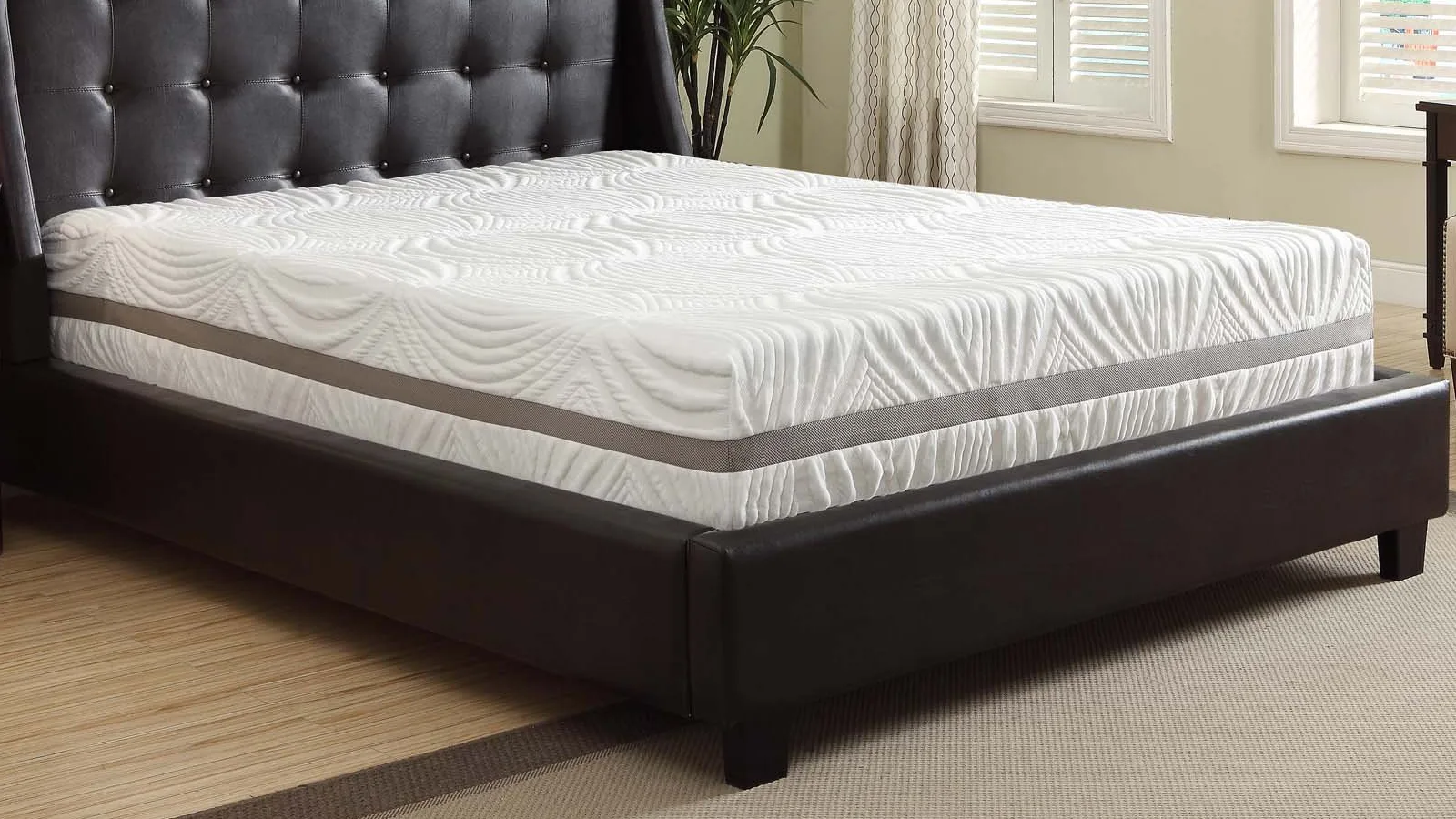
The label usually describes one comfort layer within a taller stack. The Nectar Classic Memory Foam Full listing describes a 12-inch mattress with a 1-inch memory foam layer, 3 inches of responsive support foam and 8 inches of base foam; only a twelfth of its height is memory foam. The same page offers a hybrid version, so check which build is selected before comparing.
IKEA’s ABROTTEN Full is listed at 7.875 inches, with three foam layers, a removable washable cover and a phase-change coating, and its materials list keeps memory foam distinct from other polyurethane foam. Neither listing is a recommendation; together they show why the useful numbers are the thickness and position of the memory foam layer, the support core beneath it and the finished height.
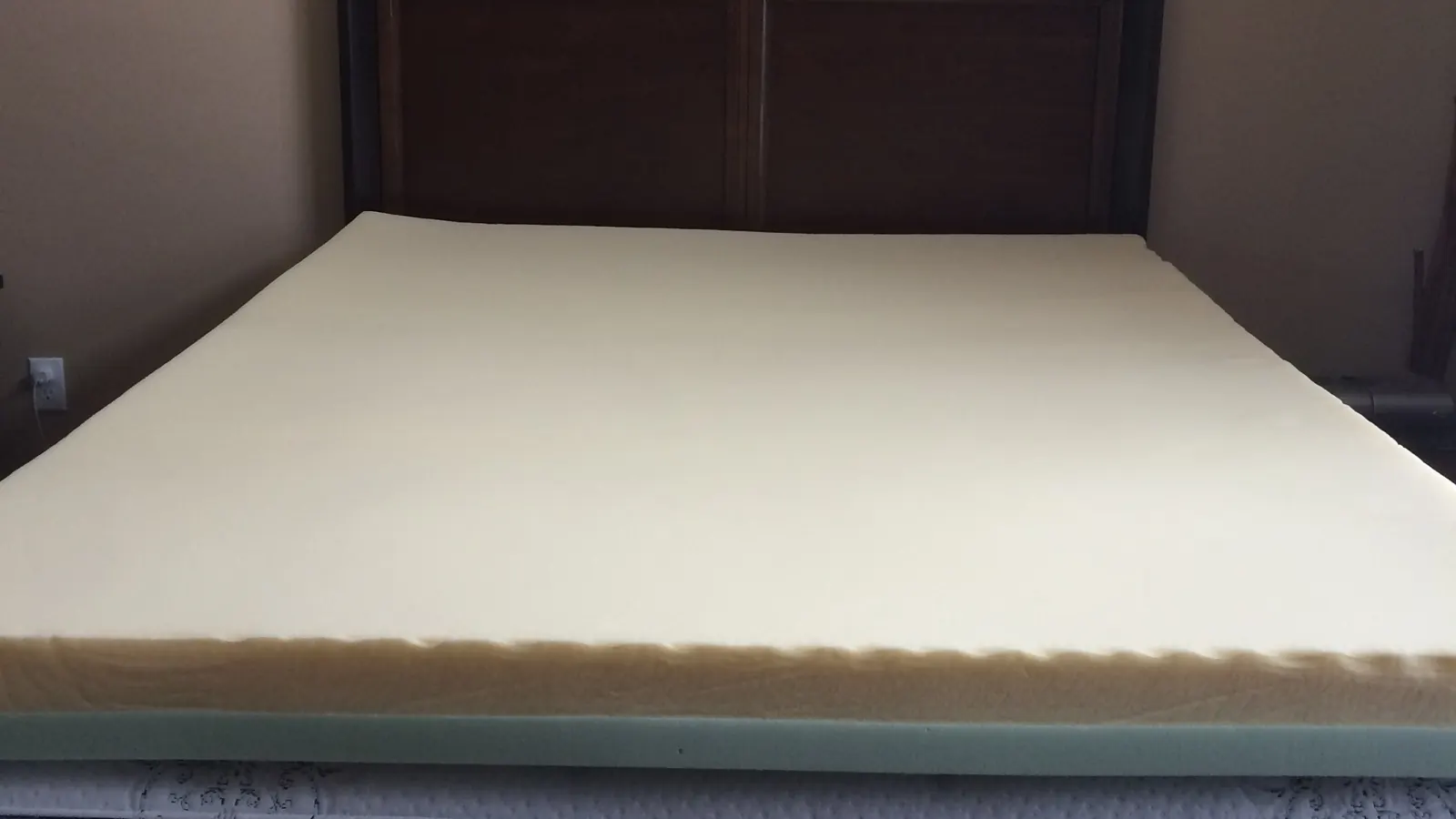
How much memory foam sits on top changes the feel more than the label does. A thin layer gives a gentle first impression before the firmer support foam takes over. Several inches give the deep, cradled sink that memory foam is known for.
Heat: why it can feel warm, and what the cooling features target
The original foam was temperature sensitive, and NASA notes that later formulations were made less so; how much a given foam changes with warmth depends on its formulation. What every memory foam shares is the close contour. A surface that hugs you leaves less air moving around your body, which is why warm sleepers tend to scrutinize memory foam beds.
Makers answer with gel or graphite mixed into the foam, open-cell or perforated layers, phase-change coatings like ABROTTEN’s, and cool-to-touch covers. Each targets something different. A cool-touch cover affects the first minutes on the bed; an additive or airflow channel is aimed at heat building up overnight. A numerical claim means something only with a test method, the product it was compared against and the conditions. Your sheets, duvet and room temperature matter as much as the foam, and a lighter bedding layer is an easy experiment; our cooling bedding picks cover that side.
When pricing, keep the configurations equal. An optional cooling cover can quietly turn a price comparison into one between different beds.
Motion: still on one side, slower to turn
The PFA notes that viscoelastic foams typically have very low resilience, meaning little rebound. Our reading is that a slow-responding foam also absorbs movement, so a partner rolling over usually sends less of a ripple across the bed than on a bouncy spring mattress. The flip side is effort. Because the foam recovers slowly, changing position can feel like climbing out of a dip before you settle again, especially on thick, soft layers. If you turn often or like to feel the bed push back, look for a thinner memory foam layer over a more responsive foam, or consider a hybrid with springs underneath.
Density and firmness are separate numbers
The Polyurethane Foam Association defines density as mass per unit volume, usually in pounds per cubic foot, and firmness as the force needed to indent a sample by a quarter of its height. It states plainly that firmness is independent of density: a dense foam can be soft, and a light foam can be firm. Density relates more to how well foam keeps its original properties over time.
So a “dense” memory foam may still feel soft, and a firmness rating is no guide to durability. When a listing quotes a density, ask which layer it describes; one figure need not apply to the whole mattress, and shipping weight is no substitute.
On a bunk or loft bed, the frame sets the thickness
Foam mattresses come in many heights, and on a raised bed that choice is a safety matter. The federal bunk bed rule, 16 CFR part 1513, requires the upper edge of the guardrails to sit at least 5 inches above the top of the mattress when a mattress of the maximum thickness in the manufacturer’s instructions is on the bed, and it requires those instructions to state that maximum. A thicker mattress eats into that margin. Use a mattress no thicker than the frame’s stated limit, even when a deeper one would fit between the rails, and follow the rule’s required warning not to let children under 6 use the upper bunk.
The zipper, the cover and the foam core
ABROTTEN’s listing allows machine washing the cover on the stated settings; that instruction is for the cover alone. A zipper is a construction detail, not permission to remove or wash the foam. Do not soak, steam or heat-dry a foam core. A protector handles most spills, and the model’s own care sheet covers the rest. More bed and bedding ideas live in our bedroom collection.
Getting it to the bedroom
A rolled foam mattress expands once the plastic is cut and will not go back into its carton, so open it where it will live: on the frame, in the bedroom. If you ever need to move it later, around a tight stair turn for instance, read the maker’s moving instructions before folding it.