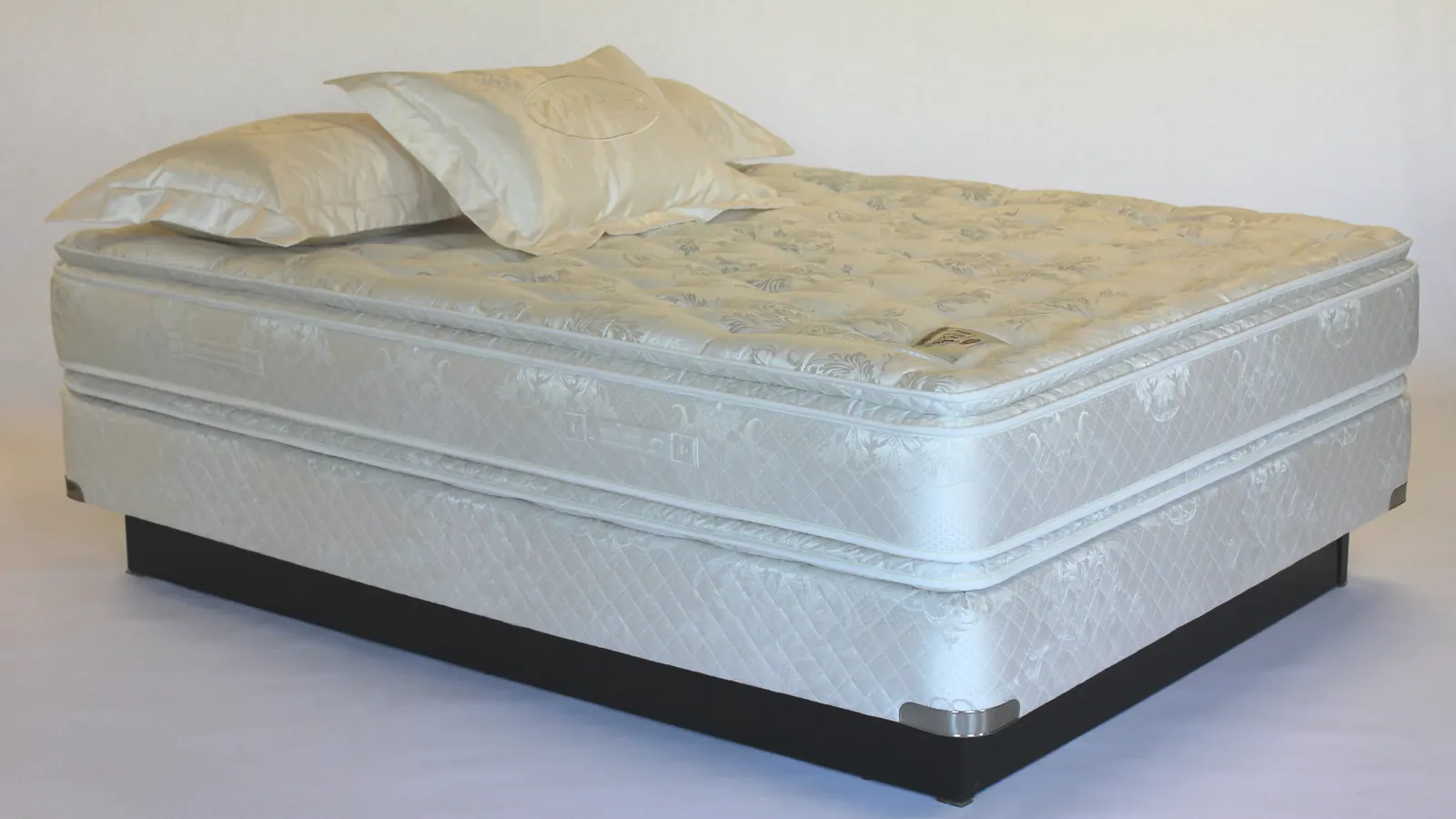
Firm Mattresses: Compare Surface Feel, Resistance and the Complete Bed
Firm means different things at the surface and deeper down, and each brand scales it its own way. How to compare the exact firmness option and the bed it will sit on.
By DecoraMintPublished 5-minute readMore in Bedroom

In this guide
On Saatva’s own firmness scale, the option called “Luxury Firm” sits at 5 to 7 out of 10, squarely in the middle, while plain “Firm” is an 8. The word firm, in other words, can mean medium in one product name and genuinely firm in the next, even within one brand. That is the most useful thing to know before shopping: compare the exact firmness option and the exact setup it will sit on, and decide in advance what you want to feel differently. Less give at the surface? An easier time turning over? A bed that does not swallow you when you sit on the edge to put on socks? Each points toward a different choice.
Write down the model, the firmness option, the height and the base for every mattress you consider. It sounds fussy, but it lets you compare real purchases instead of a word every brand defines its own way. Our bedroom hub covers the wider room and bed arrangement.
We are working from published specifications and shopping examples here, without hands-on testing, and nothing below is medical advice.
Surface feel and the deeper feel are different things
Press a mattress with your hand and you feel the top few inches: the quilting, the comfort foam, the pillow top. Lie on it and you feel the whole construction. A bed can be cushioned on top and firm beneath, or taut on top with more give underneath, so keep separate notes:
| Moment | What to ask yourself |
|---|---|
| Settling in | How does the top feel in your usual sleeping position? |
| Staying put | Do you still like it after several minutes, not just the first few seconds? |
| Turning | Can you roll over without feeling stuck or perched? |
| Sitting at the edge | Is the height right and does the edge feel stable? |
| Sharing | Does this configuration suit both sleepers? |
These are your own impressions, not measurements of spinal alignment or pressure relief. “I liked turning over on this one” is a better basis for a decision than turning a showroom moment into a claim that one construction suits everyone.
Read each maker’s scale on its own terms
Saatva’s Classic listing offers Plush Soft, Luxury Firm and Firm, rated on its own scale as 3, 5 to 7 and 8 out of 10, and sells the mattress in 11.5-inch and 14.5-inch heights. Another maker’s 8 may feel quite different, and the highest number on any scale is not automatically the best buy.
Keep the option name next to the number. If you lie on Luxury Firm in a showroom and then order Firm because both contain the word, you have changed the mattress. The same goes for reviews: a write-up of a different firmness or height may not describe the version in your cart.
Published construction can help explain why options feel different, but a foam density figure, coil count or close-up of quilted fabric cannot tell you how the finished bed will feel.
If you are torn, medium-firm is a real candidate in its own right. There is no need to jump to the hardest option just because your last mattress felt too soft.
Height changes the whole look of the bed
A firm mattress is often chosen for feel alone, but its height reshapes the bedroom. The difference between 11.5 and 14.5 inches on the Saatva Classic, for example, is three inches of mattress showing above the frame. On a low platform bed, a deep mattress can make the whole piece read chunky and modern; on a tall traditional frame, it can push the sleeping surface well above the nightstands and cover more of the headboard. Measure your headboard, the frame and your bedside tables, and picture the new top line before choosing a height. Deep mattresses also need sheets with a deep enough pocket.
Keep showroom comparisons fair
Note which base each display mattress sits on and ask whether a topper or thick protector has been added. If one bed has an extra layer and another does not, you are comparing two different setups.
Lie in the positions you actually sleep in, with a similar pillow, and focus on the things you came to change. Record the exact configuration before moving on. A few clear notes are easier to compare than a memory of a dozen feature names.
Two sleepers should take notes separately first. One may love the first model’s surface while the other prefers turning on the second. Comparing afterward makes the disagreement visible without anyone’s sense of “firm” being wrong.
If you cannot try a model in person, write down what remains unknown. Dimensions and base requirements can be confirmed before you order; how much you like the feel may only be settled at home, so choose terms you understand for that.
Match the mattress to the base you own
A firm mattress still needs the support its maker specifies for that size and configuration. Get those requirements and compare them with your bed frame’s documentation, and count any missing slats, center supports or foundation in the real cost. Support requirements are one of the places worth getting in writing, because they can affect the warranty.
For an adjustable base, verify the exact pairing. A photo of a mattress bending on someone else’s base says nothing about yours. Keep both sets of instructions together.
If your current bed has a visible problem, look into it before blaming the mattress feel. Swapping the top layer while a sagging frame stays underneath muddies the comparison, and a warranty claim is a separate track from choosing a new feel.
Three common situations
You love the surface but not the whole bed. Separate what you want to keep from what you want to change: the top cushioning you like, the trouble turning, the height. Then compare alternatives against those same notes. A different firmness, model or base may change several things at once, so record exactly what you tried so the order matches it.
Two people want different feels. See first whether you can both accept one option. If not, a split configuration means separate mattresses, a base that suits both and a plan for sheets and the center join. A king-size label alone does not tell you how two independently chosen halves will work together.
You are thinking about a firm topper instead. A topper adds height and has its own construction, fit and care needs. Weigh the cost and handling against replacing the mattress, and never count an extra layer as a repair for a faulty mattress or frame.
Pin down the whole order
Gather the model, firmness option, size and height, plus any required base, delivery service and old-mattress removal. Save the seller’s trial and return terms. A warranty, an exchange and a refund are three different remedies, and the word “trial” does not say which one you get. At home, judge the bed on your own nights without treating a short trial as a durability verdict or a medical result.