Memory Foam Pillow Guide: Solid, Shredded and Adjustable Designs
A solid core, shredded foam and a blended fill feel and handle differently. Identify what is inside, then compare height, adjustment, cover care and return terms.
By DecoraMintPublished 5-minute readMore in Pillows
In this guide
Leave a memory foam pillow in a cold guest room and it will feel noticeably firmer at bedtime than it did in the shop. That is the material working as designed: the Polyurethane Foam Association’s technical bulletin on viscoelastic foam explains that this foam softens with heat, including body heat, and stiffens in the cold, with its best “memory” action typically between 55°F and 85°F. Three properties shape the experience more than any product name: how dense the foam is, how it handles warmth, and how it smells when it first comes out of the box. Get those right, then choose between a solid block and shredded fill.
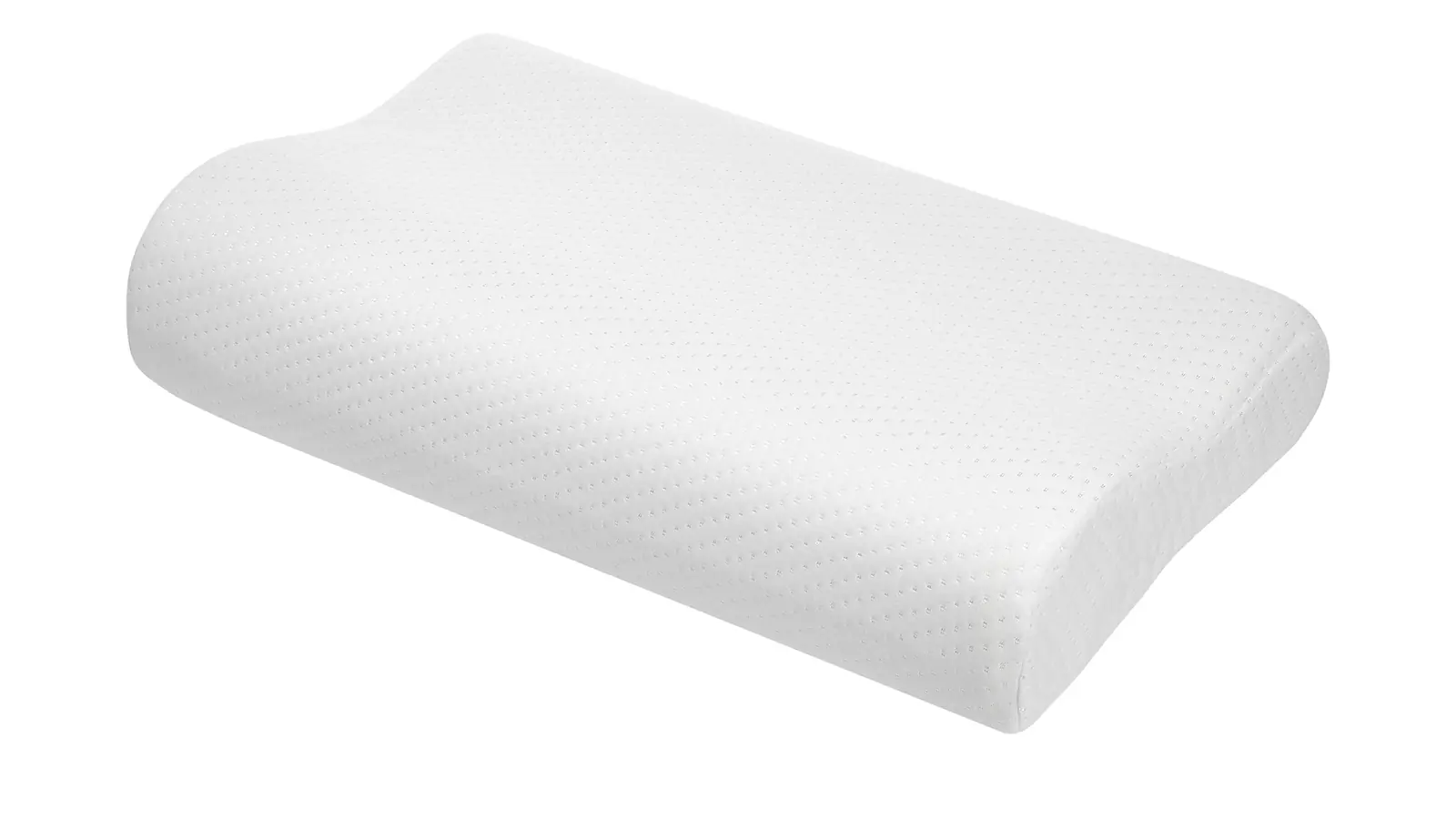
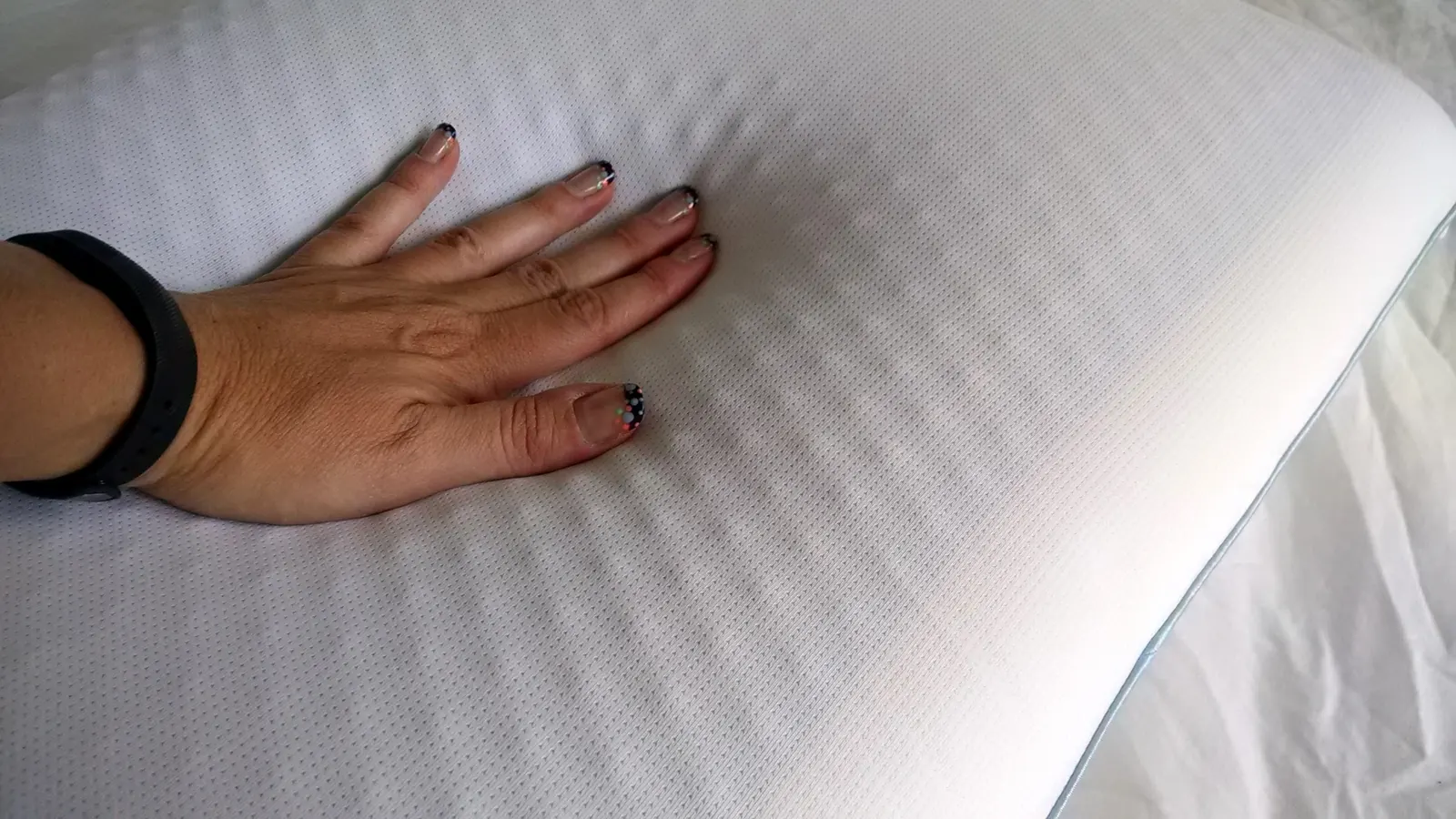
Hero photograph: Classic Brands Reversible Cool Gel, Memory Foam Pillow Touching, by The Sleep Judge, licensed under CC BY 2.0. Resized and converted to WebP. This is a third-party demonstration photograph, not DecoraMint product testing or evidence of cooling performance.
Density: the number most listings leave out
Memory foam is a viscoelastic polyurethane foam; CertiPUR-US lists viscoelastic memory foams among the foam categories it certifies. Its density is the weight of one cubic foot of the material, and the PFA bulletin puts most household and healthcare viscoelastic foam between 2 and 6 pounds per cubic foot. Higher density generally means the foam holds its performance longer.
Density and firmness vary independently. A dense foam can be formulated soft, and a lighter one can feel quite firm, so a pillow labeled “firm” reveals little about how long it will keep its shape. If a listing gives a density figure, treat it as a durability clue. If it gives none, the seller’s warranty and return terms become your best protection, so read them with that in mind.
Why it can feel warm, and what the “cool” features do
The same quality that makes memory foam pleasant, a slow, enveloping sink as it warms under your cheek, also means your head sits in a close-fitting hollow with less air moving around it than on a springy fiber pillow. Brands answer this in a few distinct ways, and it helps to know which one you are paying for.
- Phase-change additives absorb heat as they melt. The PFA bulletin describes a material with a melting point around 82.4°F (28°C) holding the foam near that temperature only until its capacity is used up, after which it recovers once you get up.
- Gel-containing foam or a cool-touch cover changes the first sensation when you lie down. Neither is a measured all-night result.
- Shredded fill, pinholes or ventilated cores leave more air space than a solid block.
If a seller quotes a percentage improvement, look for what it was compared against and under what conditions before letting it outweigh height and feel. Your pillowcase and protector sit between you and every one of these features too, so a thick waterproof protector can mute a cool-touch face. For a broader look at warm sleepers, the pillow category gathers other constructions worth comparing.
That new-foam smell
Most new memory foam has a smell when it is unwrapped, often stronger in a pillow that arrives vacuum-compressed. The PFA bulletin notes that viscoelastic formulations can produce more noticeable aromatic emissions than conventional foam and describes that residual odor as not known to be harmful but bothersome to some people; its advice to manufacturers is thorough ventilation.
At home, that translates into unwrapping the pillow in a well-ventilated room, removing the cover and letting the core air out before the first night, following any unpacking time printed on the packaging. Skip the fixes that can damage the foam or the return: no fragrance sprays, no heat, no cleaning chemicals. If the smell is still strong after the maker’s stated airing period, ask the seller whether opened pillows qualify for return, before the window closes.
Certification helps here, within limits. CertiPUR-US explains that it certifies flexible polyurethane foam, not finished pillows or entire companies, and its criteria include low VOC emissions for indoor air quality, under 0.5 parts per million. The program suggests checking its directory of participating companies and brands, and it is worth asking whether the specific pillow uses certified foam, since one seller can offer several constructions. A foam logo is silent on the cover fabric, the comfort and any health benefit.
Solid block or shredded fill
A solid core gives you one fixed shape and a smooth, sculpted look on the bed, whether it is a simple rectangle or a contour with a higher and a lower edge. You cannot make it lower, and you should never cut it. A contour also has a right way round, so check the intended orientation and think about whether you turn often enough to fight it.
Shredded or cross-cut foam reads softer and more like a plump traditional pillow under a sham. It breathes more, molds more loosely and, in designs that open, lets you remove fill. It also needs shaking out and redistributing. For a sense of how blends are described, Coop lists its Original Adjustable Body Pillow as a cross-cut memory foam and microfiber blend; that is a body pillow, shown here only as an example of a clearly stated fill, not a stand-in for a head pillow.
When fill removal is allowed, take out a small amount at a time, sleep on it for a few nights, and keep the spare fill sealed and away from children and pets. Open an inner liner only if the maker’s instructions allow it; an outer zipper may serve the cover alone.
What the listed loft hides
Catalog loft is the pillow’s height before anyone lies on it. Memory foam compresses slowly and by an amount that depends on its density, the room temperature and your mattress, so the height you sleep at can be well below the listed figure. Your current pillow is the best reference: if you fold it in half every night, you want more height; if your chin feels pushed toward your chest, you want less. Persistent neck or shoulder pain belongs with a clinician.
Keep the core dry
Tempur-Pedic says its TEMPUR pillow material is not washable, even where its covers can be laundered, and soaking foam generally invites slow drying and damage. Read the label for the cover, the inner liner and the foam separately: “machine washable” on a product page often means the cover alone. A zip-on protector is the simplest way to keep a foam pillow fresh, and a spare cover means one can be in the wash while the other is on the bed.
Our decision rule: keep a memory foam pillow if it sits level under your head on its first night, stops smelling after the airing period and stays comfortable by the small hours. A pillow that fails the third test is the wrong construction for you, and shredded or vented fill is the next thing to try.