Cooling Pillows: Compare Covers, Fill, Height and Care
A cool surface will not make up for a pillow that is too high or hard to wash. Get the height and feel right first, then look at where the cooling feature actually is.
By DecoraMintPublished 5-minute readMore in Pillows
In this guide
Slide your hand under a pillow in a hot August bedroom and the underside is almost always warm, no matter what the cover felt like when you lay down. That gap, between the cool first touch and the warm hollow your head makes by midnight, is the whole problem a cooling pillow is trying to solve. What keeps you comfortable after the first ten minutes is how easily heat and moisture can leave the space around your head, and that depends on fill and structure as much as on the cover. For most hot sleepers we would put a loose or vented fill in a breathable case first, and treat a cool-touch cover as a bonus. Height still comes before all of it, since a cold surface will not rescue a pillow that props your head at the wrong angle.
The descriptions below come from published research and maker information, not our own overnight tests.
Four ways a pillow can feel cooler
A cool-to-touch surface. Some fabrics pull heat from your skin quickly on first contact, which you feel as coolness. Textile researchers measure this transient “cool feeling”; a study of 40 summer fabrics in the Journal of Engineered Fibers and Fabrics linked it to properties such as thermal conductivity, heat capacity, thickness and weight. It is real, and it fades once the fabric reaches skin temperature.
Phase-change materials. These additives absorb heat as they melt at a set temperature, then release it as they resolidify, and their capacity runs out. In a thermal-manikin study of phase-change fibers, the fibers gave a strong but short-lived cooling effect, and how long it lasted depended mainly on how much phase-change material was present. Expect help as you settle, not an all-night chill.
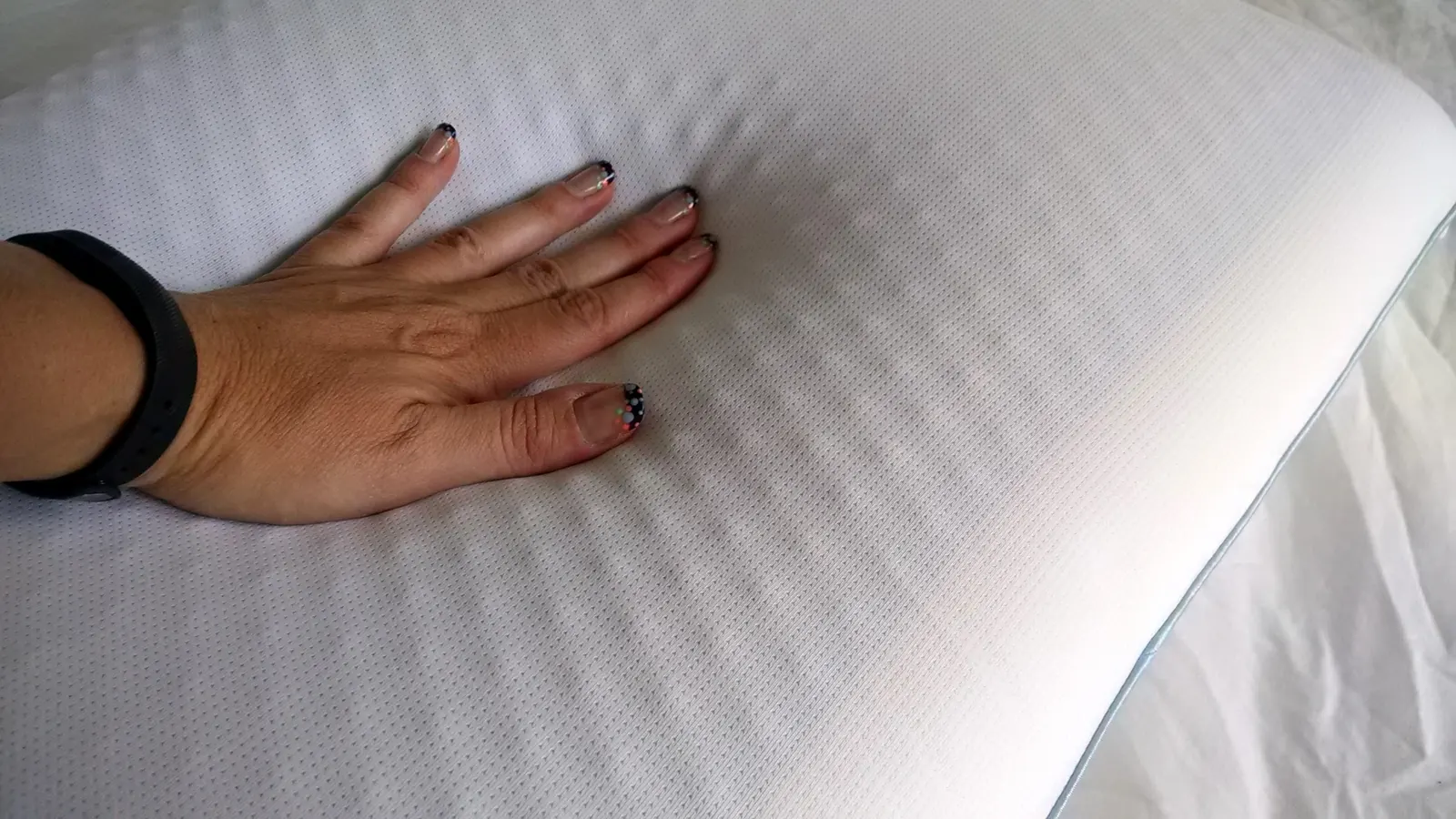
Airflow through the fill. This is the quieter factor, and plausibly the one that matters after the first minutes, though listings rarely measure it. Loose fills with space between the pieces, such as shredded foam, buckwheat hulls or latex pieces, and cores with pinholes or channels let warm air move away. A dense solid block that cradles your head closely leaves the least room for that.
Moisture handling. A damp pillowcase feels warm and clammy. Breathable natural fibers in the cover or fill, and a case that does not trap sweat, are likely to matter more over hours than a cool first touch.
A gel layer usually works through the first two mechanisms: it feels cool on contact and is sometimes described as absorbing heat, though makers rarely say how much. Placement matters too, because a gel layer on one face does nothing once the pillow is flipped.
Reading the listing
Find where the cooling feature lives: the cover, one face of the core, the whole core, or the fill. If it sits on one face, ask which face is meant to be up. A collection can include several constructions that look identical in photographs, so read the description of the exact model you are choosing.
When a seller quotes a temperature drop or a percentage, look for what it was compared against and how it was measured. A reading taken in the first moments says little about the third hour of the night.
Fiber names deserve a careful read. A cover marketed as bamboo is usually rayon or viscose made from bamboo, and the FTC’s bamboo textile guidance says a fabric can be labeled bamboo only if it is made directly from bamboo fiber, and otherwise should be labeled as rayon or viscose made from bamboo. The cloth can feel smooth and cool, but the plant name is no evidence of antibacterial or environmental benefits.
Where the height should land
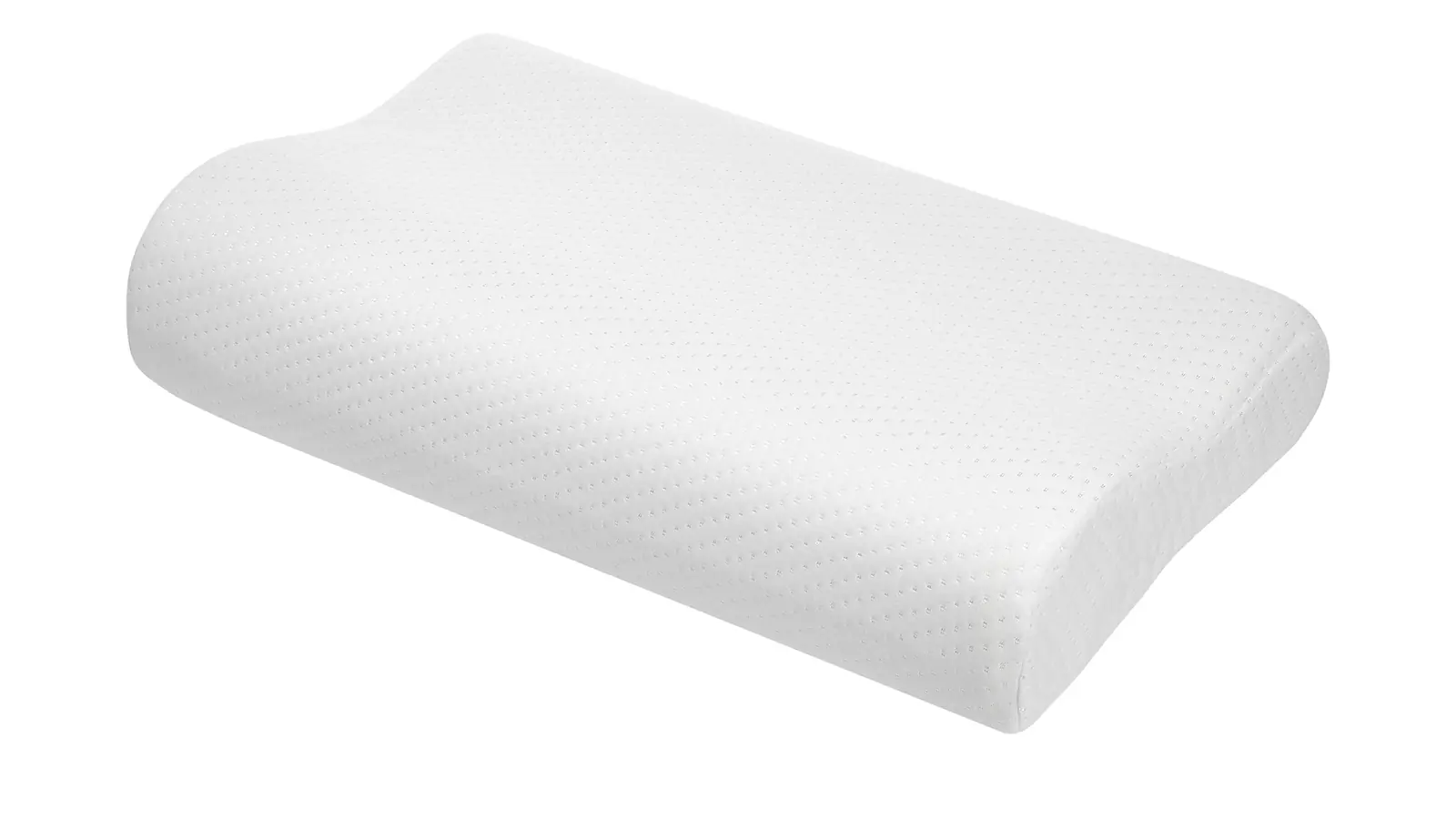
A tall pillow pushes your head into it and wraps more of your face and neck in material, so the right height is part of sleeping cooler as well as part of comfort. Start from your current pillow and ask whether you want it higher, lower, or simply less heat-trapping. A contour has an intended orientation and a raised edge or two, so check both heights in the side view. If the fill is adjustable, remove small amounts at a time as the maker directs and keep spare fill sealed. Never cut into a sealed pillow to imitate an adjustable one.
If a pillow feels uncomfortable or aggravates an ongoing neck problem, stop using it whatever its label says about sleeping position, and have persistent pain or numbness looked at by a clinician.
Case, protector and the room
Every layer between you and the pillow dilutes its surface. A thick waterproof protector over a cool-touch cover largely cancels the cover’s purpose, while a thin cotton percale or linen case keeps heat moving. Pick a case that fits: too tight compresses the pillow and blocks airflow, too loose bunches under your cheek, and contoured or extra-thick pillows can need a different size from the one on the box. Covers with cooling yarns or finishes may want low heat or air drying, and “washable” on a listing often means the cover only (see Tempur-Pedic’s care guidance for that split), so a spare cover is a practical buy for a pillow you use nightly. If the pillow arrives vacuum-compressed, give it the recovery time on the packaging before judging its shape.
The room matters at least as much. The National Sleep Foundation’s sleep tips put a bedroom between 60 and 67 degrees Fahrenheit as helpful for sleep, because body temperature falls to start sleep, and a fan or a lighter top layer works toward that. Our cooling blanket guide covers the layer above you.
Who should pick what
If you sleep hot and like a plump pillow, a shredded or loose fill in a thin cotton or linen case is the most direct fix. If you want the shaped feel of a solid core, look for vented or channeled construction and treat gel or phase-change as a short-term helper. If you only run warm for a few summer weeks, spend on a breathable case before you replace the pillow, and keep a cooling body pillow as a separate purchase, chosen for its shape first.