Microwave-Safe Plates: Check the Label, Material and Use
A plate is microwave-safe when its maker says so, not because it looks plain. Why safe plates still get hot, which decorations matter and what a home test cannot tell you.
By DecoraMintPublished 6-minute readMore in Tableware
In this guide
We may earn a commission from links on this page, at no extra cost to you. Affiliate disclosure
The plate most likely to cause trouble in a microwave is the pretty one: a wedding-china dinner plate with a thin gold band, a market find with a bright glaze, a cheerful melamine picnic plate. A plate is microwave safe when its maker says so for that exact item. Plain white porcelain can carry that statement and a near-identical plate can lack it, so the label, packaging or product page decides, never the look.
Even a properly labeled plate has limits. Microwave safe covers reheating in an ordinary microwave mode. The plate can still get hot, and broilers and sudden temperature swings need permissions of their own.
Read the underside before the pattern
Turn the plate over. Most current dinnerware is stamped with a brand, a collection name and often small care symbols. Treat each symbol as its own permission: a dishwasher mark says nothing about heating, and an oven symbol covers the oven only. If a symbol is unfamiliar, the maker’s website usually explains its own icons, and that explanation beats a guess from a similar-looking pattern.
Serving pieces need the same scrutiny. A platter designed for cheese at room temperature can be beautiful on the table and still have no heating rating at all.
A good product statement is short and specific. Bella Maison’s Julia Stoneware Dinner Plate shows the format: the retailer lists the 10-inch plate as stoneware with a green digital print, and its care guide reads “Dishwasher safe, Microwave safe” and stops there. That makes it a reheating plate, not an oven plate, because the oven is not on the list. We are relying on the published listing and have not tested the plate; Bella Maison is an affiliate merchant, and its dinnerware collection, which opens a collection page, holds pieces in several materials, each with its own care statement. The green print stays under whatever you reheat, so Julia belongs to a household happy to eat off pattern every day. Stoneware also brings weight: the store’s product data records about 1.45 pounds per plate, so a stack of eight is close to 12 pounds lifted down from the shelf.
The same shop’s Olive Porcelain Dinner Plate, also 10 inches, shows how a second plate can carry a longer statement: porcelain with a hand-painted rim, and a care guide that lists the dishwasher, the microwave and the oven. It is the lighter plate in the store’s data, about 1.07 pounds against Julia’s 1.45. Two gaps remain. The page gives no oven temperature, and in the retailer’s photographs the painted rim is a gold-brown line while the listing does not say what the paint contains, so ask Bella Maison to confirm the rim has no metallic content, and ask for the oven limit, before relying on either permission.
How each material behaves
Porcelain, stoneware and ceramic are often microwave safe, which is why it is tempting to assume. The decoration and the condition of the glaze are what change the answer, so look for the statement on the specific line.
Glass dinnerware can be an excellent everyday choice when the product is meant for it. Corelle’s product FAQ permits microwave use of its Vitrelle dinnerware when the supplied directions are followed and recommends a dry pot holder because the glass gets hot. That permission belongs to Vitrelle; a thin white plate from another maker needs its own.
Plastic needs an express microwave-safe label. Reusable and dishwasher safe are different claims.
Melamine belongs on the table. The FDA specifically advises against heating food and drinks on melamine-based dinnerware in microwave ovens. Its crisp patterns and light weight suit the patio or a child’s place setting; warm the food in a microwave-safe bowl, then plate it. Outdoor, kids’ and travel plates are often melamine, so read the material line on anything sold for those uses.
Paper plates come with their own instructions, including limits on printed or coated surfaces.
The FDA’s microwave guidance makes the general point plainly: container choice matters, the oven’s manual has the final word on what goes inside, and dishes can get hot from the food they hold.
Gold rims, silver bands and combination ovens
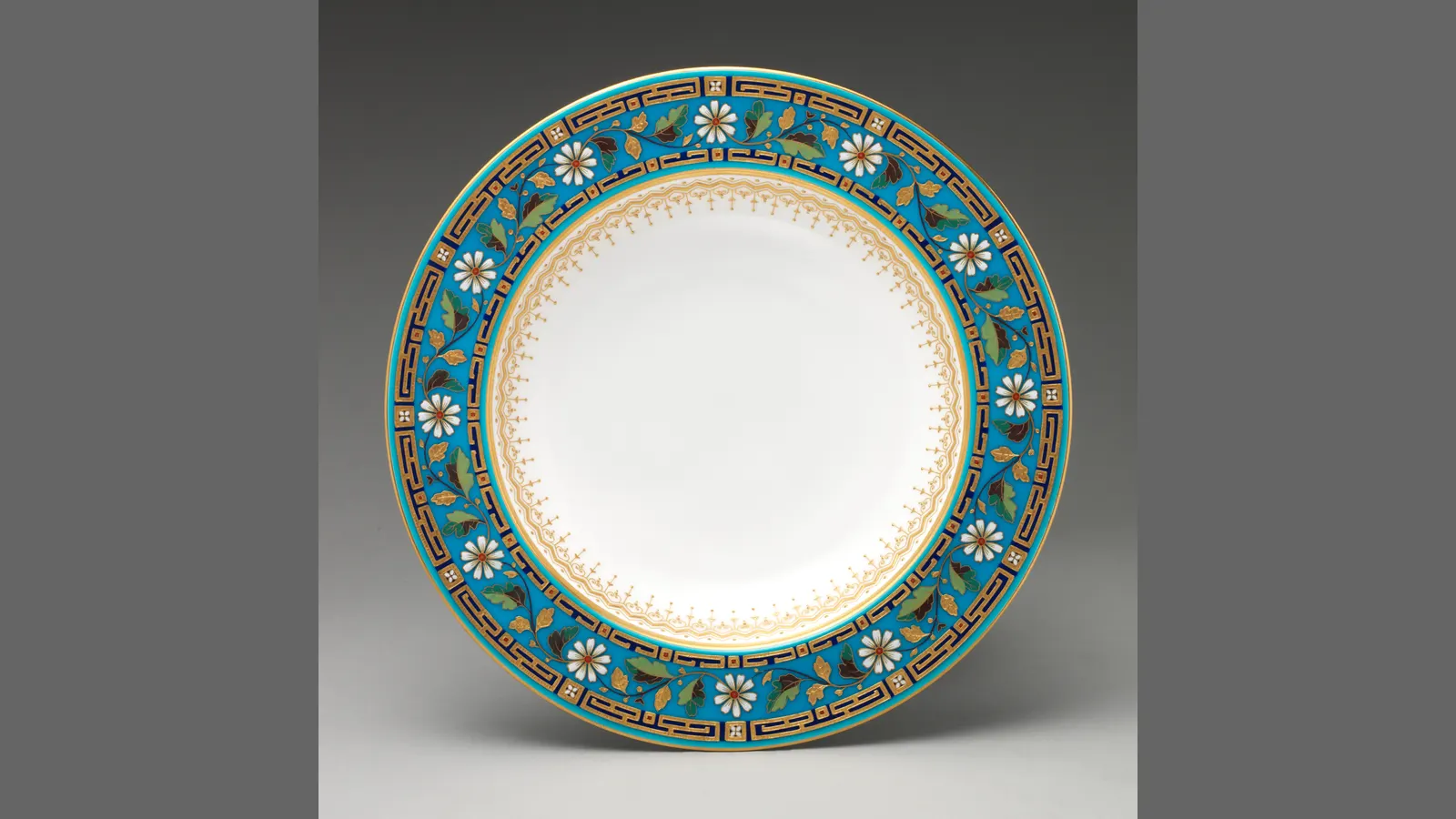
Metallic trim is the decoration people forget. A fine platinum line around a rim reads as elegant at a dinner party and as a hazard in the microwave: GE Appliances’ dish guidance warns that metallic decoration can cause arcing. Keep metal-trimmed dinnerware for serving, and reheat on a plainer plate.
GE’s guide also separates ordinary microwave cooking from convection cooking. If your oven combines the two, the mode you select changes what is allowed. A metal rack supplied with the appliance is permitted because the maker designed it for that oven; a gilded salad plate has no such design behind it.
Why a safe plate still burns your fingers
Hot food passes heat into the plate, and a broad rim can feel surprisingly warm even though it held no food. Lift with a dry towel or pot holder, especially with glass and heavy stoneware. If a plate gets hotter than the food on it, or behaves oddly in any way, stop using it for reheating and look up its instructions. Heating it longer to see what happens is the wrong experiment.
Some appliance makers, GE among them, describe a short water-and-dish test for how a dish behaves in their ovens. If your oven’s manual includes one, follow it exactly. It can tell you about heat, but it cannot overrule a “not microwave safe” label, make a gold rim acceptable or reveal what a glaze is made of.
Chips, cracks and sudden temperature changes
Look over everyday plates now and then. A chip or crazed glaze can change how a piece should be used, and many makers say so in their care notes. Corelle’s safety and usage instructions split restrictions by product line, including cautions about rapid temperature changes and certain heating uses for its stoneware. Read the section for your line; instructions for a sister collection do not transfer.
A plate going straight from the freezer to the microwave is exactly the kind of swing those cautions cover. Do it only when the dish instructions allow it.
Handmade, antique and decorative pottery
A hand-thrown plate in a deep glaze can be the most beautiful thing on a table, and many handmade pieces are perfectly fine for food. The questions come first, though. The FDA’s traditional-pottery guidance explains that some improperly made glazes or decorations can release lead into food, and it advises against using pieces labeled for decoration only (some carry a warning such as “Not for Food Use”) for cooking, serving or storing food.
The FDA flags higher-risk pieces: handmade or irregular items, antiques, worn or damaged pottery, flea-market and street-vendor finds, and bright orange, red or yellow decoration. No amount of washing or boiling removes lead from pottery. For a piece you cannot trace to a maker who states it is food safe, give it a place on a shelf or wall, where it can still be admired every day.
Fit inside the oven
Measure the turntable and cavity, and compare the full plate diameter, including any handles or corners. A large square plate sweeps a wider circle than a round one of the same width, so make sure it can rotate without catching the walls. Your oven’s manual gives the clearance it wants.
A wide-rimmed dinner plate that only just clears the walls is also awkward to lift out hot. For everyday reheating, a slightly smaller plate or a shallow bowl with a narrow rim is easier on the fingers, and the big plates can stay on the table where they look best.
An 8-inch plate is a practical size to keep for the microwave alone. Bella Maison’s Vintage Porcelain Dessert Plate is listed at that diameter in porcelain; the retailer’s photographs show a blue hand-painted edge around an embossed floral print, and the care guide covers the microwave as well as the dishwasher and oven. Two inches less across than a dinner plate is room your fingers get back at the edge of the turntable. Compare the 8 inches with your own turntable before ordering, since the listing gives the diameter and nothing about rim height.
Retailers to browse
Compare colors, sizes, materials and return details on the retailer’s current listings.
- Browse dinnerware at Bella Maison
Bella Maison
Opens Bella Maison’s dinnerware collection, not a single product.