How to Choose an Oversized Chair That Fits You and the Room
Thick arms can eat most of a wide chair. Measure the seat, not the frame, decide what you want to do in it and check the delivery route before committing to a chair-and-a-half.
By DecoraMintPublished 5-minute readMore in Accent Chairs
In this guide
Overall width is the least useful number on an oversized chair’s listing. It tells you what the room has to surrender, not what you get to sit in. Thick, rolled arms can claim a surprising share of a wide frame, and a deep seat that sinks you back feels wrong if you like to sit upright. The figures that matter are the usable seat width and depth, and whether the chair will survive the trip up the stairs.
Start with how you will use it, then compare seat measurements, then the footprint, and only then confirm the delivery route. A chair that looks wonderfully slouchy in a photo is no use if it jams in the doorway or cannot take the turn at the top of the stairs.
Oversized is a label, not a size
Sellers use “oversized chair” and “chair-and-a-half” loosely, so judge the real dimensions against smaller chairs in the same collection and against furniture you already know. Room & Board’s York range shows the idea by listing an oversized chair alongside a smaller one, which makes the difference easy to see for that range alone. Treat the maker’s dimensioned drawing as the source for the piece you are considering.
Seat first, frame second
Record overall width, depth and height, then find the usable seat width, seat depth and seat height, plus arm and back height when they are given. Missing numbers are a reason to ask before ordering; a good answer is a dimensioned drawing, not a single overall figure. Overall width governs floor space and delivery. Seat width decides whether you have room beside you for a pillow or a tucked leg, so check whether the extra width sits inside the arms or mostly outside them.
Try seat depth in a comparable chair, with the back cushion arranged as it would normally be. Can you reach the back without sliding forward, and do your feet rest on something stable in the posture you prefer? Seat height governs standing up as much as sitting down, and arm height and shape decide where your elbows and a book land.
Choose the activity before the silhouette
For reading, think about back support, the lamp position and where a book or drink will go. A very wide chair with low rounded arms invites lounging, which is a different experience from an upright reading chair. For television, test the angle to the screen: if you usually turn sideways, a deep chair set square to the wall will not feel right. A swivel base can change the orientation but adds a moving footprint that must stay clear.
For two people, find the manufacturer’s stated capacity and weight limit. Chair-and-a-half does not guarantee a rating or comfort for two adults, and if two people want independent seats regularly, a loveseat is the better comparison.
Tape it out with a person in it
Tape the full footprint on the floor, adding any clearance for reclining, swiveling or moving parts, and sit a temporary chair inside the outline to check the route around it. Count the legs, a footstool and a side table pulled in beside it, because a plan showing only furniture rectangles underestimates an occupied seat. Open nearby doors and storage, walk between chair and sofa, and make sure outlets, vents and controls stay reachable. If the chair crowds the only practical route, compare a narrower arm profile or a different format. A light-colored fabric lessens the visual bulk but not the physical footprint.
A chair-and-a-half or something else
A chair-and-a-half spends its extra inches on width, a chaise on length for putting your legs up. A chair with a separate ottoman lets you shift the footrest when the room needs open floor, at the cost of one more piece to place. A loveseat gives two clearer seats, and a modular unit can be rearranged later, though a piece designed to join others may have unfinished sides. A wide chair does not become a bed by being big: if it is sold as a sleeper, check the mechanism, the open dimensions and the sleeping surface on their own, since an ordinary upholstered chair is not built for overnight use.
Cushions and covers
Find out whether the seat cushion is fixed or removable and whether it can be turned. Removable does not always mean reversible or washable, and a zipper may exist for manufacturing rather than laundering. Read the care instructions for the exact fabric: a textured weave, a smooth weave and leather each need different treatment, and a performance label is not a cleaning recipe. A swatch viewed in your room beside the sofa tells you more than the product shots. With pets or frequent snacks, the seller’s stated care and warranty exclusions matter more than the picture. A large chair can outlast its first cover, but whether replacement covers or cushions exist depends on the product, so look before you buy.
Delivery route
Room & Board’s delivery measuring guide recommends checking doorways, hallways, stairs and elevators, including obstacles such as handrails and low ceilings. Measure that whole path against the piece’s dimensions, not only the front door against the chair’s width. Ask whether legs or other parts come off and whether delivery service handles that; upholstered arms are often fixed even if another chair in the collection has removable ones. For apartments, confirm elevator size, service-entry access and building delivery rules, and clarify how the item is packaged, since a large carton can be harder to move than the assembled chair. If access is uncertain, send the retailer measurements and photos before paying, and do not alter the furniture or the building to squeeze it in.
Where it sits in the room
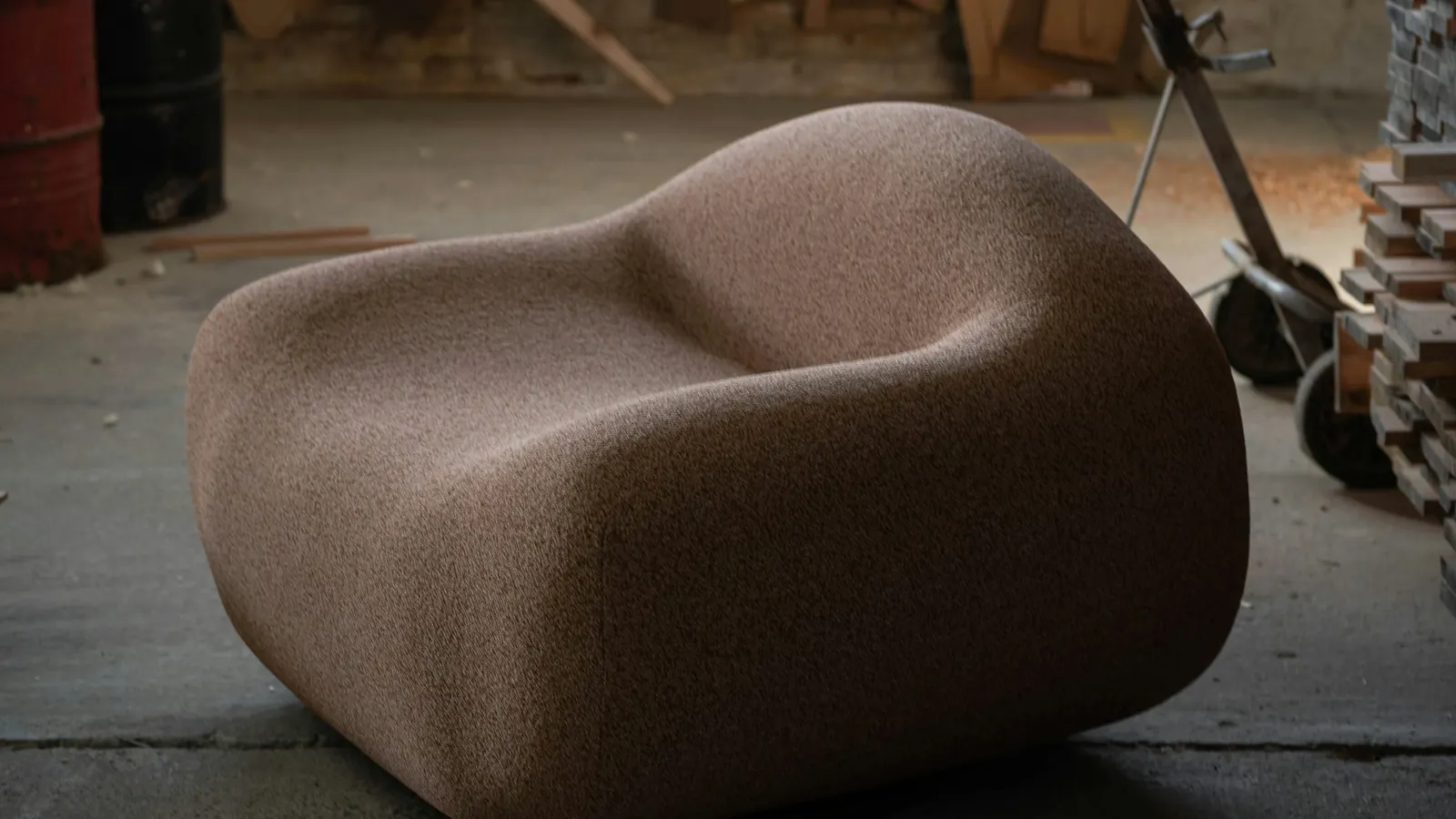
A deep, low chair in rust chenille tucked into a window corner can anchor a whole living room: a floor lamp arcs over one shoulder, a small round table holds the books, and a worn wool rug gives the chair a base so it does not look dropped in. The textures overlap, which is why the corner feels settled. It works best when the surrounding pieces stay modest, because a bulky chair beside a bulky sofa and a heavy console leaves nowhere for the eye to rest.
Scale decides the rest. In a small room the chair can be the main seat, with a narrow table and a slim lamp built around it. In a larger room it makes a secondary lounge spot, angled toward the sofa so conversation can reach it, with a pale, smooth rug to keep a dark upholstered mass from sinking the floor. If it replaces two occasional chairs, think about whether you will miss two independent seats when guests come. Beside a sofa, compare seat height and scale, though the two need not match. The living-room collection has broader planning ideas.
The deciding number is the seat width between the arms: a chair with generous inside width and a slightly smaller frame beats the showpiece that spends its inches on the arms.