How to Choose an Accent Chair for an Apartment
Width, seat height, visual weight and upholstery, plus the doorway measurement people forget, for choosing an accent chair in a small apartment.
By DecoraMintPublished 5-minute readMore in Accent Chairs
In this guide
The classic accent-chair mistake is measuring the corner and forgetting the hallway. A chair that fits its spot on the floor plan still has to clear the elevator, the stair turn and the apartment door, and then leave you a path to the window. So settle two things first: can it arrive, and can you walk past it with a laundry basket?
Everything else (seat height, upholstery, shape) comes after that. No single width or seat height suits every apartment or every person, and a compact-looking chair can take more floor than its photo suggests, while a wide one can sit happily in the right corner. This guide works from published specifications and room-planning logic rather than comfort tests or durability rankings. For the seating and tables around it, browse the furniture collection.
What the extra seat is for
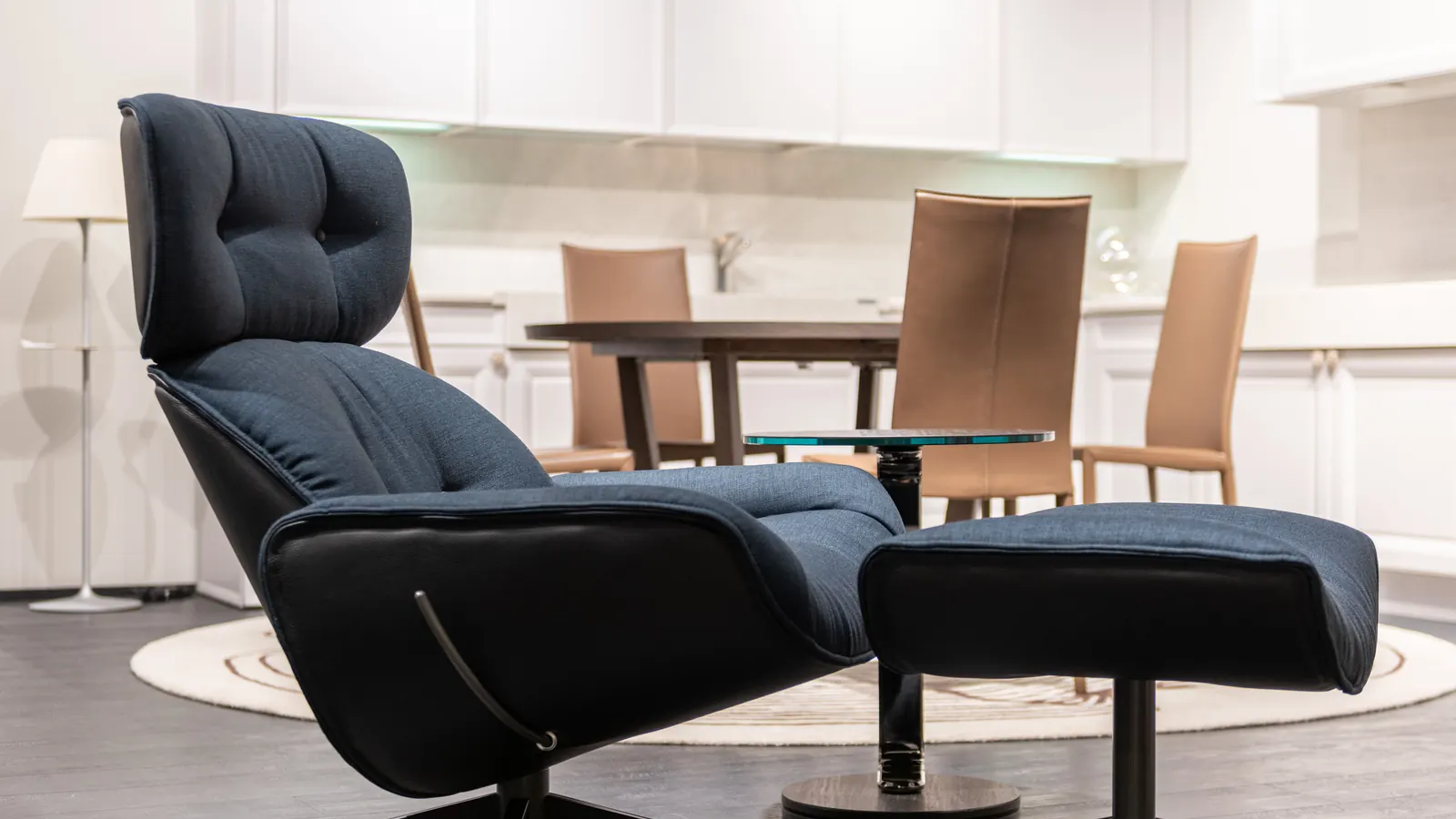
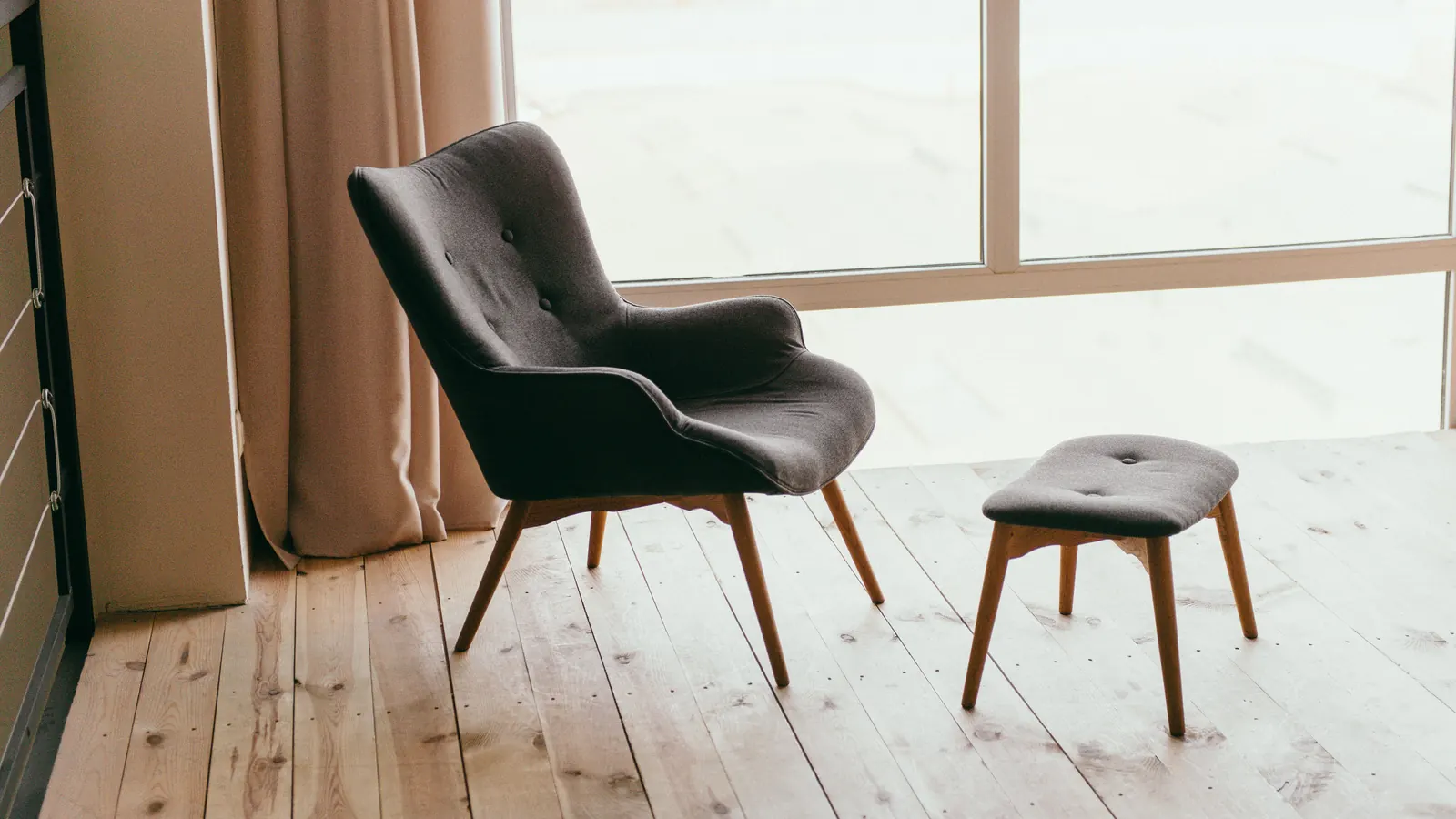
An accent chair has a job, and the job changes what to inspect. A conversation chair faces the sofa and needs an arm profile that does not block the walk past it. A reading chair needs a lamp and a surface for a cup within reach. A guest seat has to be light enough to drag across the room and park somewhere else. A chair with a footstool needs the stool counted in the footprint, because an empty outline looks generous until the whole arrangement is taped out.
Swivel chairs and recliners also count as accent chairs, but their operating footprint is bigger than the frame. Measure the full arc or recline before deciding where one goes.
Tape it out, then plan the delivery
Mark the chair’s widest point (usually the arms) and its deepest (usually the rear legs) on the floor with painter’s tape or another removable tape that suits your flooring. Add the footstool, the lamp base and the side table. Open the nearest door and drawer, then walk the routes you really use. If the chair sits in the only line between the door and the window, move the tape before you move the chair.
For the trip in, measure doors, corridor turns, stairs and elevators, and compare them with the shipping carton as well as the assembled chair. Removable legs help only if the product instructions give the resulting dimensions, and fixed upholstered arms stay fixed even when another chair in the range has detachable ones. Sketch the tightest turn with its measurement. A doorway wider than one listed dimension still leaves open whether a bulky frame can pivot through the full route.
Reading the dimensions
Overall width is what the room has to give up. Seat width is what you get, and thick arms can make a wide chair feel enclosed. Seat height and depth interact with the back angle and cushion shape in ways a short specification table cannot show, so the best reference is a chair you already know. Work out which dimension you want to change, and by how much, instead of choosing a number because a guide calls it standard. If you can sit in the real chair, notice whether your feet reach the floor without a stretch, whether the front edge presses behind your knees and whether the arms suit how you actually sit.
Two IKEA listings show how different the proportions can be. The POÄNG armchair in walnut-effect/Knisa black is listed at 26¾ inches wide and 32¼ deep, with a 16½-inch seat height and a 22-inch seat width. Its frame is layer-glued wood veneer with birch veneer, so “walnut-effect” describes a finish, not solid walnut. The STRANDMON wing chair in Sulviken blue/beige is 32¼ inches wide, 37¾ deep, with a 17¾-inch seat height. Its cushion cover is marked do not wash, do not dry clean, and the fixed upholstery is vacuumed or wiped with a damp cloth. These figures come from the maker’s pages and describe those cover versions only; we have not sat in either chair.
Upholstery: the claim and the care label
Velvet, bouclé and performance weaves behave differently even when the marketing sounds alike. Look for the fiber content, the care instructions and any named test for the specific cover, because a fabric category alone cannot predict pet hair, stains or aging. Keep two questions apart: is the cover removable, and may it be washed? A zipper is not washing permission, and the frame, cushion cover and any insert can each carry their own directions.
If swatches are offered, look at them against your floor and sofa in daylight and again under lamps, and study the weave up close as well as from the doorway. For a pet household, think about the cleaning routine you will actually follow and whether replacement covers are sold. “Pet-proof” on a label is worth a question: the answer should name what the claim covers and what the warranty excludes.
Visual weight and the look of the corner
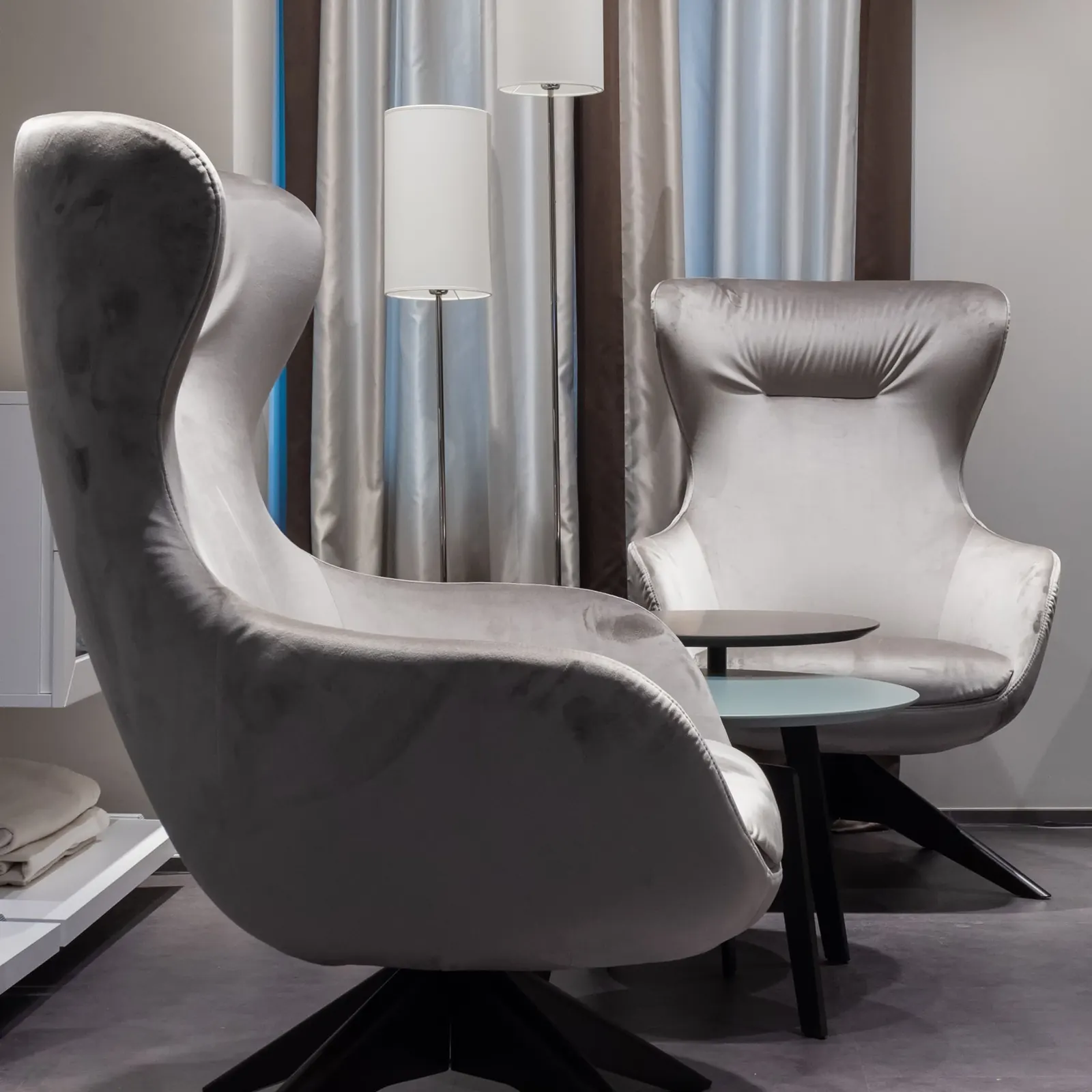
Two chairs with the same footprint can read very differently. A frame with legs showing underneath lets the eye run along the floor to the wall, and in a narrow living room that extra strip of floor makes the space feel wider. A skirted chair with broad rolled arms and a high back is a solid block of color that anchors a corner and holds its own beside a large sofa.
We would let the sofa decide. If the sofa is tall, dark and heavy, a slim open-legged chair in a lighter fabric gives the eye a rest and balances the mass. If the room feels fragmented, a chair that echoes one material or color already present, say the oak of a side table or the blue in the rug, ties the corner together. A patterned chair needs a quick check of scale: a bold floral beside a striped sofa works when one of them is clearly the lead and the rest of the textiles stay plain. Snap a photo from the doorway and compare outlines before you commit.
Making the corner work
Place the chair so you can reach a side surface without leaning across the route, and put the light where it hits the page from a seated position. Check the lamp from the sofa as well (our evening lighting guide covers shades and bulbs), because glare that seems fine from the chair can hit the other seat. Keep the base and cord of any floor lamp in the plan, and leave enough room to vacuum around the arrangement and to move the chair. A piece that fits only when it is wedged against everything else will annoy you every day, even when the dimensions technically work.
When you narrow the shortlist, ask three things: does the whole chair plus footstool fit your taped outline, can the carton or the assembled frame make every turn on the route, and does the cover’s care label match how you live? If one answer is a no, drop that chair and keep the taped corner for the next candidate.