Serving Platters: Choose the Shape, Size and Surface for Your Menu
The outside size of a platter is not its usable surface. Start with the dish you serve most, then check the rim, how it carries and where it will live.
By DecoraMintPublished 5-minute readMore in Tableware
In this guide
We may earn a commission from links on this page, at no extra cost to you. Affiliate disclosure
Where will the platter sit while people serve themselves? The answer settles most of the choice. A long narrow piece fits a crowded table; a round one belongs in the middle where every seat can reach it; a deeper rim suits something with juices. The surface that matters is the part under the food, not the catalog length, so measure with the dish you serve most.
Platter or tray
A platter presents food directly on its surface. A serving tray carries or groups other things, such as cups, small plates and a pitcher. Listings use the terms loosely, so look at the construction. Put food on a surface only if it is meant for food contact; a painted display board and a decorative tray are not food platters. Think about the handoff too: a beautiful heavy piece may suit a sideboard and be a poor choice for passing between seated guests.
| Shape | Good for | Watch |
|---|---|---|
| Oval | A shared main dish | Room at both ends to grip |
| Round | Cheese, fruit, a centerpiece | Reach from every seat |
| Rectangular | Rows of small bites, sliced dessert | Corners and storage depth |
| Long and narrow | A line of bites on a crowded table | Whether a utensil can reach the food |
| Shallow bowl-like | Loose ingredients or some sauce | Actual depth |
Cut paper to the platter’s dimensions, lay it on the table and add dinner plates and glasses. That shows quickly whether a platter fits the catalog photograph but takes over your dining space. For a buffet, leave a clear approach for a guest’s plate and a serving utensil, and prefer a narrow arrangement to a deep display people must reach across.
Usable surface
The listed length includes the rim or handles unless it says otherwise. A broad decorative border can take much of the piece, so for a round platter compare the food area, not only the diameter. A dip bowl set in the middle needs more room than the food alone. Guest counts do not convert directly to platter length, since bite-size appetizers, a whole main dish and a generous cheese arrangement need different space. Two smaller platters often beat one oversized one, because they can sit at different ends of the table and be refilled in turn. A main dish for six still needs one long piece, though; small platters only add up when the food comes in bites.
Materials
Glazed ceramic and porcelain. They coordinate with dinnerware and give a defined rim. Oven, microwave and dishwasher use depend on the exact piece. A platter is serveware unless it is sold as bakeware, so move food from the oven to the table in a piece expressly made for it and follow its temperature directions.
Wood. A wooden platter is a warm backdrop for cheese and fruit. Wood intended for food should be sold as food-contact, and its finish decides how to clean it. John Boos says its wood boards should not be soaked or put in a dishwasher, as its care FAQ explains. That is one maker’s advice for its own boards. For a wooden serving piece, follow the instructions that came with it, and use only the oil or wax its maker names. A painted or lacquered decorative board is for display.
Glass, metal and melamine. Read the intended uses. Utensils can mark some surfaces and some coatings change cleaning instructions. The FDA advises against heating food or drinks on melamine-based tableware in a microwave, so serve on melamine and heat in cookware meant for it.
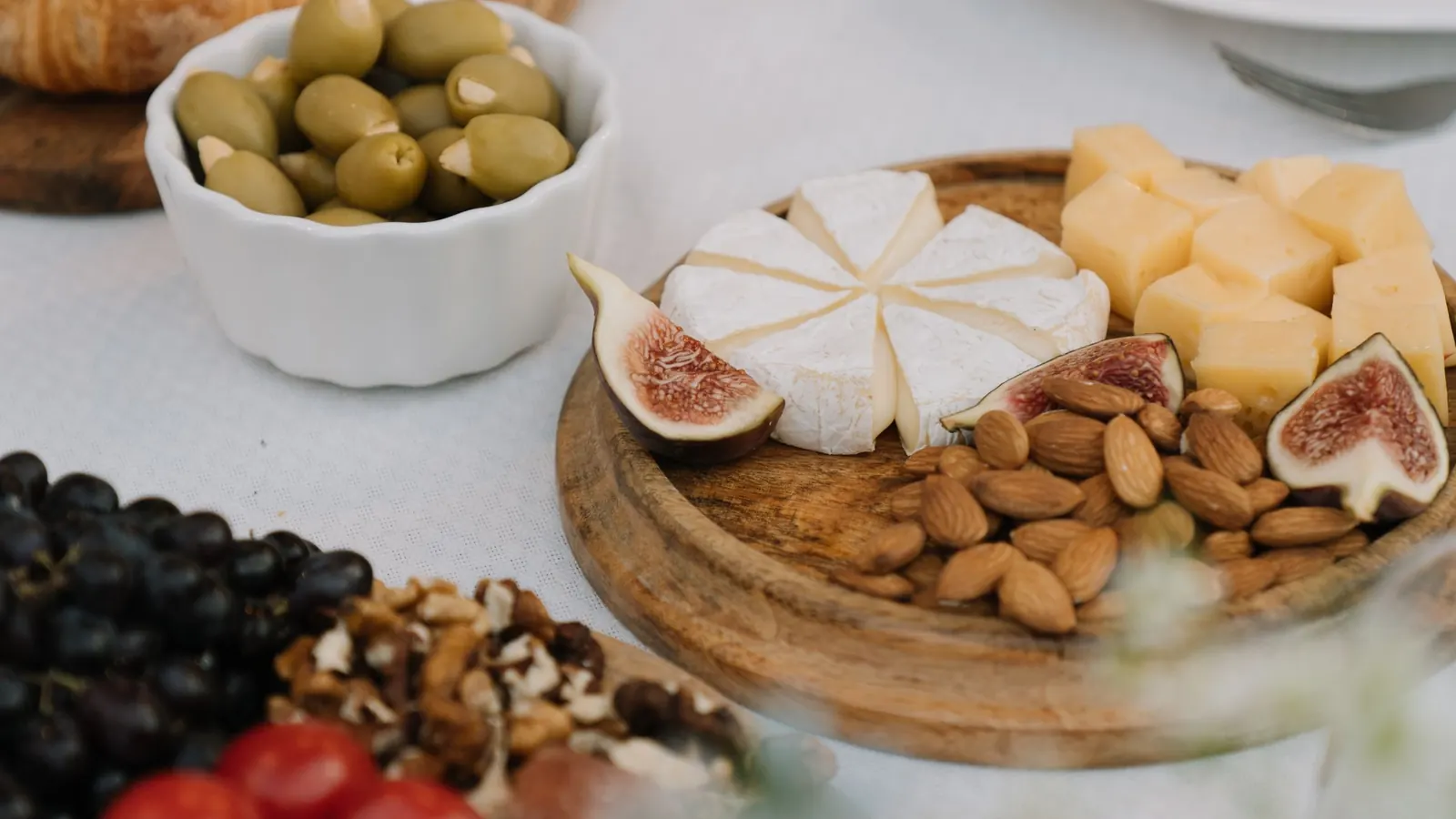
A long table might hold a round wooden platter of cheese, figs and almonds at one end, a small bowl of olives beside it and a porcelain oval of roasted vegetables at the other, white plates between them and a linen runner underneath. The wood gives a warm, matte note against glossy white, the two platters sit at different heights from the plates, and guests can reach both without crossing the table. One natural-material platter and one white porcelain one, both plain, leave the food as the only pattern on the table.
One compact porcelain example
Bella Maison, one of our affiliate merchants, lists its Lemoncello Porcelain Serving Platter in lengths of 6, 7.5 and 9.5 inches, as 100% porcelain with a lemon-inspired design and gentle-cycle dishwasher care. We may earn a commission on purchases through our link, and we have not tested it. The retailer describes them as pieces for appetizers, pastries or shared dishes, and the lengths agree: even the largest, at 9.5 inches, is shorter than a 10-inch dinner plate is wide. Each size has its own place on a table. The 6-inch holds lemon wedges, butter or a few olives beside a main platter, where the lemon motif stays visible around a small heap of food. The 9.5-inch carries a round of pastries or a cheese course for two or three, and the print disappears under anything more generous. The store’s product data puts them between about 0.35 and 0.86 pounds, light enough to pass hand to hand between seated guests, which a heavy oval is not. The listing gives no guest count or oven rating and names only a gentle dishwasher cycle, so these stay serveware: food goes on them after it leaves the oven.
None of the three will take a roast or a shared main for six. For that, Bella Maison’s serveware collection opens a collection page rather than a single product; check each piece’s listed length against the paper template from the first section, since the length includes the rim.
Weight, storage and cleaning
Weigh the platter with food on it, and find where hands can grip without touching the food. A decorative rim may not give the carrying grip of a handle. Measure the shelf, drawer or rack where it will live, including handles and curves, since a platter stored out of the way is used less. A dishwasher-safe platter can still be too big for your machine, and hand washing needs sink and drying space that holds it securely.
A platter is not a cutting board unless its maker says it is, since a glaze or decorative surface may not take a knife, so prepare food on a board and transfer it. A raised rim helps define the surface but does not stop a tilted platter from spilling, so keep a loaded one level. For a special-occasion piece, protected storage is a fair trade; for everyday service, simple cleaning wins over an elaborate edge.
Retailers to browse
Compare colors, sizes, materials and return details on the retailer’s current listings.
- Browse serveware at Bella Maison
Bella Maison
Opens Bella Maison’s serveware collection, not a single product.