Serving Spoons: Choose the Right Bowl, Handle and Material
A shallow platter, a deep vegetable bowl and a small sauce dish each want a different spoon. Match the bowl and handle to your usual menu, then check care and storage.
By DecoraMintPublished 5-minute readMore in Tableware
In this guide
We may earn a commission from links on this page, at no extra cost to you. Affiliate disclosure
Mashed potatoes want a deep, broad bowl. Green beans in their cooking liquid want a slotted spoon, or they arrive on the plate in a puddle. A relish dish wants a small spoon with a short handle that will not slide into the jar. A serving spoon is judged by how neatly it moves food from dish to plate, so start with the dishes you serve from most and buy a few spoons that fit them, not a matched set of many.
Match the spoon to the dish
| Utensil | Common task | Detail that matters |
|---|---|---|
| Solid serving spoon | Food with some sauce | Bowl depth and what it carries |
| Slotted spoon | Lifting food, draining liquid | Slot size against the food pieces |
| Spoon and fork pair | Salad and larger pieces | Both heads fit the bowl |
| Ladle | Soup and liquid dishes | Capacity and reach |
| Small spoon | Relish, jam, condiments | Handle length |
A slotted spoon cannot stand in for a ladle, and a very deep spoon is awkward in a shallow dish. Think through the path from bowl to plate; if you have to tilt the dish or make extra passes for one portion, the shape is wrong. At a meal with several dishes, give each its own utensil, which also keeps flavors and ingredients apart for guests choosing around dietary restrictions.
Bowl and handle
The head’s width, length and depth set what the spoon does. A side view shows depth, and an overhead photograph hides it. The head should slip into your serving bowl without hitting the rim; a tiny spoon in a big dish is slow. Use a spoon you own as a reference, note what you would change (more depth, a smaller head, a longer handle) and shop for that.
A long handle reaches into a deep dish but needs somewhere to rest, and in a small bowl a long, heavy handle sprawls across the table. Look at how it balances when set down. At a buffet, move the dish toward the front of the counter before reaching for a longer handle. Handle thickness changes comfort as well, and weight matters most with a loaded spoon in the hand.
Two stainless examples
OXO’s Steel Serving Spoon is a solid design with a deep head, a slight angle and a grip area on the handle, listed as stainless steel, 13.25 inches long and dishwasher safe. Its Steel Slotted Cooking Spoon has openings that drain liquid and is listed at 14.8 inches, also stainless and dishwasher safe. We have not tested either, and the care details are OXO’s for those models.
Two spoons in the same finish do different work, so compare function and measurements with your own dishes.
Materials and heat
Stainless steel, wood, silicone and mixed construction all turn up in serving utensils, so read the description of the handle as well as the head. A metal look can hide another material. Metal spoons can scratch some coated pans, and silicone or wood utensils have temperature limits of their own. A utensil that only moves food from table bowl to plate has a gentler life than one left in a hot pot, so look for the maker’s stated heat limit before using a serving spoon at the stove.
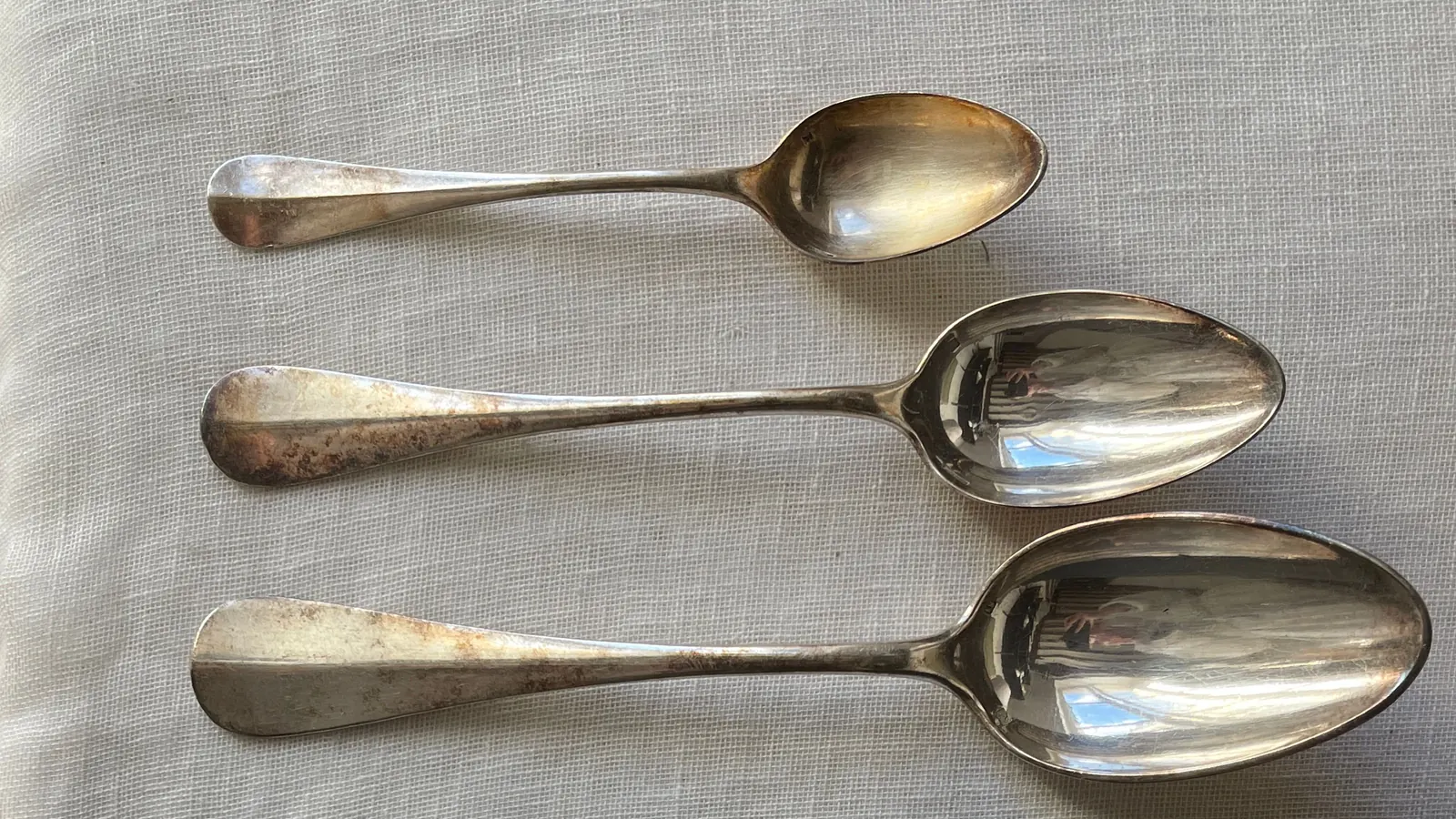
Vintage spoons need their own judgment. Color alone does not tell you whether a piece is solid metal or plated, or how to clean it. Ask a seller for material and condition details, clean plated or decorated pieces with product-specific guidance, and keep one of uncertain composition away from food until you know.
Where dinner puts them
Plan the buffet so a guest can tell which spoon belongs to which dish, with handles within reach and none pointing across another bowl. A tidy line that guests can use beats a perfectly matched set they have to rearrange.
Building a small collection
List the dishes you serve at an ordinary shared meal and at larger meals, then count how many need a solid spoon, a draining spoon or a ladle at once. A vegetable dish with liquid and a bowl of rice call for different heads, salad is easier with a pair, and a relish bowl needs a head that fits its opening.
For the salad pair, size the heads to the bowl and decide on care before looks. Bella Maison’s Floral Mango Wood Salad Serving Set lists an 11-inch spoon with a 3.1-inch head, which suits a deep bowl that needs reach; in the retailer’s photographs the wood runs from the heads down the handles to a sage-green band painted with white flowers, a warm note beside white stoneware. The care line is a soft damp cloth, away from moisture, with no washing at all, which matters for servers that come back coated in dressing. The same shop’s Finta Stainless Steel Salad Serving Set is shorter, at 9.75 inches, for a smaller bowl, with steel heads on gold-colored handles that finish in a small spiral. It is listed as 100% steel and still marked hand wash only, a reminder that metal alone does not mean dishwasher, though unlike the wood pair it can go in the sink. Pick the wood pair if the salad bowl is deep and you are content to wipe the servers clean; pick Finta if the bowl is modest, you want to wash them properly by hand, and its steel heads should match brushed-steel spoons elsewhere on the table.
A Sunday table might hold white stoneware bowls of rice and roasted carrots, a glass dish of green salad, and spoons of brushed steel, one with a wooden handle, laid on small saucers at the right of each bowl. The steel bounces light across the cloth, the wood handle adds a warm note against white, and every utensil has a home. We would keep one finish for the heads and let a wooden handle bring warmth, which looks intentional without identical handles. If you already own several useful spoons, fill the missing role and leave the rest.
A spoon needs a resting place. If it cannot lean safely in its dish, give it a saucer or small plate, planned before the table fills with glasses.
Drawer and dishwasher
Dishwasher permission for one model does not carry over to another with a wooden handle or a decorative finish, and a detachable part may have its own directions. Choose a storage place that fits the full length, because a spoon that fits only diagonally is a daily annoyance. For a hanging rail, the handle opening must suit the hook and the heads must clear the work space beneath. Compare the finish with your everyday flatware and your serving bowls: a simple spoon sits happily beside patterned dishes, while an ornate handle adds detail to a plainer table. Inspect utensils as you wash them. A loose handle, sharp edge or flaking surface should stop a utensil’s use until the maker’s repair or replacement advice has been followed.