Serving Trays: Choose a Useful Size, Grip and Everyday Layout
A tray that carries two cups easily may be more useful than a big one you dread lifting. Start with what you carry and where it lands, then compare handles and care.
By DecoraMintPublished 6-minute readMore in Tableware
In this guide
We may earn a commission from links on this page, at no extra cost to you. Affiliate disclosure
Picture a Sunday morning: two mugs of coffee, a small jug of milk and a plate of toast, carried from the kitchen to the sofa in one easy trip. The tray that makes that walk pleasant is rarely the biggest one in the shop. It is the one that holds exactly what you carry most often, gives your fingers a real grip and lands neatly on the table at the other end.
So start with the job. A drinks tray, a breakfast tray and a coffee-table tray each want something slightly different, and one well-chosen tray can cover two of those roles if its flat surface, rim and handles suit both.
Size it from your own cups and plates
Set out the things you usually carry, spaced so you can lift any one without bumping the next, and measure the footprint they make. That is your minimum flat interior.
Product dimensions are usually overall: they include handles, a flared rim or sloping sides. An oval tray that looks generous in a listing can hold far less in the middle than its length suggests, because the ends narrow quickly.
Then look at where it lands. A tray that just fits the coffee table leaves no room to set it down without nudging the lamp and the remote aside first. A little margin on the landing surface makes the whole ritual calmer.
Two light trips also beat one heavy one. A tray loaded until you cannot see over the teapot is harder to carry and harder to put down.
Breakfast in bed is the one job a plain tray handles poorly: with no legs, it tilts on a duvet. A legged bed tray keeps the coffee level.
Shape sets the mood
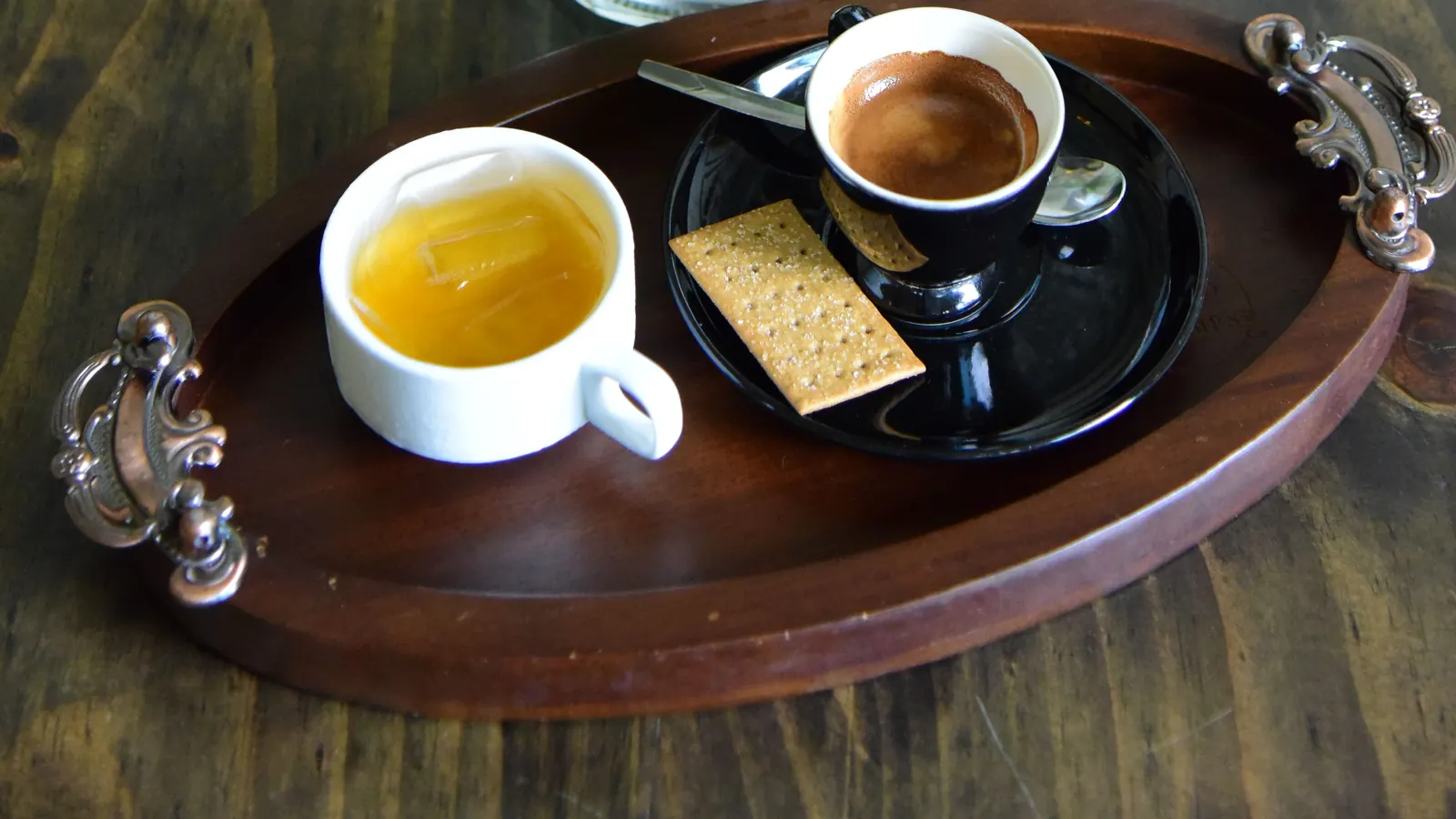
Rectangles are the workhorses: plates and cups line up in rows, and they slip onto a shelf or into a cabinet without wasted space. Round trays feel more sociable, gathering a cluster of glasses or a candle and a few books into a single island at the center of a coffee table. An oval softens a square room and looks graceful with handles at each end, though you give up some usable space at the tips.
On a coffee table, the tray works as a frame. It pulls small things into one composition and makes the surface look deliberately styled. Keep the arrangement easy to lift out (a vase, a candle, a stack of two books) so the tray can still go to work when guests arrive and you need it for drinks. A large tray on an upholstered ottoman turns it into a coffee table, provided the top is firm and flat; on a domed cushion, a stiff-bottomed tray and short glasses help.
Handles, rims and that non-slip claim
Handles decide whether a tray is a pleasure or a chore. Cutout handles and generous loops leave room for your fingers; small decorative loops can look pretty and pinch. Note how far the handle sits from the contents, too, since knuckles and mugs compete for the same space.
Handles add width. A tray that fits your cabinet without them may not fit with them, and a listing photo rarely shows whether they fold or are fixed.
A raised gallery edge defines the surface and catches small slips, while a steady, level hand still does most of the spill prevention. Very tall sides also make it harder to pick up a low espresso cup. A “non-slip” base usually means the underside grips the table, while a textured top would keep things from sliding on the tray. Neither stops a full glass from moving while you walk.
Serving food directly on it
Many trays are designed to carry plates and bowls, with the food sitting on dishes. Before you arrange pastries or cheese straight onto a painted, lacquered or decorative surface, look for a food-contact statement in the description. Without one, set a food-safe board or platter on the tray and let the tray do the carrying.
Heat is its own question. Carrying a mug of tea and holding a hot casserole are very different loads, so keep hot pans off any finish whose heat tolerance you do not know.
Wood, metal and melamine
Wood brings warmth and a soft, matte glow that suits breakfast in bed and rustic tables. Finishes vary a lot: solid wood, veneer and coated composites all look similar and clean differently. A cutting board’s oiling routine, such as the specific washing and oiling guidance John Boos gives for its own cutting boards, applies to those boards, so do not rub oil into an unfamiliar tray finish just because both are wood.
Metal reads polished and a little formal, perfect under cocktail glasses. Polished surfaces show fingerprints; brushed or hammered ones hide them. Many metal-look trays are plated or coated, so look for the base material and finish in the listing, since that tells you how to clean it.
Melamine is light, cheerful and good outdoors, but it stays out of the microwave. The FDA states that food and drinks should not be heated on melamine-based dinnerware in microwave ovens. Follow the exact tray’s washing instructions, and bring it in after the party; outdoor serving and living outdoors are different uses.
A blue-and-white melamine example
Bella Maison lists its Bleu Blanc Melamine Serving Tray at 16.54 by 12.20 inches, in melamine printed with blue-and-white floral and bird motifs, with a non-slip base. The retailer calls it lightweight and suited to indoor and outdoor use; its product data records about 1.28 pounds.
Those numbers point to one job: the Sunday-morning run from the first paragraph, and the same run out to a garden table. Before ordering, cut a sheet of paper to 16.5 by 12 inches and set your two mugs, the milk jug and a toast plate on it. They are overall figures, so if the group only just fits on the paper, it will be tight on the tray. The blue print shows between the cups, and it repeats best beside white mugs or a plain linen napkin; with a patterned teapot as well, the tray and the pot compete. The non-slip base is a claim about the underside, so it helps on a coffee table or a firm ottoman top and does nothing for a glass sliding across the printed surface. The listing mentions no legs, which leaves breakfast in bed to a legged tray, and it gives no care guide, so ask Bella Maison how it should be washed before it goes near a dishwasher.
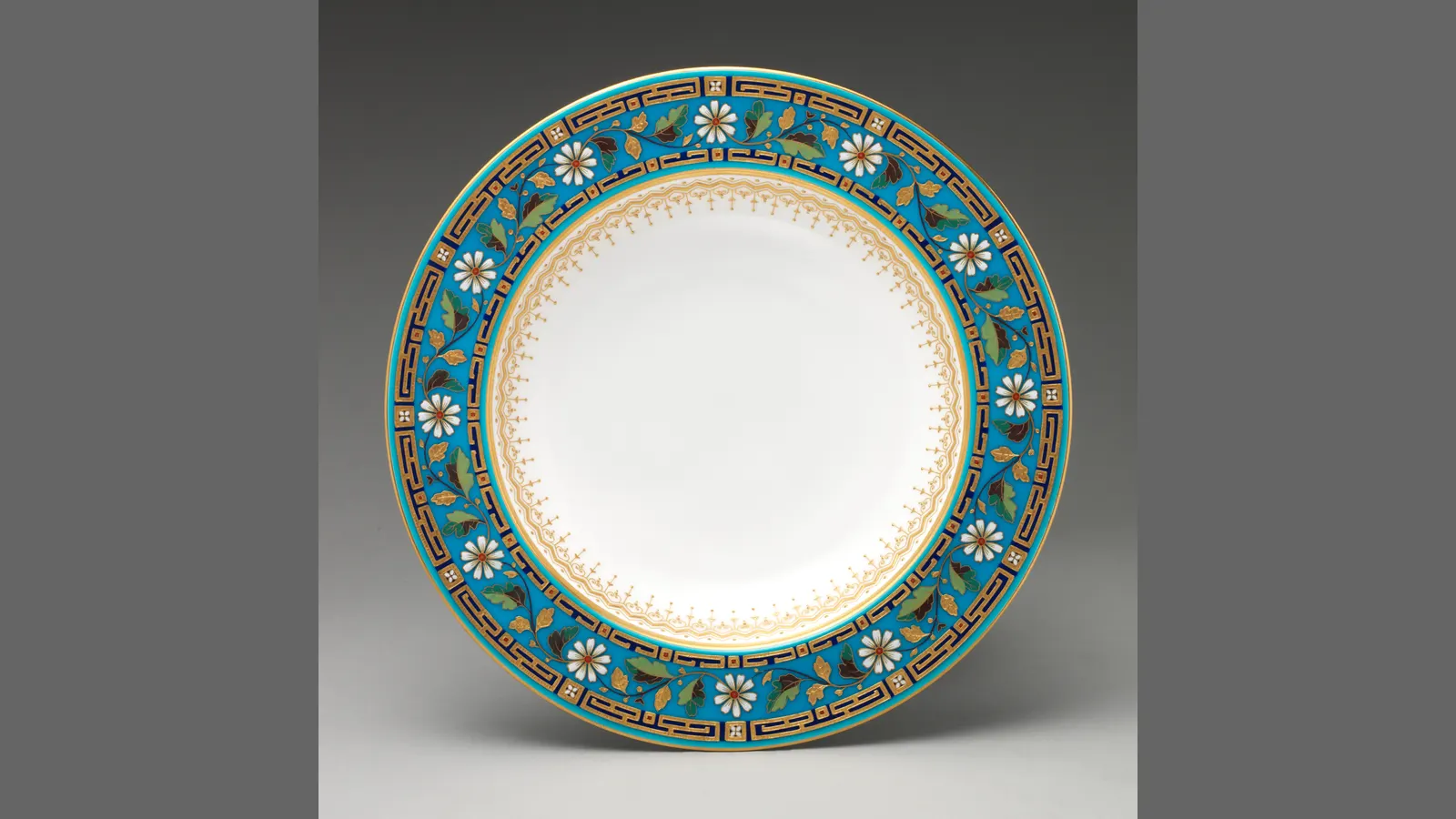
We are working from the published listing and have not load-tested the tray or tested how well it grips. DecoraMint may earn a commission if you buy through the merchant link on this page. The tray in the photograph at the top is a different one. To see the rest of what the retailer sells for serving, Bella Maison’s serveware collection opens a collection page; read the material and finish line on each piece, for the cleaning reasons above.
Where it lives between uses
A tray you have to excavate from behind the glassware will stop being used. Give it a slot of its own, in a cabinet with a vertical divider or leaning in a shelf section where it cannot slide, and measure that space with the handles included.
Wipe-clean, hand-wash and dishwasher safe are three separate permissions; keep the care note with the product name. If handles start to wobble or the base rocks, tighten or retire it before the next load of glasses.
Retailers to browse
Compare colors, sizes, materials and return details on the retailer’s current listings.
- Browse serveware at Bella Maison
Bella Maison
Opens Bella Maison’s serveware collection, not a single product.