Short Curtains: Choose the Coverage, Hem Position and Hardware
A 63-inch curtain can finish above, at or below the sill, depending on the rod. Choose the end point with a quick mock-up first, then the panel length.
By DecoraMintPublished 4-minute readMore in Blinds & Shades
In this guide
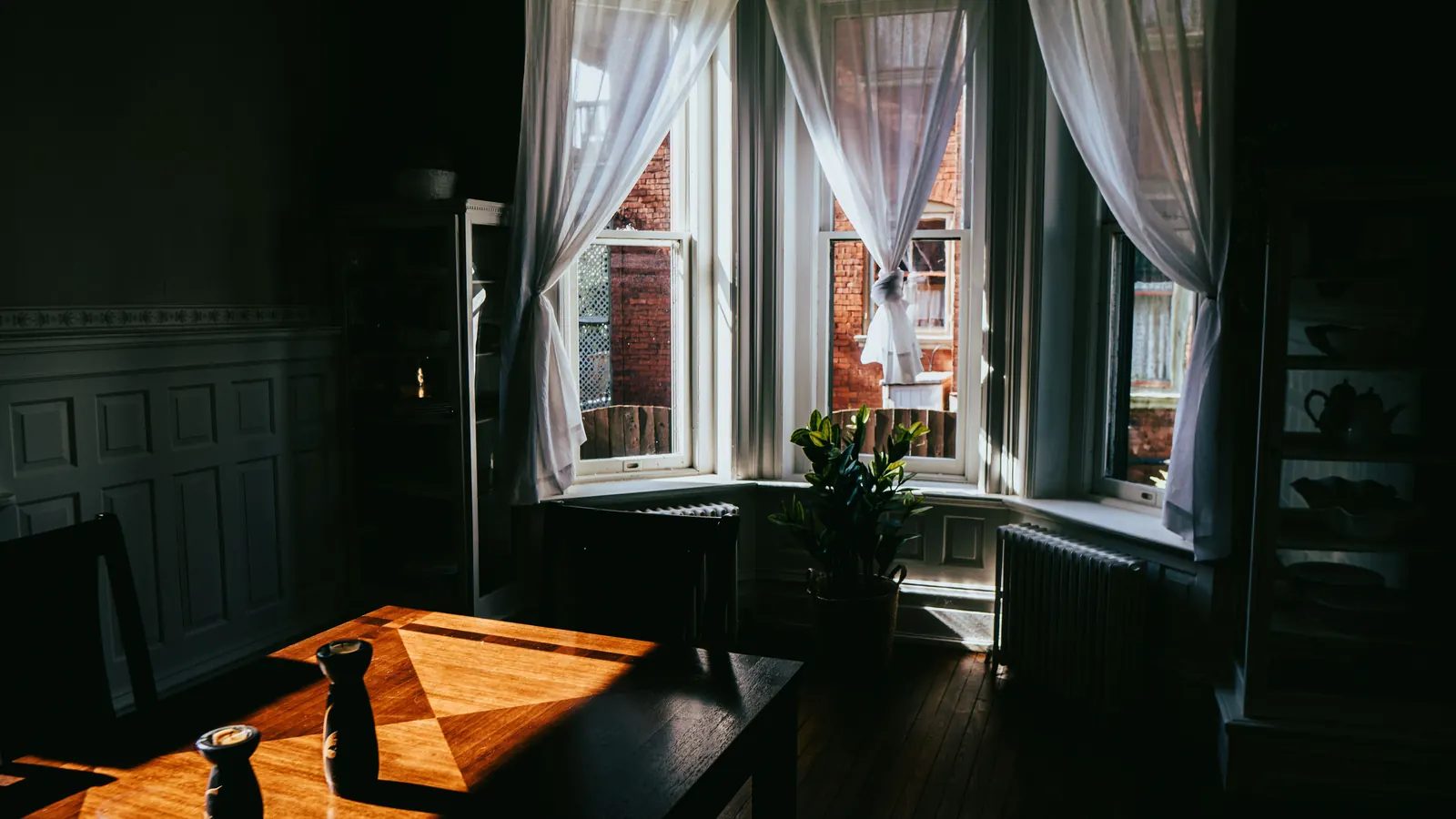
A 63-inch curtain finishes in a different place on every window. Hung high above a tall frame it can finish well below the sill, on a rod mounted just above a small window it can run past the apron toward the floor, and on a cafe rod halfway down the glass it can pool on the floor. So choose where the hem should land first, mock it up, and only then buy a length. The Shade Store lists 63 inches among common ready-made lengths and notes that the result depends on where you mount the rod, which is the right way to read any standard size.
The four ways to stop short
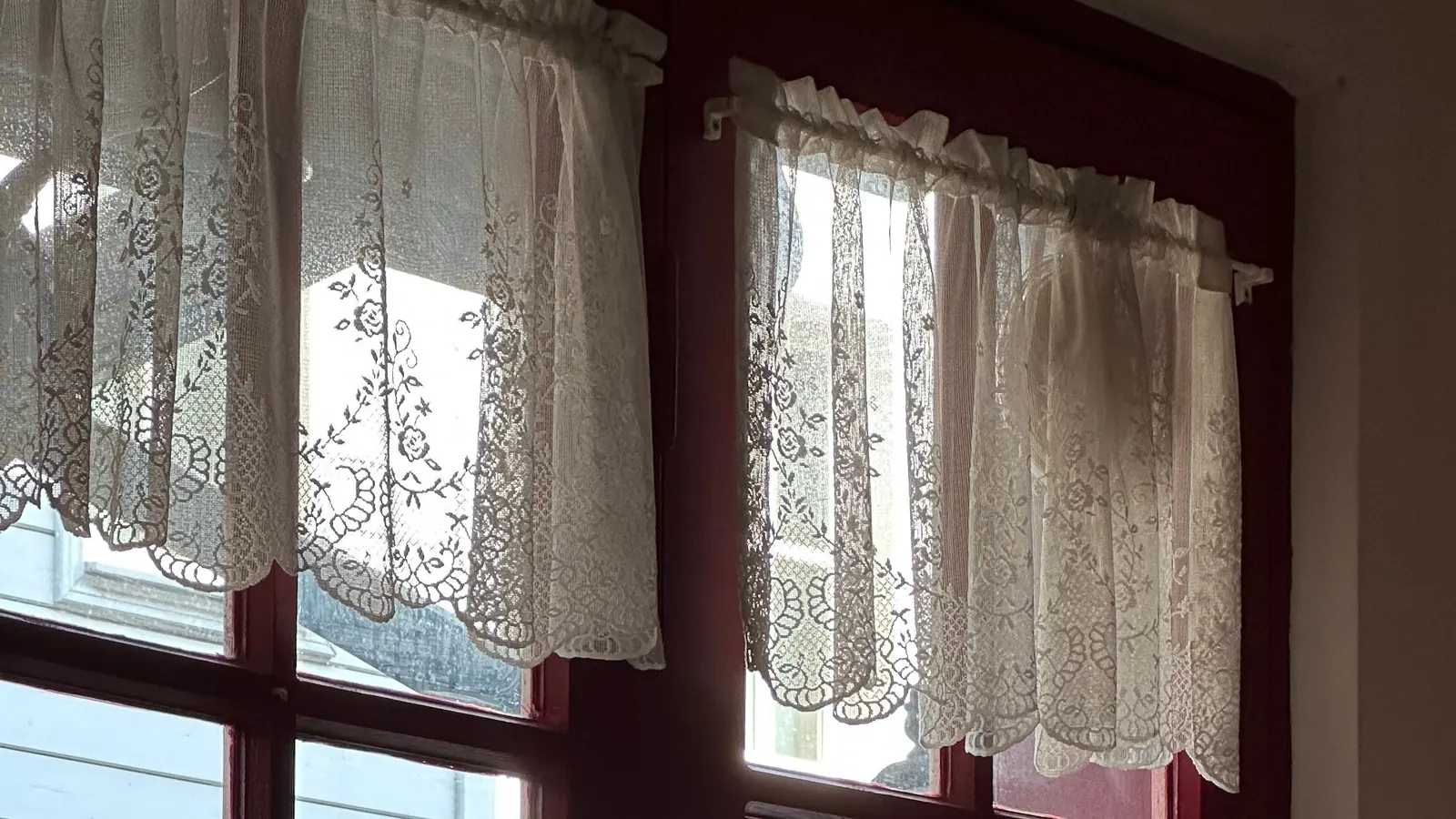
Sill length ends near the sill, so the fabric can move without resting on the sill or whatever sits on it. Apron length carries on past the sill and the lower trim, which gives the window a slightly longer line as long as the wall below is clear of furniture and equipment. A cafe or tier curtain covers only a band of the glass. The Getty Art & Architecture Thesaurus describes cafe curtains as short, straight-hanging curtains, sometimes arranged in tiers. An upper decorative panel or valance covers the top, so lower-window privacy needs something else.
Where the fabric sits changes what you see. An upper panel brings texture and leaves the view open. A lower tier cuts sightlines at seated height and exposes the glass above. Neither covers every angle at every hour, and an upstairs neighbor can look over a lower tier that blocks the sidewalk.
A window that needs a short curtain
A desk, window seat or built-in cabinet under the window usually settles the question, because a long panel would drag across it. Consider a breakfast nook with a pale wall, a pine bench and a small window above it. A sill-length panel in cream cotton with a thin blue stripe, hung on a slim black rod, clears the cushions, softens the frame and leaves the top of the glass open to the light. The same window with a floor-length panel would fight the bench for space.
In a street-level kitchen with a wide window over the sink, a cafe curtain in white cotton lace across the lower half of the glass blocks the view of the sink area from the pavement and lets daylight in above. The lace throws a faint pattern across the countertop and the line of the rod gives the window a trim, finished edge; the cabinets and a plain tile backsplash balance the pattern.
Short is not automatically right for a small window. A small window can take a longer curtain when the wall supports it, and a wide window beside a cabinet may need short fabric. Write the goal in one sentence: soften the upper frame, cover the lower view from the sidewalk, or end at the sill above a desk. It makes product photographs easier to judge.
Testing the hem
Mark the bottom edge with painter’s tape or a strip of paper, and look at it from across the room and from the seat nearest the window. Compare a hem near the sill with one at the apron. For a cafe curtain, mark the top edge too. Look at it at night with the lights on, because fabric that seems opaque by day can show shapes when lit from behind. Request a sample and judge the weave directly.
Measuring
The top of the fabric, the top of a ring and the hanging point of a hook are different reference points, so measure from the one the heading uses. Rod pocket, grommet, clip rings and hooks place the fabric differently against the rod, so follow the product’s own diagram. If the drop you need is shorter than the panel, a different length or an allowed alteration works better than moving the rod to compensate, since that changes the relationship with the window frame.
Measure both sides if trim or floor is uneven. For a row of windows, measure each, and decide whether the hems should share one line or follow each sill.
Width and open position
Check whether the listed width is one panel or a pair, and what fullness the heading wants. A pair that looks balanced closed can cover much of a small window when gathered at the sides, so compare the gathered width with the glass you want to keep. For a lower tier you slide regularly, a rod pocket is slower to move than rings; for one that stays put, the rod pocket is fine. Match rod diameter and heading.
Heat, hardware and windows that open
A short curtain above a heater or stove can still get too hot. Keep fabric away from it to the appliance’s stated clearance, and choose another arrangement if you cannot. Open the window fully and check the handle path. A tension rod needs the right span, a sound mounting surface and a load rating that covers the panels, and a no-drill rod still has installation limits. Where a shade is already installed, check the two together so the curtain does not catch its controls.
Fabric and pattern
A lace panel, a dense weave and a lined curtain all look different at the same length. Near food preparation or splashes, think about distance and cleaning, and follow the whole care label, including drying and shrinkage guidance, before you hem. A big pattern can be cut awkwardly by a short drop, so see how it repeats across a pair.
For most short windows we would hang sill-length panels from rings on a slim rod set just above the frame, and keep the cafe style for kitchens where the lower view needs covering.