Small Plates for Appetizers, Sides and Dessert: What to Buy
Appetizer, bread, salad and dessert plates are labels, not sizes. Measure the usable surface for the food you serve and avoid buying several sets that do the same job.
By DecoraMintPublished 5-minute readMore in Tableware
In this guide
We may earn a commission from links on this page, at no extra cost to you. Affiliate disclosure
Line up a salad plate, a dessert plate and a bread plate from three different collections and you will often find one plate wearing three names. Store labels name a job, not a size, so the useful measure is how much flat surface a plate gives the food you actually serve. This guide is about the dishes, not small-plate recipes, and the product example is judged from published information rather than hands-on testing.
Match the plate to the job
A dessert plate needs room for the cake and for a fork to work around it. A bread plate can be compact and tuck beside a bowl of soup. A salad plate does better with a gentle curve that keeps dressed leaves from sliding. An appetizer plate for people standing and talking has to be easy to hold in one hand with a few bites on it.
One design can cover several of these. Start with the most frequent job and add a specialized shape only when the plates you own fail at it. A plate that holds a slice of cake well may be too flat for a generous salad, and a small bowl often does better for something loose or saucy.
| Label | Usual role | What to compare |
|---|---|---|
| Bread or side | Bread, a small side | Room beside the main setting |
| Appetizer | A few bites before dinner | Weight and rim in one hand |
| Salad | A separate course or light meal | Flat surface and how it contains dressing |
| Dessert | Cake, pastry, fruit | Space for garnish and a fork |
| Small serving plate | Shared bites or condiments | Whether it suits passing around |
Surface, not diameter
Outside diameter includes the rim. A plate with a broad decorative border and one with a narrow edge can share a diameter and offer very different space. Put a typical serving on a plate you own and look at what is left for cutting and for resting a fork, then measure the flat center. A deeply curved plate holds sauce but leaves less flat area for a pastry; a very flat one looks clean and gives little help containing loose food.
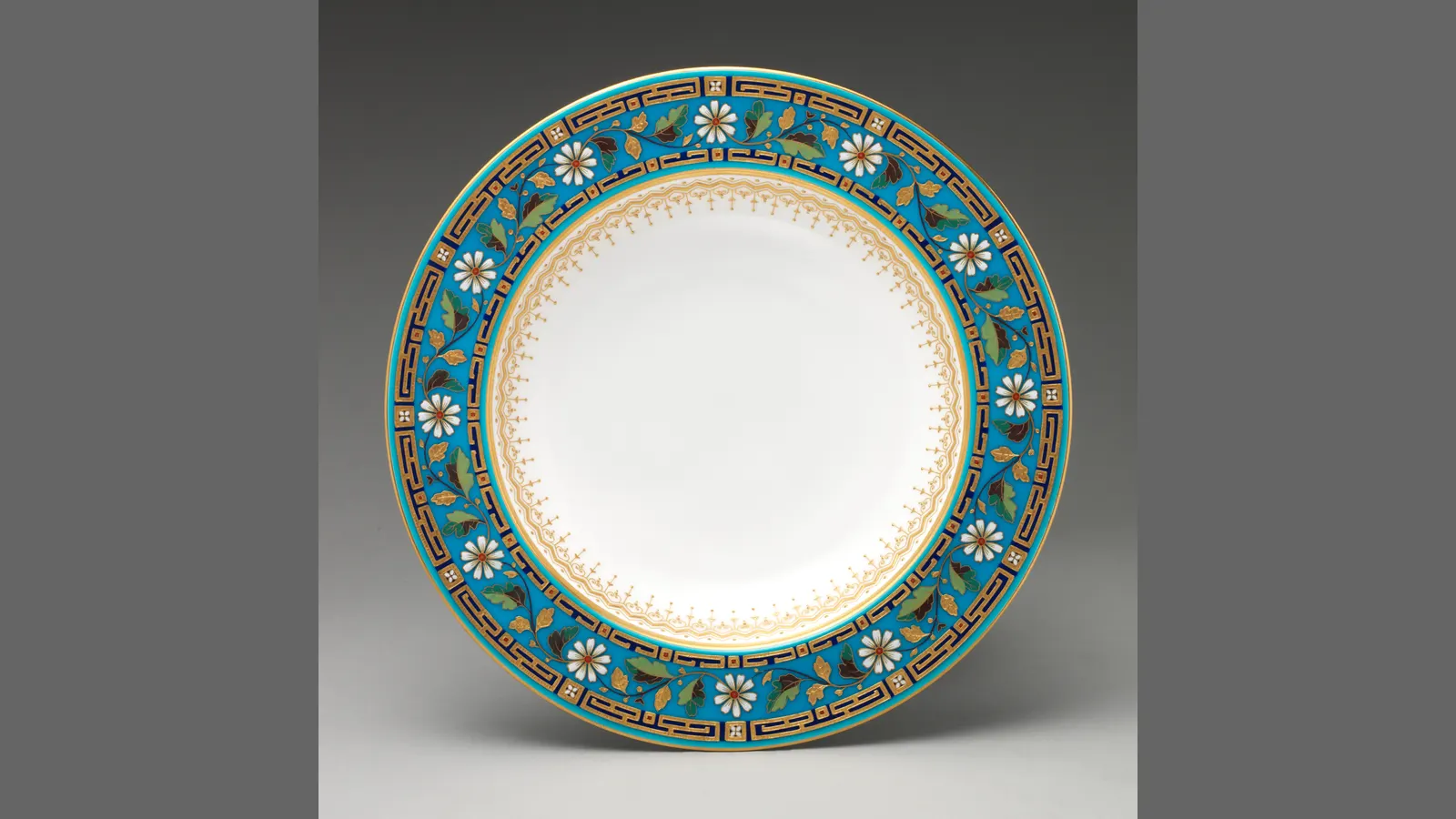
Bella Maison, one of our affiliate merchants, lists a Vintage Porcelain Dessert Plate as an 8-inch porcelain plate with an embossed digital print and a hand-painted rim (a floral sprig inside a blue edge in the retailer’s photographs); its care guide names dishwasher, microwave and oven use. We may earn a commission if you buy through our link, and we have not tested the plate. The listing gives no separate center measurement, so treat the eight inches as the outside size, rim included. That puts it in the dessert-and-salad range rather than the bread-plate range: a slice of cake with a fork beside it, not a roll tucked next to a soup bowl, where a 6-inch plate takes less of the cloth. The listing calls the print embossed, which suggests some relief in the surface; if crumbs caught in a raised pattern would bother you, ask how pronounced it is. Sold singly, it is easy to set beside the dessert plate in your cupboard before deciding how many to add.
Counting and setting
Count how many clean plates must exist at once. Six guests who get a side salad and then dessert on plates need twelve if you will not wash between courses; serve the salad in bowls and six dessert plates are enough. For an appetizer party, decide whether guests keep one plate or take a fresh one, and plan from that rather than a fixed multiplier. A couple of spares cover a break or a late guest, and noting the collection name and size helps if you need a matching piece later.
Set each place with a white dinner plate topped by a smaller plate with a thin blue rim, a linen napkin folded across it and a sprig of rosemary beside the fork. The blue repeats a glass or a bowl elsewhere on the table, the smaller plate adds a ring of shadow and texture, and the setting looks finished before any food arrives. The layering earns its place for a first course only. Clear the top plate when the main arrives, or guests hunt for somewhere to put it. On a 10-inch dinner plate, an 8-inch top plate leaves about an inch of the lower rim showing all round, which is enough to read as two layers without crowding the cutlery. Check that a stacked small plate sits flat on the dinner plate rather than rocking on an uneven rim.
An accent plate from the tableware collection can introduce a pattern without replacing your dinnerware. Repeat one color already on the table, or pair a simple small plate with a more detailed dinner plate, and view them together under your dining light. At a buffet, put the plates where people first collect food, with a visible place for used ones. Keep the stack where guests can lift a plate without reaching across hot dishes.
Storage and cleanup
A stack should fit the shelf and lift comfortably. Raised rims, feet and sculptural shapes change how plates nest, so a shape that looks good alone can take more cabinet space than expected. Check the dishwasher rack too, since a small plate can still have an awkward profile. Decorated pieces sometimes need hand washing even when plain ones do not, and a material name alone does not tell you whether a piece may go in the microwave, oven or dishwasher, so the label on the exact product decides. The Vintage plate’s page, for example, says oven safe without a temperature; ask the retailer for the limit before warming it. A short product-page label is no complete heating procedure, so where a maker permits oven use for warming, follow its stated temperature, and keep decorative serving plates out of the oven unless they say so.
Before buying separate bread, salad and dessert sets, test whether one plate handles your usual versions of all three. Bella Maison’s plates collection opens a collection page rather than one product; compare the listed diameter of each piece with the plate that passed your test, and read its care line separately, since pieces in one shop carry different permissions. A flexible everyday size plus a few special pieces usually beats three nearly identical stacks. Compatible sizes and a shared color are enough, and the pieces do not all have to match.
Retailers to browse
Compare colors, sizes, materials and return details on the retailer’s current listings.
- Browse plates at Bella Maison
Bella Maison
Opens Bella Maison’s plates collection, not a single product.