Stoneware Dinnerware: Choose Pieces That Fit Everyday Meals
Stoneware brings weight and texture to an informal table, and that weight matters on a high shelf. Check the piece list, cabinet fit and appliance claims before buying a set.
By DecoraMintPublished 6-minute readMore in Tableware
In this guide
We may earn a commission from links on this page, at no extra cost to you. Affiliate disclosure
Stoneware’s best quality and its biggest drawback are the same thing: it is heavy. Pfaltzgraff describes stoneware dinnerware as tending to be thicker and heavier than porcelain or china, which is what gives it that grounded, tactile presence on an informal table, and what you notice when you lift a stack of eight from a high shelf. Pick up one plate and one bowl before committing to a service.
Weight, chips and what stoneware is
Stoneware is one kind of ceramic, alongside porcelain, bone china and earthenware. Pfaltzgraff says earthenware is less chip-resistant than stoneware and calls bone china the most durable of its ceramic types, so heavier does not automatically mean tougher. A speckled glaze or an irregular edge does not identify the material; look for the maker’s product description. A thick rim chips differently from a thin one, and any ceramic can be damaged by a knock against the faucet.
Judge the exact piece rather than the look. A photograph shows color and shape and cannot show microwave suitability or glaze quality, so lean on a clear product description with the maker named.
How it sits on the table
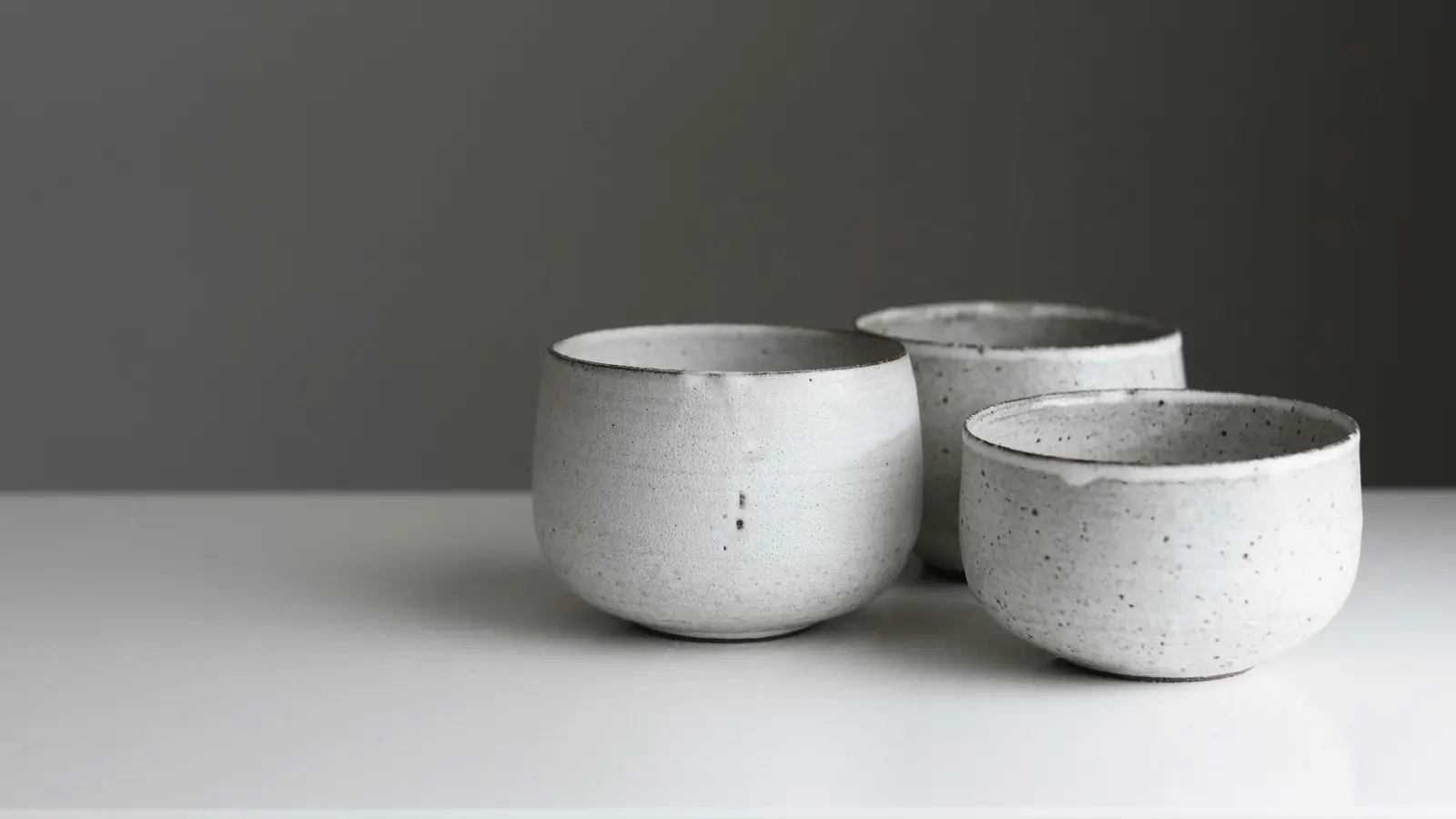
Stoneware has a texture that porcelain does not. A speckled cream glaze looks a little different on each plate in window light, a reactive glaze pools darker at the edges, and a matte clay or sage plate sits quietly beside glossy glassware. Linen napkins and a wooden table suit it; a polished tablecloth and thin crystal can make it look heavy.
On a scarred oak table, a family dinner might run to speckled white plates, deep blue soup bowls, a jug of branches in the middle and a bare overhead bulb with a warm tone. The thick rims catch the light unevenly and the bowls feel generous in the hand. One plate color with the bowls in a second keeps the table from reading as a single flat glaze.
Proportion and shape
A broad rim frames food and leaves less room in the center. A coupe plate curves continuously to the edge and gives more flat area for a mixed meal. Neither is better; compare the center width with a plate you already use. If you serve a small main course with a separate salad bowl, you may not need the largest dinner plate in the collection.
For bowls, tell a low pasta bowl from a deeper cereal or soup bowl. A big diameter can still be shallow. Capacity filled to the brim is more than most people can carry comfortably. An intentionally uneven edge is attractive, but see how it stacks and whether the rim feels comfortable at the lip.
Measure shelf depth and height, including room to slide a stack out, since a plate that fits only with the cupboard door open is a poor fit. Tall plates can foul the dishwasher spray arm, and a deeply curved bowl sits awkwardly between closely spaced tines, so match the pieces to the machine you own. Handmade variation is the maker’s to describe and never excuses a crack.
Heat, cold and cleaning
Pfaltzgraff says its dinnerware without precious metal accents is dishwasher and microwave safe, that anything with metal trim stays out of the microwave, that earthenware can get extremely hot there (use mitts), and that dinnerware is sensitive to thermal shock: sudden temperature changes can crack it, so cool pieces never go into a preheated oven or onto a burner. Corelle’s usage instructions restrict rapid temperature changes and abrasive cleaning for its stoneware lines, and Le Creuset’s care guide gives its own heating and handling directions. The shared lesson is to let a hot plate cool before it meets cold water, keep it from going straight from freezer to heat, and clean it with the nonabrasive products the maker lists. Microwave, dishwasher and oven use are three separate permissions, and decoration can change each. Before you buy, you want a yes or no on each for the exact piece, which cleaners and pads are off limits, and whether oven use is allowed and at what temperature. If a listing contradicts the instructions in the box, go with the box. Royal Doulton adds that metallic decoration changes what a piece may do.
Load stoneware so pieces are not knocking against each other, and stop using anything with a chip, crack or damaged glaze if the maker’s instructions say to discard it. A household repair product has no food-contact rating, so do not use one on a chipped plate.
Building a set
The number on a box counts pieces, not people. A set might include plates, bowls and mugs, or several plate sizes with no mugs. A starter list of a dinner plate, a smaller plate and a bowl per regular place setting suits many households, adjusted for how often you wash. If your mugs already fill a cupboard, a bundled mug set adds storage pressure without improving the table. Whether breakfast and dinner both use a bowl, and how often you run the dishwasher, decide how many bowls you need. Add serving pieces only when you have a use and a shelf for them.
Open stock lets you replace a broken piece or add a shape later, though collections are eventually discontinued, so prefer a pattern whose pieces are sold individually today.
A stoneware plate to compare
Bella Maison, an advertiser available through this site’s affiliate links, lists the Julia Stoneware Dinner Plate as a green stoneware plate with a digital print, 10 inches across, made in Turkey and described as dishwasher and microwave safe. We may earn a commission on purchases through our link, and we have not tested it or compared its chip resistance with other plates.
It is sold as a single plate rather than a boxed service, which is the open-stock route described above: buy the number you need now and add or replace one later while the pattern is listed. A digital print is applied as a repeat, so the plates should vary less from one to the next than a reactive glaze does, though the listing makes no promise either way. On the oak table above, it would be the one plate color, with plain cream or deep blue bowls bringing the second; if you would rather repeat the print, the collection also has a Julia soup bowl. Before ordering eight, measure the dinner plate you use now: if it is 11 inches, a 10-inch plate gives up a ring of space at every meal. The store’s product data records about 1.45 pounds per plate, so the stack belongs on a shelf you reach without stretching. The listing does not give stack height or dishwasher fit, so measure your rack spacing against a 10-inch diameter yourself. The dinnerware collection we link to holds other materials too, so read each item’s description.
Mixing and matching
Choose one thing to repeat, a color, rim shape or finish. Plain everyday bowls pair well with patterned plates, and a textured neutral plate is a good base for seasonal linens. A cohesive table does not need every piece from one box. Check bowls and small plates against your glassware and flatware for proportion before buying several. For a holiday meal, add a few pieces that suit the guest count and menu instead of a second service.
Retailers to browse
Compare colors, sizes, materials and return details on the retailer’s current listings.
- Browse dinnerware at Bella Maison
Bella Maison
Opens Bella Maison’s dinnerware collection, not a single product.