Travel Pillows: Compare Foam, Wrap and Inflatable Designs
A thick pillow that feels great in the store can crowd the headrest once you sit down. Three real designs compared by seat fit, packed space and cleaning.
By DecoraMintPublished 5-minute readMore in Pillows
In this guide
A travel pillow is really a spacer between your head and a seat you did not choose. A plush memory-foam U fills that gap the moment you sit down, and it is the bulkiest to carry. An inflatable packs down small and lets you set the firmness, at the price of blowing it up every trip. A fabric wrap with a built-in support skips the ring and braces one side of your head. None of the three wins outright: the seat, the way you lean and the space in your bag decide.
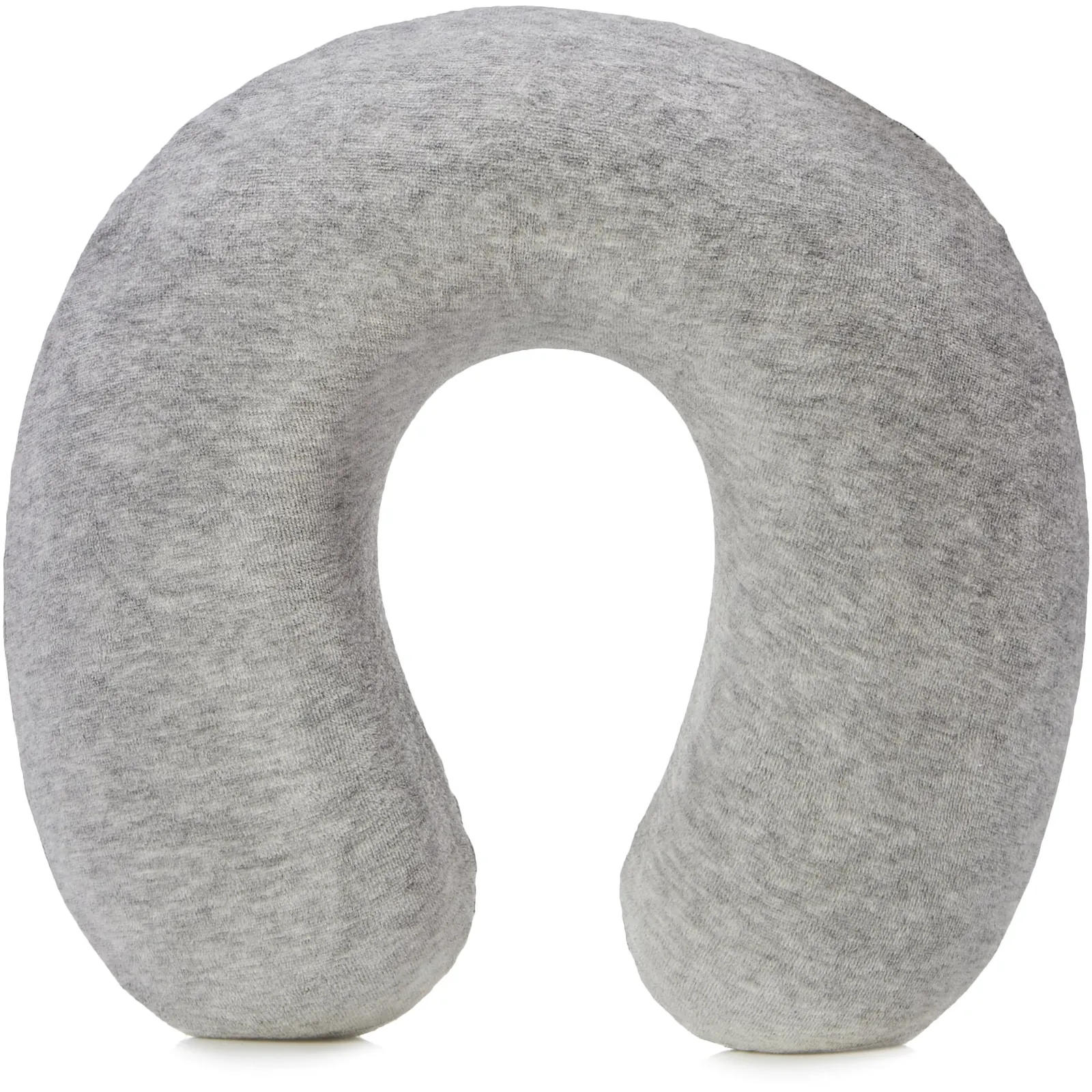
This guide is about upright travel: airline and train seats and the passenger seat on a road trip. A regular bed pillow makes sense only where you can lie down; upright, a rectangle does little to cradle the neck and eats bag space. For pillows you lie down on, browse the pillow collection. The comparisons below come from makers’ published details. The gray U-shaped pillow in the photo shows the format and is not one of the three products named here.
Three designs side by side
| Example | Construction | What to think about |
|---|---|---|
| Cabeau Evolution S3 | Memory-foam neck pillow with a front clasp and seat straps | Will the straps work on your seat without getting in the way of anything? |
| Trtl Travel Pillow | Fleece wrap around an internal support | Do you prefer support along one side of the jaw to a full ring? |
| Sea to Summit Aeros Premium Travel Pillow | Adjustable air bladder with a snap collar | Is the tiny packed size worth inflating it each time? |
The Evolution S3 listing describes a removable, washable cover and a carry case. Its straps attach to the seat to steady the pillow, which is a clever idea as long as they never block a screen, tray table, seat control or your neighbor’s space. Airlines set their own rules for anything attached to a seat, so follow the manufacturer’s instructions and the crew.
The original Trtl listing describes a support inside a soft fleece wrap that fastens around the neck. The support comes out before the fleece goes in the wash on the specified cold cycle, which makes it easy to freshen between trips. It looks like a scarf, so its feel against the jaw is something to try before you commit.
The US Aeros Premium Travel Pillow page lists a packed size of about 3.9 by 2.4 by 2.4 inches and a packed weight of 71 grams. We include it as a documented inflatable, without promising it is in stock; older pillows called “Traveller” have different specifications, so match the model name when you buy.
Fitting it to the seat
Space behind your head
Sit back fully before judging. A thick rear cushion can push your head forward and leave you perched away from the seatback, which defeats the point. A thinner back section, or a design without one, suits a seat with a forward-curving headrest. That is a question of fit, and a pillow is no promise of better posture.
Try it against a chair with a headrest if you can. A dining chair without one is a poor stand-in for a deep airline seat, and a front-facing photo hides how far a pillow projects behind the neck.
Which way you lean
Window sleepers tip sideways; others drop forward. Think about where the pillow meets your cheek, jaw and shoulder in your usual position. A firm side support and a broad foam ring touch you in very different places, which is why a pillow your travel partner loves can feel intrusive on you.
Wear it for a few minutes while awake, closure adjusted as instructed. It should feel supportive without pressing or constricting. A neck pillow is a comfort item and is not a medical brace; ongoing pain or an injury calls for advice from a professional who knows your situation.
Headphones, glasses and collars
Put on the over-ear headphones, glasses and jacket you will travel in. A high collar under a bulky ring changes everything, and large earcups can bump tall side cushions. Better to find that out at home than at cruising altitude with the cabin lights down.
Packed size and carrying
Use the published packed dimensions to compare it against what else goes in your personal item. A compression case is often how those small numbers are reached, so look for whether one is included and whether it closes easily over repeated trips.
Foam pillows usually clip to the outside of a bag, which saves interior space but leaves the face side exposed. Keep it covered, away from wheels and off the terminal floor. An inflatable adds a valve and a setup step; on short connections, decide honestly whether you will bother inflating and deflating it each leg.
That valve earns its keep in the air. Airliners are certified to hold cabin pressure at the equivalent of no more than 8,000 feet in normal operation (14 CFR 25.841), so the cabin air is thinner than at most airports and the air sealed in a bladder pushes outward a little. A pillow pumped firm at the gate can feel firmer at cruise; letting out a breath of air brings it back, and topping it up before landing does the reverse.
Keeping it clean
Three things to find out: what comes off, what can be washed and what must be bone dry before it is packed. “Washable” often refers only to the cover, with the foam core or support left out. Bed-pillow washing habits do not carry over.
Keep the care label. If a removable cover sold you on the pillow, see whether replacement covers exist for that exact model; a generic one may change how it fastens or cover the valve. Plan washing around drying time so you are not packing a damp cover the night before a flight.
A five-minute trial at home
- Sit in a seat with a headrest, wearing your usual travel clothes.
- Fit the pillow and closure as the instructions describe.
- Check how it meets the headrest, shoulders, headphones and glasses.
- Practice removing and stowing it without unsettling the seat.
- Pack it, clean, in the bag you are actually taking.
Do the trial before the trip, because some sellers accept returns only on unused items in original packaging. Read the return terms before taking the tags off.
On a plane, follow crew instructions about attached accessories. In a car, travel pillows are for passengers only; a driver should never use one to rest while the vehicle is moving. Children need products made for them and compatible with their car seat or restraint, not an adult pillow.