How to Choose an Arc Floor Lamp: Reach, Base and Placement
The arc is the reason to buy one and the reason to measure. Check how far the shade reaches, how much floor the base takes and where the light lands before it arrives.
By DecoraMintPublished 4-minute readMore in Lamps
In this guide
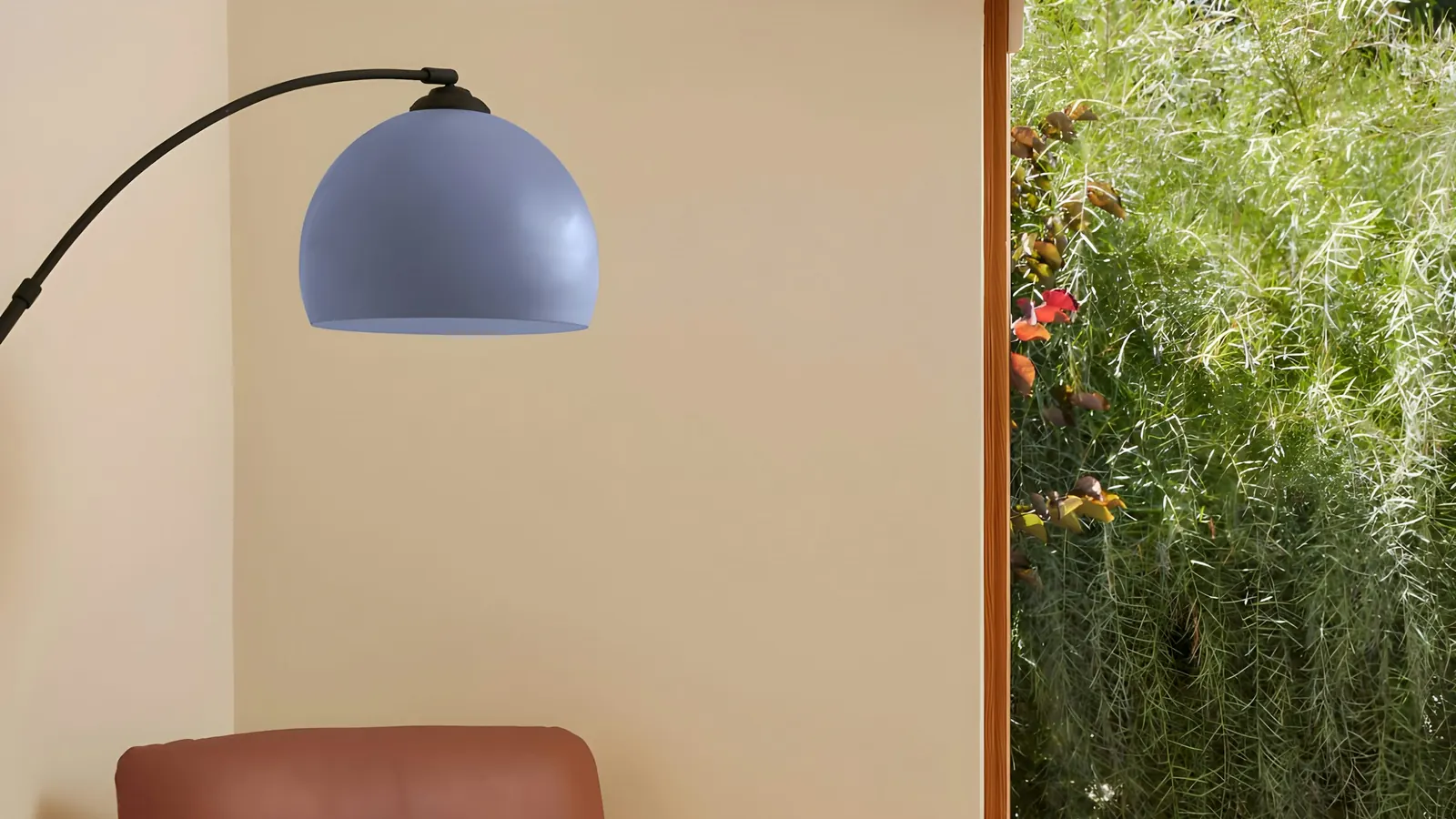
The arc is a counterweight problem dressed as a sculpture. A shade hangs a long way from the base, so everything the lamp does well, reaching over a chair or a sofa corner without a ceiling fixture, depends on a base that is wide and heavy enough to hold that overhang. Buy for the reach you need, then judge the base as seriously as the curve.
Four numbers that get confused
Overall height is the top of the arch. Horizontal reach is how far the shade projects, but retailers do not all measure it from the same point, and one may quote the distance to the shade’s center while another counts its edge. Base size is the floor you give up. Shade width and drop is what sits over your head. Ask for a dimensioned drawing if a listing blurs them, and note the lowest point of the shade, since that is what people meet first.
Some arcs lean backward before they curve forward, so a base pushed against the wall may leave no room for the stem. Adjustable models need room to move. If the only workable layout means pulling the sofa out further than you want, a smaller lamp or another format is the better answer.
The base is the safety system
A tall lamp with an offset load is the sort of object that can topple when bumped, and a child or pet can pull one over by the shade or cord. We would place an arc where the cord is not a trip line, where nobody lunges past it, and not within reach of a toddler who grabs. That is our own advice rather than a regulation, so follow the lamp’s instructions on base, assembly and placement.
Weight helps, but only when it is the maker’s design. Flos lists its US Arco model at about 141 pounds, a marble block that explains why delivery access and lifting need planning; that is one product, not a target for every arc. Never remove weights, shorten structural parts or shim a rocking base with a rug edge. If the lamp rocks on a level floor, return it. If it sits partly under the sofa, make sure the furniture does not press on the stem or trap the cord, and follow the instructions on level surfaces and assembly.
Mock it up with tape and a chair
Mark the base with painter’s tape. Hold a paper circle at the planned shade position, or have a helper do it; do not hang anything heavy over furniture. Then sit in the actual chair, look toward the television, down at a book and across the room, stand up and walk around. The photo-friendly spot is often the one where your head meets the shade.
What the light does
An opaque shade aimed down pools light on a seat or table. A translucent shade sends more of it around the room. Those are tendencies, so the bulb and the shade opening still matter. Lumens’ floor-lamp guide separates task lighting from ambient lighting, which is the question to answer here: is this lamp for a page, a dark corner or a decorative glow?
For reading, check that your head or shoulder does not block the beam. For conversation, check that nobody opposite sees the bare bulb. Do not tilt a shade past what the maker allows to fix glare.
Compare brightness in lumens, as the FTC explains, and stay within the fixture’s stated bulb limits even when a package compares its output to an old incandescent. Matching color temperature across lamps in one seating group avoids a visibly mismatched glow. A dimmable bulb does not make a lamp dimmable, so confirm the control and bulb work together; with integrated LEDs, find out how the maker handles servicing. Our cozy living-room lighting guide shows how several sources divide the work.
Cord, switch and outlet
Trace the cord from the base to the outlet and keep it out of the walking path and out from under rugs. See where the switch is: one hidden behind the sofa gets annoying fast, while one on the stem is reachable from the chair. A plug-in arc gives renters an overhead-style light without wiring, but it still needs a stable spot, clearances and a proper outlet.
Over a dining table
An arc can work where the ceiling outlet is in the wrong place, but the base and arm must leave room for chairs to move. Test with someone seated nearest the base and the chairs pulled out. A lamp centered on the everyday table can land off-center once a leaf goes in, and a floor lamp spreads light differently from a pendant, so check for glare for anyone facing the shade opening.
Keep the drawing, assembly instructions and bulb specs. Confirm the package weight and delivery route if the base is stone, and read the return policy before assembling something expensive to ship back. Some arcs are adjustable and some only look it, so find out which parts move and how they lock. And whether it can stand in for a ceiling light depends on shade, output and room; plan around the activities you need lit.