Lamp Buying Guide: Table, Floor and Task Lamps Compared
A bedside light, an entry lamp and a floor lamp by the sofa can look alike online and throw light very differently. Choose by the job and the space, then the bulb and controls.
By DecoraMintPublished 7-minute readMore in Lamps
In this guide
Where does the light need to land? On a page in bed, across a sofa corner or on the console by the front door? Answer that before you look at a single base. A reading light has to reach the page while hiding the bulb from your eyes; a sofa lamp needs a shade that spills soft light up and down; an entry lamp needs a warm glow and room left for keys. Once you know the landing spot, table, floor or task lamp mostly picks itself, and the bulb, switch and exact model follow.
This guide covers portable plug-in lamps. Hardwired fixtures are a separate installation decision.
Table, floor or task: match the format to the spot
| Lamp type | Best at | What to measure |
|---|---|---|
| Table lamp | Bedside, console, side table | Base, widest shade dimension, the surface left over |
| Floor lamp | Light beside seating with no table | Base or leg spread, full height, any overhang |
| Adjustable task lamp | Reading, writing, hobbies | Reach and footprint in the working position |
| Small accent lamp | A soft pool on a shelf or console | Whether its output is enough for more than mood |
A slim base does not make a lamp compact. A wide shade can hang past the edge of a nightstand or into a hallway. And if the lamp swallows the whole bedside table, leaving nowhere for glasses, water and a phone, a floor lamp or wall light will serve you better than a smaller, prettier lamp squeezed in beside them.
Where the light goes
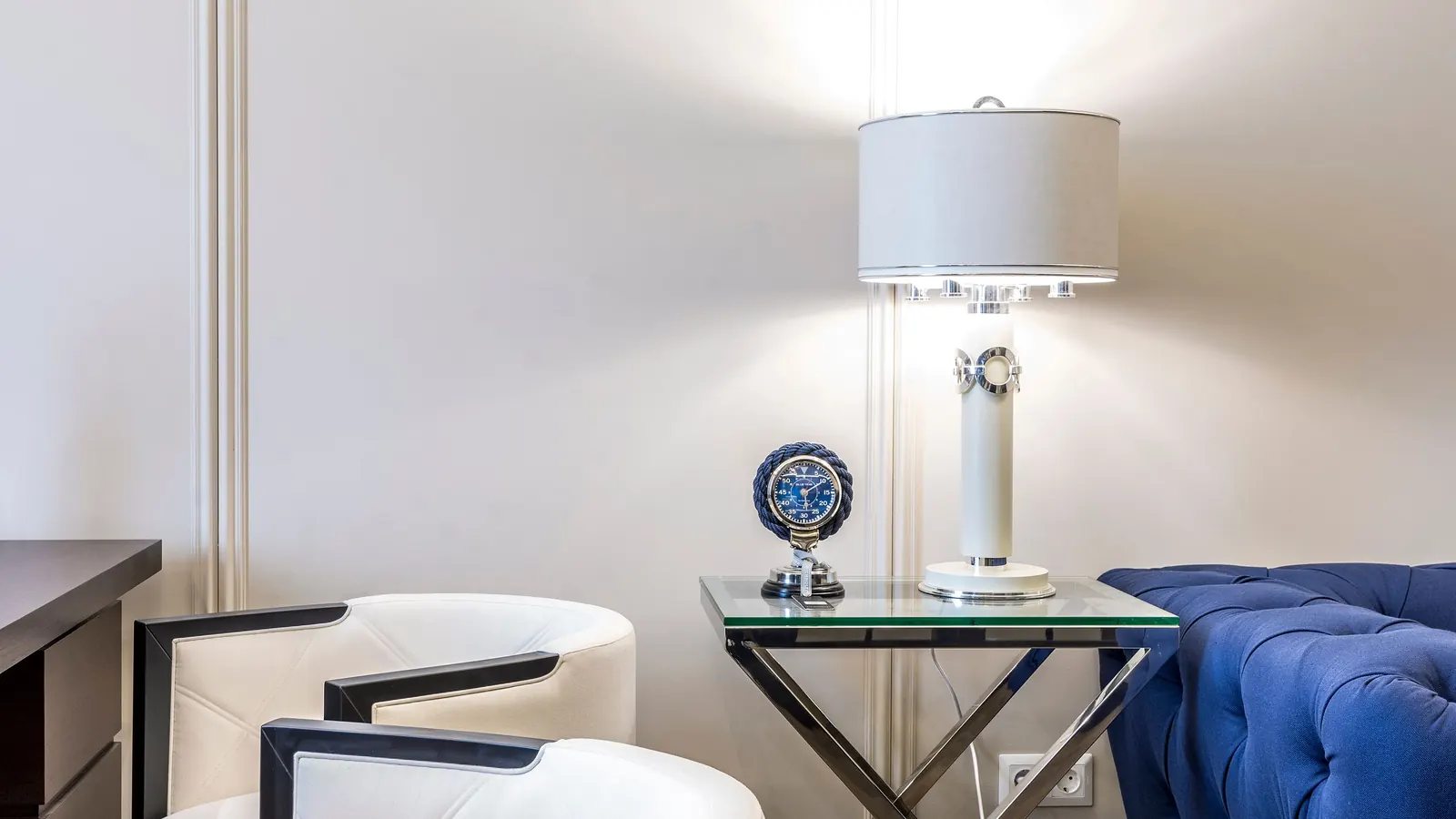
The shade decides more than the bulb. An opaque shade with open ends sends light in two beams, up to the ceiling and down to the table, and keeps the room around it fairly dim. A linen or paper shade glows all over and softens the whole corner. An open metal head aims a defined cone at one spot. Unlit product photos hide all of this, so look for lit shots, and notice whether other lights in the room are doing the work in those pictures.
For reading, the light should arrive over your shoulder or from the side, not from behind your hand, and the bright inside of the shade should stay out of sight from your seat. For an accent lamp, the goal is a pleasant pool alongside other light sources. Our living-room lighting guide shows how lamps layer in a whole room.
Output comes from the bulb and the shade, so a tall floor lamp can easily be dimmer than a table lamp. Compare lumens on the bulb label instead of lamp heights.
Two tabletop formats compared
These examples come from IKEA’s published specifications, not from testing, and they are not a best-lamp ranking.
| Example | Construction and function | The question to ask |
|---|---|---|
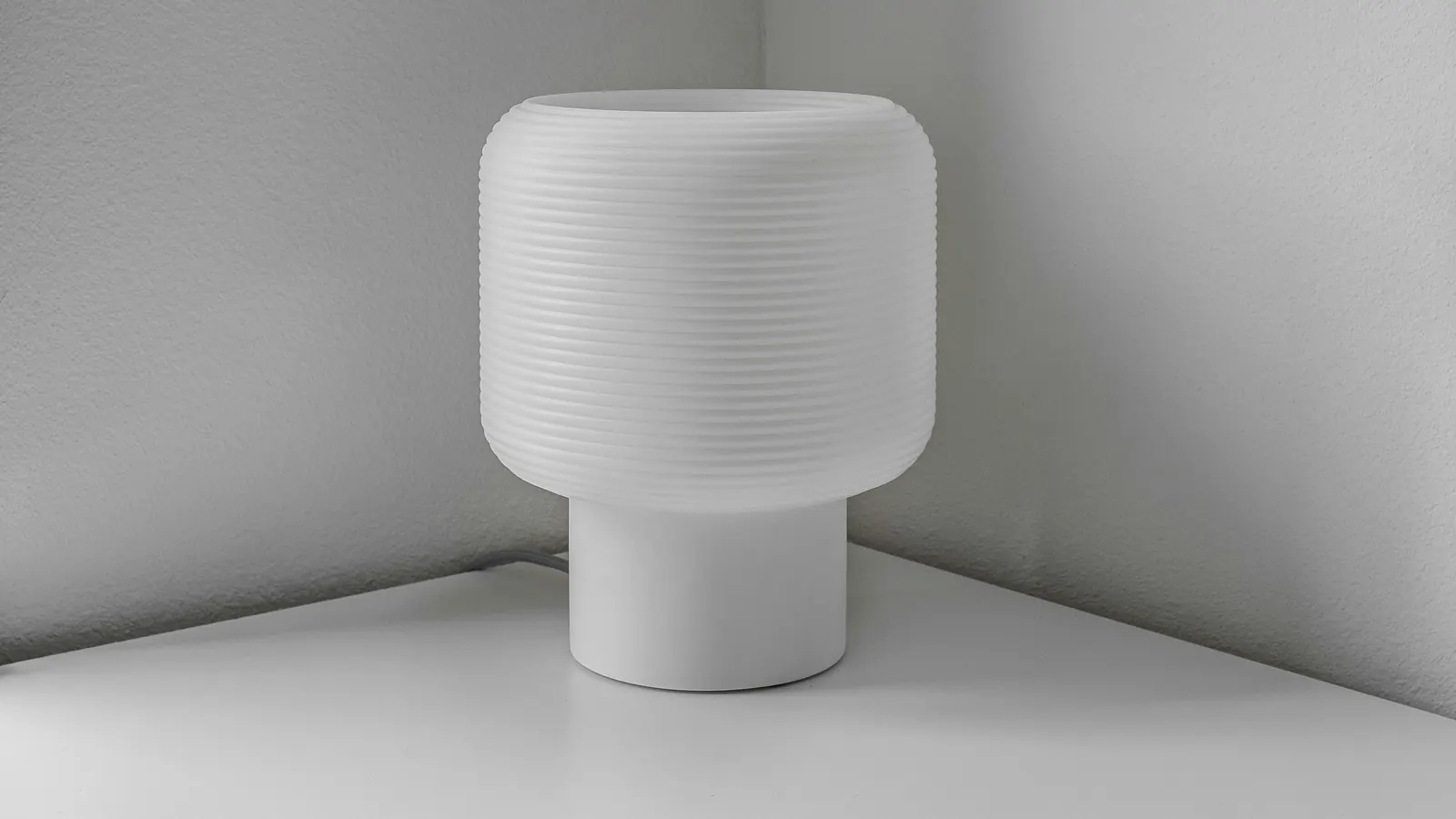
| IKEA FADO white 70096377 | Glass globe shade; separate E26 bulb; listed 10-inch diameter and 9-inch height | Will the whole globe sit where you want a soft accent glow? |
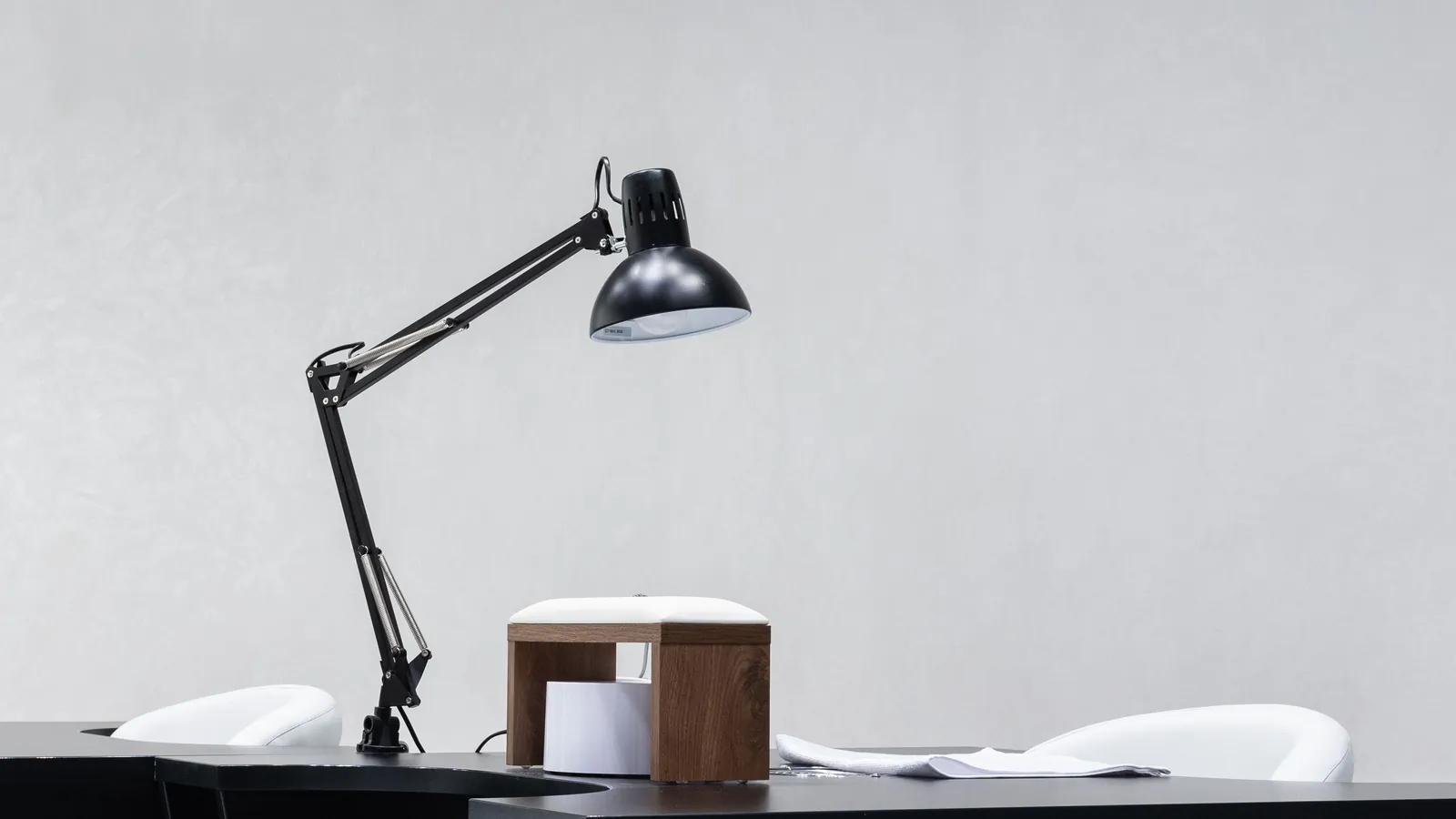
| IKEA RANARP off-white 50231319 | Adjustable arm and head; separate E26 bulb | Does its reach cover the task without crowding the desk? |
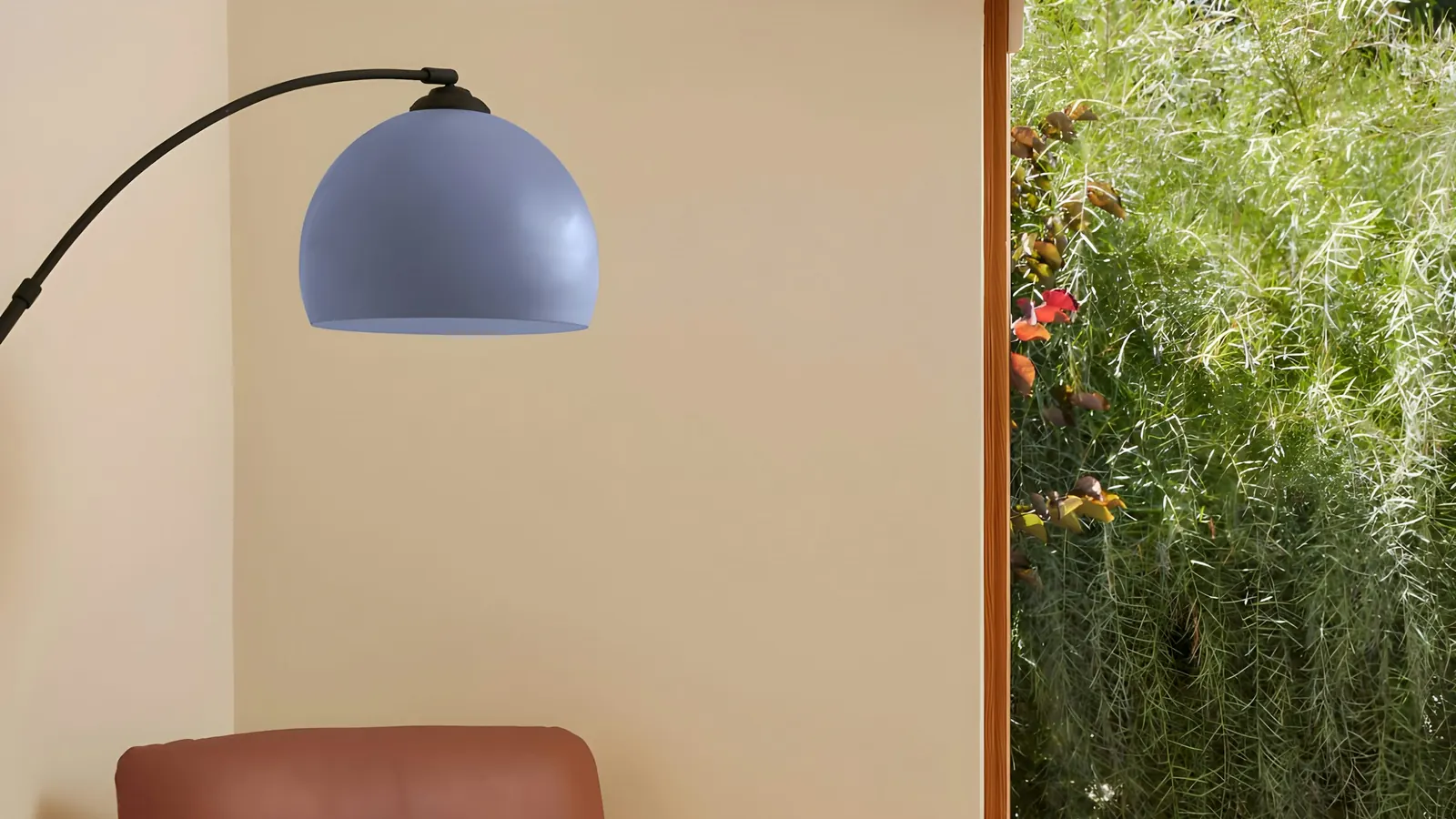
The FADO is a low, round object that glows in every direction, a mood light by design. The RANARP work lamp stands taller and moves its head over the task. Neither is the lamp in our photograph.
Two floor formats compared
IKEA’s LAUTERS 00405048 pairs a textile shade with a tripod base. The listing gives an adjustable height of 47 to 59 inches, a 24-inch base diameter and a 15-inch shade, so the legs take up more floor than the shade suggests.
RANARP 00331383 is the floor reading version, with an adjustable arm and head. IKEA lists it at 60 inches high and 11 inches wide, with a separately purchased E26 bulb.
The first makes a soft glowing corner; the second aims light onto a book. For a reading chair, think about where the base can stand without catching your foot. For a decorative corner, think about how the lit shade looks from across the room. Check local availability before ordering, as listings change.
Bulbs: brightness, color and limits
Lumens measure brightness; watts measure energy. The FTC’s Lighting Facts guide gives the handy benchmark: a 60-watt incandescent bulb gives about 800 lumens, and an LED can do the same on about 9 watts. The label also places the bulb on a warm (more yellow) to cool (more blue) scale. Warm light flatters wood, skin and textiles in an evening living room; cooler light reads as crisp and daylight-like at a desk.
Then make sure the bulb fits the lamp: socket, shape, size and the maximum wattage marked on the lamp. The “60-watt equivalent” on an LED box is a brightness comparison; the bulb’s real draw is far lower.
Replaceable bulb or integrated LED?
With a replaceable bulb, you can change brightness or warmth later within the lamp’s limits. An integrated LED has the light source built in. That can mean a sleeker shape and built-in dimming or color settings, but ask what happens when the LED or driver fails: is there a replacement part, a repair service, or nothing at all? If the color appearance is fixed, be sure it suits the room before buying.
Dimming and switches
“Dimmable” only works when bulb, lamp and controller agree. Lutron’s compatibility guidance starts with the light-source type and the exact dimmer model. A smart plug that switches power on and off does not dim, and smart bulbs bring their own control rules.
The switch is a daily detail. An in-line switch can slip behind the headboard. A touch control may come back on, or stay off, after a power cut depending on the design. From bed, you want to reach it without sitting up.
Bedside lamp height
The right height depends on where your eyes are when you sit up against the headboard with your usual pillows, and on how tall the nightstand is. Overall lamp height does not tell you where the lower edge of the shade sits. This calculation does:
Lower shade edge above the floor = tabletop height + distance from the bottom of the lamp base to the lower shade edge.
Take one hypothetical lamp whose lower shade edge is 18 inches above its base:
| Bedside tabletop height | Lower shade edge above the floor |
|---|---|
| 24 inches | 42 inches |
| 28 inches | 46 inches |
The figures illustrate geometry and recommend no particular height. They show why a lamp that is perfect on one nightstand can glare from another. If the bulb is visible from your pillow or the page sits in shadow, try a different shade or lamp before reaching for a taller one. And do not prop a working lamp on stacked books to test it.
Cords, batteries and older lamps
Locate the outlet before settling on a spot, and run the cord along the wall, away from walkways and out from under furniture legs. Resist tucking it under the rug: the CPSC warns against running cords under carpets or rugs because they stop the cord from releasing heat. A cord that has to cross the room is a sign the lamp belongs nearer an outlet. Keep lamps away from water and heat unless they are designed for it, and look for a mark from a recognized testing lab such as UL or ETL on new lamps.
A rechargeable lamp frees you from the cord but adds a charging routine. Runtime claims usually refer to a specific brightness setting, so read which one, and whether the lamp can run while charging.
Vintage and imported lamps are charming, but judge them by the condition of the cord, plug and socket and by their electrical rating, not their patina. Have one assessed by a qualified electrician when its rating or condition is uncertain.
What is in the box
A listing may sell a shade only, a base only, a lamp without a bulb or a fully integrated unit, and styled photos can make a shade look like a complete lamp. Add any bulb you need to the price, read the return terms for assembled or used items, and keep the product number with the instructions for future parts.
One last check before you order: the lamp’s full footprint, the bulb you will actually use and whether you can reach the switch from where you sit.