Arched Window Blinds: Shape, Coverage and Practical Options
Do you need to cover the curve, the rectangle below it, or both? Answer that and whether each part must open before comparing shades, shutters or curtains for an arched window.
By DecoraMintPublished 6-minute readMore in Blinds & Shades
In this guide
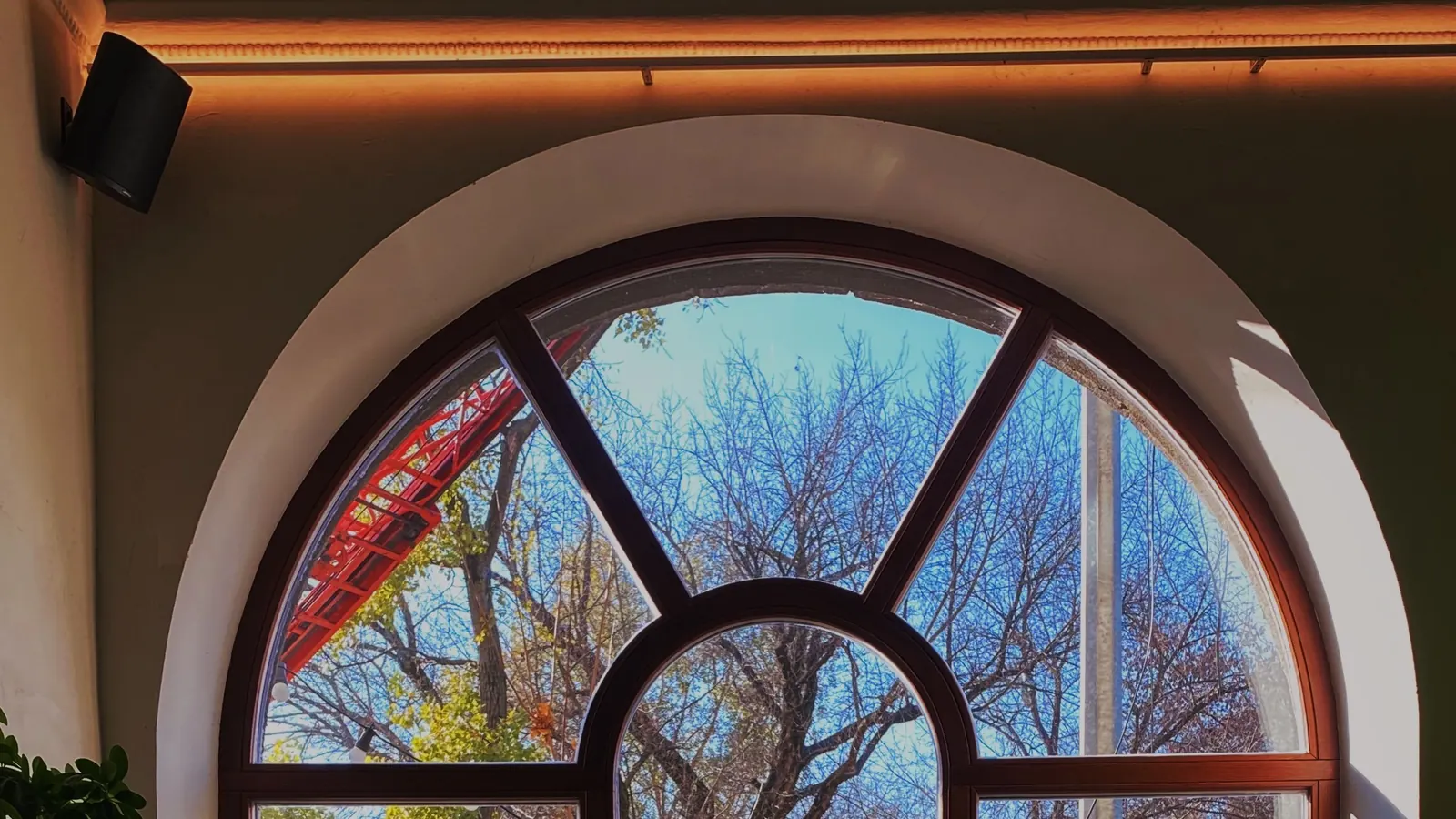
One fact shapes every arched-window project: some treatments made for the curve do not open at all. Hunter Douglas’s arched-window guide separates stationary specialty shapes from adjustable options, and the beautifully fitted sunburst you have in mind may stay exactly where it is installed. That is not a flaw, just a decision. The way to cover an arched window well is to decide which part of it causes the problem, the curved top, the rectangle below, or both, and whether that part needs to move. Three situations cover the usual layouts, and each has a natural answer.
Situation one: an arch sitting above a rectangular window
This is the familiar layout: a half-circle or eyebrow transom over an ordinary window or pair of windows. Here the two parts can be treated separately, which usually gives the best result. The lower window gets a familiar, easy-to-use shade or blind for privacy at eye level, and the arch is either left bare or given a fitted treatment of its own.
Leaving it bare is often right. The curve is often the best architectural feature in the room, and the daylight it brings in high on the wall is part of its charm. Stand where you sit, work or sleep at the time of day the light bothers you before deciding: an arch can be well above any privacy concern and still throw afternoon glare straight across a desk or a television.
If glare is the issue, a fitted arch treatment over the transom solves it. A cellular shade cut to the curve spreads into a soft, light-diffusing fan with no heavy frame, so the arch still glows. Ask whether the arch piece is stationary, moves within the opening or has some other model-specific adjustment, since the rectangular version in the catalog tells you nothing about the curved one. Ask, too, for a drawing of where the arch piece meets the shade below: rails, fabric direction and visible stacks can differ, and two pieces with the same color name do not always match in place, so compare samples side by side in daylight.
Situation two: one tall, continuous arched opening
An elongated arch, straight sides rising into a curved top in a single opening, or a pointed Gothic arch, has no convenient dividing line. Two treatments suit it best.
Curtains on a straight rod above the curve cover the whole opening when closed and reveal the full arch when open, a graceful, traditional answer that keeps the architecture on show most of the day. It needs enough wall above the window and a sound fixing point. Mark the rod and curtain edges on the wall first, and check that open panels clear the curve and closed panels give the privacy you need. On a very high rod, plan a wand or other practical way to draw them, since daily tugging on fabric you cannot reach wears out curtain and hardware.
Shutters turn the arch into architecture. A radial sunburst louver pattern echoes the curve, while horizontal louvers continue the lines of the rest of the room. Ask which louvers move and whether the panel opens for cleaning, and get the frame dimensions as well as the louver layout: a substantial frame covers part of the glass and trim, and a hinged panel needs room to swing past furniture or a deep sill.
Slatted blinds are possible too. Some retailers call fabric shades “blinds,” so say clearly if you want slats, then ask which slats tilt, whether any part raises, how the slat ends follow the curve and whether replacement parts exist. A standard blind cannot simply be cut into an arch at home; the shape and lift system are engineered together.
Situation three: a bedroom that has to be dark
Here the whole opening needs a plan, top included. Ask about the fabric or lining and, just as important, the gaps around the curved frame, because a blackout material does not guarantee a dark room once installed. Where two coverings meet, ask how the joint is handled and whether a line of light is expected. Judge the material with a sample, and coverage with a drawing or an installation photo; a photo taken in an already dark room proves little.
Remember that height is not privacy. An arch high on the wall can still be seen from an elevated neighboring window, a stair landing or a street on a slope, so walk around outside and look up at it before deciding it can stay bare.
Fixed or adjustable: ask what “operable” means
“Operable” can mean tilting slats, sliding a panel or swinging a hinged frame, and each gives a different daily experience. Ask the supplier to describe ordinary use in plain words, and for an adjustable arch, request a demonstration or video of the exact shape and control. Motors offered on rectangular shades are not always available for curved ones, so confirm the configuration before planning a remote or automation routine.
A fixed treatment means living with the same view and light all day, every season. That is fine where privacy is always needed and cleaning and window access stay practical. For seasonal glare, a permanent opaque cover can feel heavy the rest of the year.
Cords on the parts that move
A fixed fan over a transom has no cords to worry about. The safety question sits on the operable shade or blind below it, which is exactly where a child can reach. Choose cordless controls for that lower covering and follow CPSC window-covering safety guidance, keeping beds, cribs and furniture away from any accessible cords. A tall single arch with curtains needs the same thought about draw cords or wands within reach.
Getting the shape onto paper
Start with a preliminary record: the widest opening, overall height, the height where the curve begins and the recess depth. Measure both sides, since arches are often not symmetrical and older trim and plaster can be uneven. Photograph the window straight on, plus the trim, the recess and any handles or opening sashes.
Many makers then need a full-size template or their own measurements for fabrication. Follow their template instructions exactly, including material, labels and orientation, and do not send a scaled phone photo unless they explicitly accept one. Settle who owns the final measurement: a professional measure-and-install service can put that responsibility on the supplier, which is worth a lot on a specialty shape, while a self-measured custom order leaves the risk with you.
Arches often sit high, so plan how the treatment will be installed, operated and dusted without climbing on furniture, and use a professional for difficult access or uncertain mounting surfaces. Brackets do not belong on glazing, seals or moving hardware, and if the window has an opening sash, show the installer its full movement before anything is fitted.
When you request a quote, send your photos, preliminary dimensions and a note on what you want the window to do, and ask for a written answer covering:
- the exact shape and product configuration offered;
- which sections move, and how;
- fabric, finish, lining and sample availability;
- visible rails, frames, joins and expected light gaps;
- mounting requirements and who makes the final template;
- installation, cleaning access and warranty service;
- cancellation, remake and return terms for the custom order.
If a supplier proposes a standard rectangular roller for the arch itself, keep looking: it is no substitute for a treatment made for the shape.