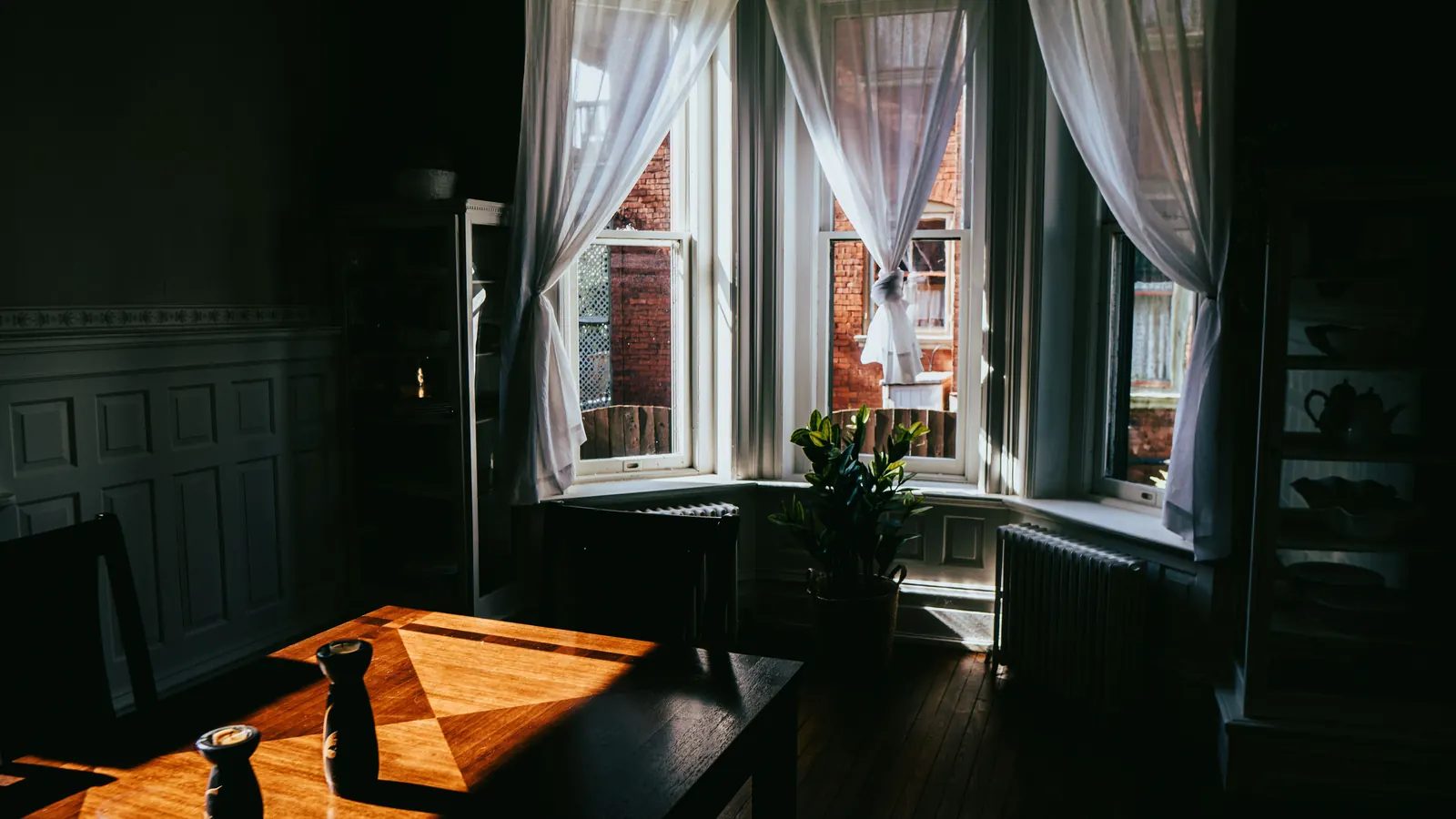
Bathroom Window Curtains: Choose Coverage, Fabric and a Practical Drop
Curtains can soften tile and fixtures, but a window curtain is not a shower curtain. Decide which glass needs covering, the drop you want and how the fabric will dry and wash.
By DecoraMintPublished 4-minute readMore in Blinds & Shades
In this guide
A bathroom is the one room where a curtain has to survive steam, and the window is usually small and surrounded by tile, mirror and porcelain, with nothing to absorb a splash. That is why a bathroom window curtain succeeds on three things: it handles humidity without a fuss, it screens the glass at night when the room is lit, and it is easy enough to unhook and wash that you will actually do it. The look comes after that.
This guide covers window fabric. It is a different product from a shower curtain or liner, and neither can stand in for the other. If the window sits inside the bathing area, buy a treatment made for that position instead of improvising with a panel. Hunter Douglas’s bathroom guide says bathrooms are often the most humid room in a home and that window position matters most near the shower, which is where it stresses faux wood shutters that can handle moisture.
Moisture comes first
A curtain beside a dry vanity lives a very different life from one a foot from the tub. Before choosing fabric, look at what the fabric could touch: wet glass, a damp sill, a splash zone. If the panel would sit against any of those, pick something other than a curtain.
Fabric also cannot fix an air problem. The EPA advises keeping indoor relative humidity below 60 percent, ideally between 30 and 50 percent, and running the bathroom fan or opening the window while you shower (EPA mold guidance). A curtain that stays damp for hours is telling you the room needs better ventilation.
Within a dry-enough window, we would favor a light, washable fabric in a medium or small scale over a heavy, deeply lined one. A light polyester or cotton-blend panel dries between uses and comes down in minutes. IKEA’s white GINSTMOTT gives a sense of what a label should say: polyester, a warm normal wash, no tumble drying and maximum 4% shrinkage. It also notes that silhouettes may be visible from outside at night, which brings us to the other job.
Screening the glass after dark
A sheer white panel looks gentle on a morning visit and then turns into a shadow screen when the vanity lights come on. Judge privacy at night with the room lit, from the outside viewpoint, including the edges and the gap below the hem.
How you cover the glass changes both privacy and light:
- Cafe tiers across the lower half leave the top of the window open to sky and branches. They suit a window where the eye-level view is the issue, though an upstairs neighbor or a raised garden changes that.
- A full pair or single panel gives one soft surface when closed and a narrow stack when open, which needs a strip of wall beside the mirror or cabinet.
- A valance or stationary pair beside another covering frames a shade that does the real screening. Hunter Douglas describes top-down, bottom-up shades that open from the top, the bottom or anywhere in between to balance privacy and light, and Roman shades that soften ceramic and porcelain with fabric folds.
If you want curtains and a shade together, give the shade the privacy job and let the curtain supply color and softness.
Pattern, tile and proportion
Tile is the loudest thing in most bathrooms, so decide what the window should do against it. Over a busy geometric floor, a small solid pair that borrows one tile color gives the eye a quiet landing, and the glass above can stay open. In a plain white or pale room, the window can carry a print, but choose a scale that survives the gathers: large motifs vanish into folds, while a small repeat reads as texture from the doorway. Look at the towels and any shower curtain together from the door. One patterned textile with calmer neighbors usually looks more composed than three near-matches.
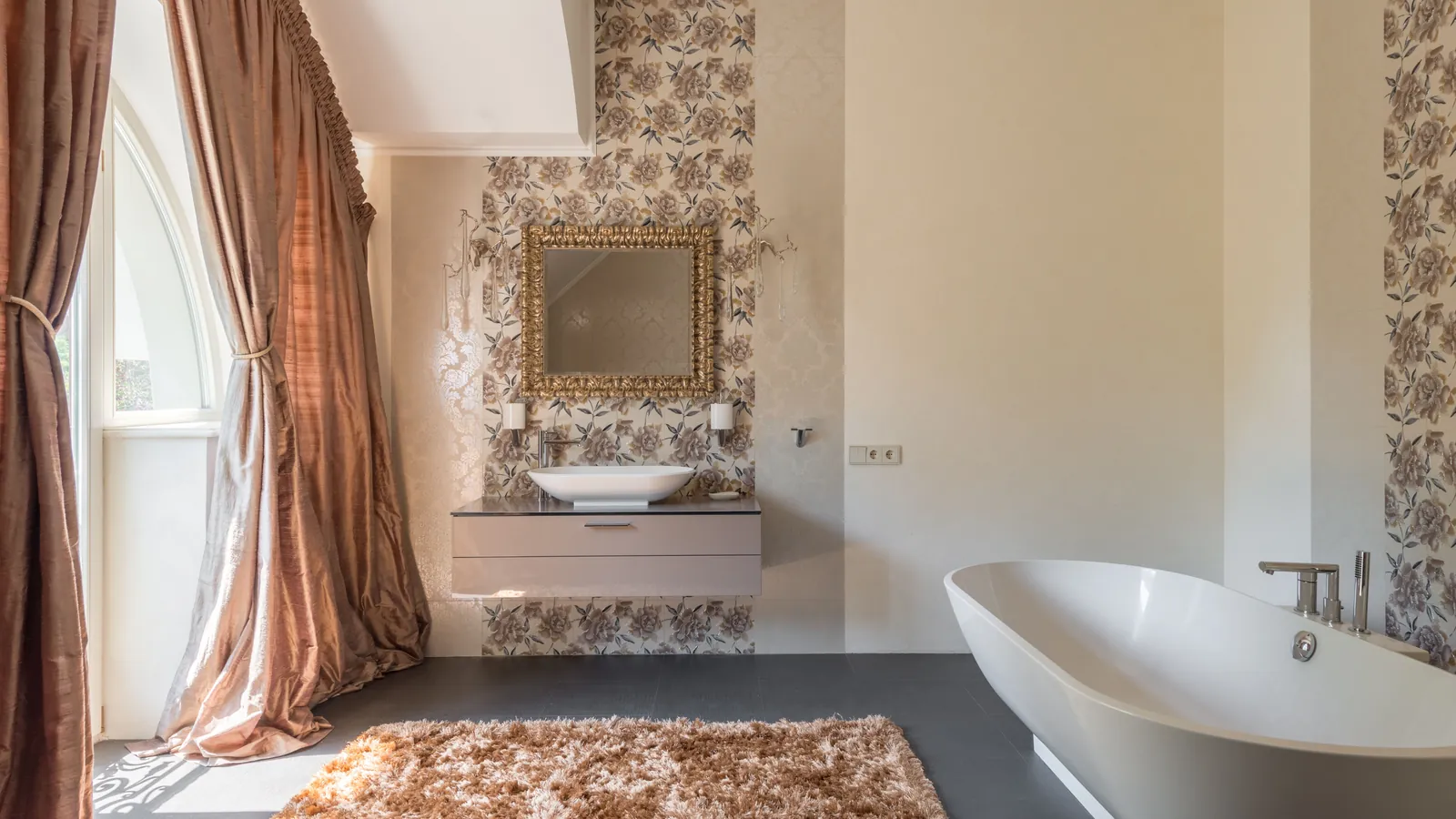
Length changes the room’s proportions. A panel ending at the sill keeps the vanity and counter clear and suits a standard window. A taller pair that falls past the sill stretches the wall and flatters a tall, narrow window, as long as the hem stays well clear of wet floors and cabinet doors. Skip the pooled hem you saw in a styled photograph; it will soak up splashes. Tape a strip at the planned hem line and live with it for a day.
Hardware, drop and handles
Rod pockets, rings and hooked headings put the same panel at different heights, so measure from the maker’s stated starting point and record the hem line separately from the hardware. Leave the window’s handle, lock and sash free to move, and make sure nothing catches on a drawer or cabinet door near the sill. For a pair, find out whether the listed width is per panel or both together.
Hang it so it comes down easily. If reaching the rings means leaning over a tub, choose a simpler heading or a lower mounting.
Washing the curtain
Read the whole label, since lining, trim and heading may care differently from the face fabric, and fabric that is washable may still shrink. Use fabric care products on the curtain, never bathroom-surface cleaners. If you plan to hem, follow the maker’s preparation guidance before cutting, and for custom work settle the finished dimensions with the workroom instead of adding your own allowance.
A bathroom curtain that has gone limp, spotted or musty is due for a wash. Take it down, launder it per its label, let it dry fully and rehang it.